


Primary sourceArtifact1941
Soviet 1941 Propaganda Poster Invoking the Battle on the Ice
1941
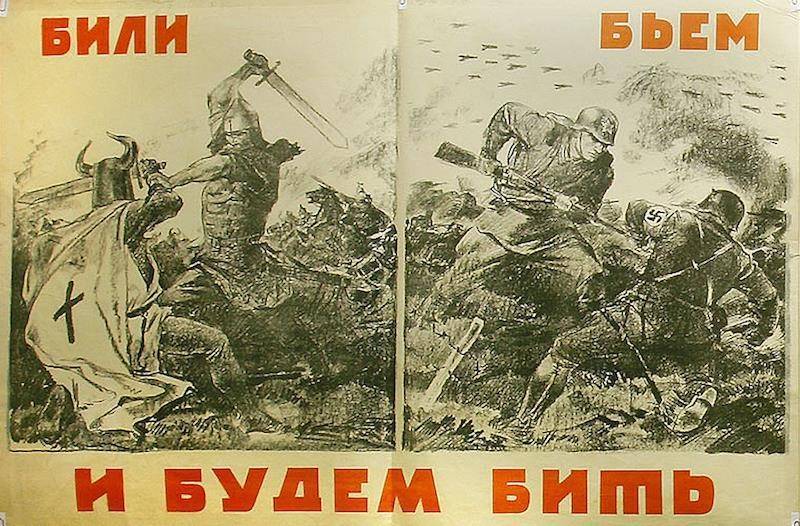
A black-and-white Soviet wartime poster that compares the fight against Nazi Germany with Alexander Nevsky's victory over the Teutonic Order on the frozen lake in 1242.
This poster shows how Nevsky's victory over the Teutonic Order was reused in the Soviet fight against Nazi Germany, a later use of his legend rather than his own act.
About this source
What it is
This is a Soviet wartime propaganda poster from 1941. It has two black-and-white panels with red Russian text. The left panel shows a knight in a white robe with a black cross fighting a warrior in a horned helmet. The right panel shows a Soviet soldier with a rifle clashing with a German soldier in a swastika helmet. The red text reads "BILI" and "BYEM" above and "I BUDEM BIT" below, which can be read as "we beat, we are beating, we will keep beating." The poster's creator is not known. It is kept in the Commons image collection.
Why it matters
During the Second World War, the Soviet Union used the memory of past victories to rally its people. The poster links the Eastern Front with the Battle on the Ice, in which Alexander Nevsky's forces defeated the Teutonic Order. Showing the medieval past this way made the war seem like a continuation of an old struggle against invaders from the west. The image shows how a figure from the thirteenth century could be used by a government in the twentieth century.
Look closer
- Which figures are matched across the two panels, and what does that pairing suggest to a viewer?
- Who made this poster and for what audience, and what would it have asked people to feel or do?
- What does the poster leave out, such as the people who suffered in the war or the complicated history behind the medieval conflict?
This artifact is part of the curated material that grounds the AI version of Alexander Nevsky on Humy.ai — when students ask about related events, the AI can quote it and cite it.
More Alexander Nevsky sources
Browse all 93 →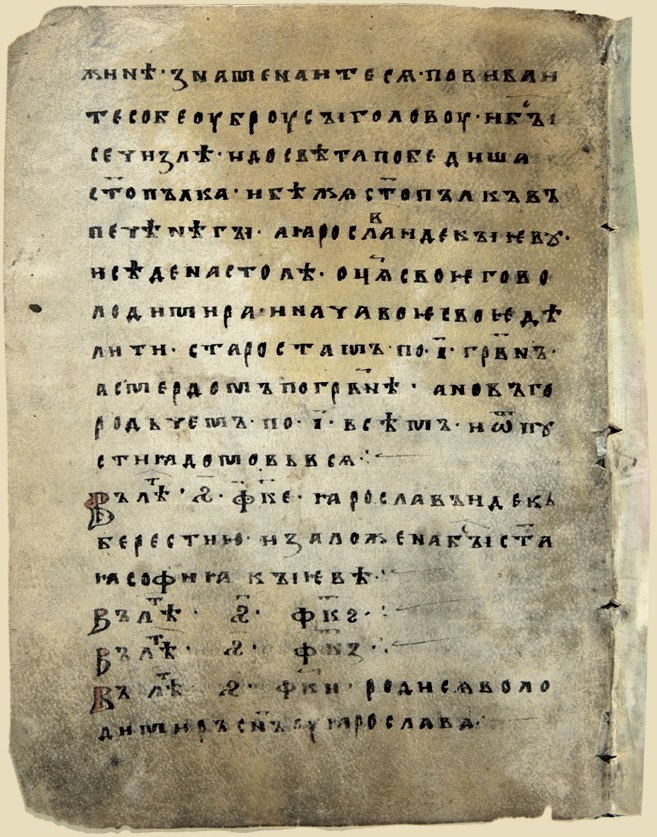 Document
Primary source
Novgorod First Chronicle
13th century (covering events from 1016)
 Document
Secondary source
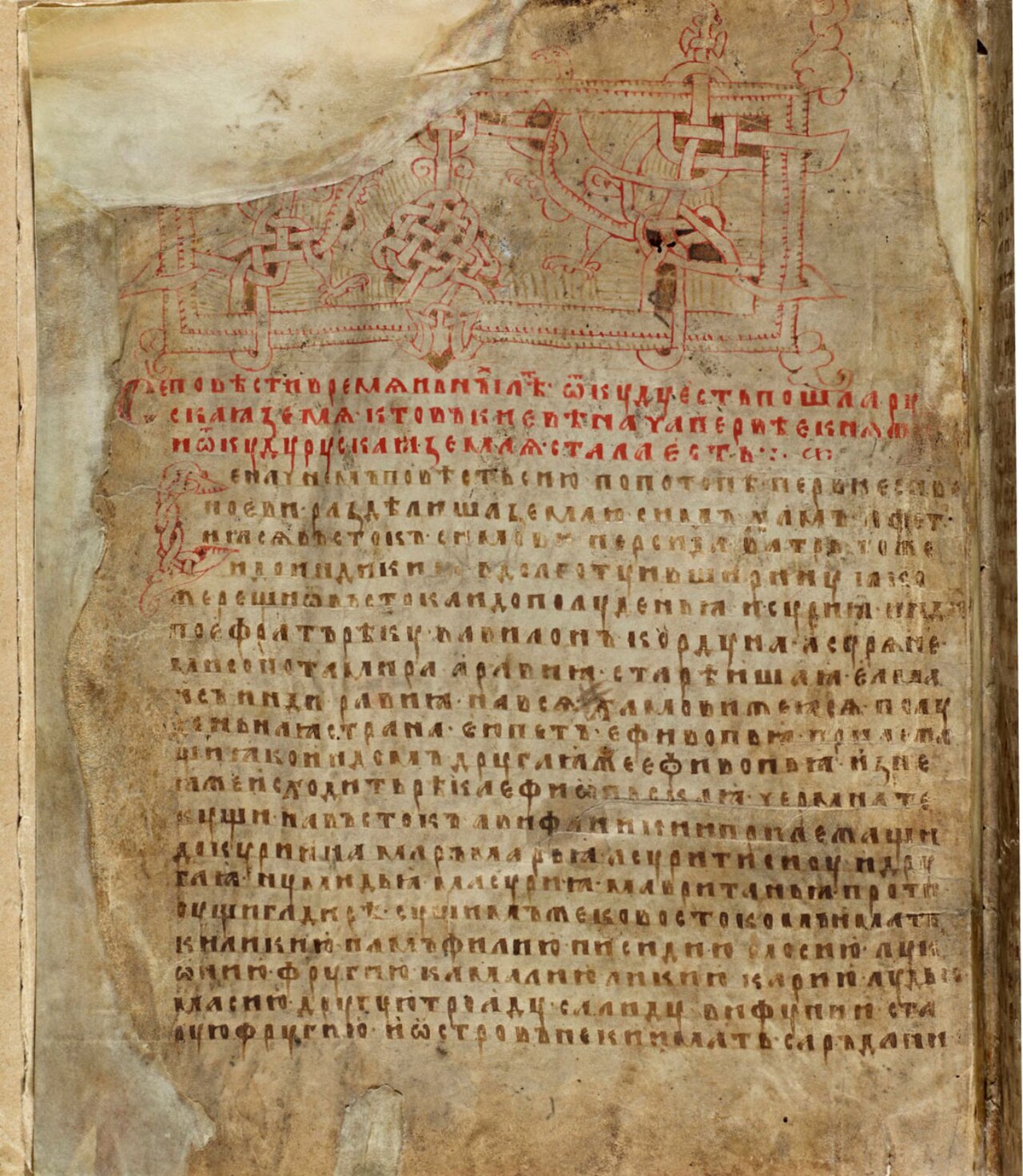
Laurentian Codex
Laurentius · 1377
 Artifact
Primary source
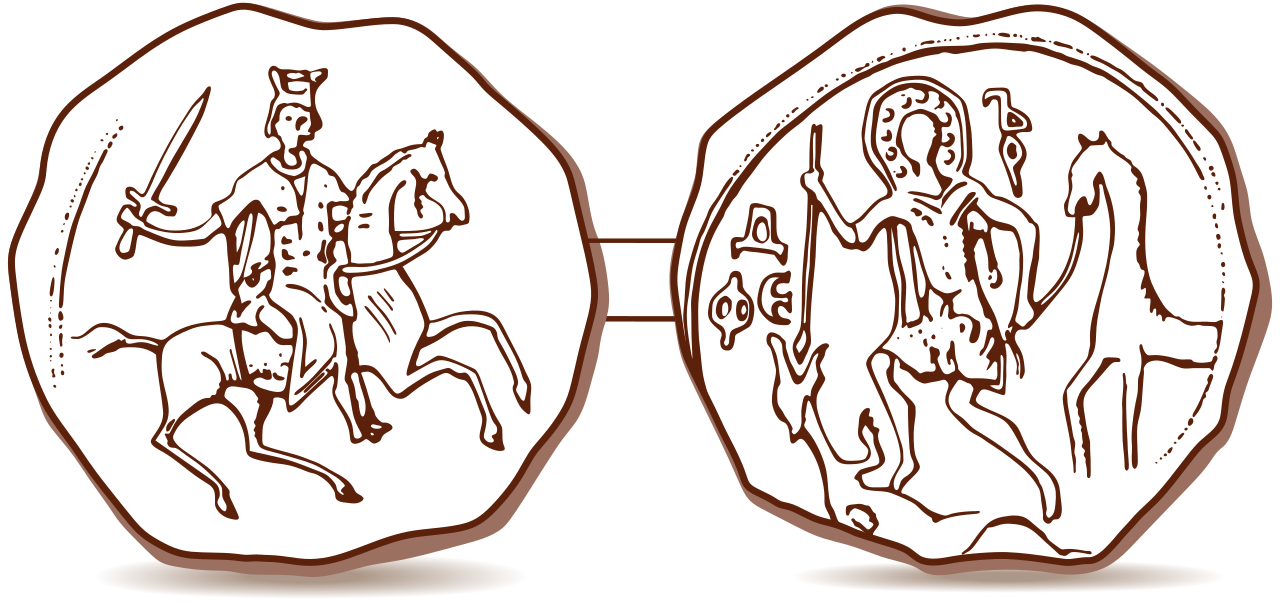
Seal of Alexander Nevsky
13th century
 Artifact
Primary source
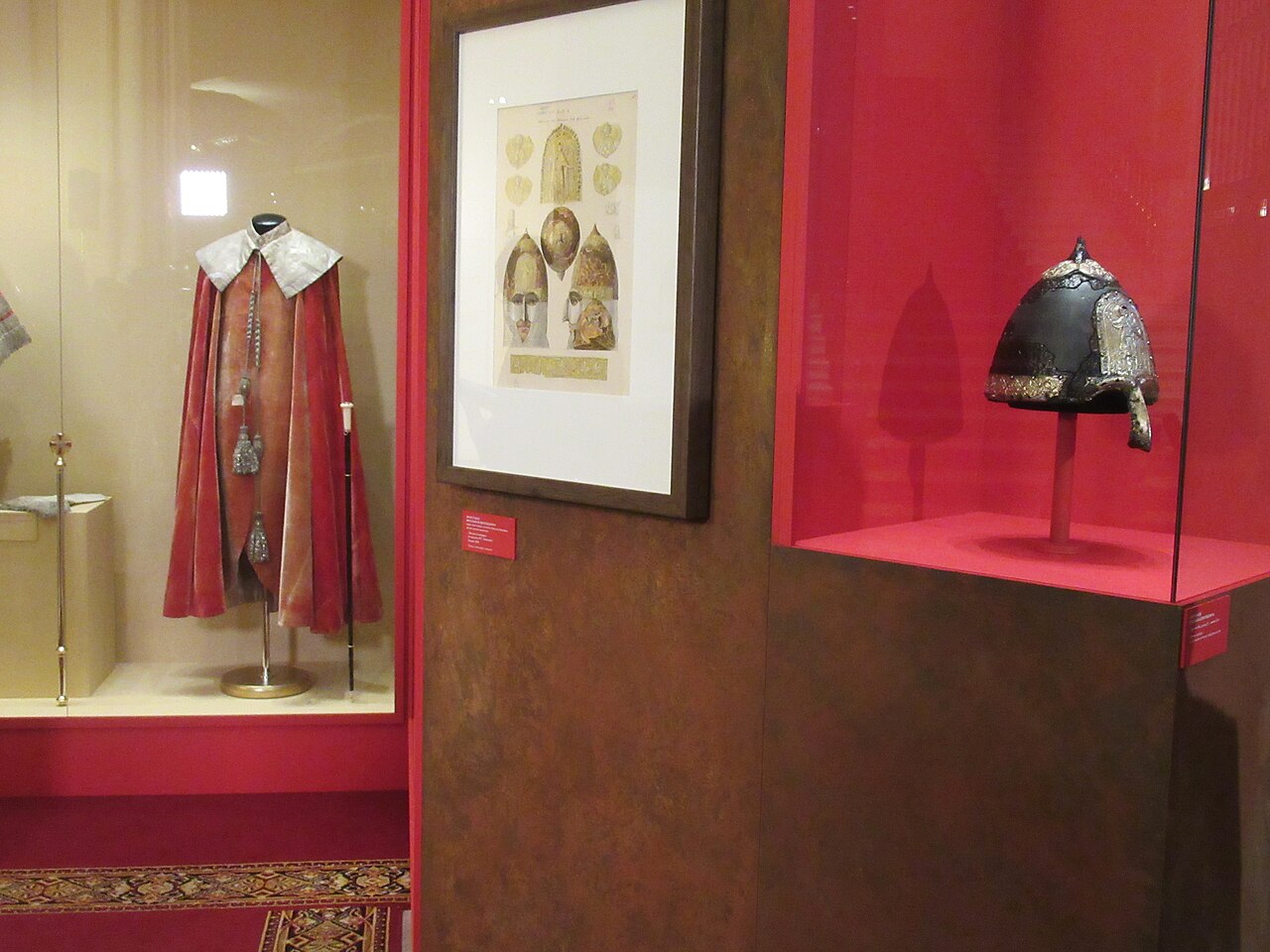
Helmet of Yaroslav Vsevolodovich
Rus' armourers · early 13th century
Free account
Read every Alexander Nevsky source
Sign up free →
Ready when you are
Start chatting with Alexander Nevsky now.
20 messages free · No credit card · Available in 50+ languages.