


Primary sourcePaintingc. 1200
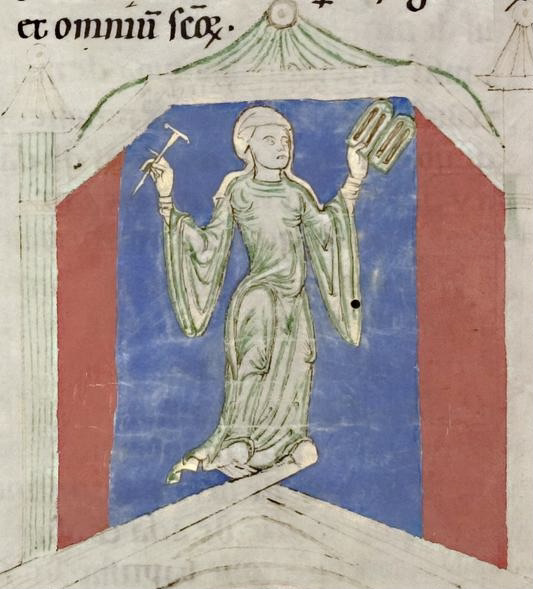
St. Hildegard Receiving Visions, Salem Scivias Manuscript
Unknown author · c. 1200
A detail from an early illuminated copy of Hildegard's own visionary work Scivias, made around 1200.
An early illustrated copy of Hildegard's own major work, Scivias, depicting her receiving visions.
About this source
What it is
This is a detail from an early illuminated manuscript of Hildegard of Bingen's major visionary work, Scivias, made around the year 1200. It shows a robed figure standing within a decorated panel, holding writing tools, with Latin text visible above.
Why it matters
Scivias records Hildegard's religious visions and theological ideas, and this manuscript is an early copy made close to her own lifetime. Images like this one, showing a figure receiving and recording visions, helped shape how Hildegard's mystical experiences were understood and remembered by later readers.
Look closer
- What do the writing tools in the figure's hands suggest about how Hildegard's visions were recorded?
- Why might the artist have used bright colors and careful framing for this scene?
- What can an illustrated copy of a text tell us that the words alone cannot?
This painting is part of the curated material that grounds the AI version of Hildegard of Bingen on Humy.ai — when students ask about related events, the AI can quote it and cite it.
More Hildegard of Bingen sources
Meet the AI Hildegard of Bingen → Book
Primary source
Scivias
Hildegard of Bingen · 1151-1152
 Painting
Primary source
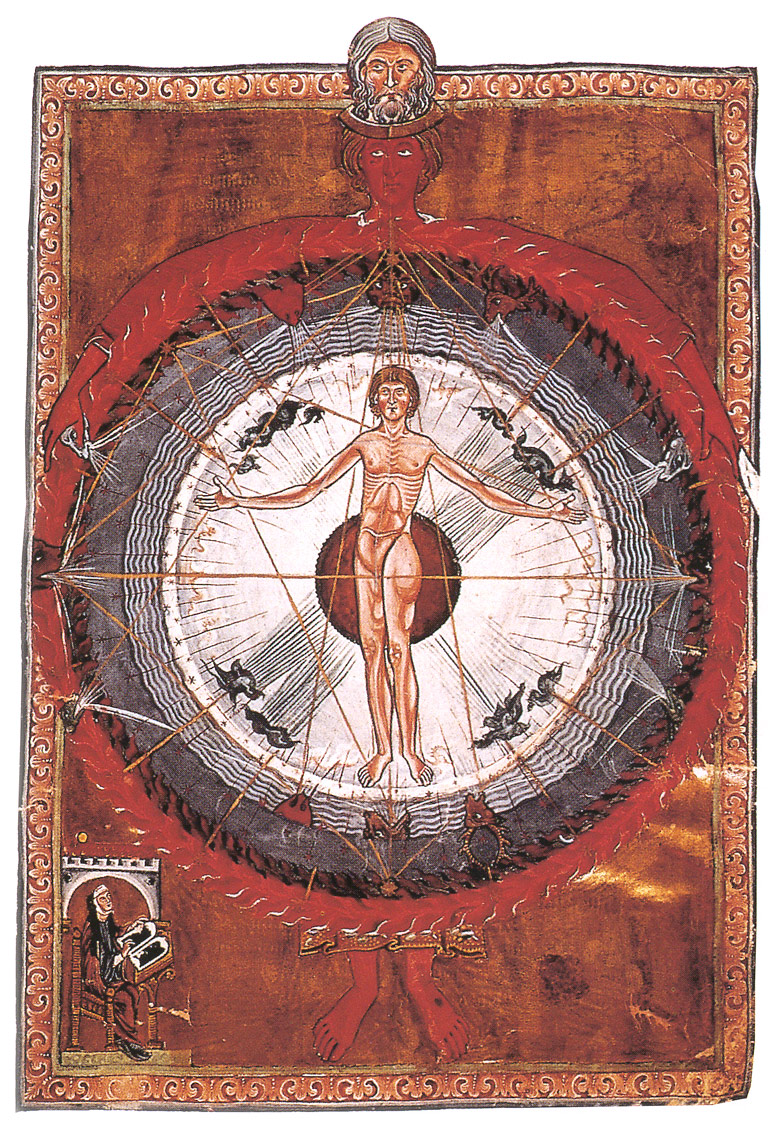
Scivias Frontispiece Miniature
12th century
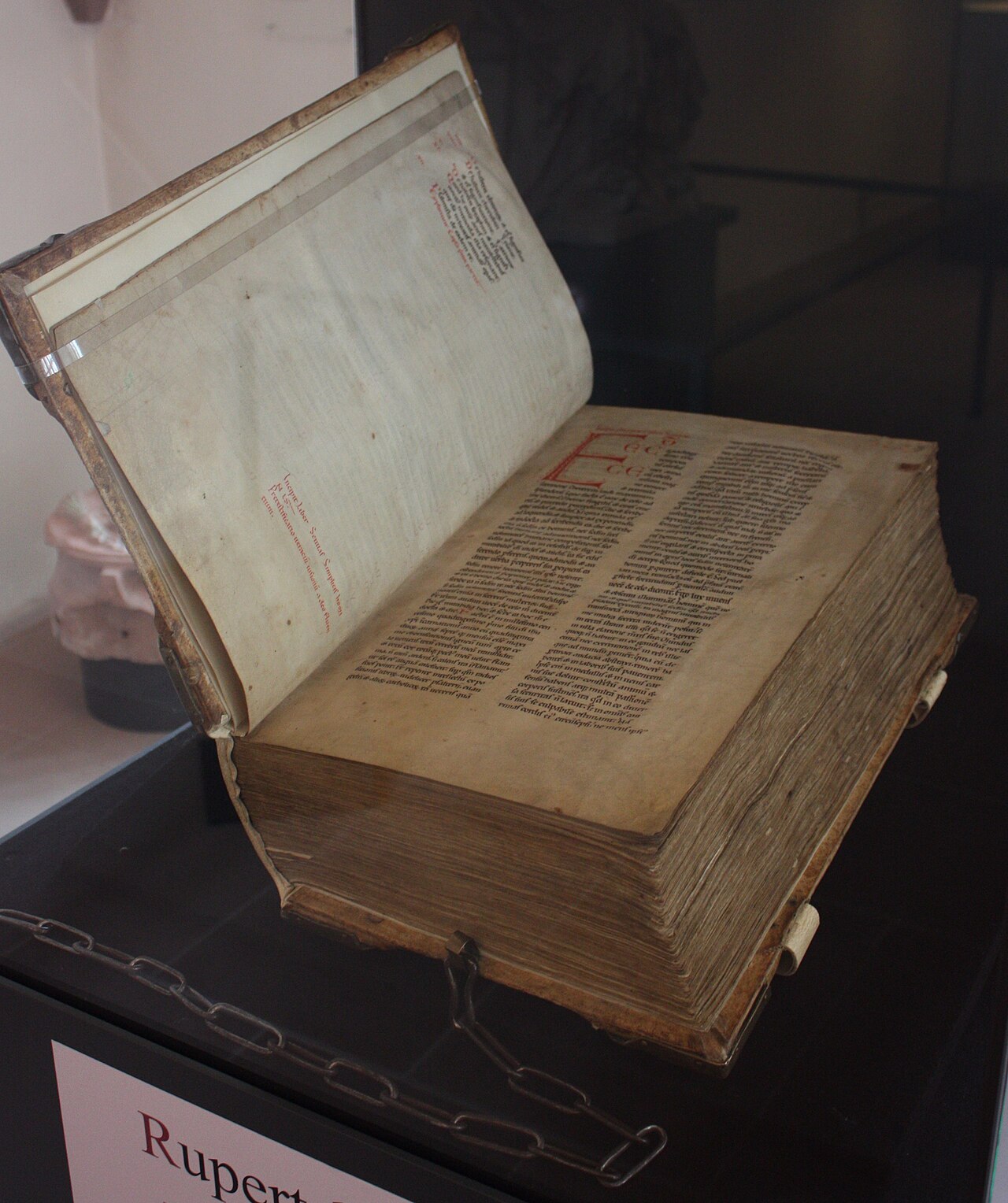 Book
Primary source
Wiesbaden Codex
Hildegard of Bingen · c. 1200
 Book
Primary source
Liber divinorum operum
Hildegard of Bingen · c. 1163-1174
 Document
Primary source
Dendermonde Codex
Hildegard of Bingen · c. 1175
Ready when you are
Start chatting with Hildegard of Bingen now.
20 messages free · No credit card · Available in 50+ languages.