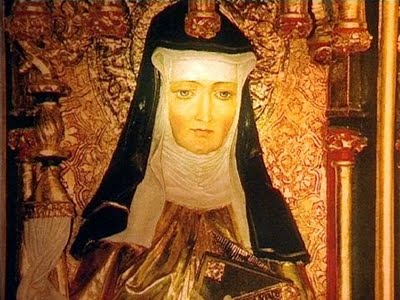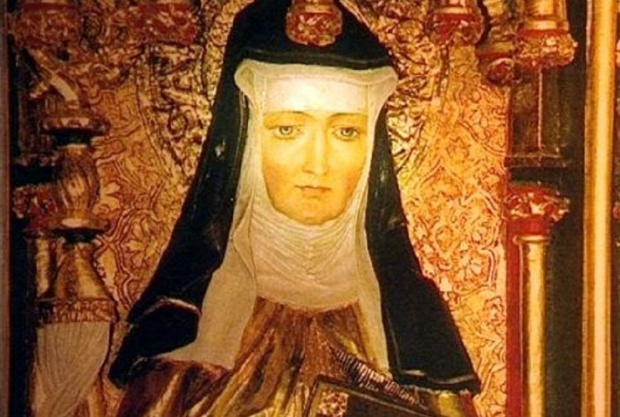
Portrait of Hildegard of Bingen

AI Historical Figure

Hildegard of Bingen

Picture: Public domain  Wikimedia Commons

German Benedictine abbess, polymath, mystic and Doctor of Church

Chat with Hildegard of Bingen via text or voice — in 50+ languages, drawing on a curated biography and selected sources. Available 24/7.

Start chatting with Hildegard of Bingen20 messages free · No credit card
Format
Text + Voice
Languages
50+
Used by
98 schools & universities
Hildegard of Bingen

Hildegard of Bingen

Online · responds in seconds

Hello — I'm Hildegard of Bingen. German Benedictine abbess, polymath, mystic and Doctor of Church. What would you like to ask me?

20 messages free · No credit card · Powered by Humy.ai

Live preview · Switch between 42 languages above · Send a message to continue in the app

Multilingual

Talk to Hildegard of Bingen in 42 languages

Ask Hildegard of Bingen questions in any language below, and the rest of Humy's app speaks it too. Pick yours to open the chat in that language.

Also in German (Austria), German (Switzerland), English (UK), English (Australia), English (Canada).

The sources behind this AI

84 sources · 27 paintings · 16 artifacts · 15 documents · 13 books · 7 photographs · 5 sculptures · 1 documentary

Hildegard of Bingen doesn’t improvise from thin air. The AI is grounded in 84 curated historical sources students can inspect. Open any of them to see what informs the conversation.

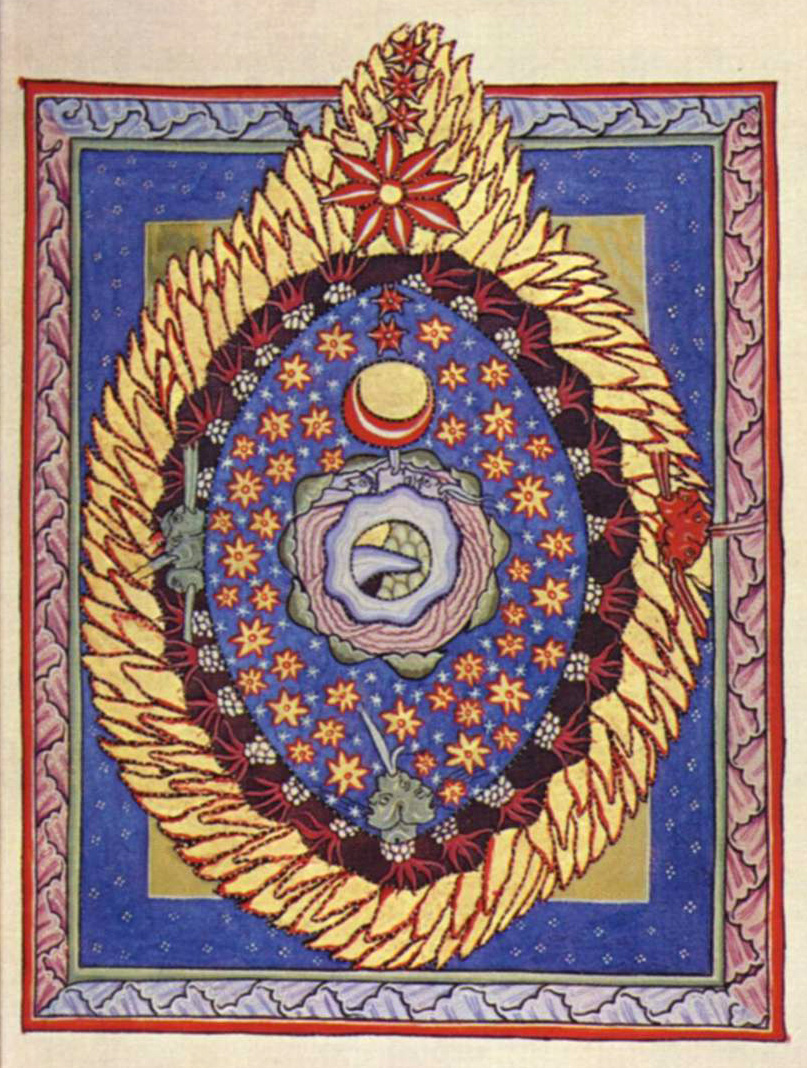
Illuminated manuscript miniature: an oval mandala of gold flame-like rays and dark red and white bands surrounds a blue field with gold stars, a red-and-white sun or disc at top, and a central cosmic diagram of concentric rings with a bluish-white globe and green figures at top and bottom.Book

Primary source

Scivias

Hildegard of Bingen · 1151-1152

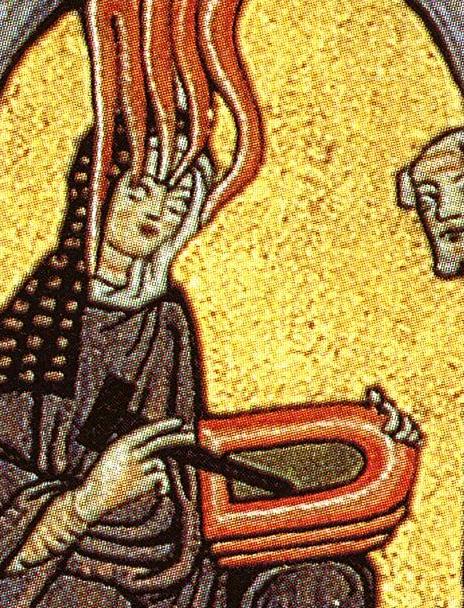
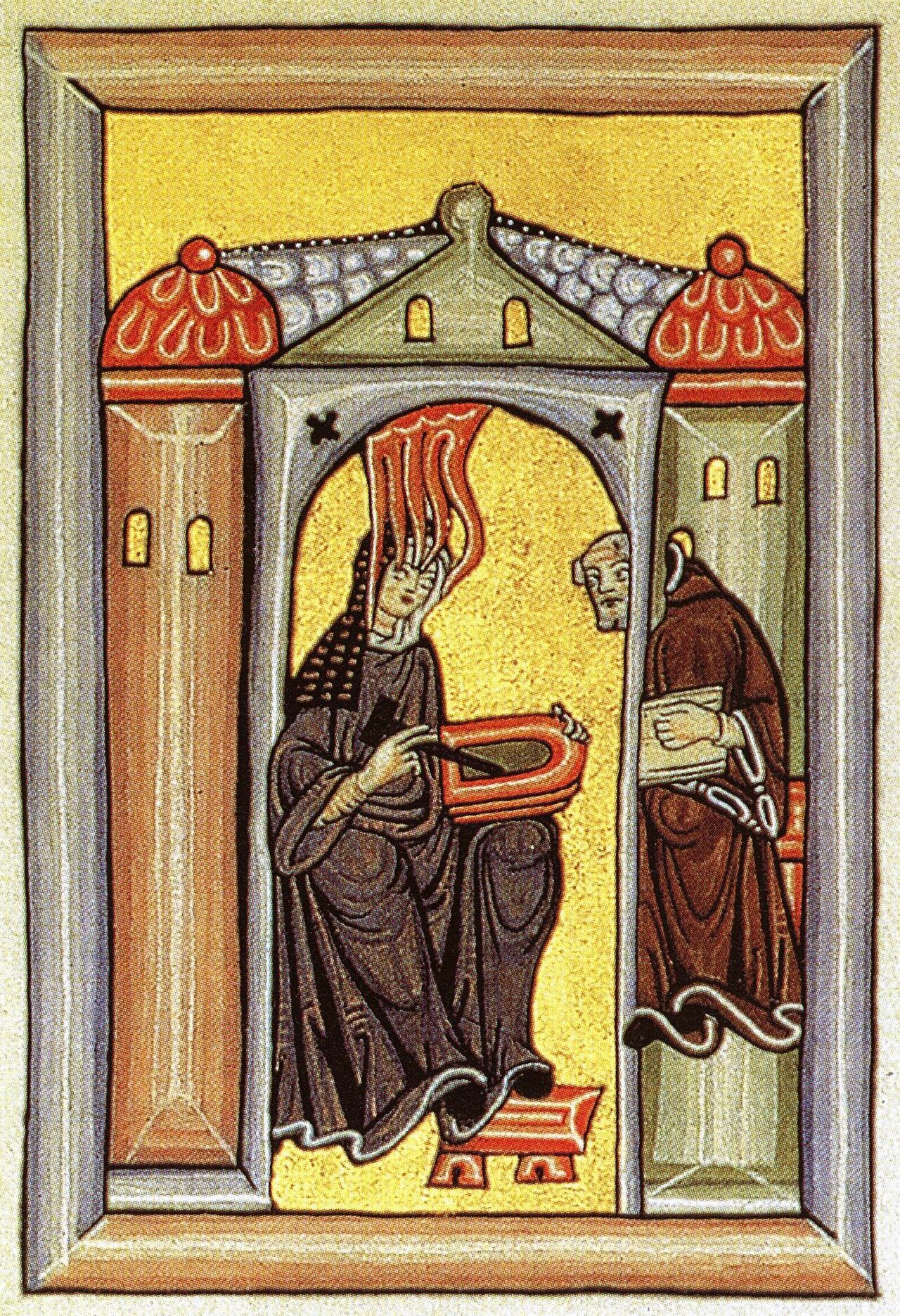
Detail of a painted medieval miniature in orange, red and gold tones. A figure with flowing red hair sits at a desk, writing with a stylus on a tablet. A second face in profile appears at the right edge.Painting

Primary source

Scivias Frontispiece Miniature

12th century

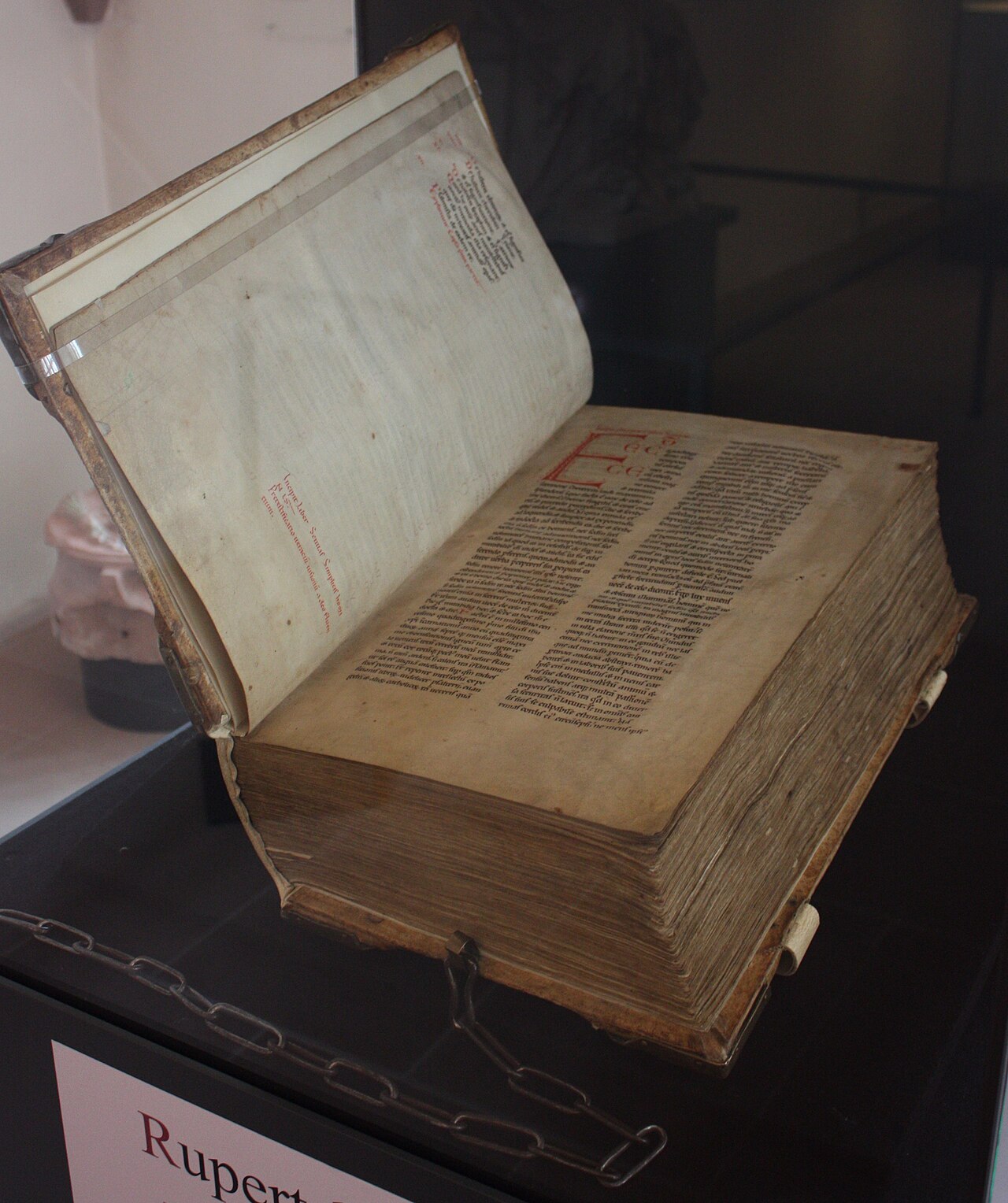
A large open medieval manuscript codex lies on a dark display stand in a glass case, with a metal chain attached to its binding and a white label reading 'Rupert' at the bottom. The pages show black text in columns and red decorated initials.Book

Primary source

Wiesbaden Codex

Hildegard of Bingen · c. 1200

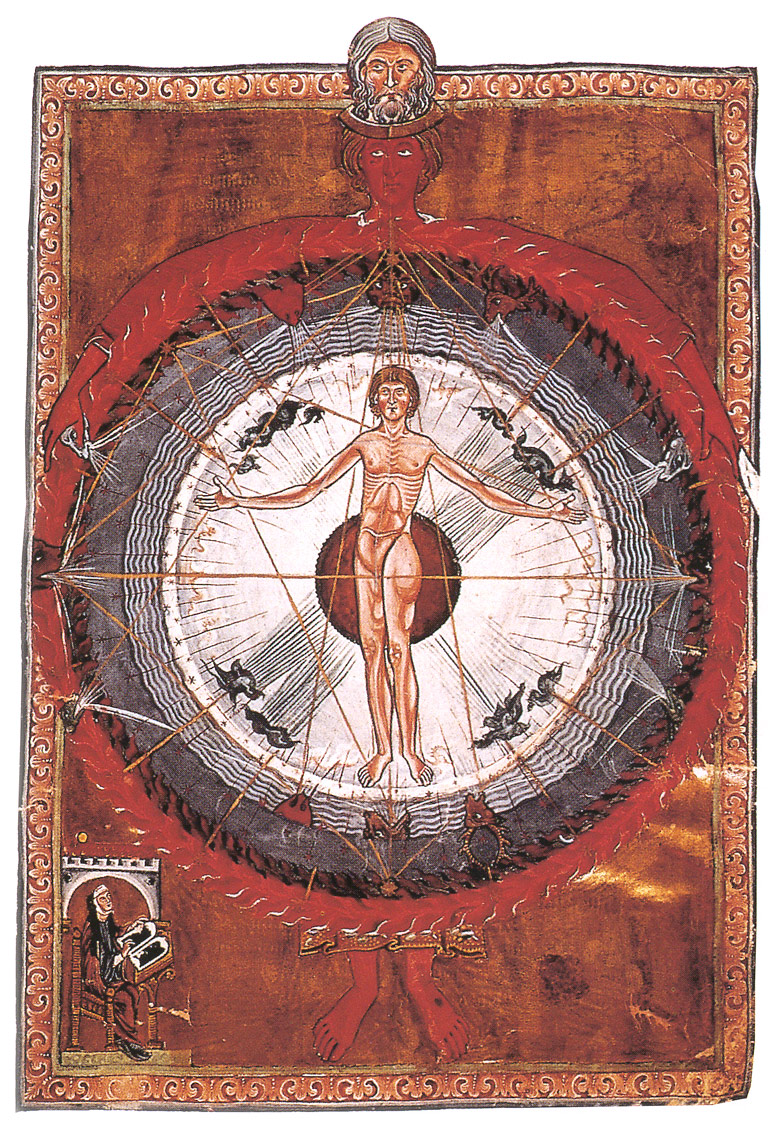
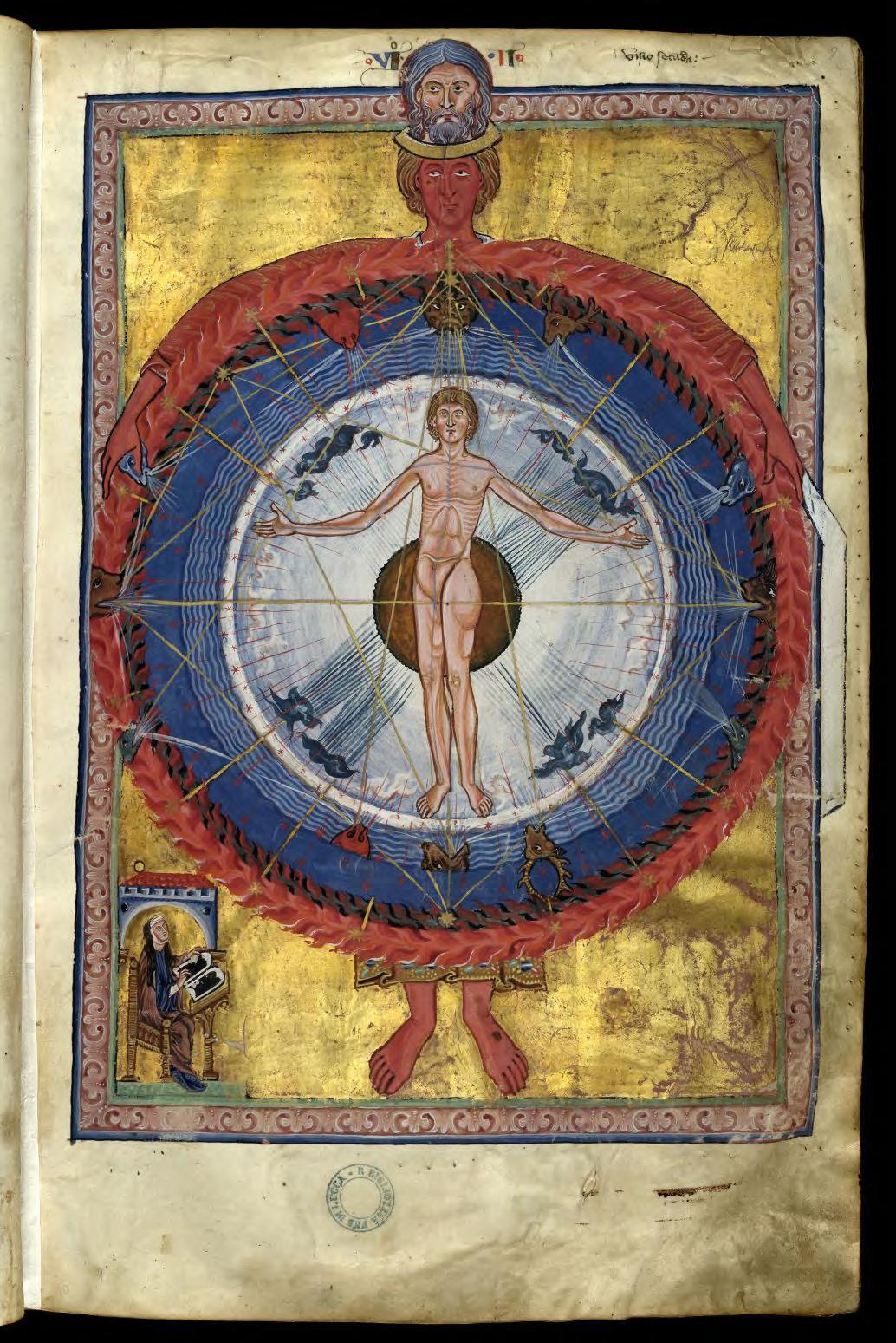
Medieval illuminated manuscript miniature of the Universal Man: a nude human figure with outstretched arms stands within a large white circle surrounded by concentric rings, red and gray bands, and a red border. A bearded head crowns the top and a red-footed figure appears below. A small seated scribe at lower left writes at a desk.Book

Primary source

Liber divinorum operum

Hildegard of Bingen · c. 1163-1174

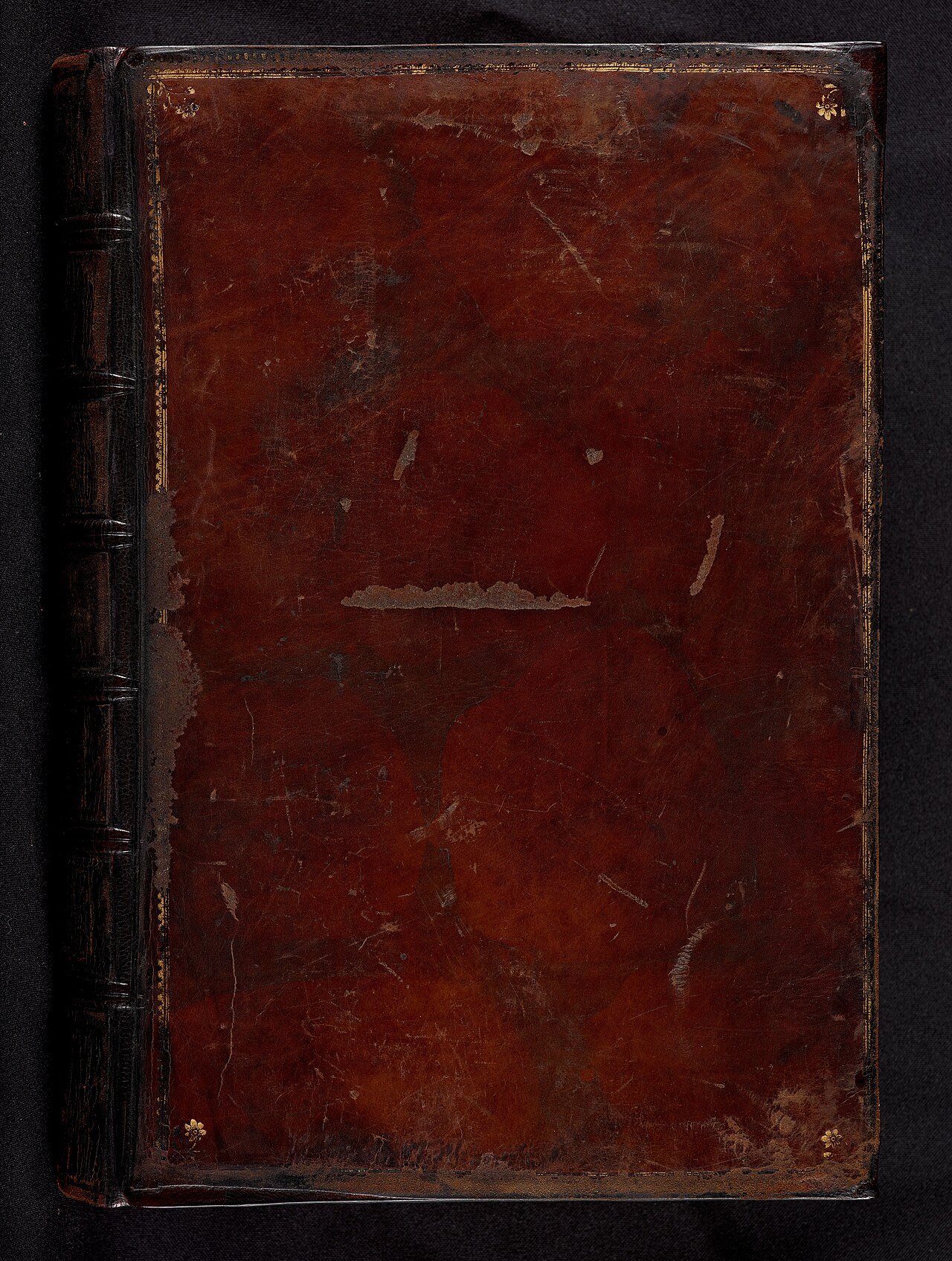
Front cover of an old manuscript volume bound in worn reddish-brown leather with a dark spine featuring raised bands and small gold floral tooling at the corners and gold edge rules. The cover is scratched and stained.Document

Primary source

Dendermonde Codex

Hildegard of Bingen · c. 1175

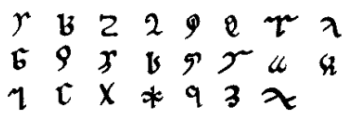
Grid of about 23 invented glyph-like characters arranged in three rows, drawn in black ink on a white background. The symbols are angular and curly, resembling an unknown alphabet, the Lingua Ignota script.Document

Primary source

Lingua Ignota

Hildegard of Bingen · c. 1200 (manuscript copies)

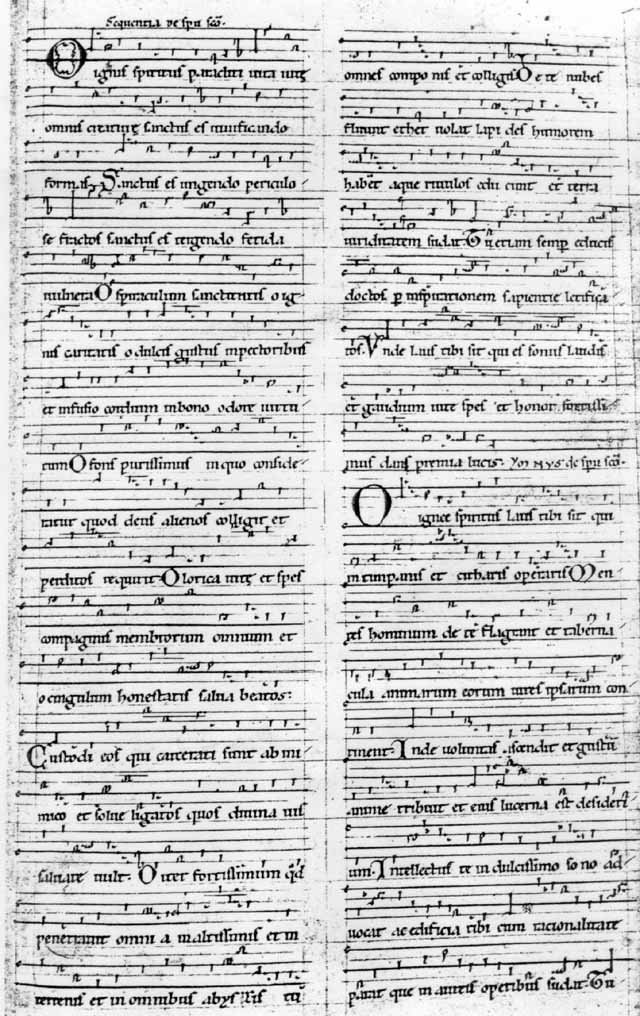
Scanned black-and-white page of a medieval musical manuscript with hand-drawn square-note neumes on staff lines and a large decorated initial letter O at the start of the sequence. The Latin text is written under the notes in two columns, with a heading at the top reading Sequentia de Spiritu Sancto.Document

Primary source

O Ignis Spiritus

Hildegard of Bingen

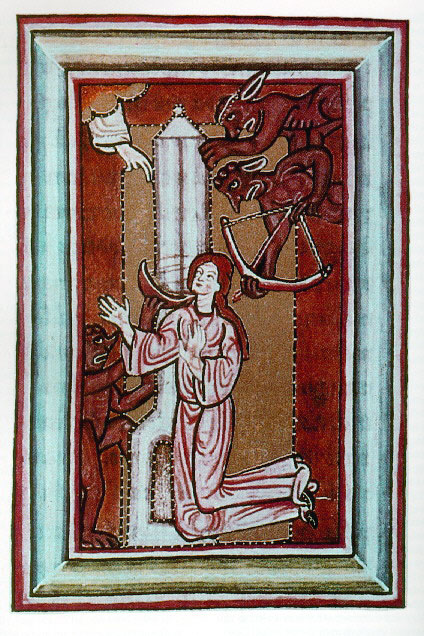
Medieval illuminated manuscript miniature in a pale green and red frame. A pale kneeling figure in a long robe raises one hand beside a tall white column. At left a dark red horned demon stands, and at upper right two red horned beasts with claws are shown. A white scroll appears at upper left.Painting

Secondary source

The Human Soul

Unknown author

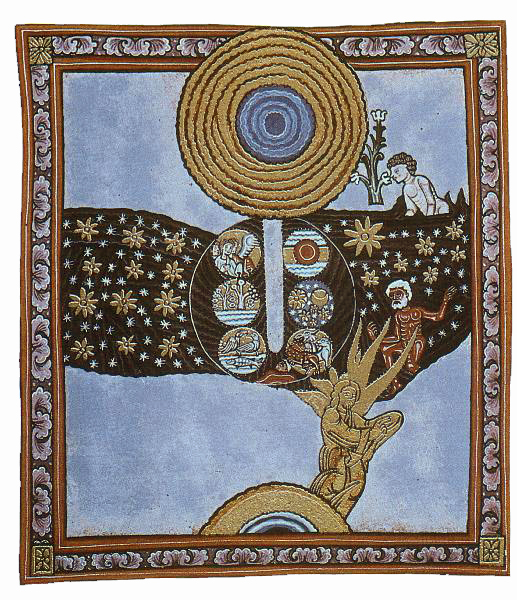
Medieval illuminated miniature on blue ground with a gold-rayed circle at top, a dark starry band, a central column with small roundel scenes, a reclining nude figure at upper right, and a seated figure with gold rays below.Painting

Secondary source

The Creation of the World in Six Days

Unknown author

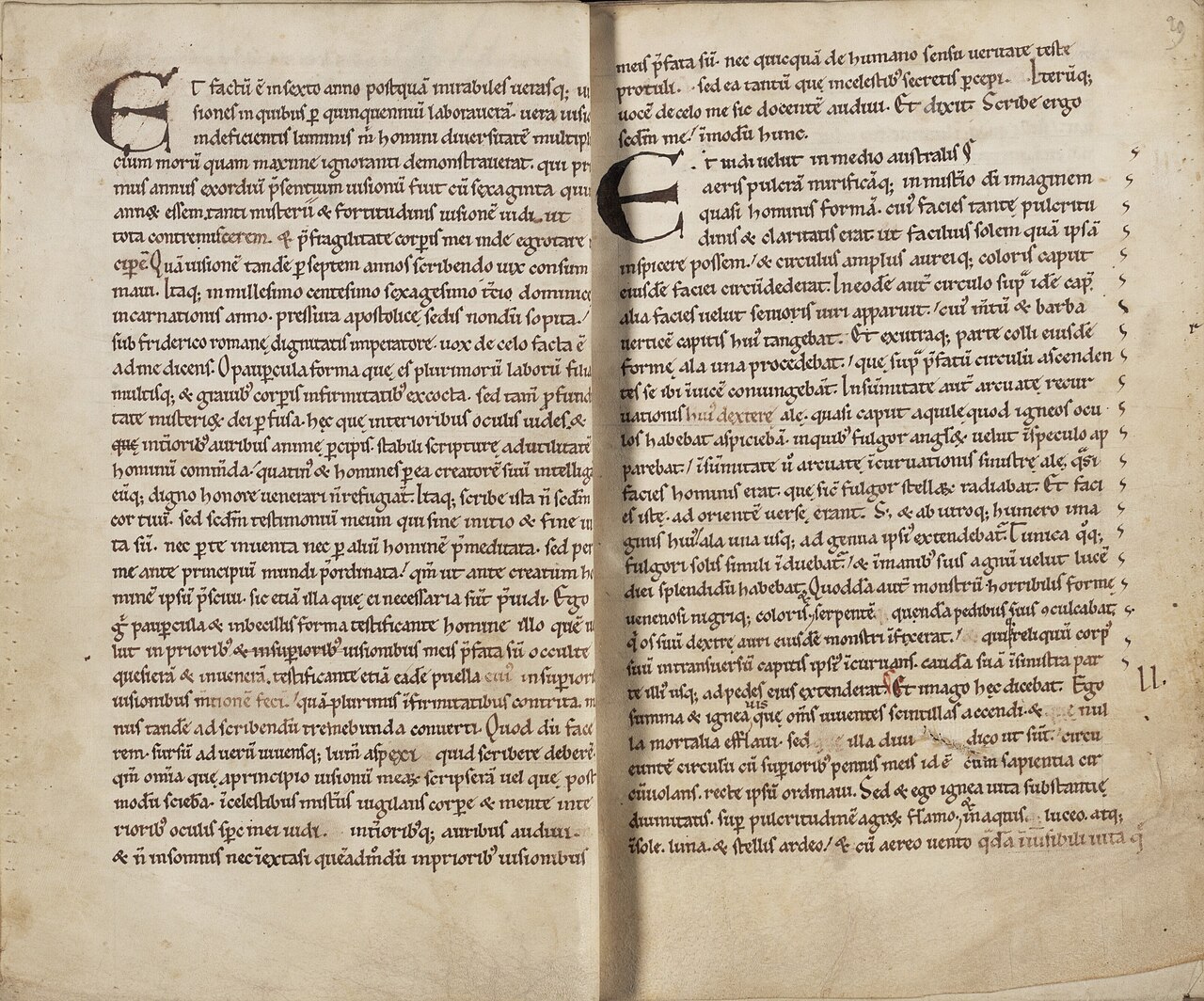
Two facing pages of a medieval Latin manuscript in dark brown ink with a large decorated initial letter E on each side, and a cropped page edge visible; the text is in dense columns with red-brown rubrics and marginal marks.Book

Primary source

Liber Divinorum Operum, Ghent Manuscript

Hildegard of Bingen · 12th century

Detail of a medieval illuminated manuscript painting: a robed figure with a veil or head covering, tilted head looking upward, holding a pen or stylus over an open book on a desk, with a golden background and red-roofed structure at top.Painting

Secondary source

Hildegard Reading and Writing

Unknown author

Artifact

Primary source

O Frondens Virga

Hildegard of Bingen · c. 1150s

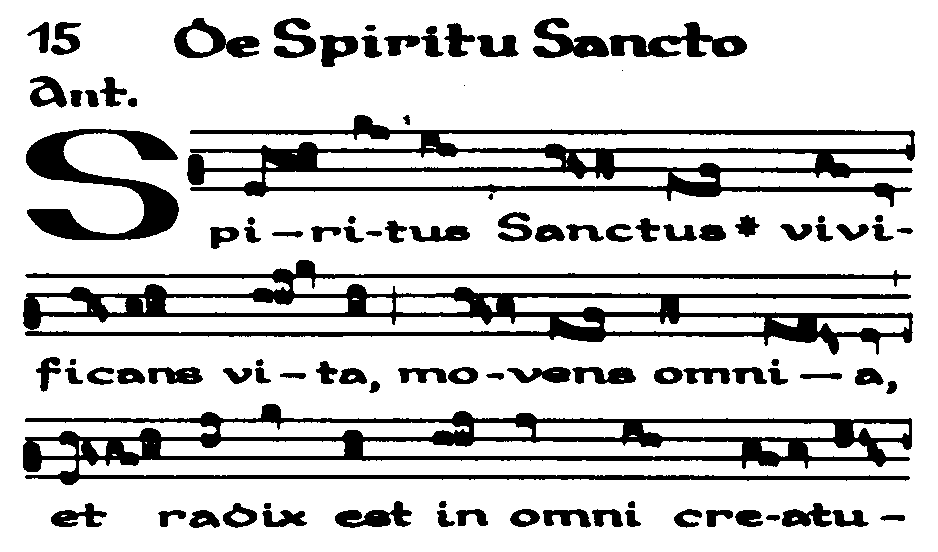
Printed musical notation of the antiphon 'De Spiritu Sancto' on staff lines, with the large decorated initial S and Latin text 'Spiritus Sanctus vivificans vita, movens omnia, et radix est in omni creatu-'. Black notes on five-line staves.Document

Primary source

De Spiritu Sancto Antiphon Fragment

Hildegard von Bingen

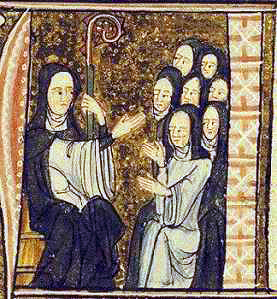
Medieval illuminated miniature: a woman in a dark veil and robe holds a tall staff topped with a curled crosier-like finial, facing a group of veiled women behind and beside her, some with hands clasped in prayer. Gold background.Painting

Secondary source

Hildegard of Bingen and Her Nuns

Unknown

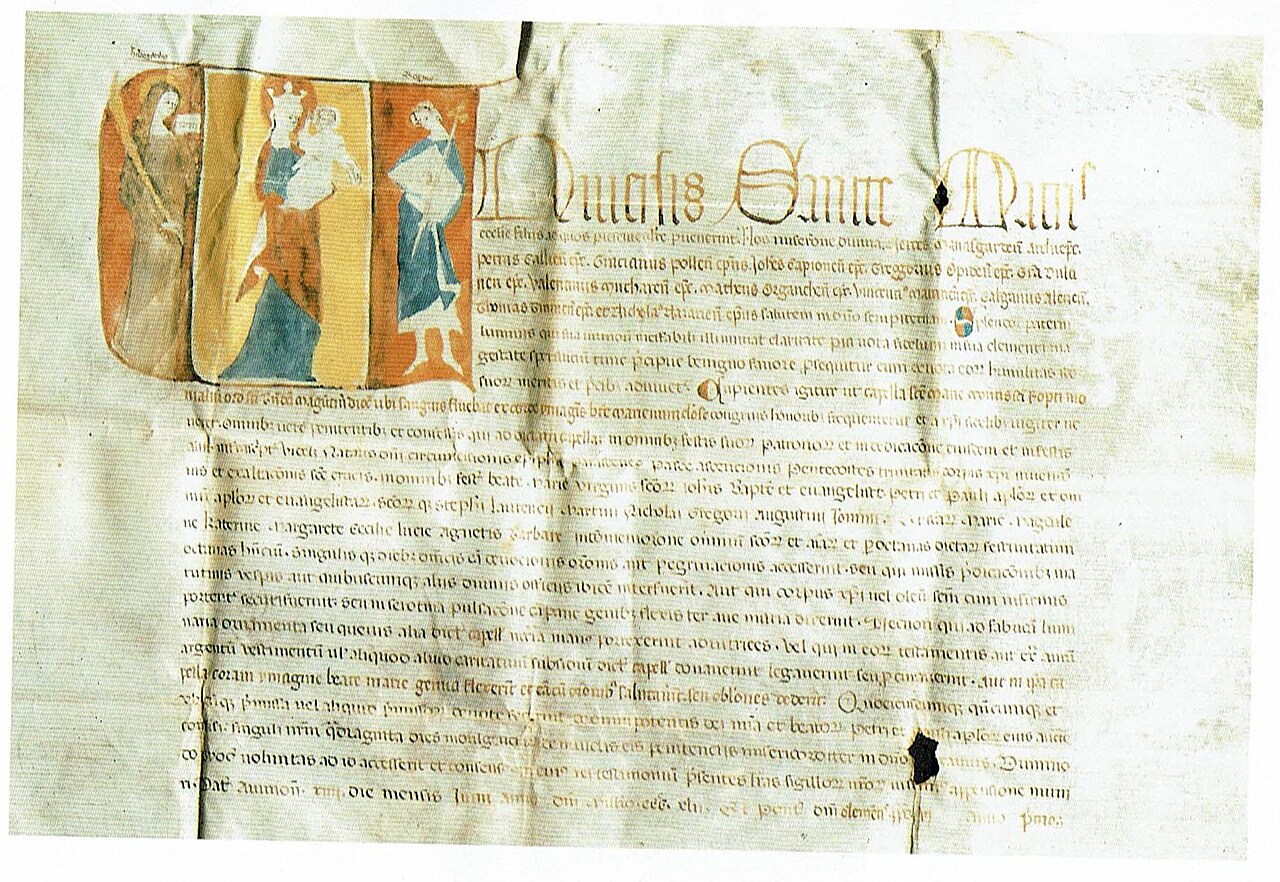
Scan of a medieval parchment indenture with Latin text in brown ink and gold illuminated initial capitals. Three painted miniatures on the left show a standing saint with a book, a seated Virgin and Child, and a bishop with a crozier.Document

Secondary source

Indulgence Charter for Rupertsberg Depicting Hildegard

Unknown · 14th century

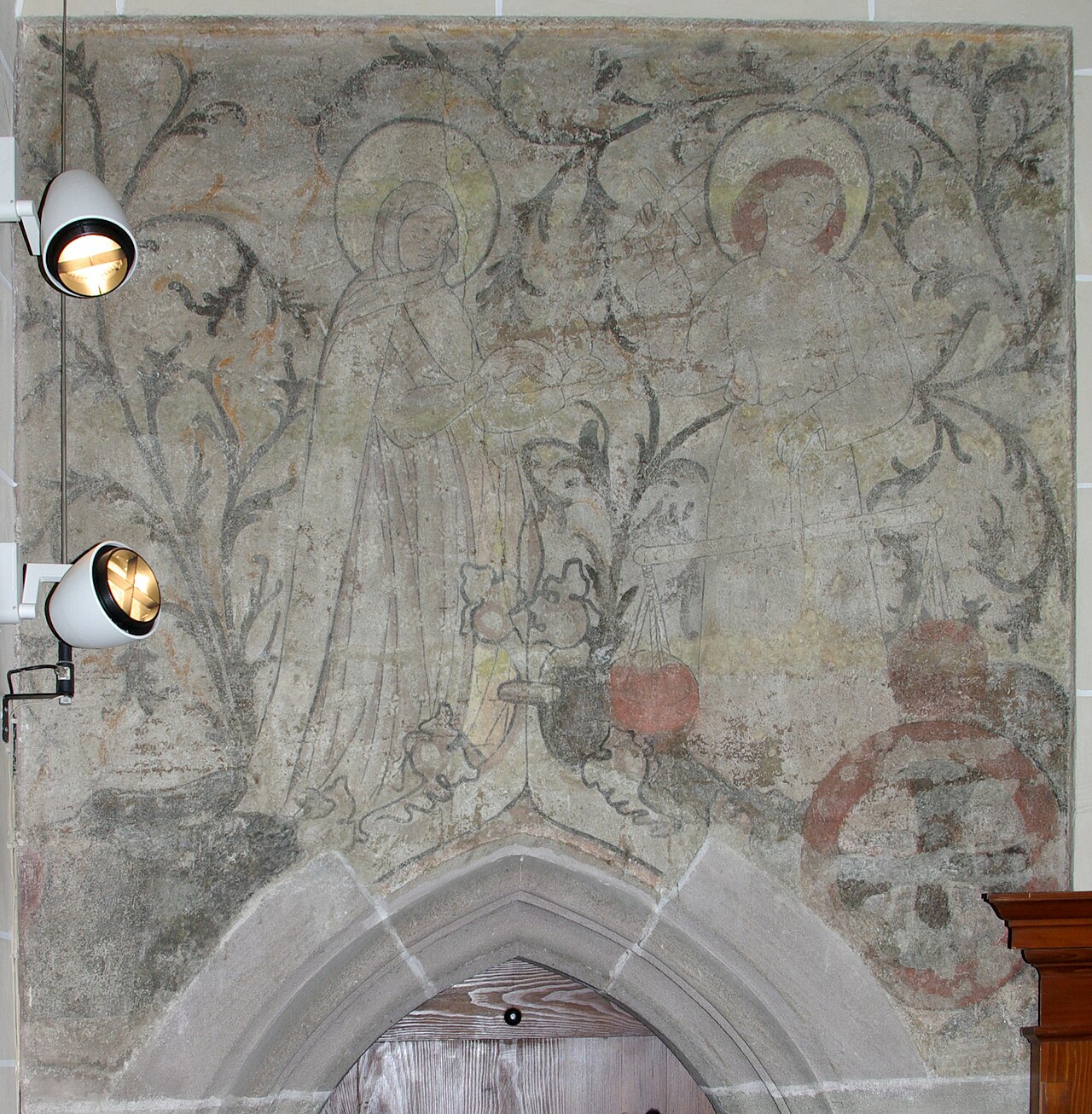
Medieval wall painting in a church chancel above an arched doorway. Two haloed figures stand among grey-green foliage: a woman in a long robe on the left and a figure on the right, with a red-tinged halo and a wing-like form, holding a balance scale. Two lamps hang on the left.Painting

Secondary source

Wall Painting of Hildegard and the Archangel Michael, Eltersdorf

Unknown · c. 1400

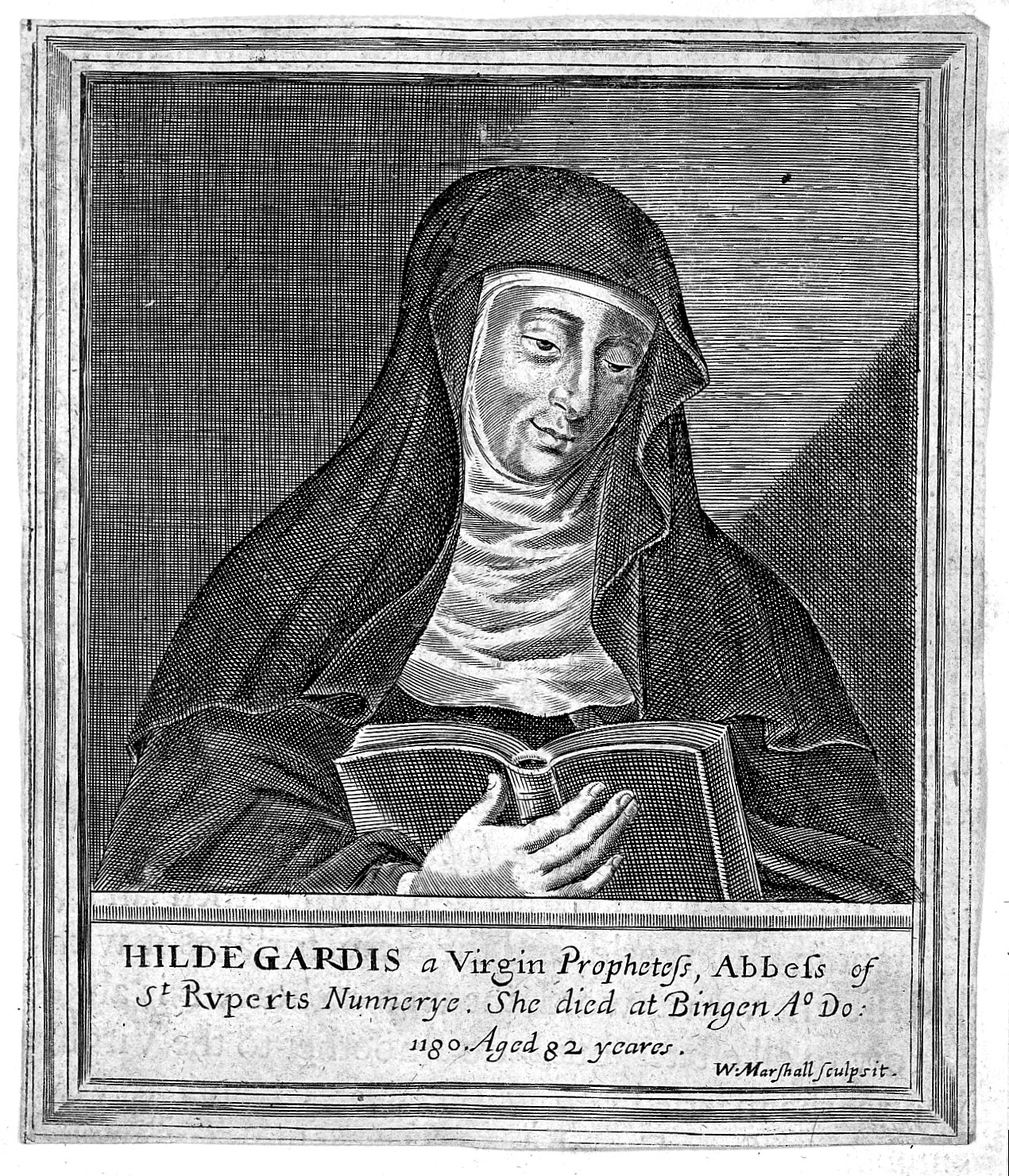
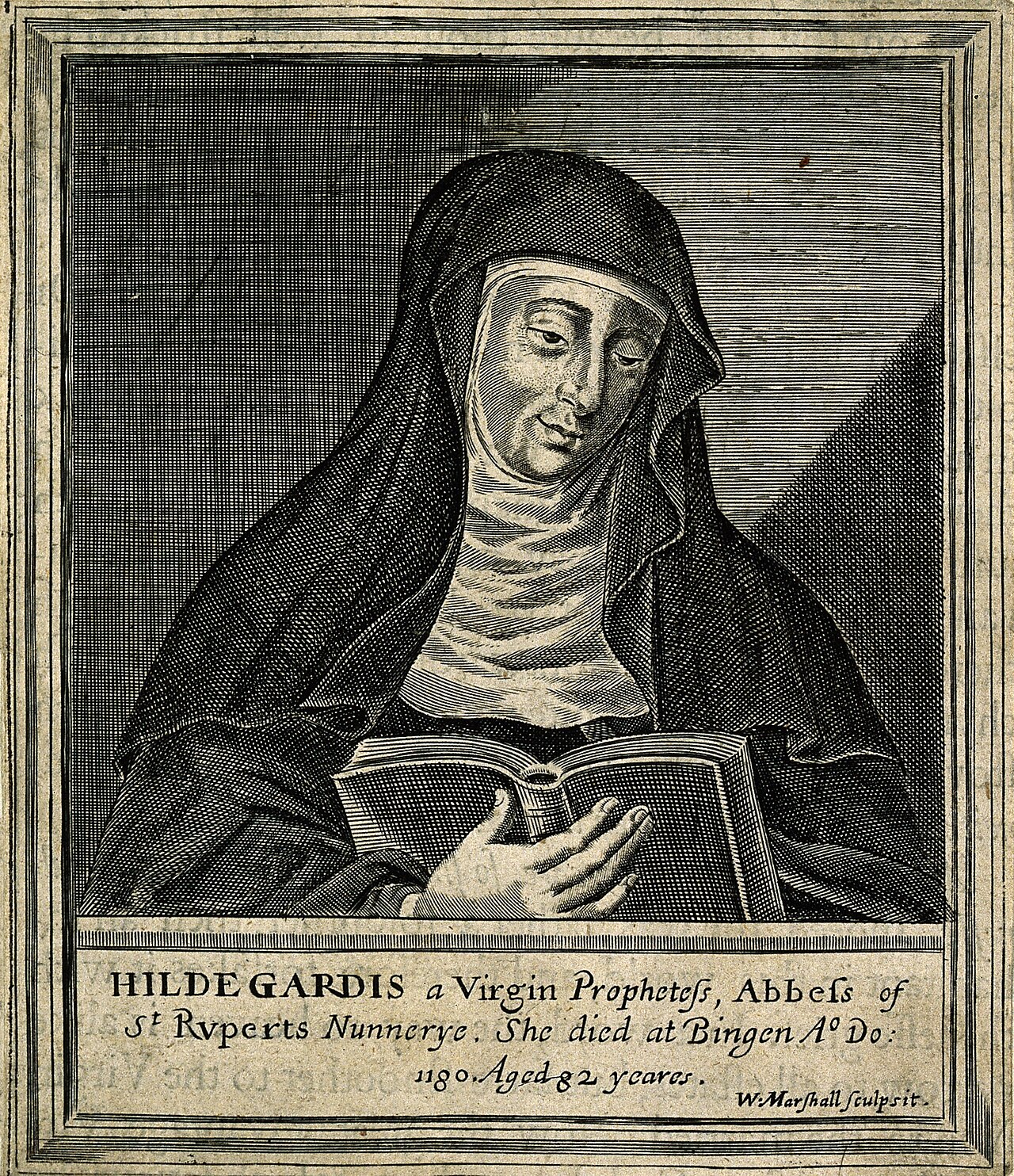
Black and white engraved portrait of a veiled nun in a dark hooded habit and white wimple, reading an open book held in her hand. Caption below reads: Hildegardis, a Virgin Prophetess, Abbess of St Ruperts Nunnery, died at Bingen 1180 aged 82 years. Signed W. Marshall sculpsit.Painting

Secondary source

Engraved Portrait of Hildegard von Bingen

William Marshall

Documentary

Secondary source

Disibodenberg Monastery Documentary Clip

ZDF/Terra X/Faber Courtial/Jörg Courtial/Jochen Schmidt · 7 September 2020

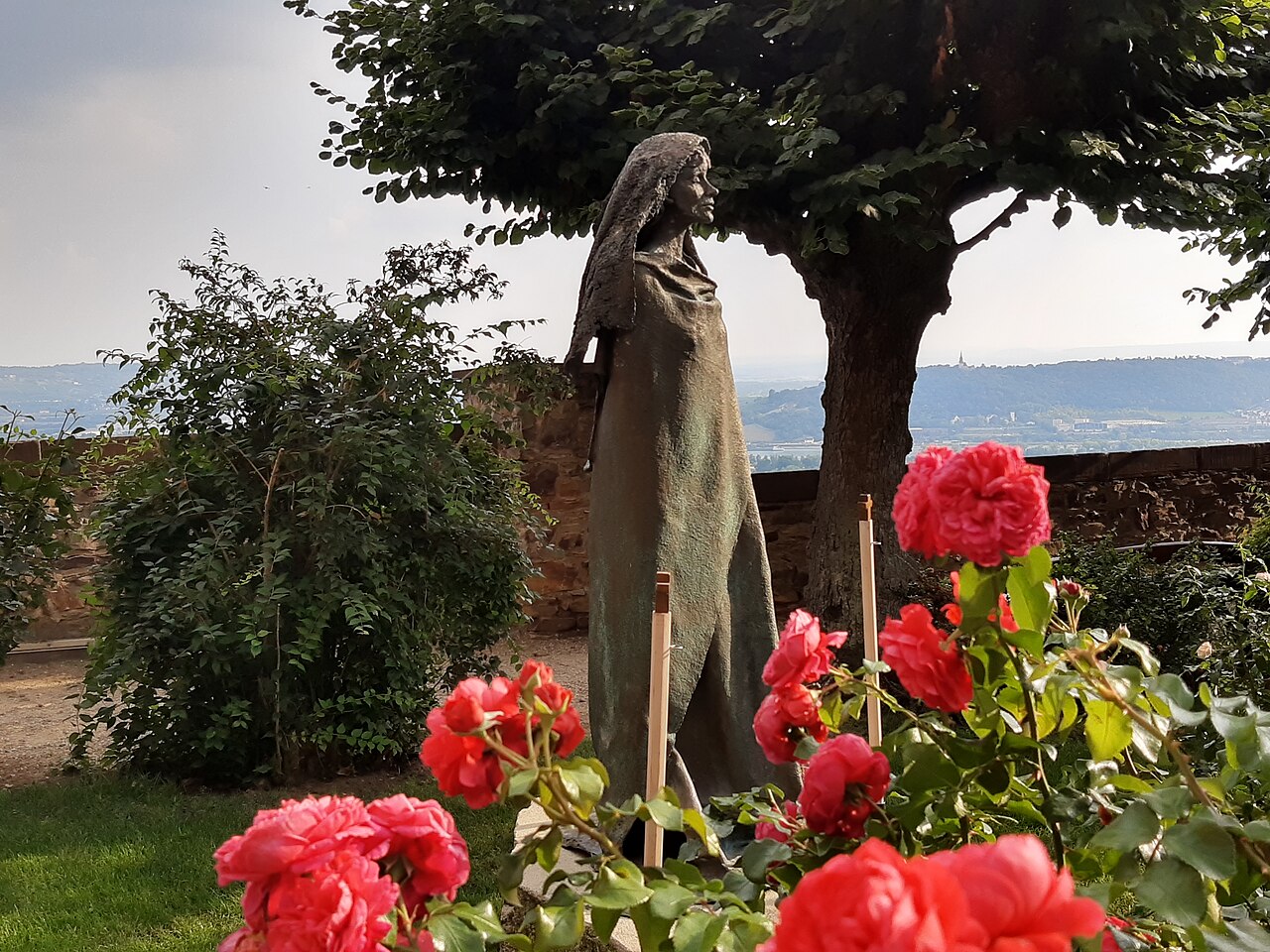
A bronze statue of Hildegard of Bingen in a garden with red roses and trees, with the Rochus Chapel visible in the distance.Sculpture

Secondary source

Bronze Statue of Hildegard at Eibingen Abbey Garden

Karlheinz Oswald

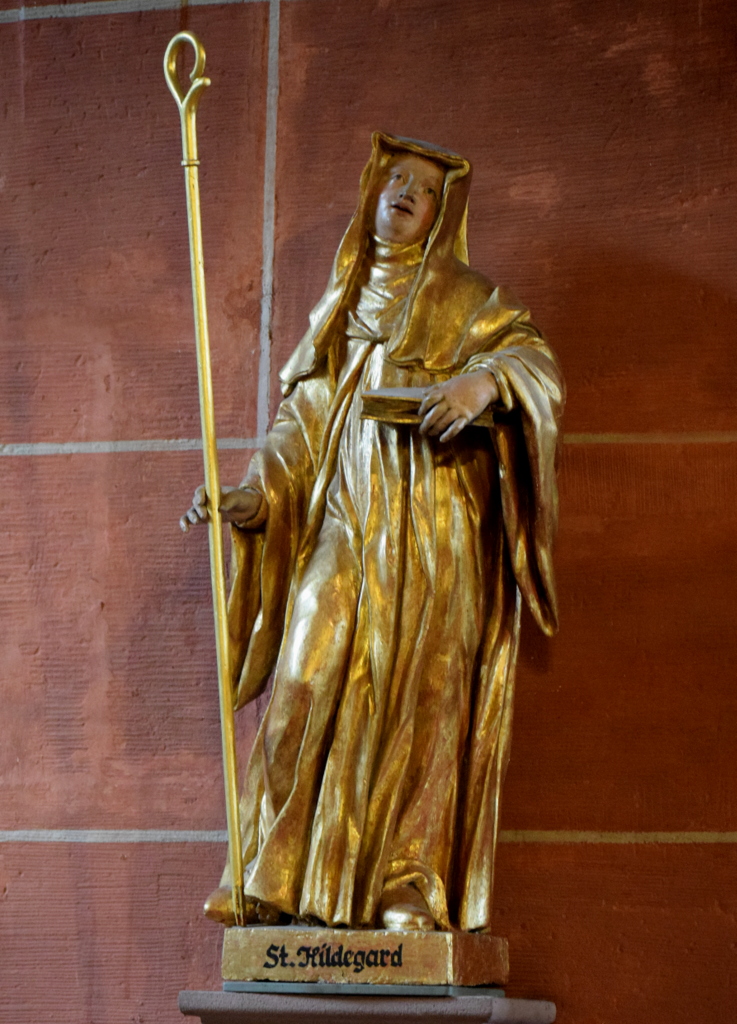
Gilded wooden statue of a robed female saint with a hood and a book in one hand, holding a tall crozier staff in the other, standing against a reddish brick wall. A plinth below reads St. Hildegard.Sculpture

Secondary source

Statue of Saint Hildegard, Geisenheim

RomkeHoekstra · 2021

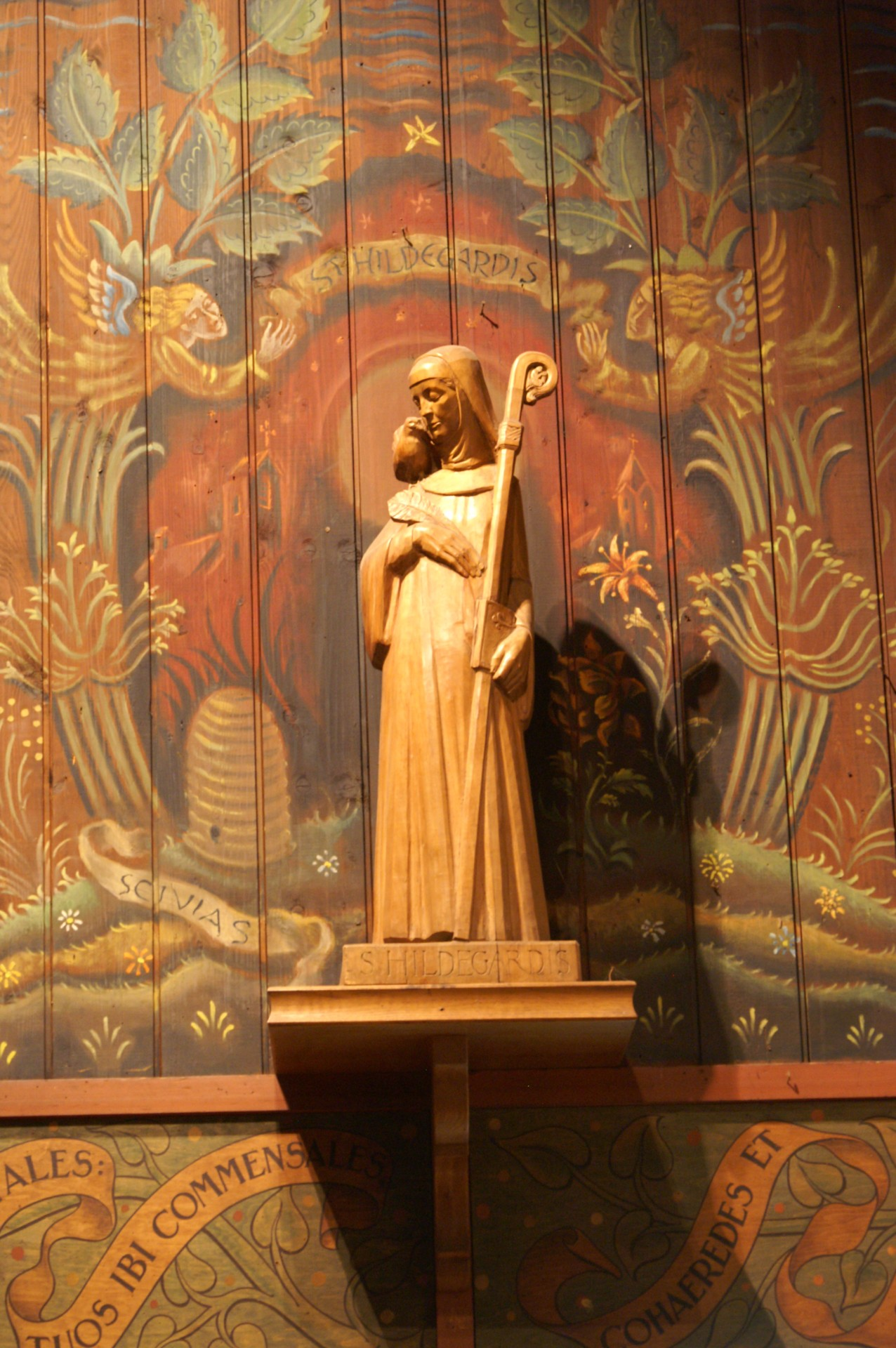
A wooden sculpture depicting Hildegard of Bingen, located in a church.Sculpture

Secondary source

Wooden Sculpture of Hildegard of Bingen by Mari Andriessen

Mari Andriessen · 1922

A line engraving portrait of Hildegard von Bingen.Painting

Secondary source

Hildegard von Bingen Line Engraving by W. Marshall

W. Marshall

An image showing Hildegard von Bingen receiving a divine inspiration and passing it on to her scribe.Painting

Secondary source

Hildegard von Bingen Receives a Divine Inspiration and Dictates to Her Scribe

Unknown

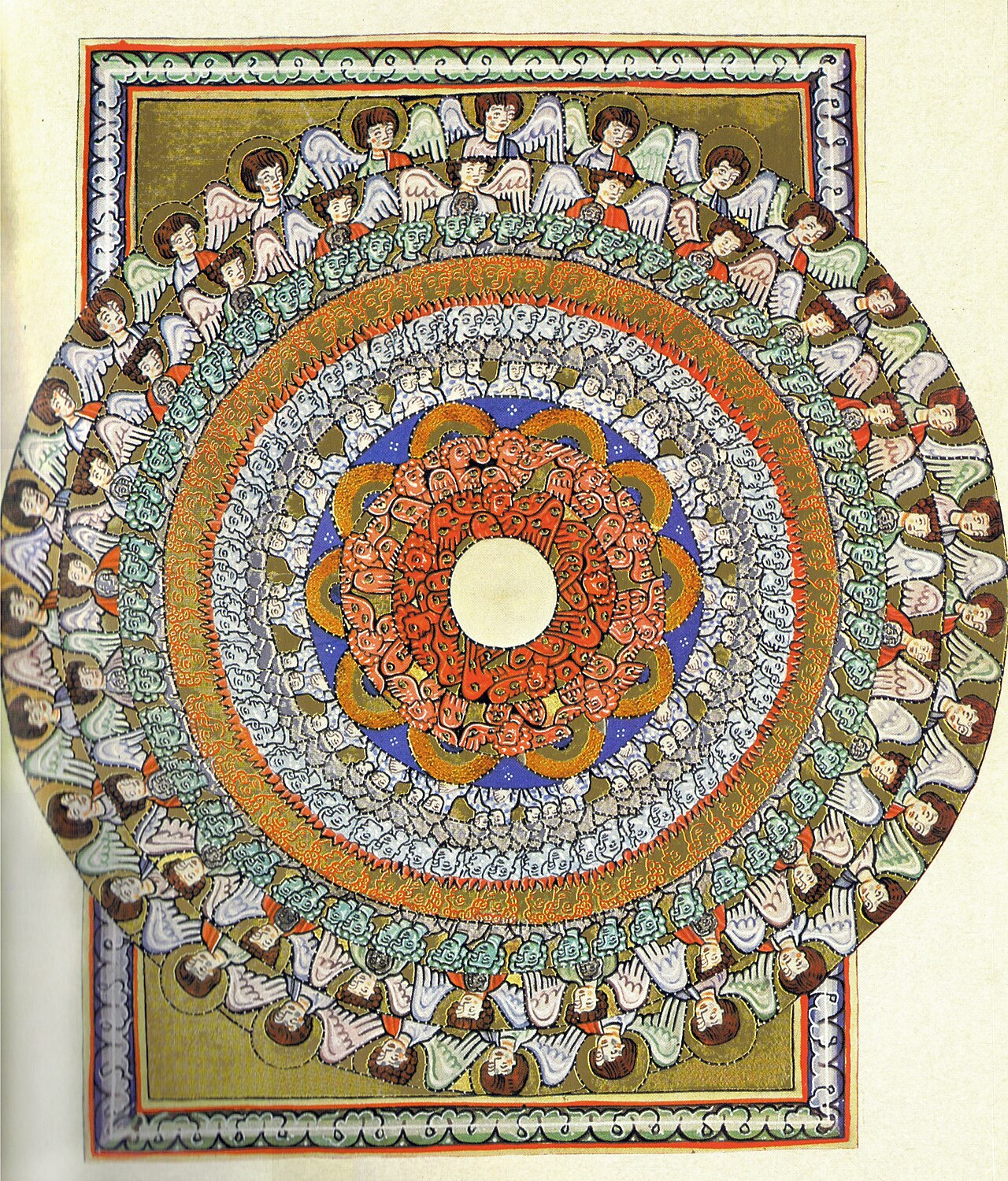
An image depicting a vision of an angelic hierarchy, in a style connected to Hildegard of Bingen's visionary writings.Painting

Secondary source

Vision of the Angelic Hierarchy

Unknown · 12th century

Document

Tertiary source

Hildegard (1), A Dictionary of Saintly Women

Agnes B. C. Dunbar

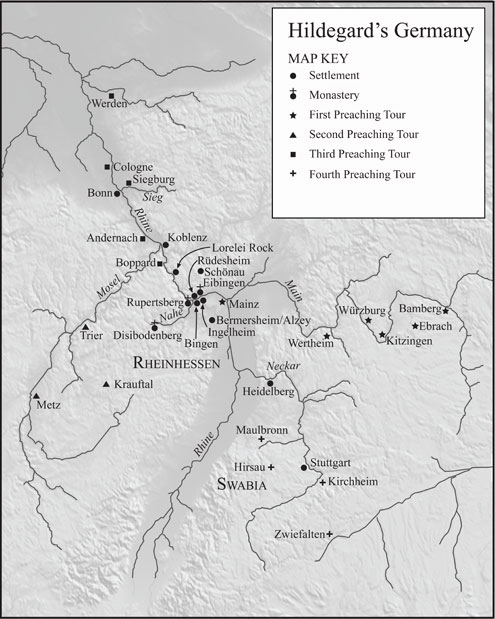
A map showing the routes of Hildegard's preaching tours through the German lands.Artifact

Secondary source

Map of Hildegard's Preaching Tours through Germany

Sean Butcher & Carmen Butcher · 6 November 2006

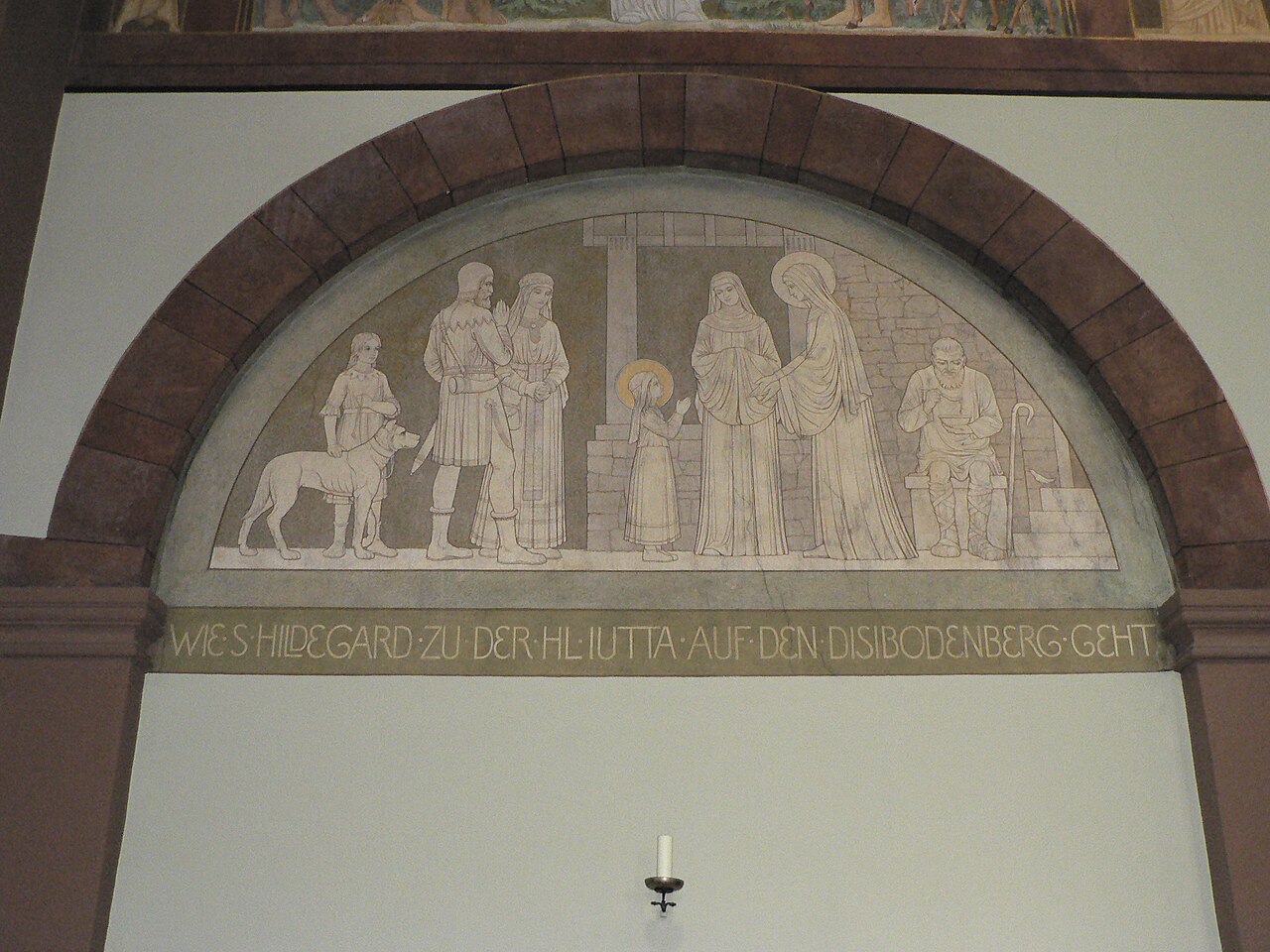
A painted panel showing Hildegard's journey to join St. Jutta at Disibodenberg.Painting

Secondary source

Hildegard Goes to St. Jutta on the Disibodenberg

Kurt Wichmann · 27 August 2005

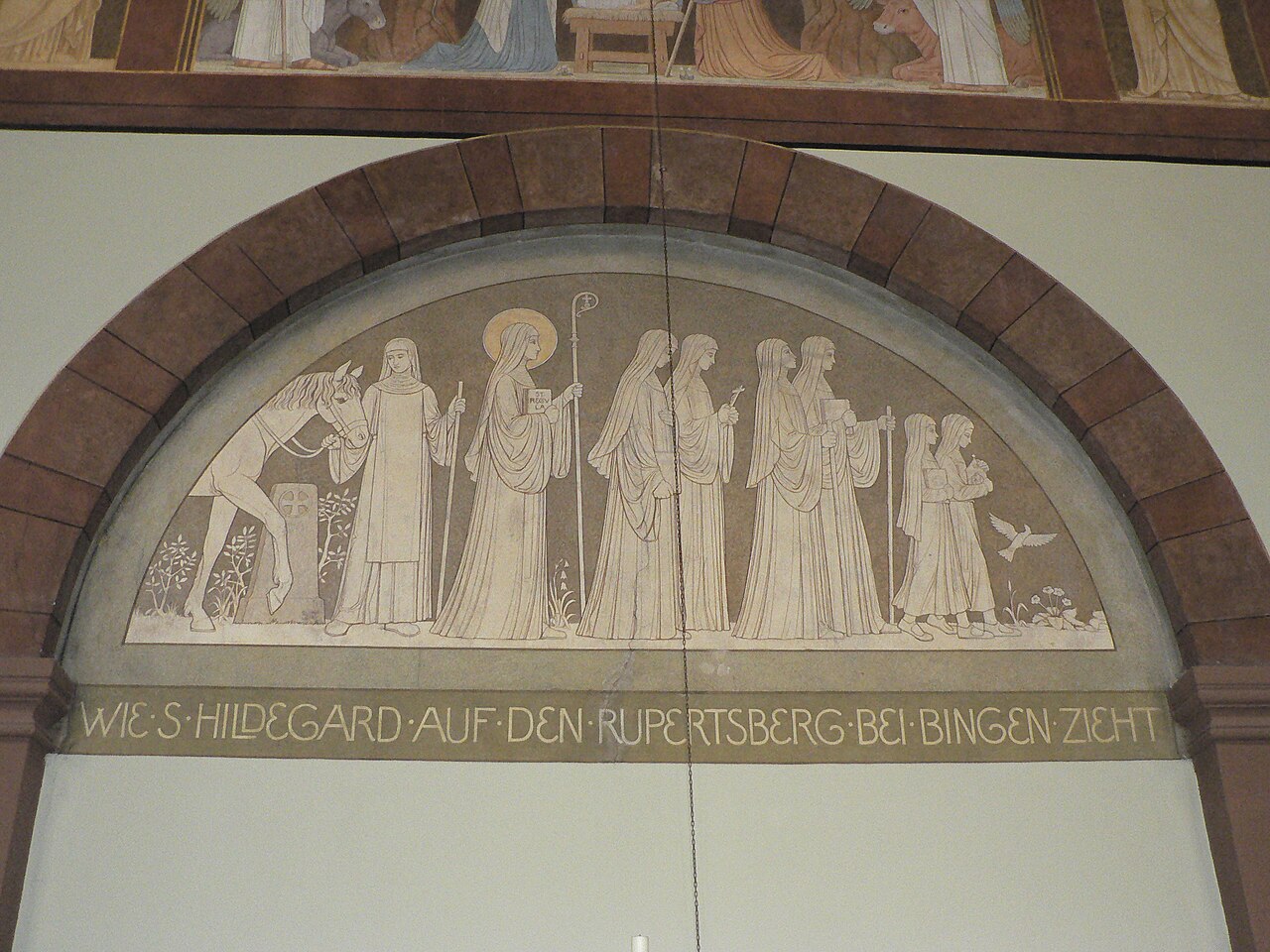
A painted panel showing Hildegard of Bingen and companions moving toward a new settlement near Bingen.Painting

Secondary source

Hildegard Moves to the Rupertsberg near Bingen

Kurt Wichmann · 27 August 2005

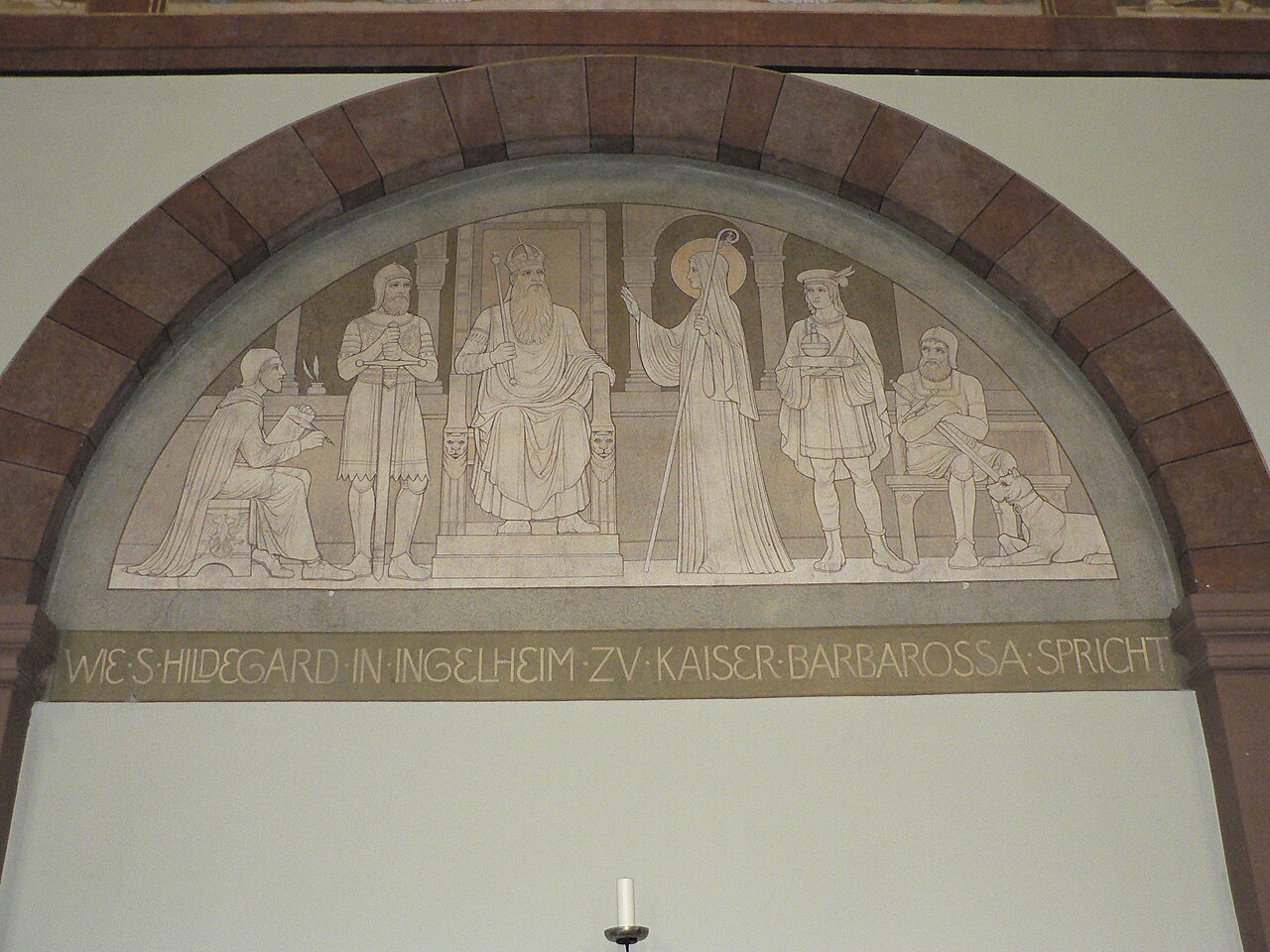
A painted panel showing Hildegard of Bingen in conversation with Emperor Barbarossa at Ingelheim.Painting

Secondary source

Hildegard Speaks to Emperor Barbarossa at Ingelheim

Kurt Wichmann · 27 August 2005

Document

Primary source

De Catharis

Hildegard of Bingen · 1163

Book

Primary source

Ordo virtutum

Hildegard of Bingen · 1927 (text written by Hildegard, c. 1098-1179)

Document

Primary source

Hildegard's Prophecy respecting Friars and Monks

Hildegard of Bingen

Book

Primary source

Hymni of Hildegard of Bingen

Hildegard of Bingen

Document

Tertiary source

Hildegard, St (Encyclopaedia Britannica, 1911)

1911

Book

Primary source

Sequentiae of Hildegard of Bingen

Hildegard of Bingen

Document

Secondary source

St. Hildegard, Catholic Encyclopedia

Charles G. Herbermann · 1913

A page from a medieval illuminated manuscript showing Gothic script in two columns with decorated initials.Book

Primary source

Liber Divinorum Operum manuscript

Hildegard of Bingen · c. 1210

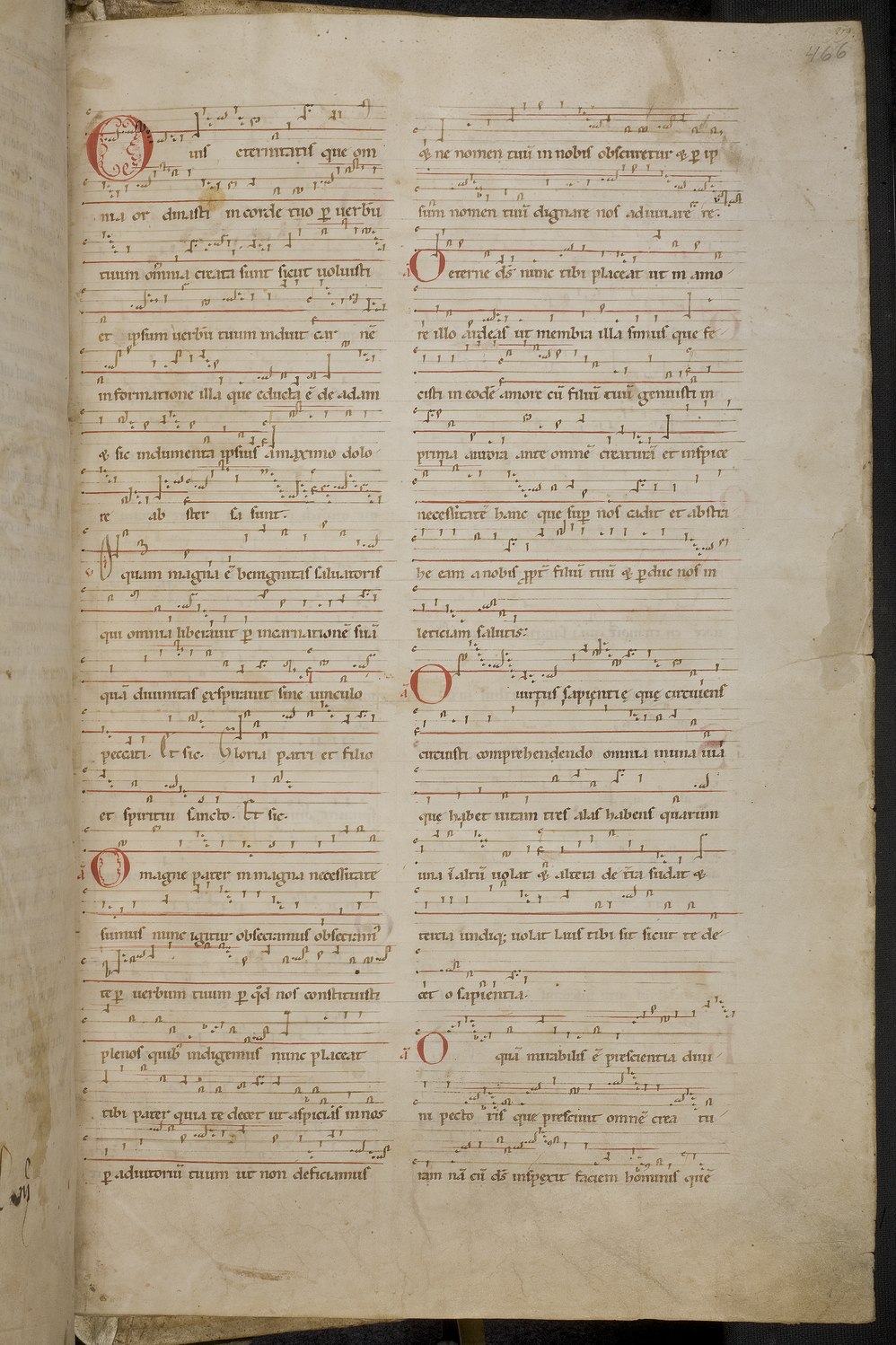
A scanned manuscript page with two columns of medieval Latin text in black ink, with red decorated initial letters and red staff lines carrying musical notation. The page number 466 is written in the upper right corner.Book

Primary source

Riesencodex Folio 466 Recto

Unknown author · 1175-1190

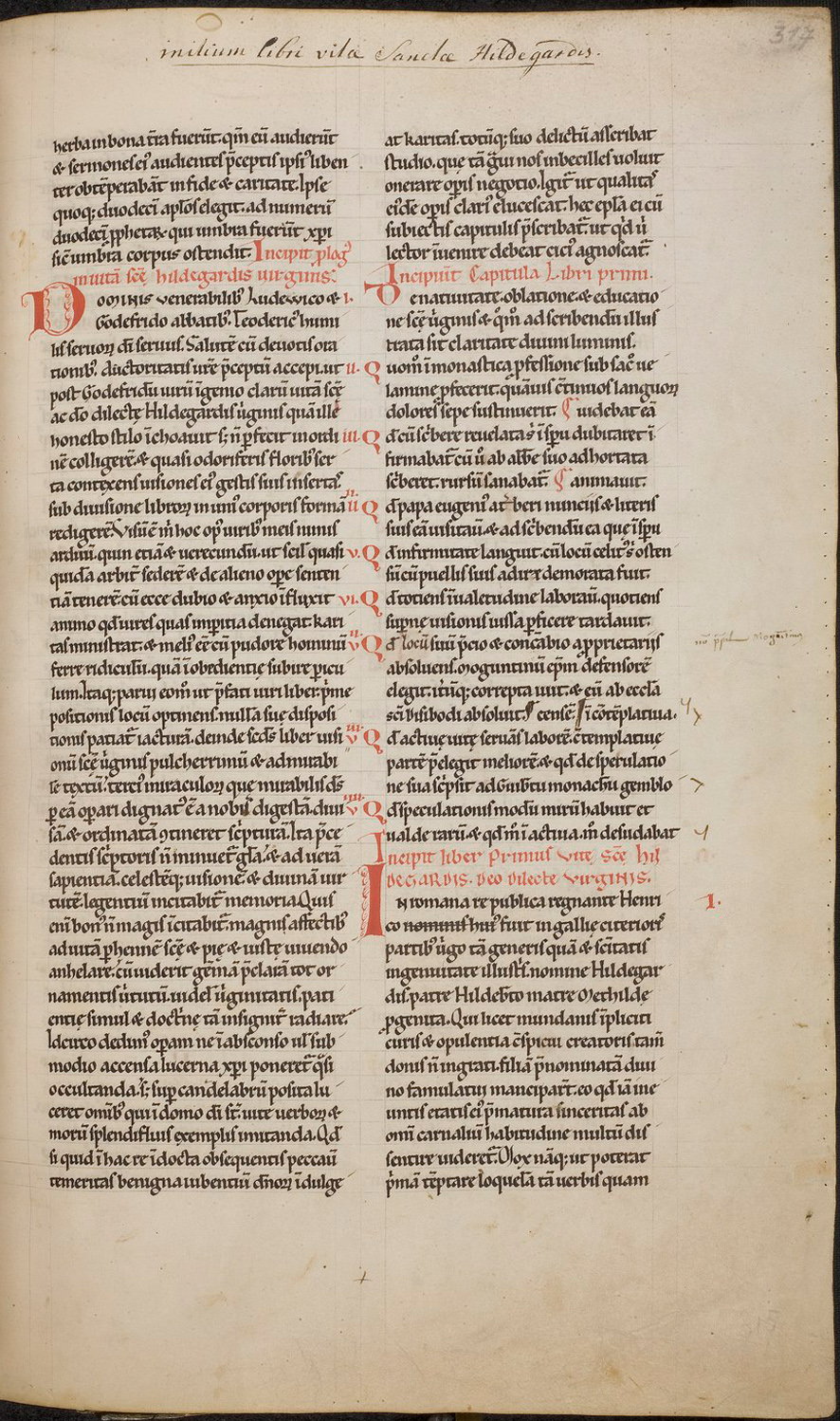
Manuscript page in Latin with two columns of brown ink text, red initials and rubrics, and a running header at top reading 'Initium libri vite Sancte Hildegardis'. The left column begins 'herba in bona ... ' and the right column includes the red-lettered rubric 'Incipit Capitula I libri primi'. Aged parchment with visible margins.Book

Primary source

Opening of the Vita Sanctae Hildegardis

Godfrey and Theodoric · 1175-1190

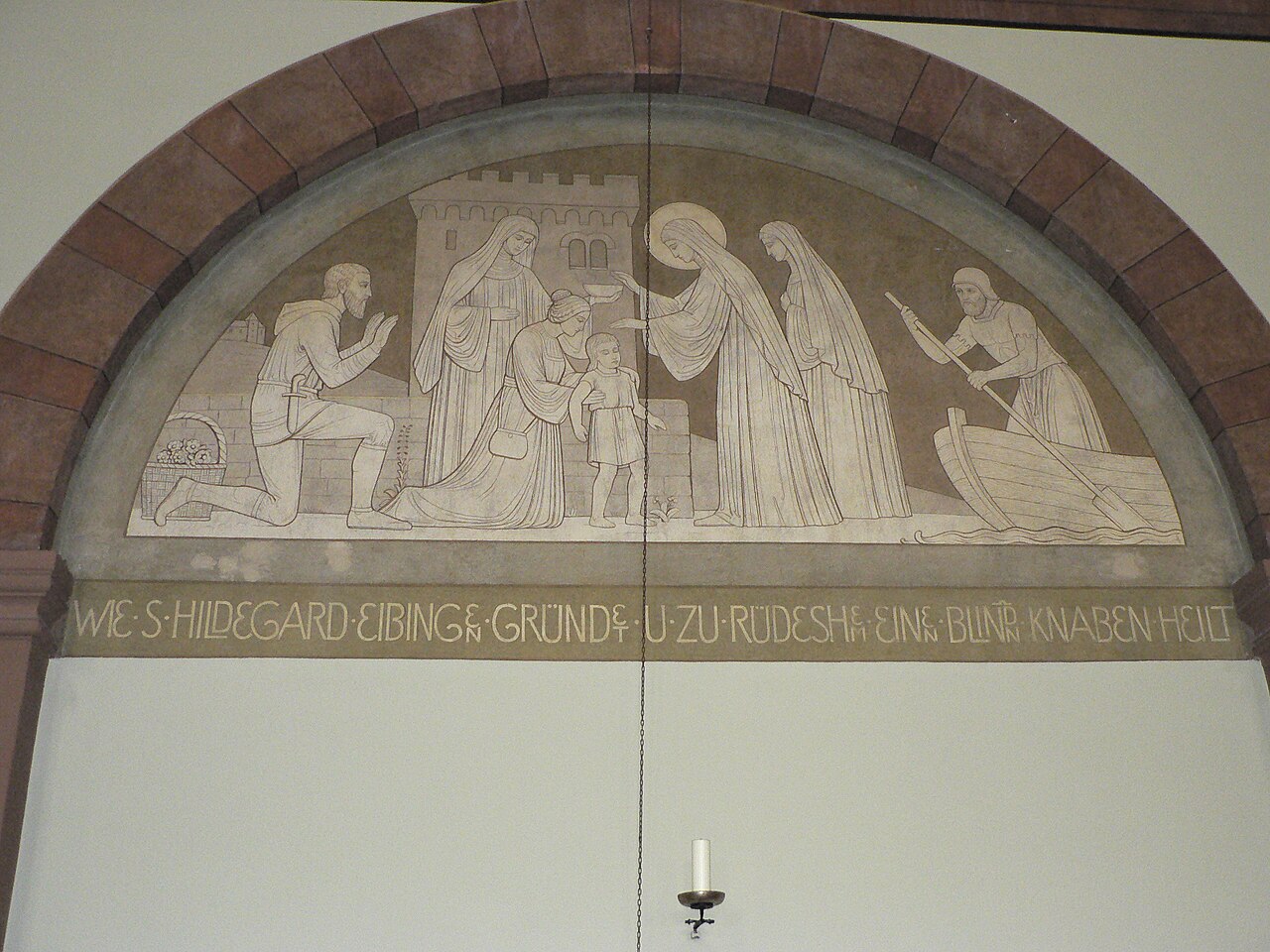
A painted panel depicting Hildegard healing a blind boy, part of a modern series at Eibingen Abbey.Painting

Secondary source

Hildegard Heals a Blind Boy

Kurt Wichmann · 27 August 2005

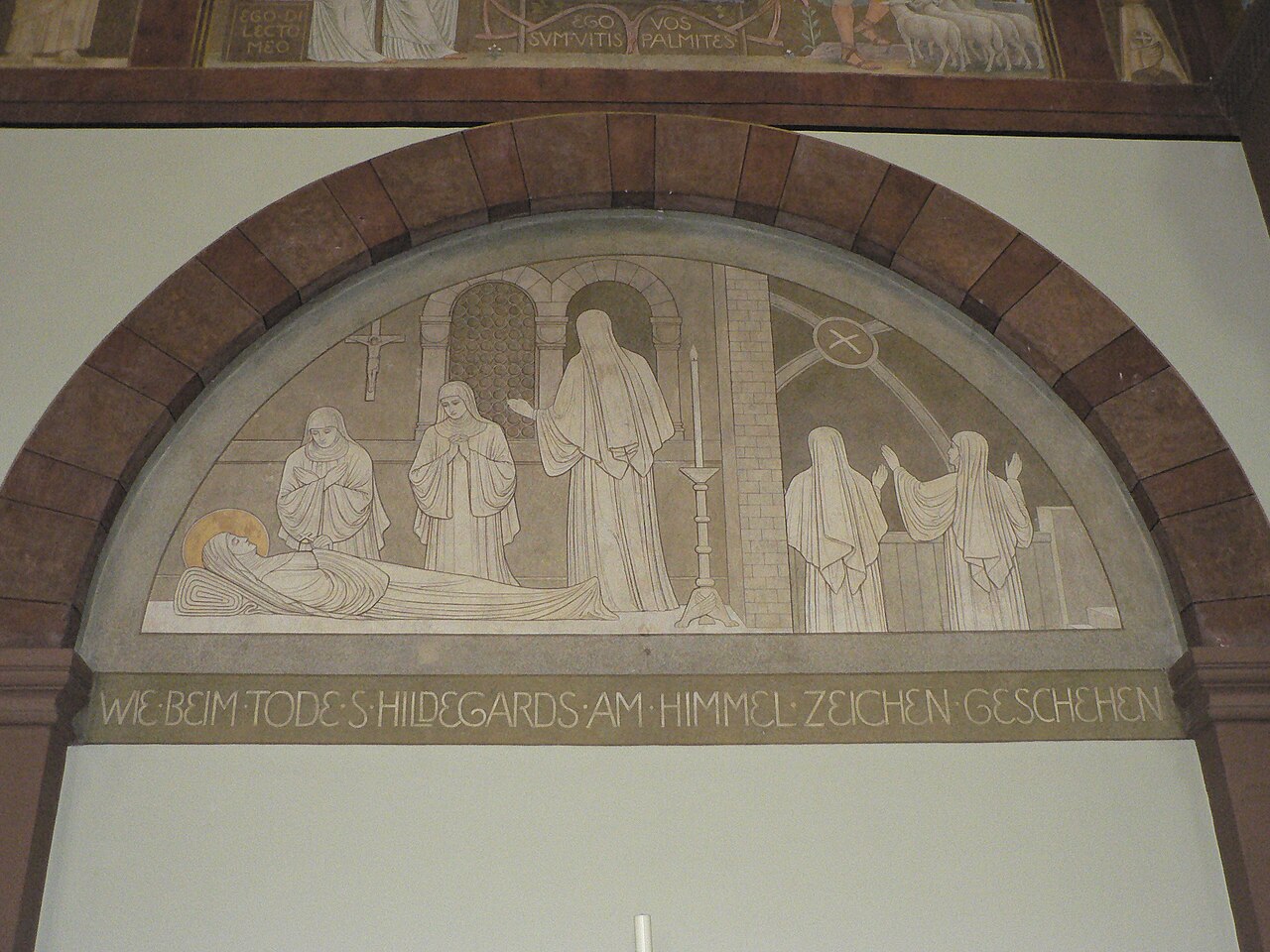
A painted panel showing signs in the sky, depicting legends surrounding Hildegard's death.Painting

Secondary source

Signs in the Sky at Hildegard's Death

Kurt Wichmann · 27 August 2005

An antique print depicting Hildegard of Bingen, likely created after her lifetime.Painting

Secondary source

Old Print of Ildegarda di Bingen

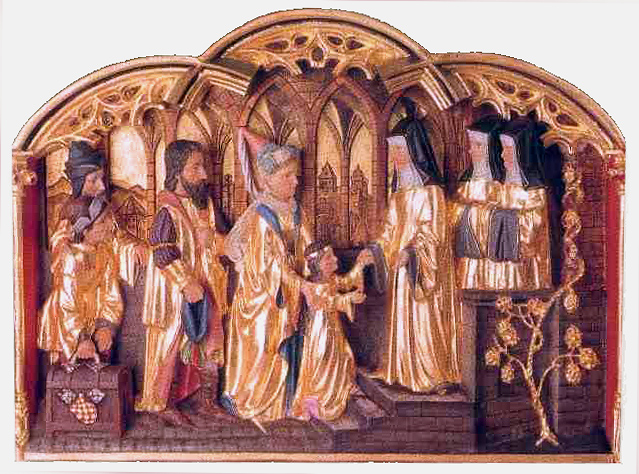
An altar panel showing the eight-year-old Hildegard being brought to Jutta von Sponheim at Disibodenberg monastery.Painting

Secondary source

Hildegard Brought to Jutta of Sponheim

Unknown author

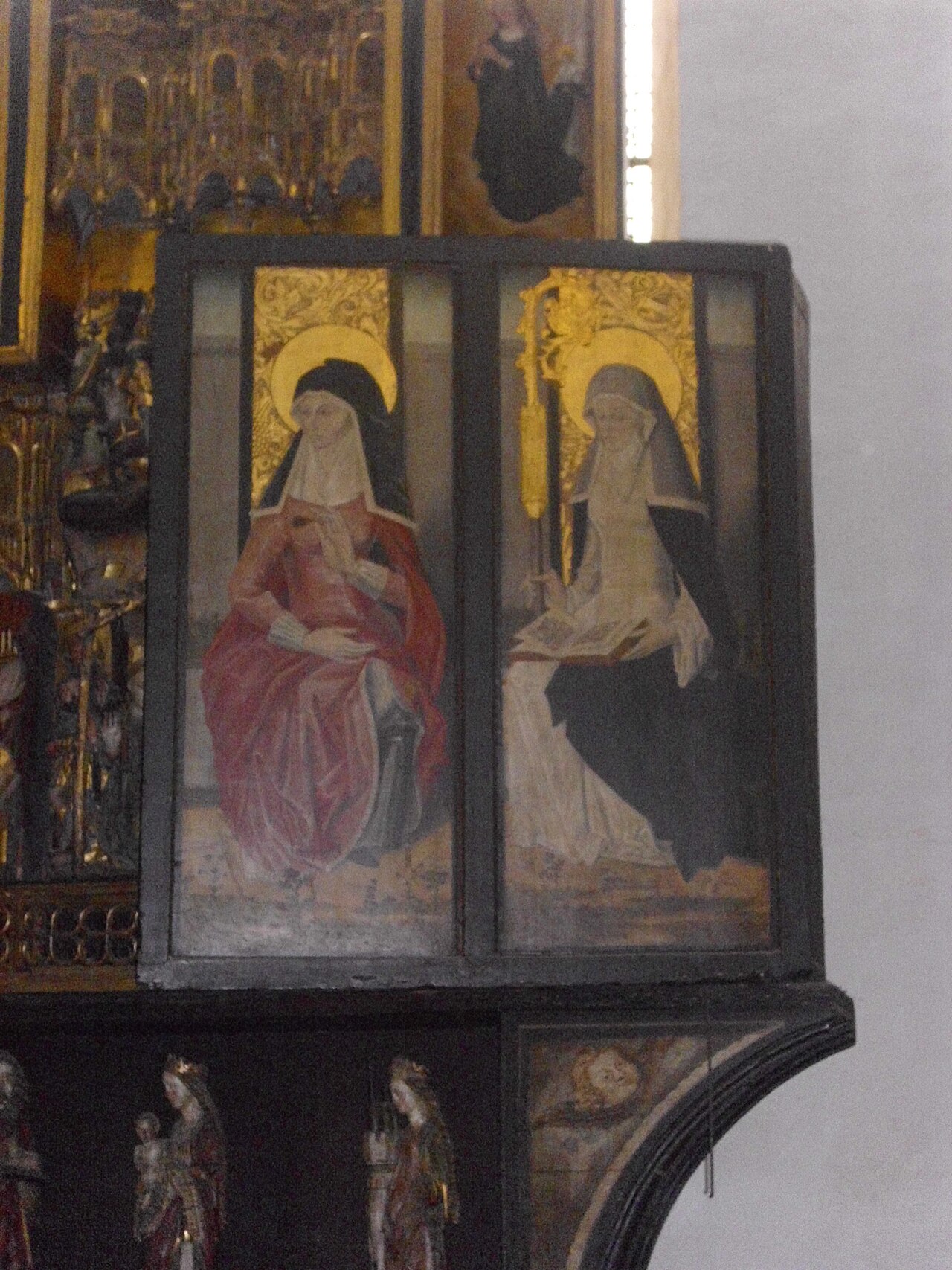
An altar panel from St. Sylvestri church in Wernigerode showing Hildegard of Bingen and an unidentified abbess.Painting

Secondary source

Sylvestri Altar Panel with Hildegard of Bingen

Unknown author · c. 1480

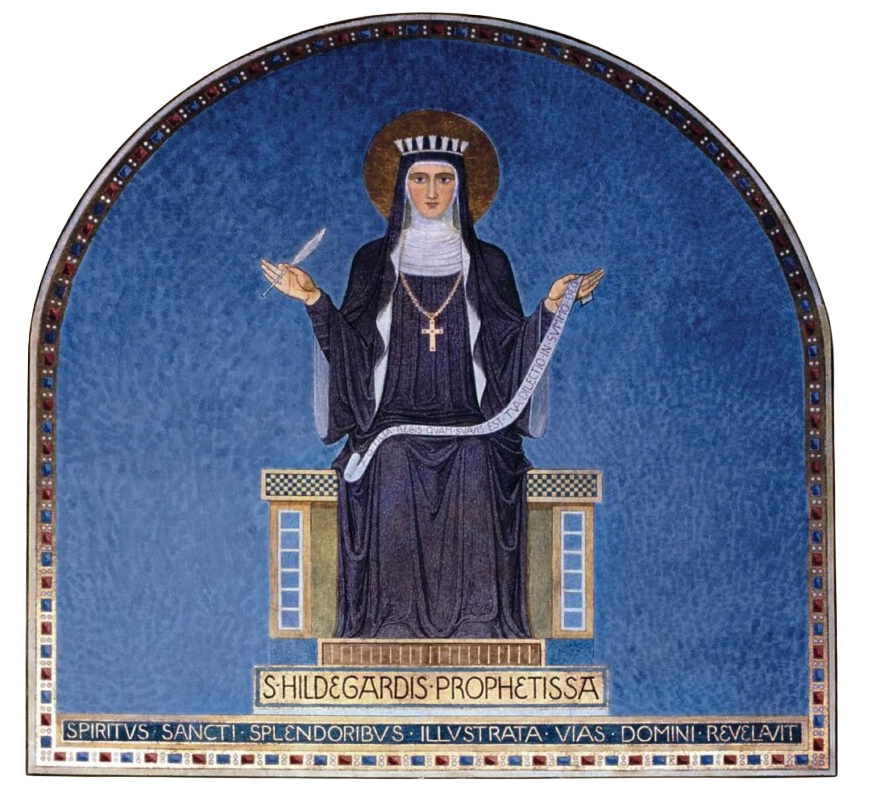
Mosaic-style painting in an arched frame of a seated woman in a dark nun's habit and white wimple, wearing a gold cross necklace and gold halo with a crown-like band. She holds a quill in one hand and a scroll ribbon in the other on a blue background. Latin inscription along the bottom reads S. HILDEGARDIS PROPHETISSA and a longer Latin line.Painting

Secondary source

St. Hildegard, Prophetess

Fr. Paulus Krebs · 1907-1913

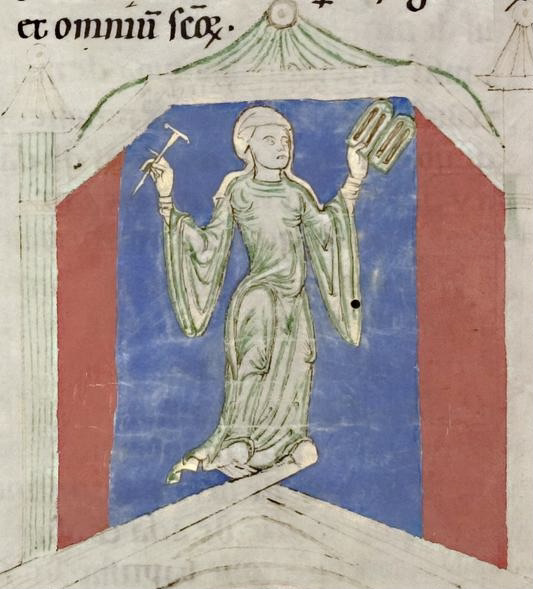
Medieval manuscript painting of a robed figure with a pale halo-less head covering, standing on a white ground within a blue panel framed by red sides and a green arched top. In raised hands the figure holds a stylus-like tool in one hand and a wax tablet or writing frame in the other. Latin text is visible above, reading 'et omnium sanctorum'.Painting

Primary source

St. Hildegard Receiving Visions, Salem Scivias Manuscript

Unknown author · c. 1200

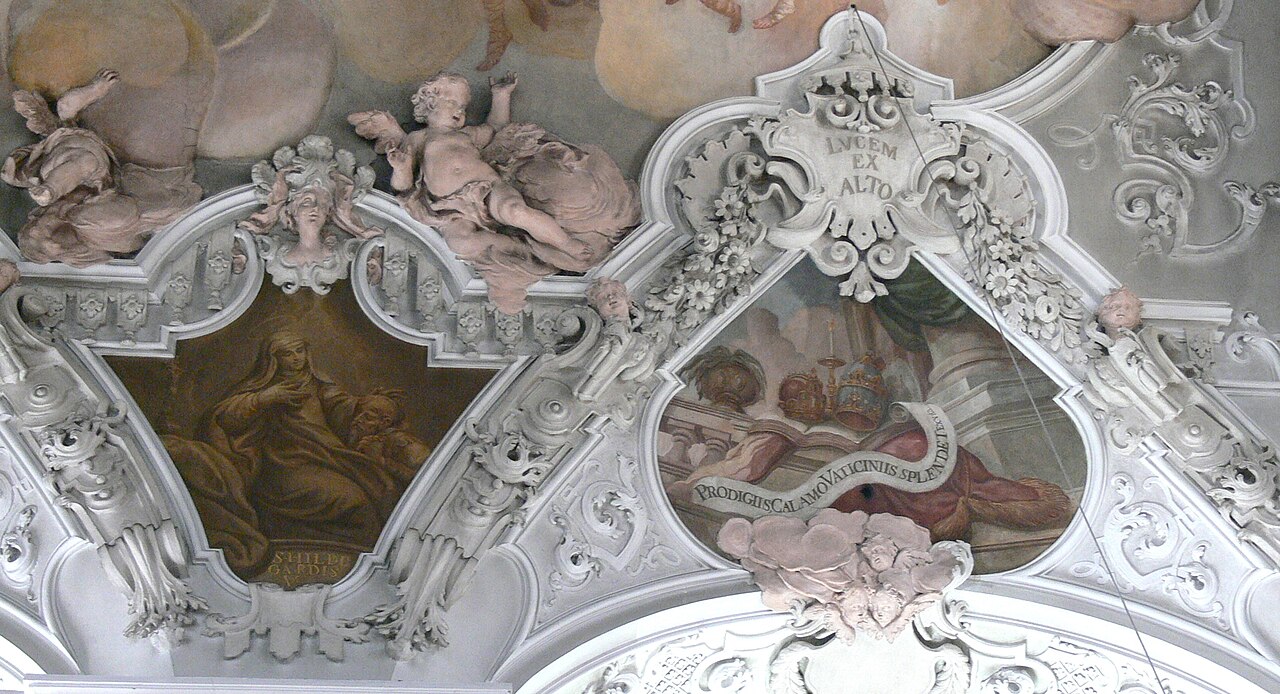
A Baroque fresco showing Saint Hildegard of Bingen with her emblem, painted on a church ceiling.Painting

Secondary source

Hildegard of Bingen Fresco, Metten Abbey

Wolfgang Andreas Heindl · 1722–1724

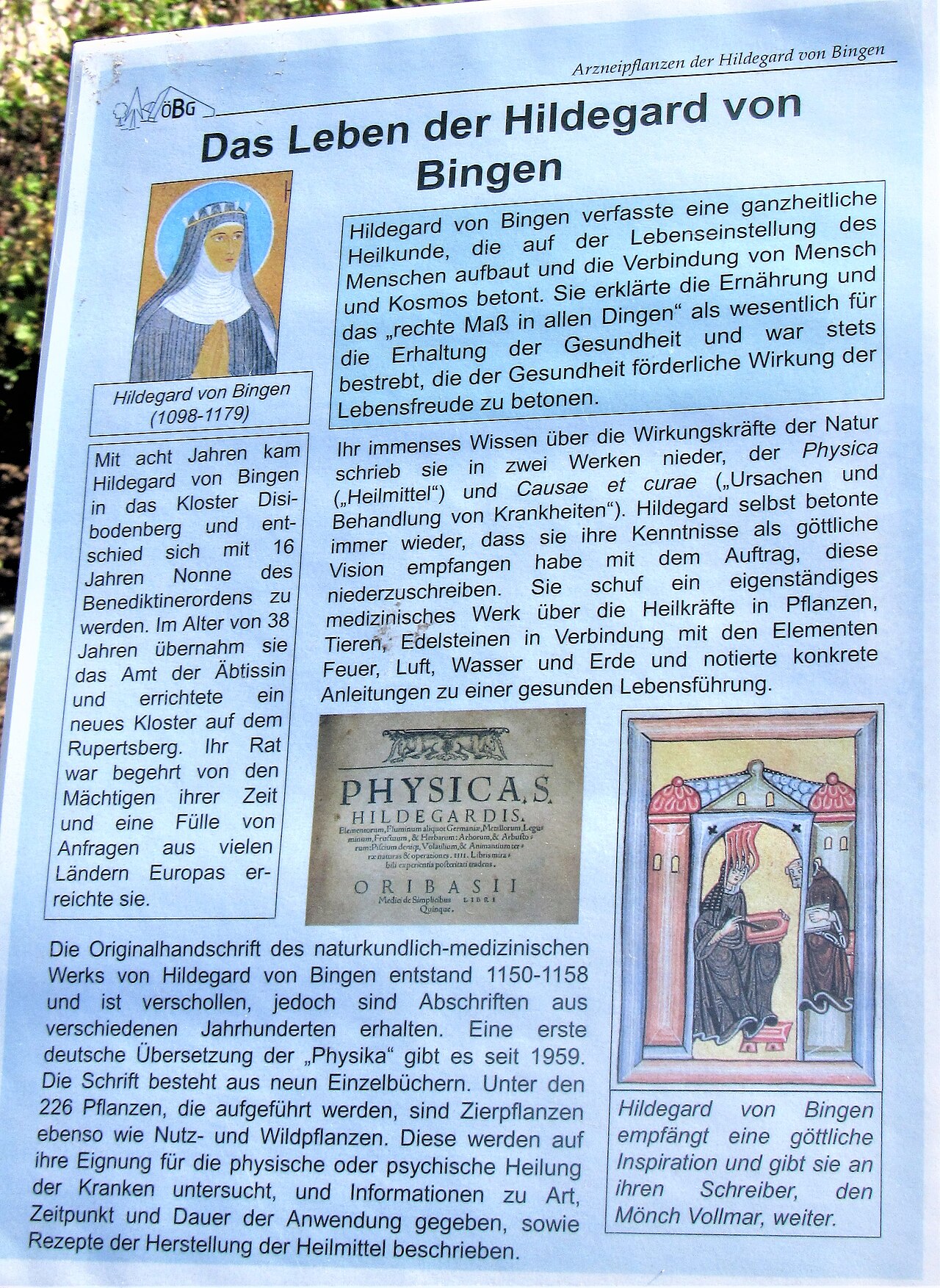
A museum information board with text about the life of Hildegard of Bingen.Document

Tertiary source

Information Board on the Life of Hildegard of Bingen

2018

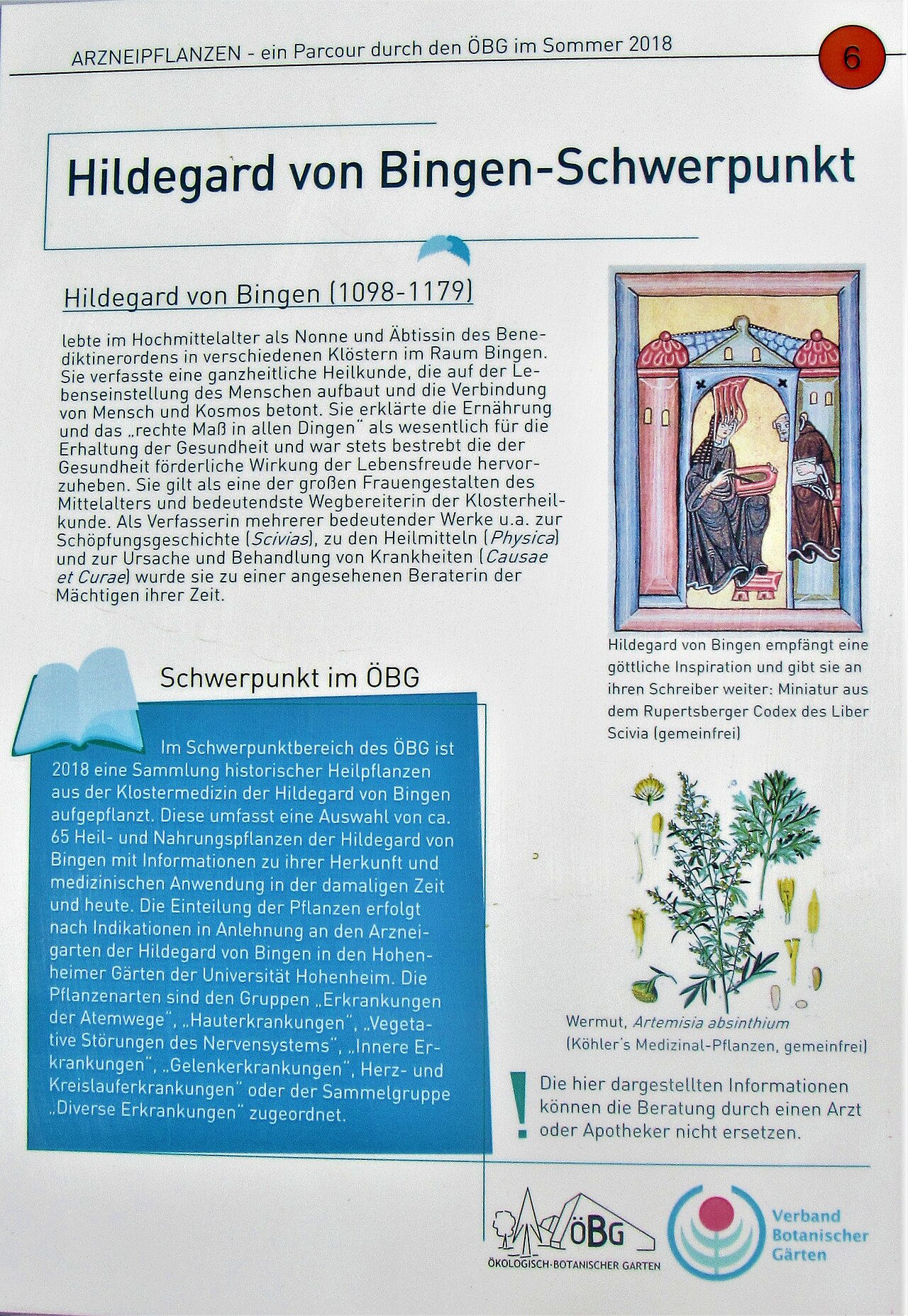
A museum information board with text describing the main focus of Hildegard of Bingen's work.Document

Tertiary source

Information Board on Hildegard of Bingen's Main Focus

2018

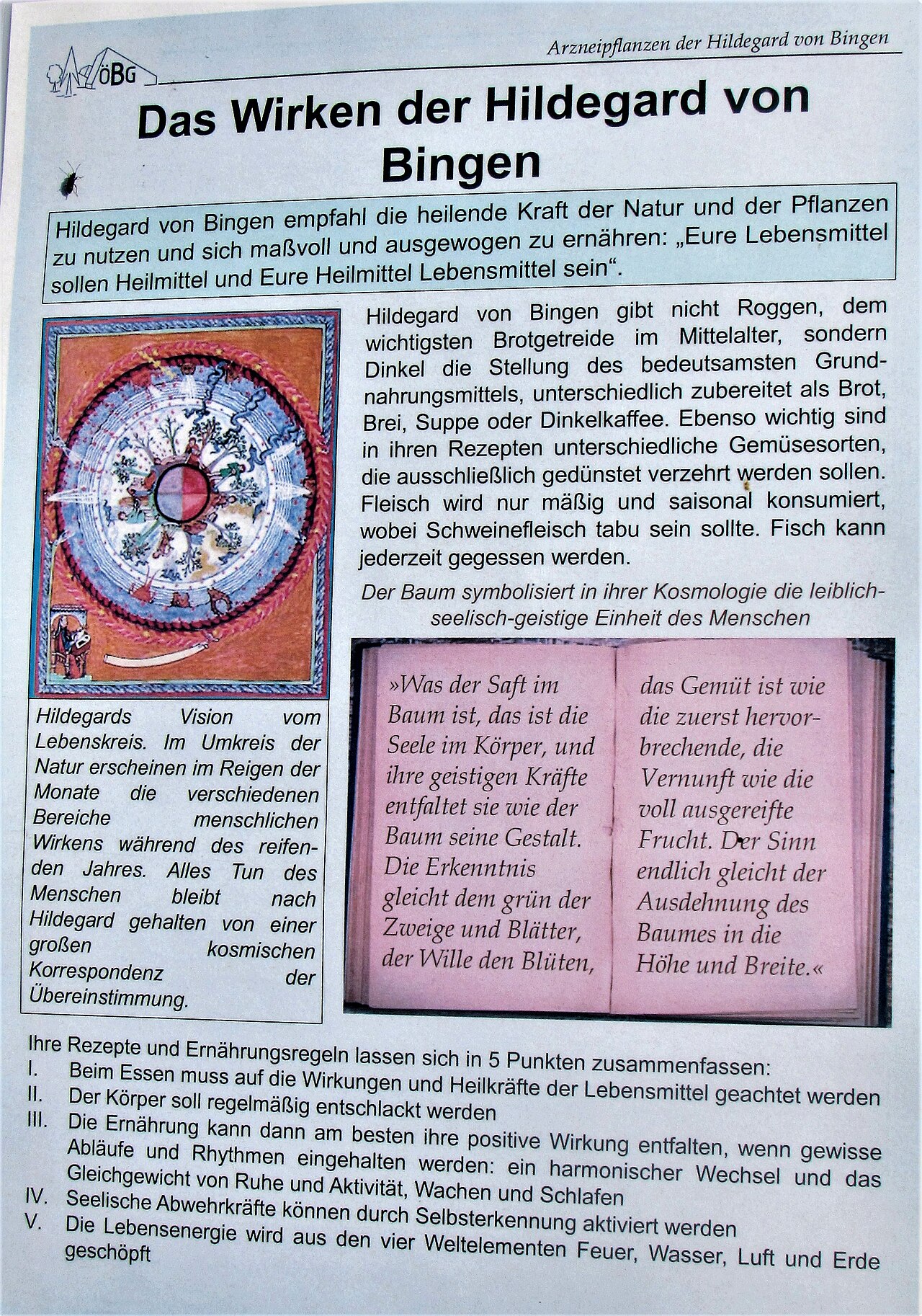
A photograph of an information board titled 'Das Wirken der Hildegard von Bingen' describing her work.Document

Secondary source

Information Board on the Work of Hildegard of Bingen

Schubbay · 2018

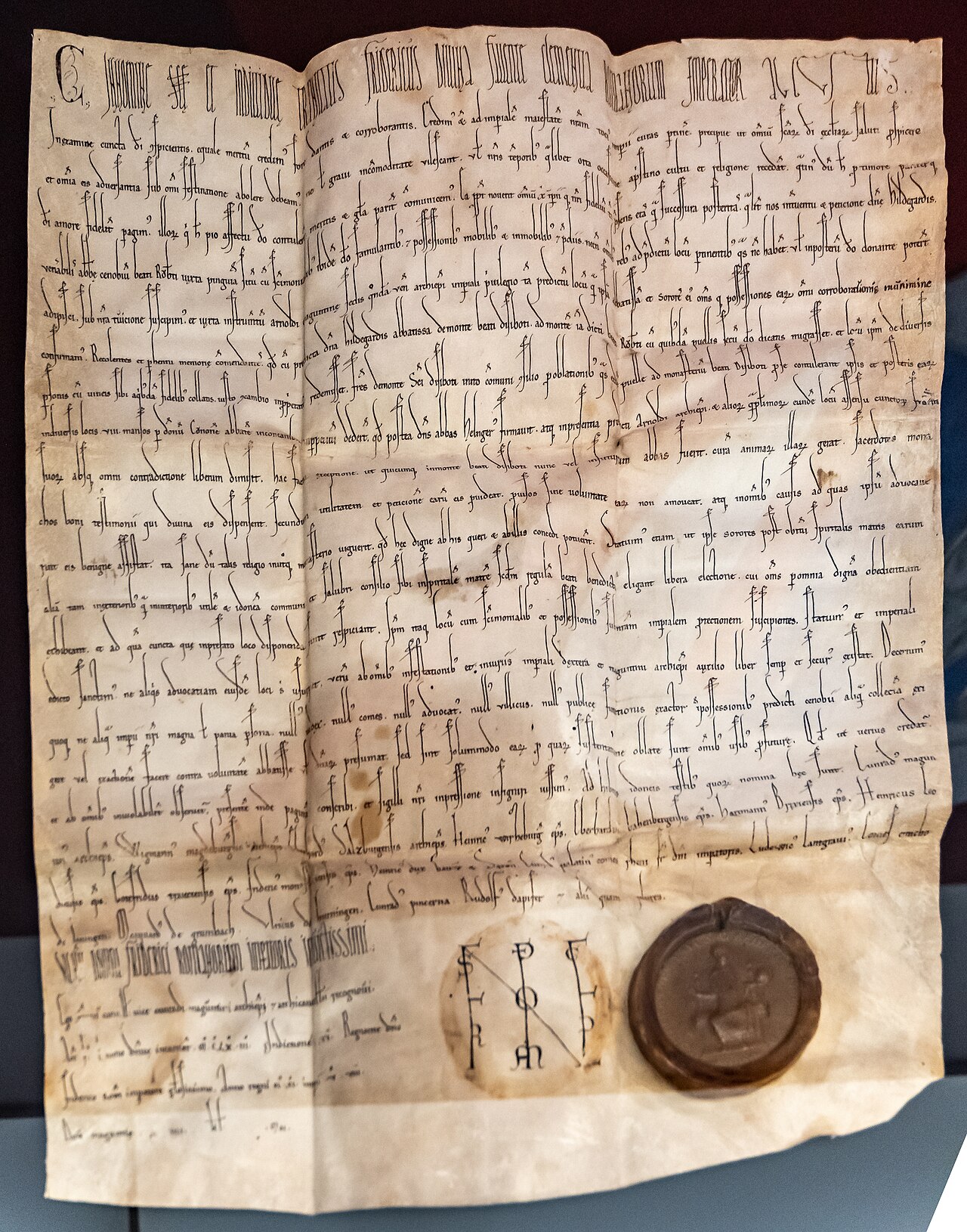
An image of a medieval imperial charter document with formal script, issued by Emperor Barbarossa.Document

Secondary source

Imperial Protection Privilege for Rupertsberg Abbey

Frederick Barbarossa · 18 April 1183

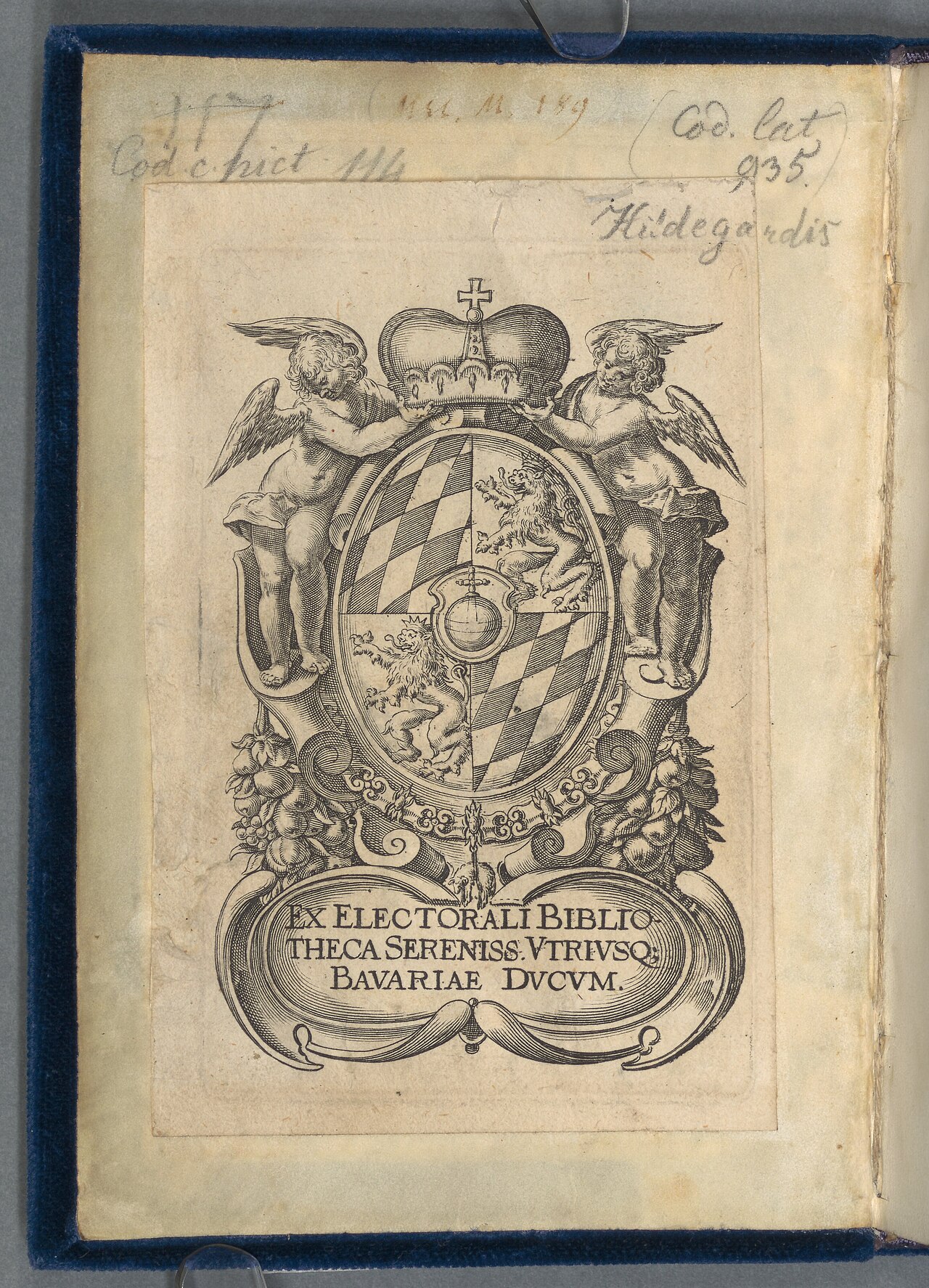
Page 2 of a manuscript: an engraved bookplate reading 'EX ELECTORALI BIBLIOTHECA SERENISS. UTRIUSQ. BAVARIAE DUCUM' with a coat of arms flanked by two cherubs holding a crown, above fruit swags. Handwritten shelfmarks in ink are at the top of the page, including 'Cod. lat. 935' and 'Hildegardis'.Book

Primary source

Prayer Book Linked to Hildegard of Bingen

Unknown · c. 1175

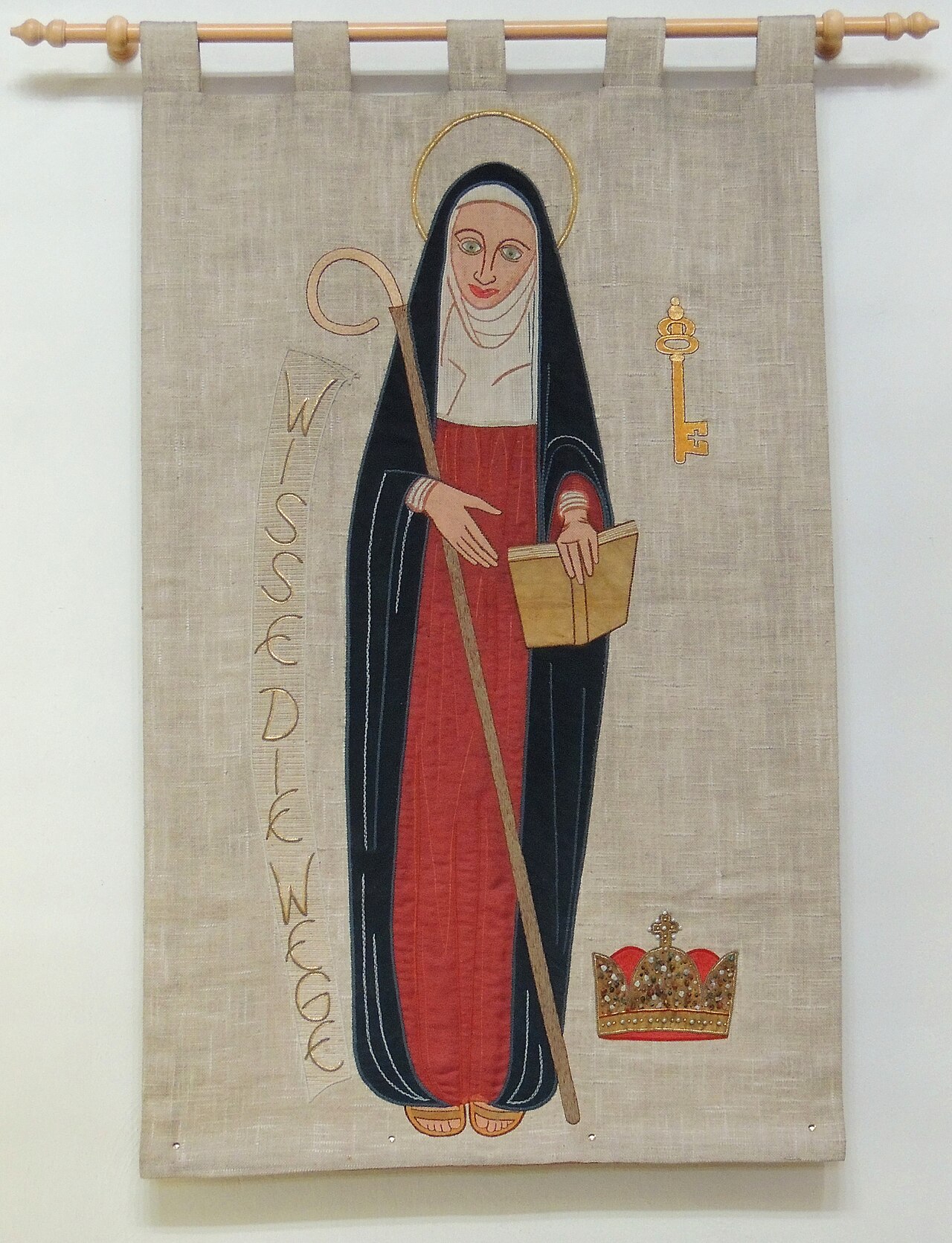
A tapestry showing a picture of Hildegard von Bingen, displayed in a church setting.Artifact

Secondary source

Tapestry Picture of Hildegard von Bingen

2013

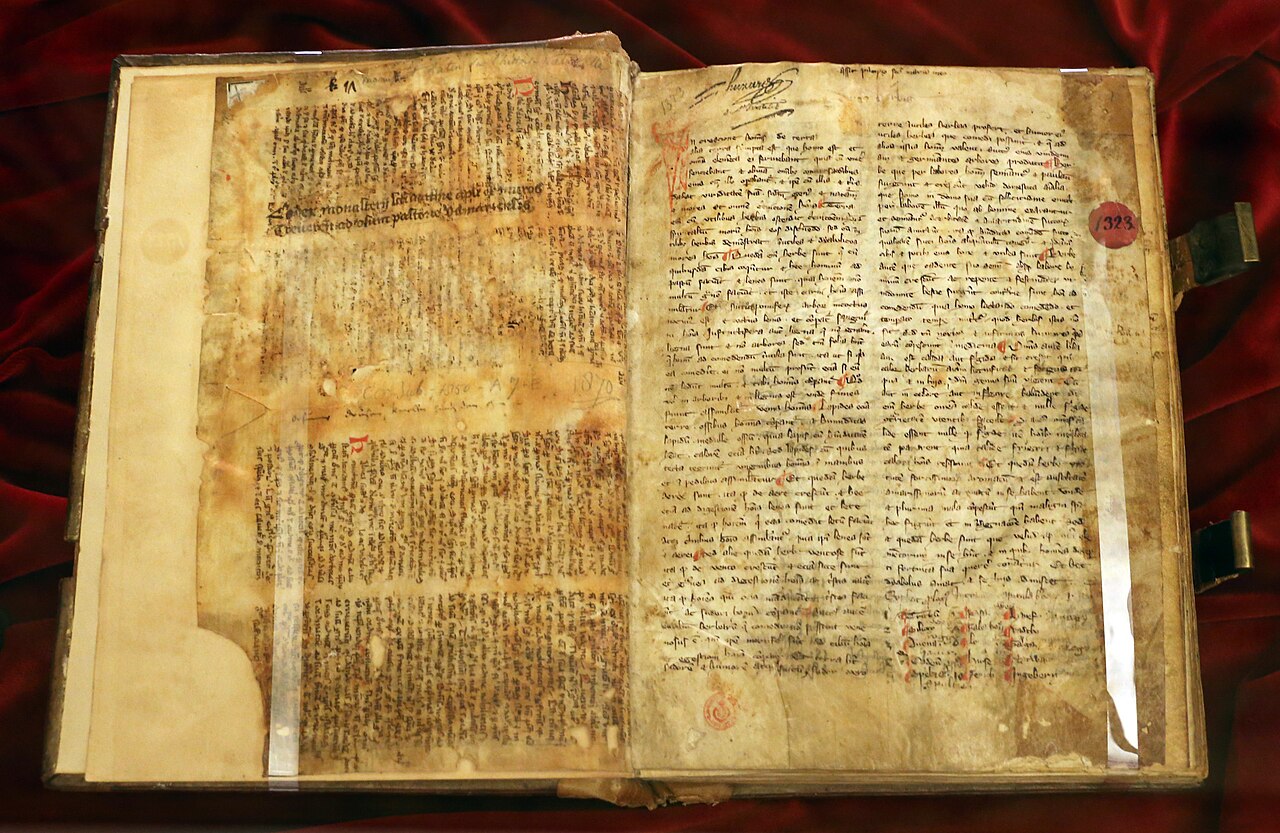
An open medieval manuscript bound volume lying on red fabric. Two pages of handwritten black-ink text in Latin script, with red initials and paragraph marks, are visible. A red circular label with the number 323 is on the right page. The vellum is yellowed and worn at the edges.Book

Primary source

Physica

Hildegard of Bingen · c. 1310 copy

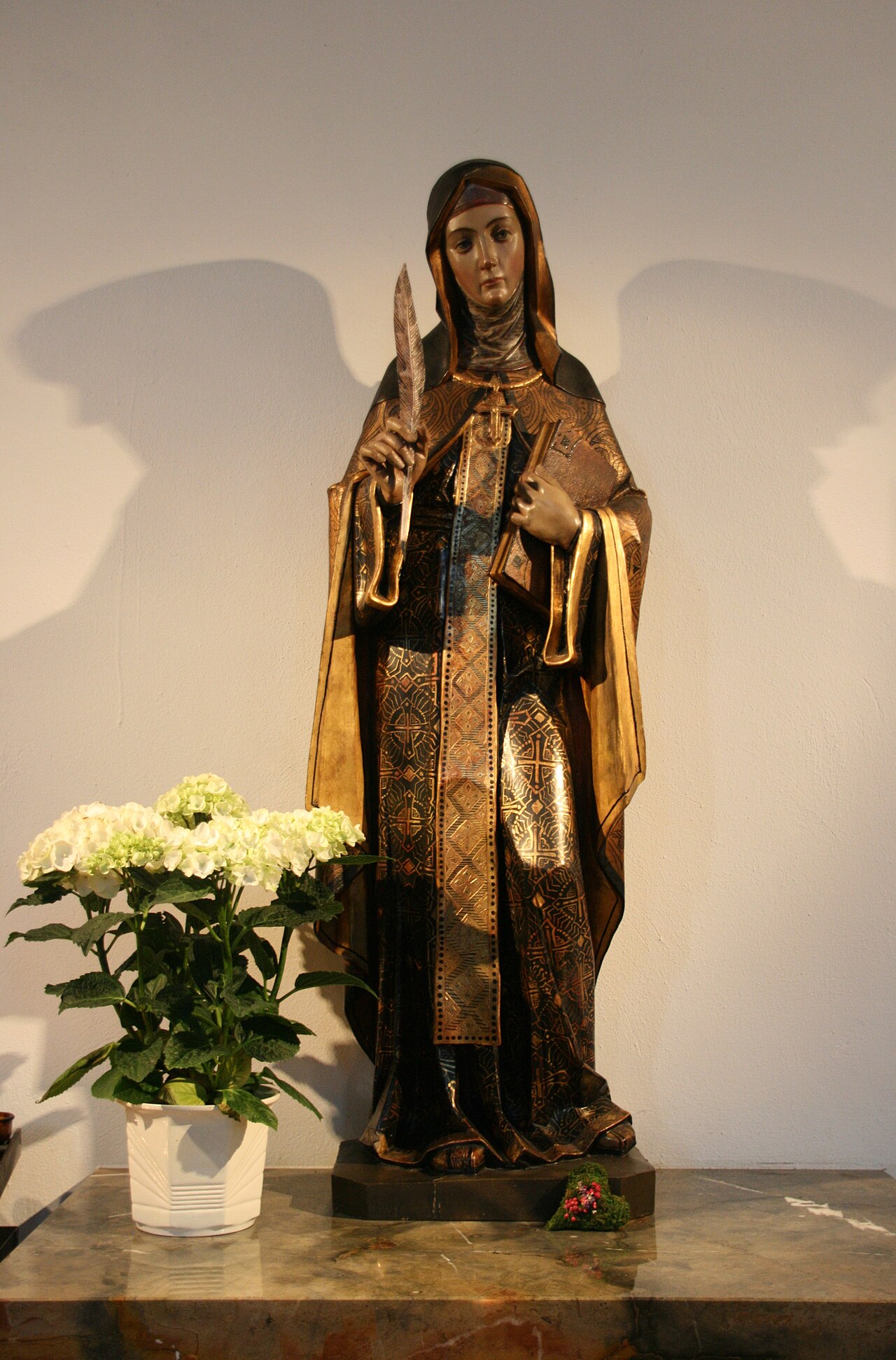
A church sculpture of Hildegard of Bingen holding a pectoral cross, quill, and book.Sculpture

Secondary source

Hildegard Figure with Pectoral, St. Hildegard Church, Eibingen

c. 1940

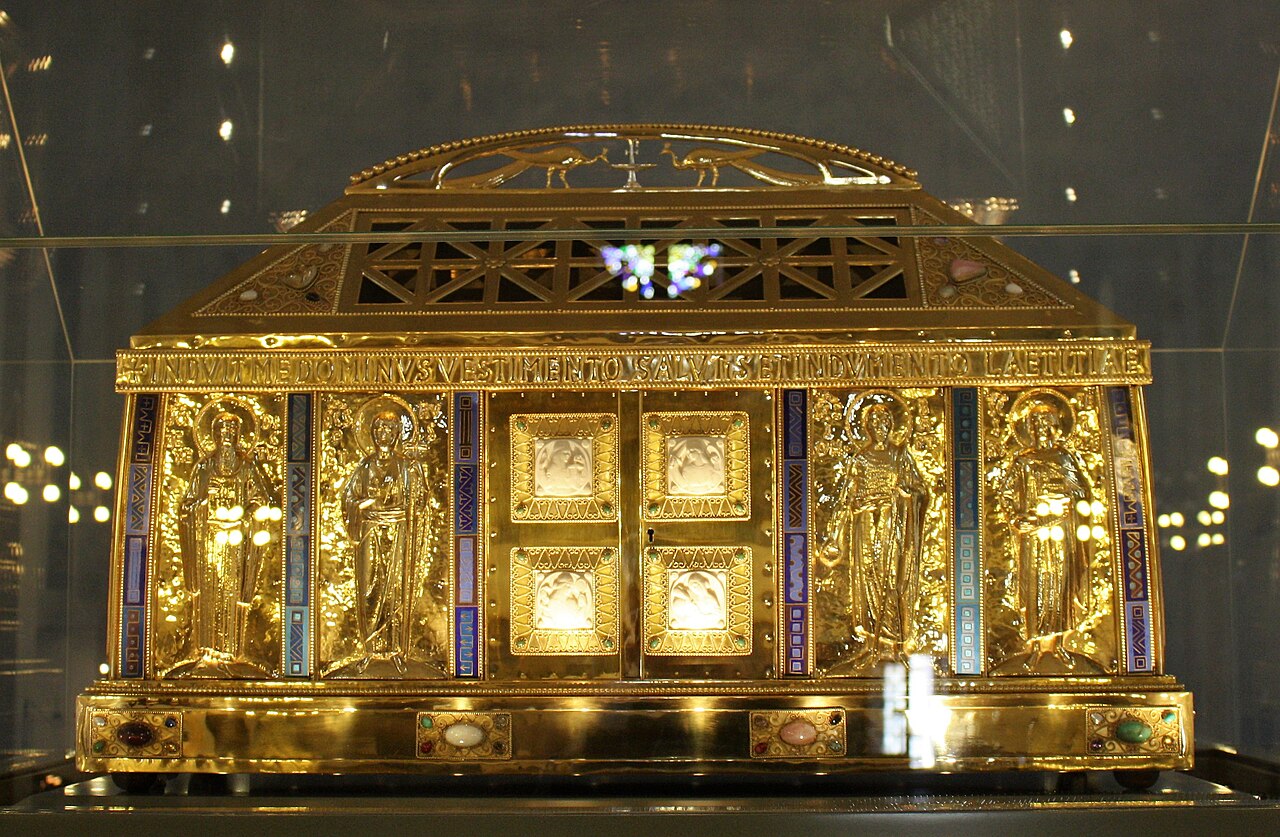
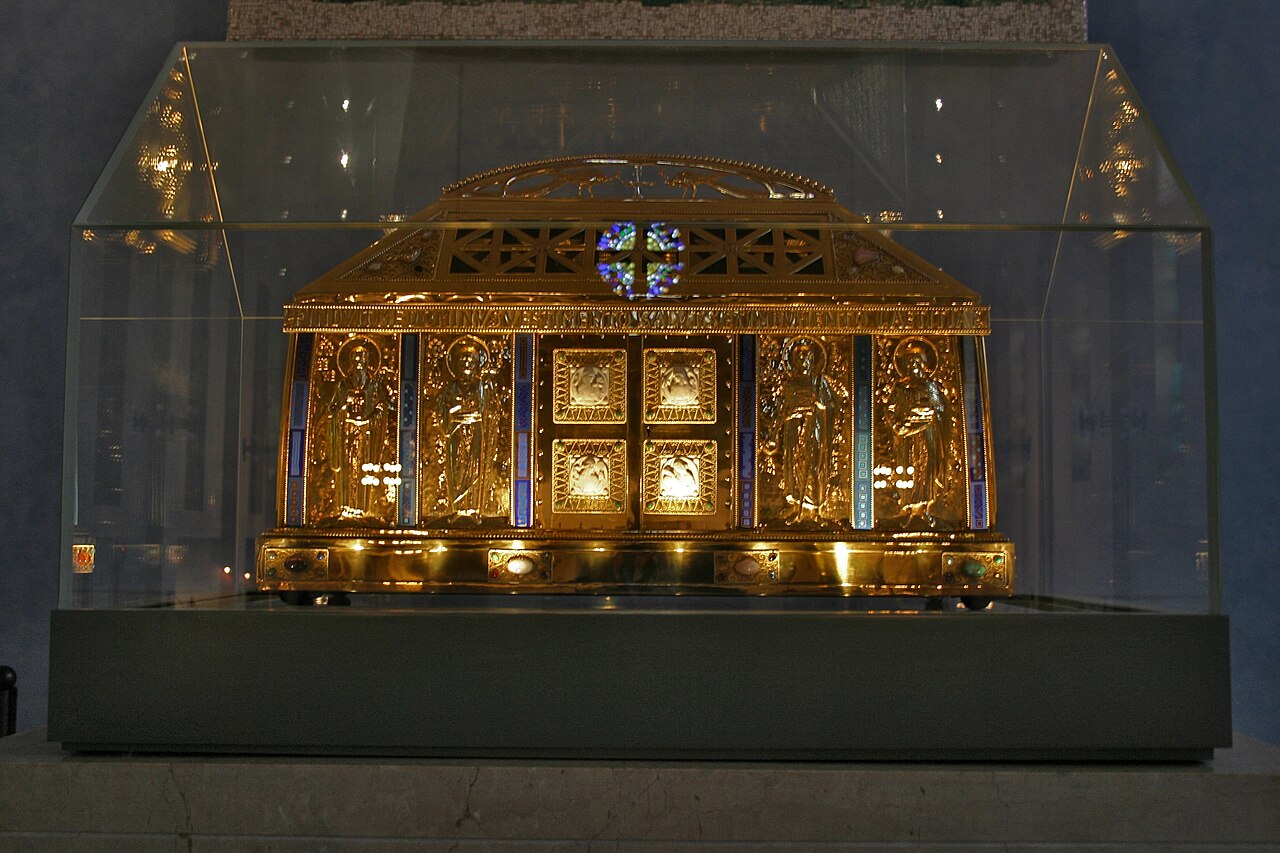
A gilded reliquary shrine behind glass, shaped like a house with a pitched roof. Its front has an inscription band, enamel-inlaid pilasters, relief figures of saints under arches, and four small framed panels with jewel-like stones. Its base has colored gemstones.Artifact

Secondary source

Reliquary Shrine of Saint Hildegard

1929

An image in a medieval artistic style depicting a woman identified as Hildegard of Bingen, likely in religious dress.Painting

Secondary source

Hildegard of Bingen, Medieval-Style Image

Unknown · Mediaeval (uncertain date)

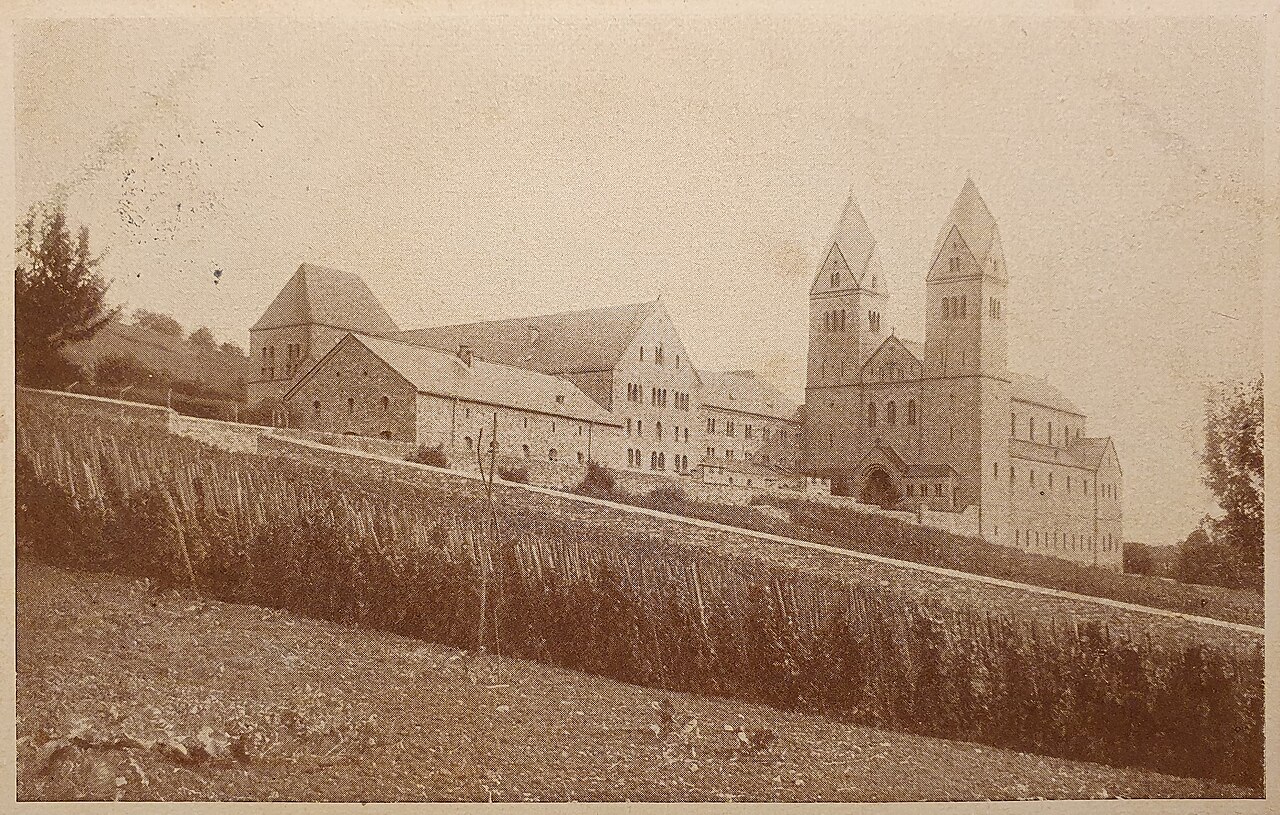
Sepia-toned photograph of the Benedictine abbey of St. Hildegard in Eibingen, showing a long stone monastery complex with a gabled roof and two tall twin-towered church with pointed spires, set on a hillside behind a stone retaining wall with a hedged terrace in the foreground.Photograph

Secondary source

Abbey of St. Hildegard, Eibingen, Postcard

before 1927

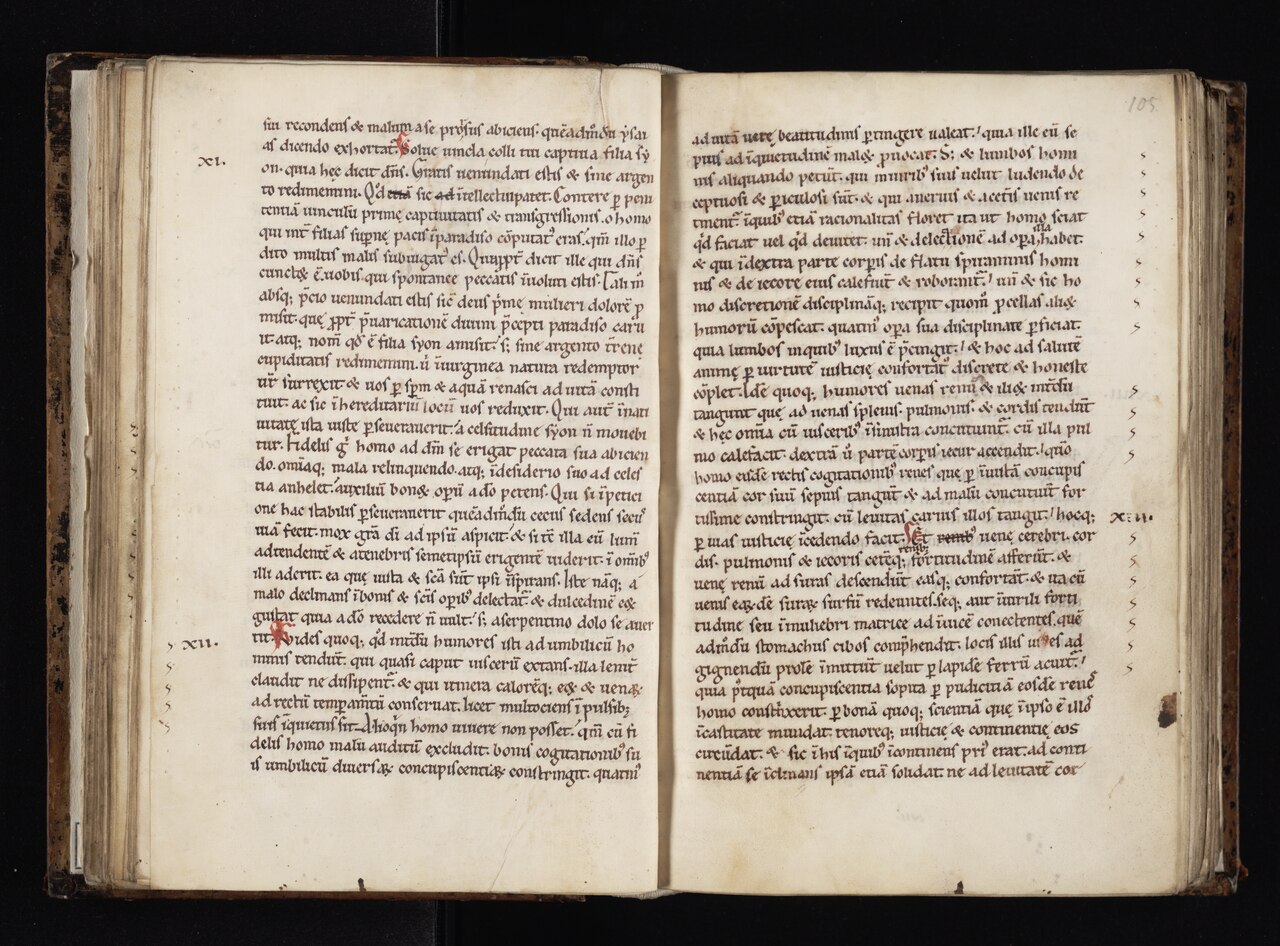
Open manuscript book showing two facing pages of dense medieval Latin text in brown ink, with red initial letters and marginal marks. The book has a dark leather binding visible at the edges against a black background.Book

Primary source

Liber Divinorum Operum

Hildegard of Bingen · 1170-1174

An ornate shrine, built in 1929, located in a parish church, used to hold relics of Hildegard of Bingen.Artifact

Secondary source

Hildegard Reliquary Shrine, Eibingen Parish Church

Unknown · 1929

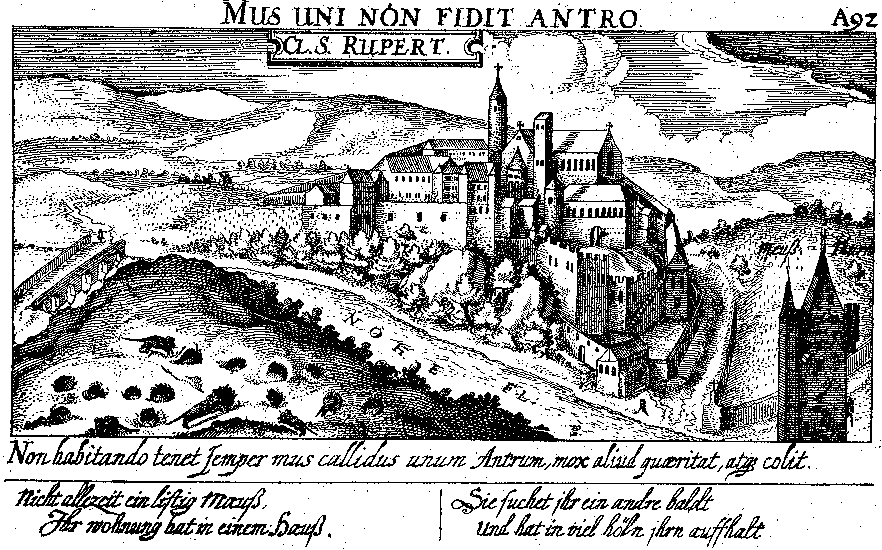
Printed view of the Rupertsberg monastery in Germany.Painting

Secondary source

Rupertsberg Monastery, c. 1620 View

Unknown author · c. 1620

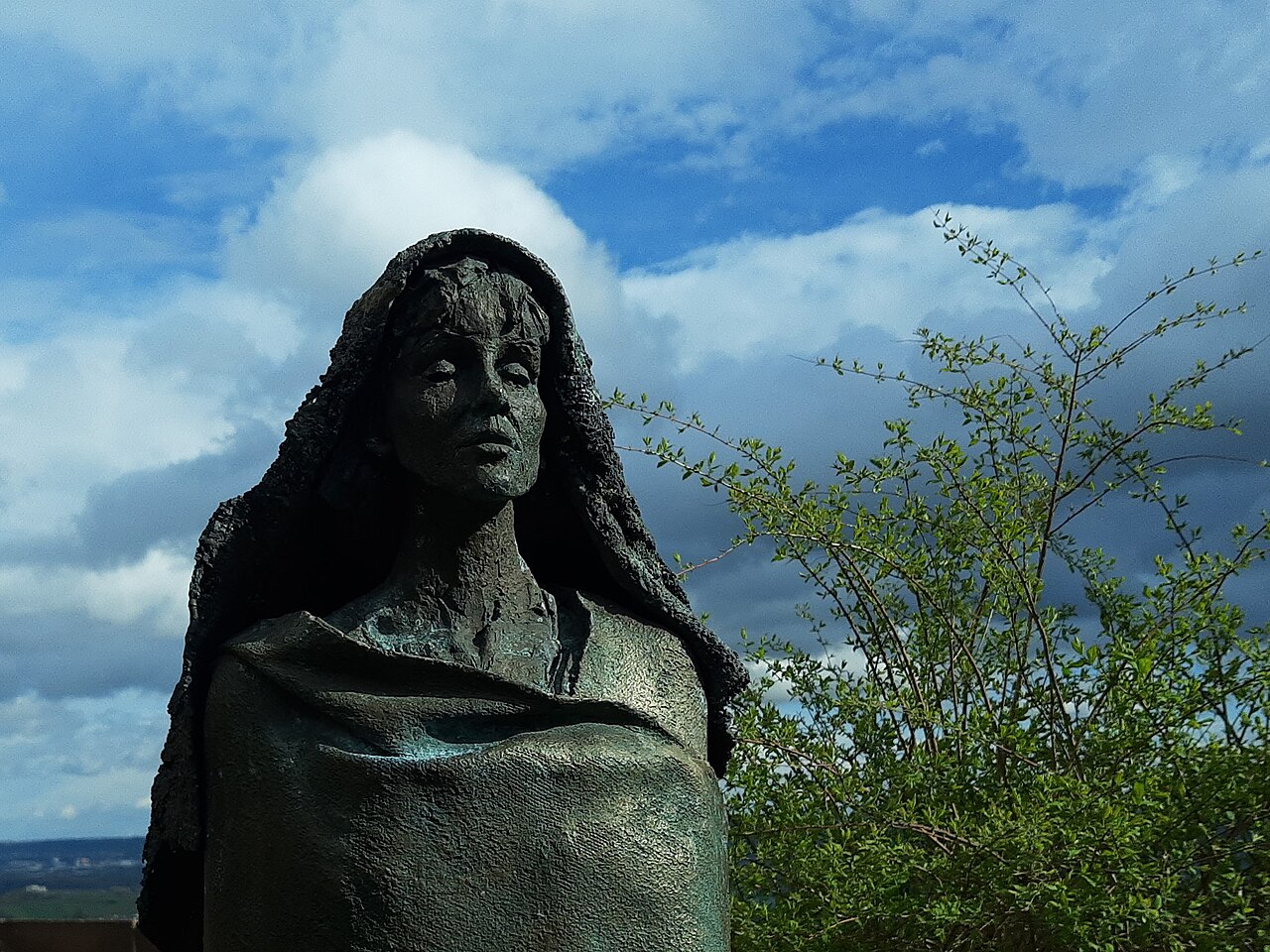
Bronze sculpture of a woman's head and shoulders, eyes lowered, with a draped veil or cloak, set against a blue sky with white clouds and a green leafy bush on the right.Sculpture

Secondary source

Hildegard von Bingen Statue by Karlheinz Oswald

Karlheinz Oswald

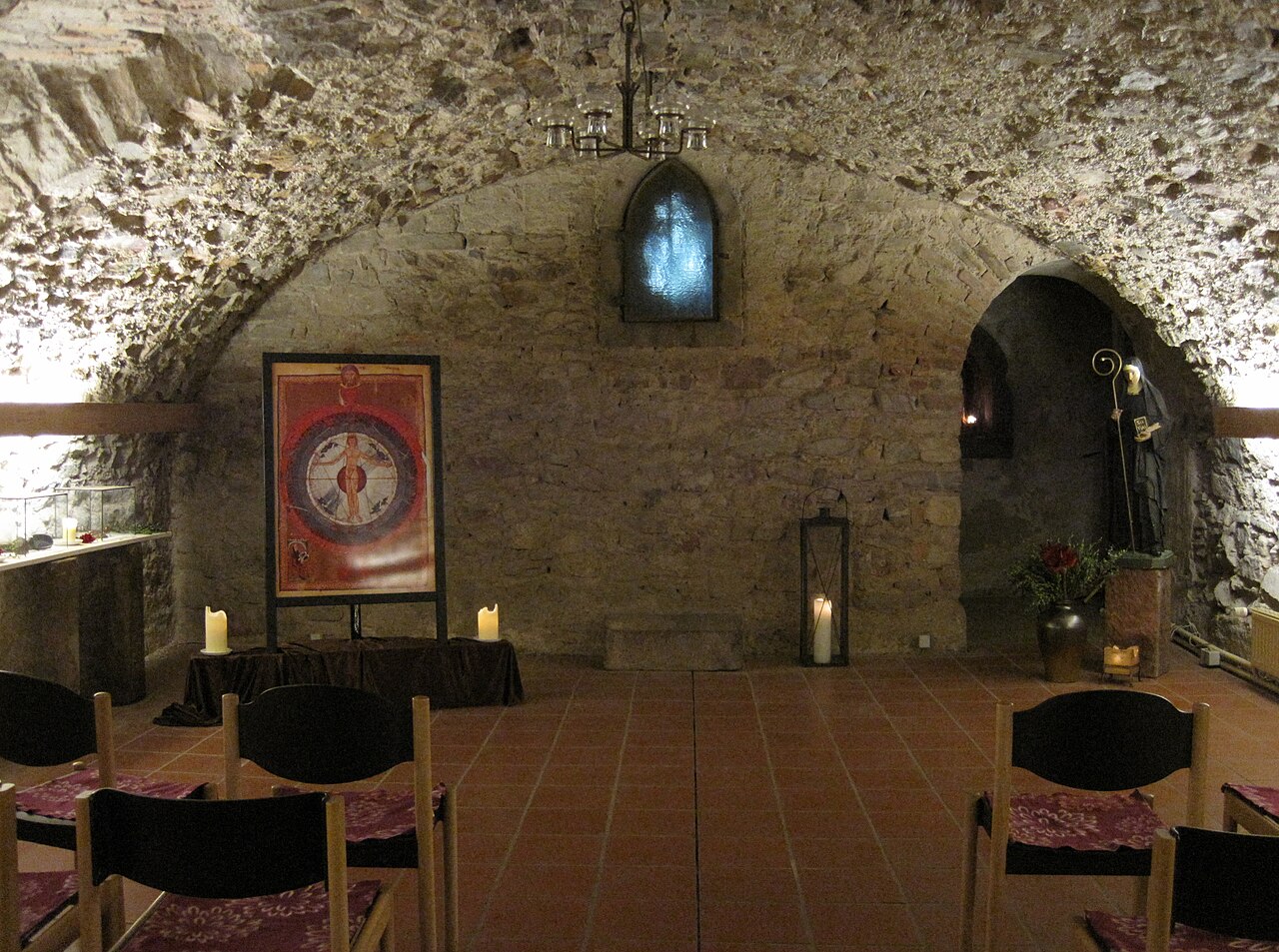
Photograph of stone vault remains of the Rupertsberg Monastery in Bingen-Bingerbrück, Germany.Photograph

Secondary source

Rupertsberg Monastery Vault Remains

Marion Halft · 14 October 2012

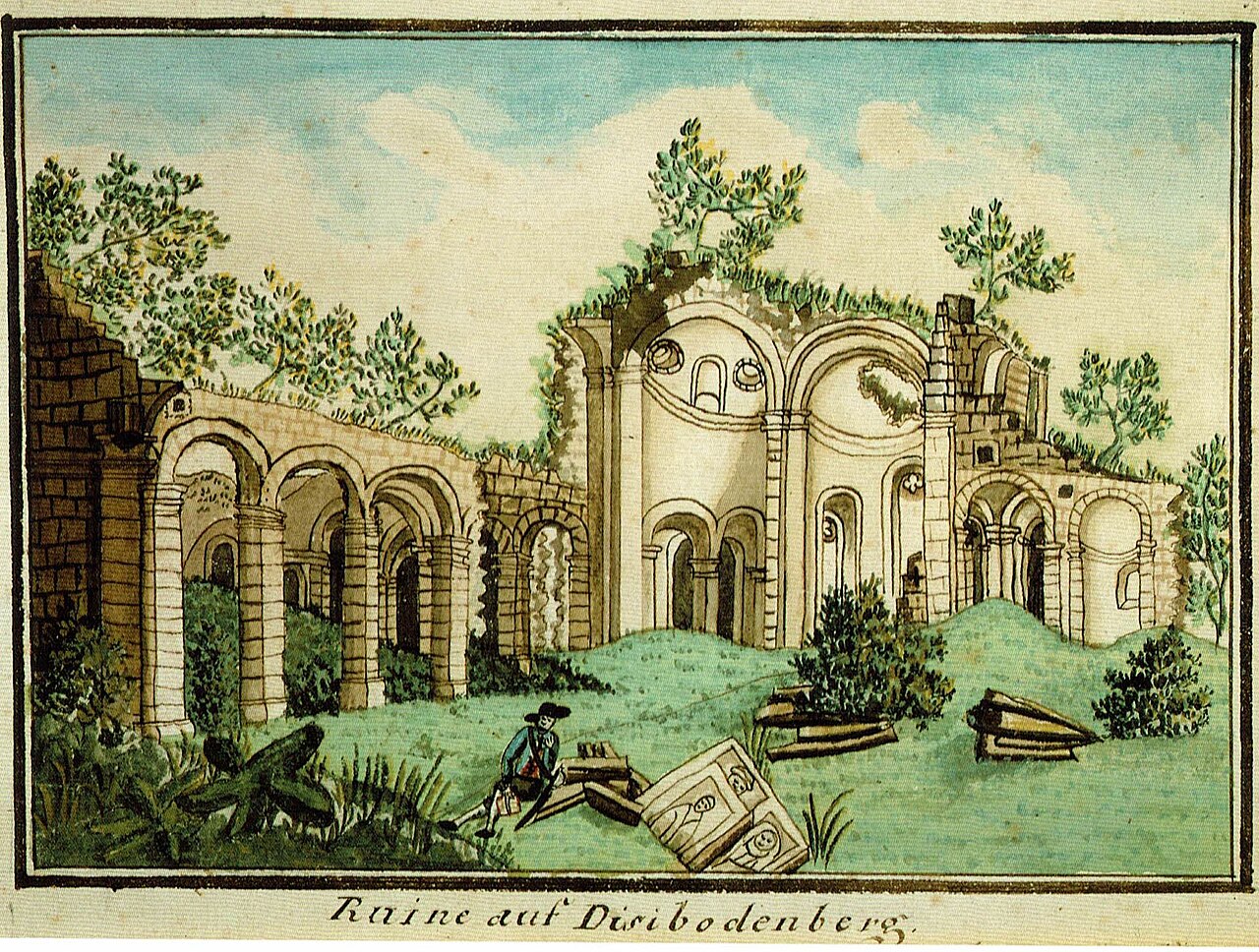
Print showing the ruined interior of the Disibodenberg church.Painting

Secondary source

Interior of the Disibodenberg Church Ruin

Unknown author · 1790

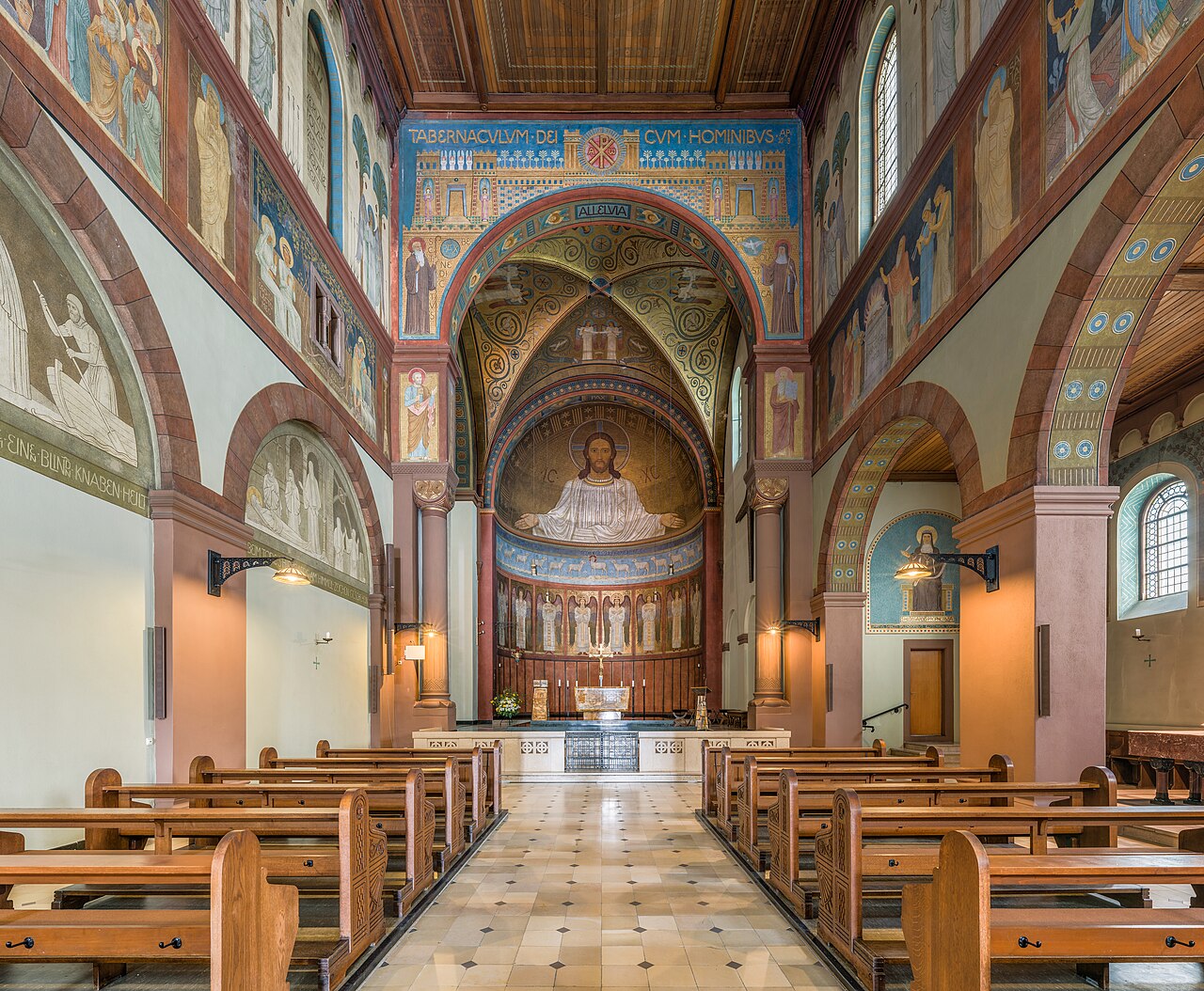
Interior view of a church nave and sanctuary with pews leading toward an altar area.Artifact

Tertiary source

Nave and Sanctuary of Eibingen Abbey

DXR · 2014

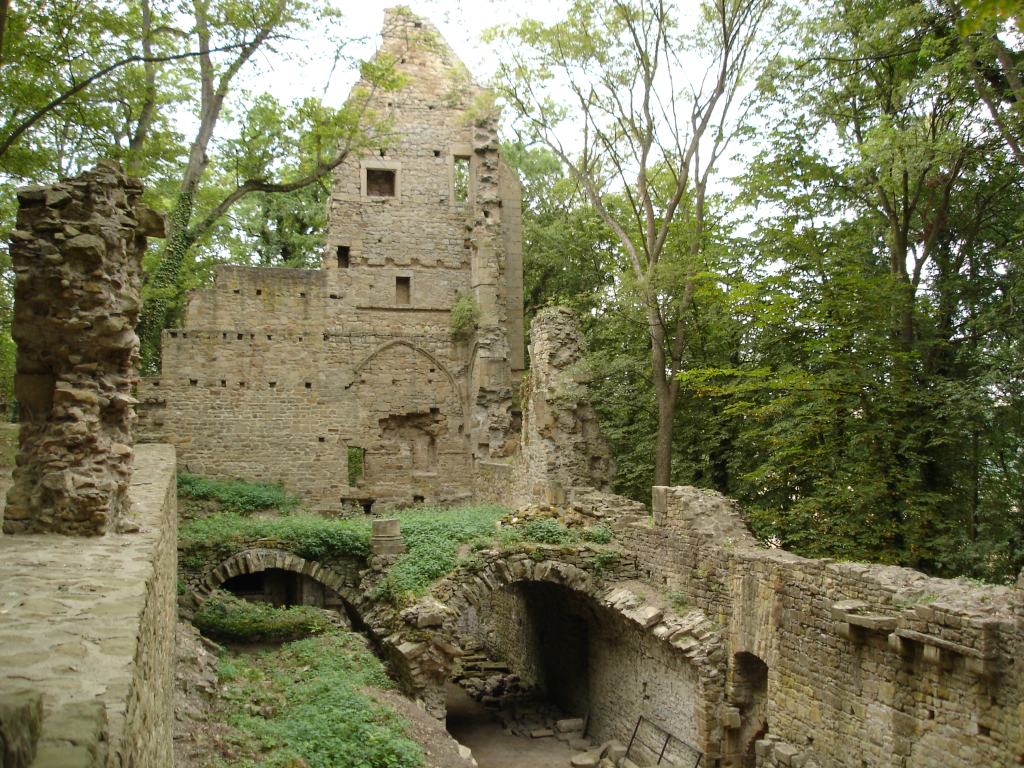
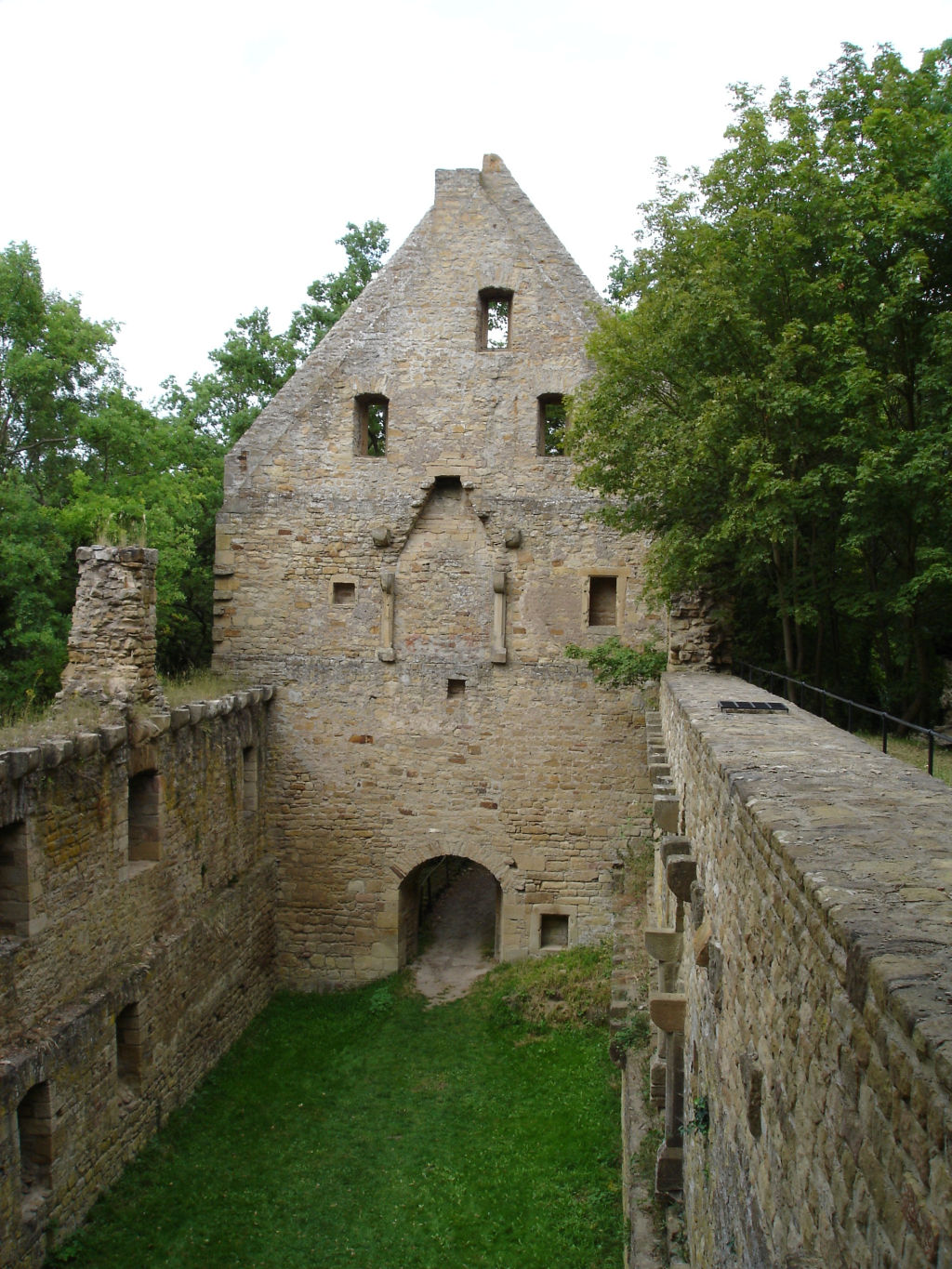
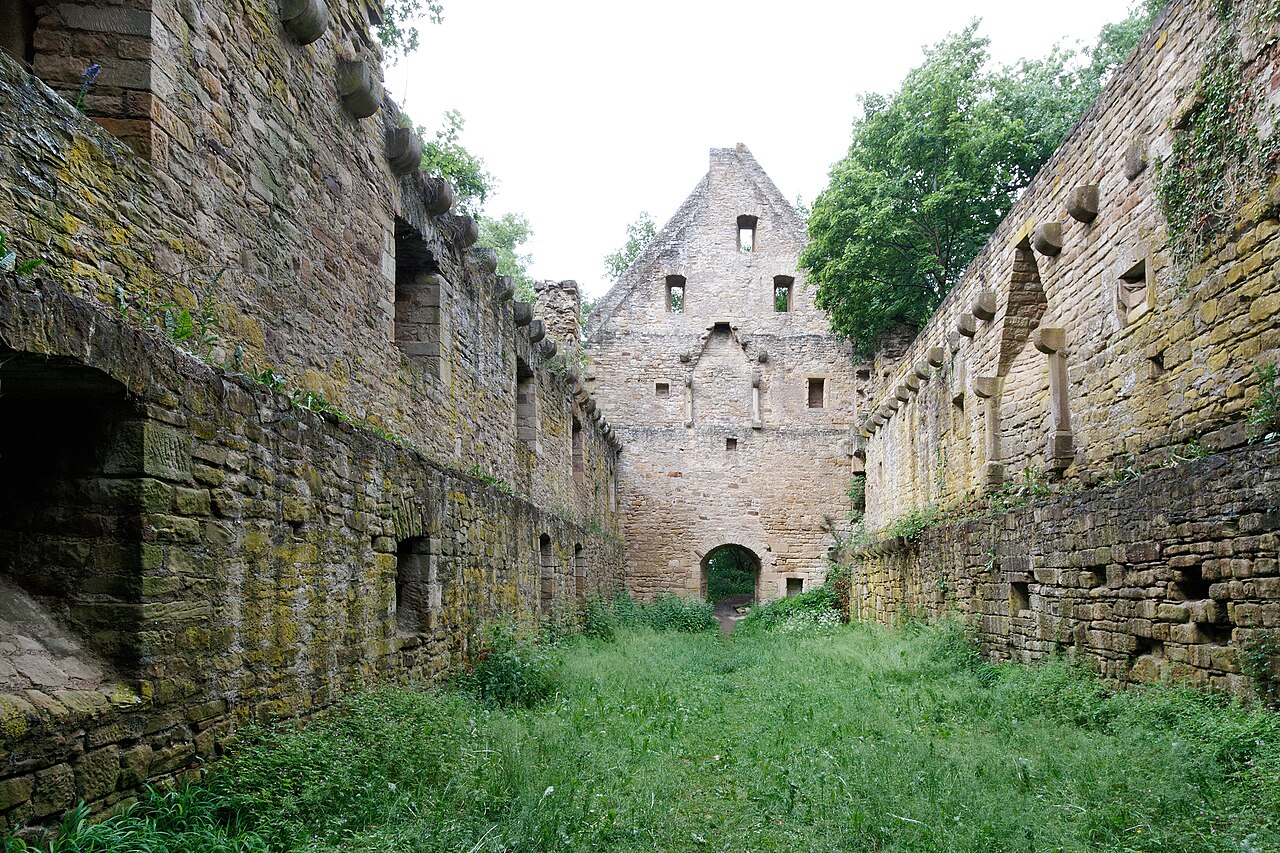
Ruined stone gable wall of a medieval refectory building with window openings, surrounded by greenery.Artifact

Tertiary source

Disibodenberg Monastery Ruin: Refectory Gable

Saharadesertfox · 2005

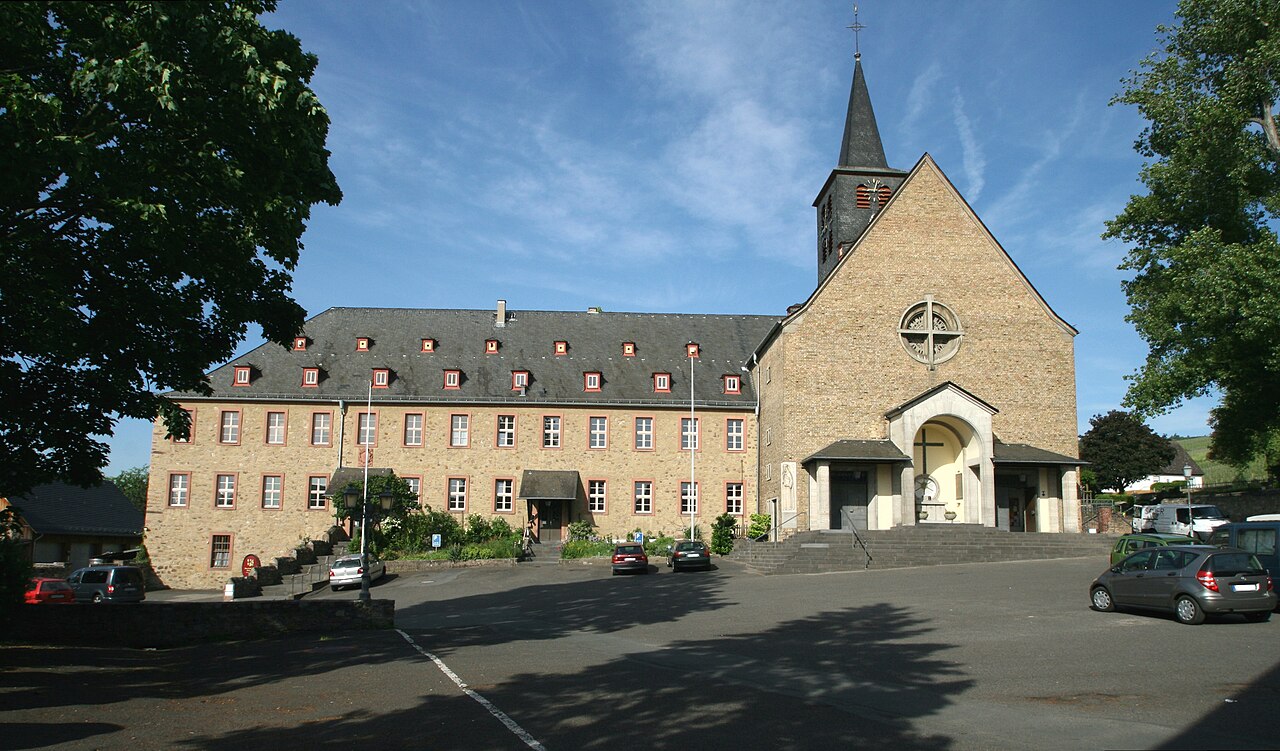
Exterior photograph of a convent building complex at Eibingen.Artifact

Tertiary source

Eibingen Benedictine Convent Photograph

Moguntiner · 2006

Ruined stone gable of a medieval guesthouse building at a monastery site, with vegetation around it.Artifact

Tertiary source

Disibodenberg Monastery Ruin: Hospital Guesthouse

Saharadesertfox · 2005

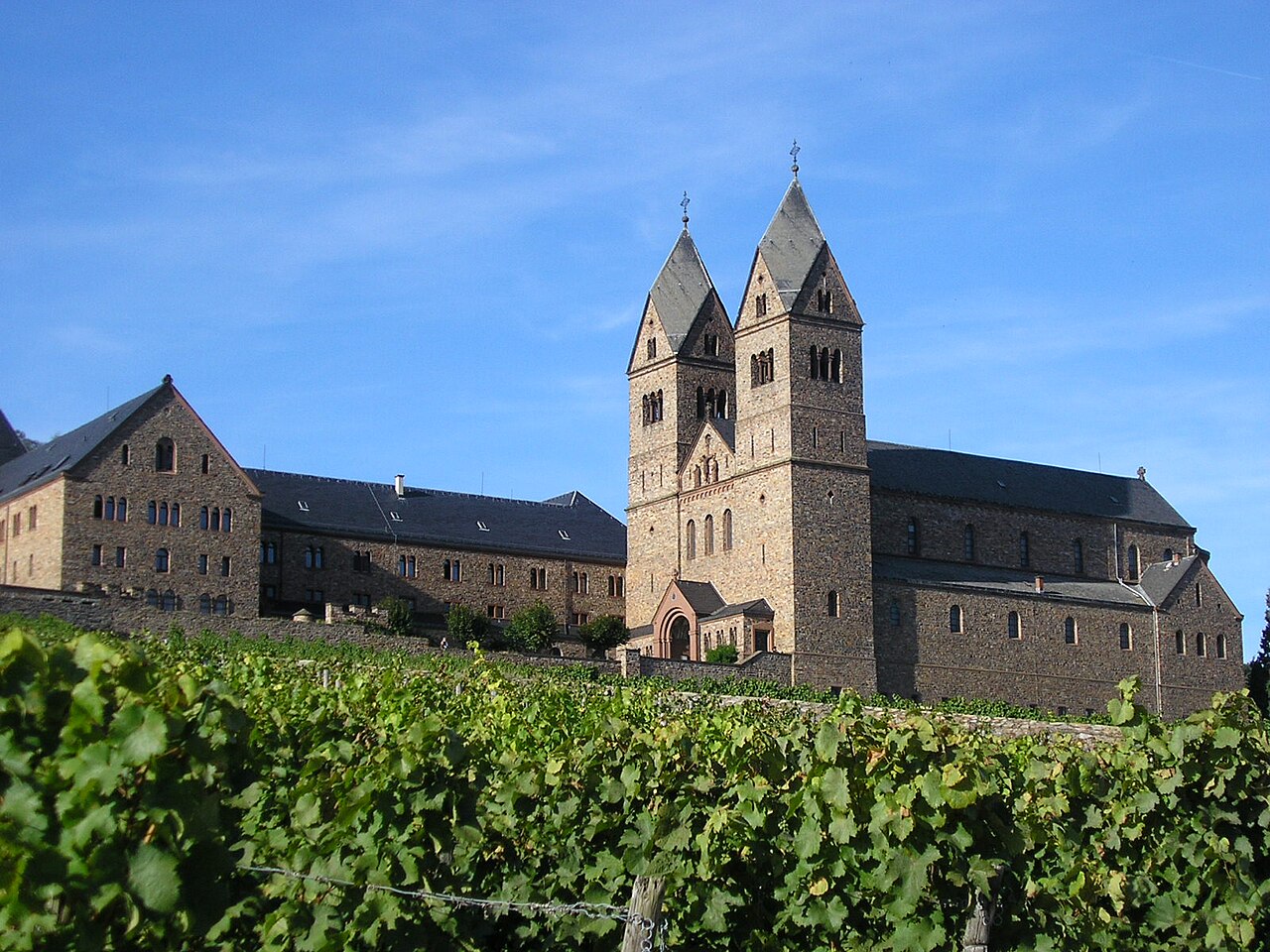
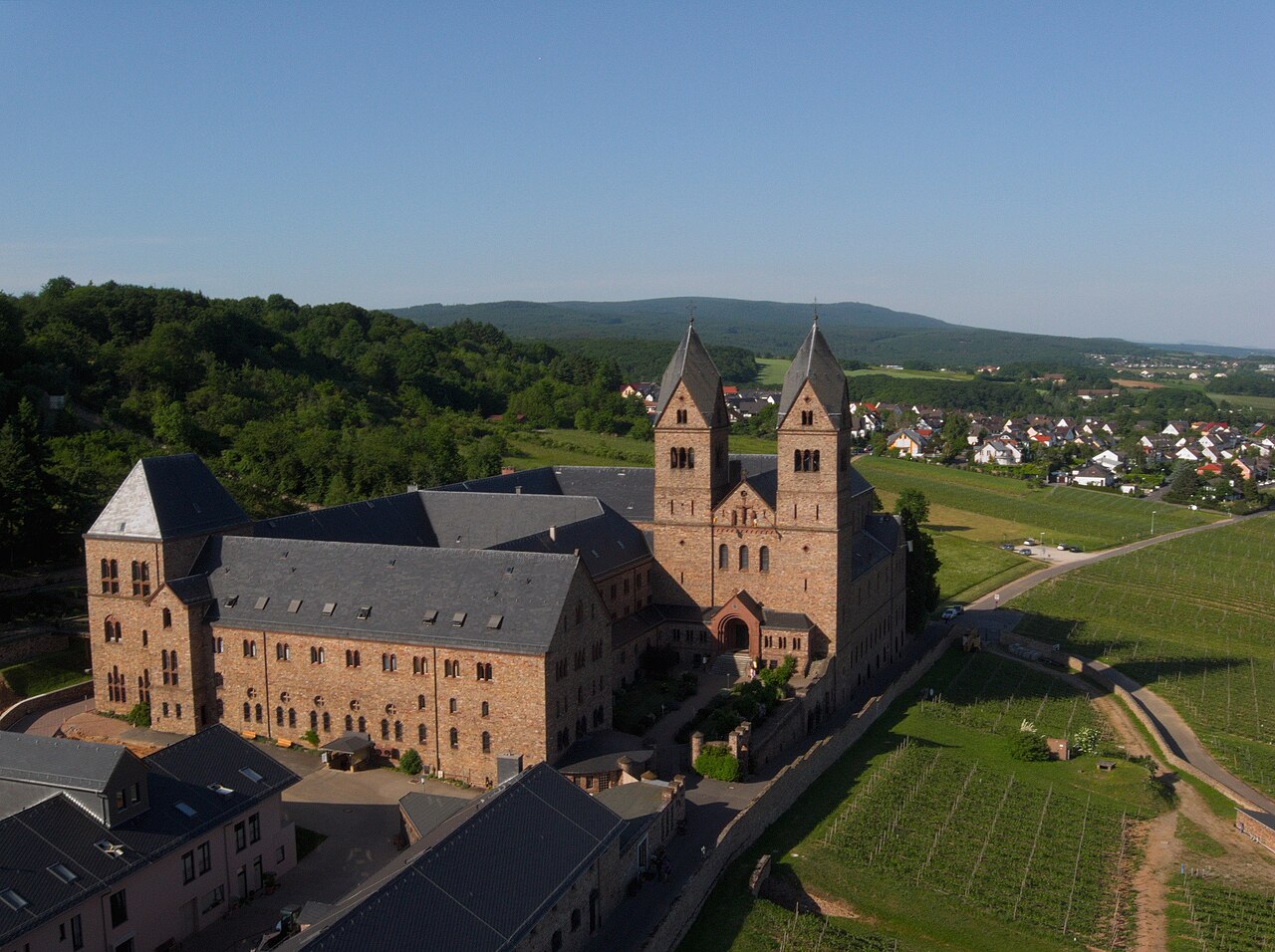
Exterior photograph of the Benedictine abbey building Abtei St. Hildegard in Eibingen.Artifact

Tertiary source

Abtei St. Hildegard, Eibingen

Tiggr · 2012

Ruined stone walls and foundations of a medieval monastery site.Artifact

Tertiary source

Ruins of Rupertsberg Monastery

Carl Woog

Exterior view of the Catholic parish and pilgrimage church of St. Hildegard at Eibingen, Germany.Artifact

Secondary source

St Hildegard Pilgrimage Church, Eibingen

Marion Halft · 25 May 2012

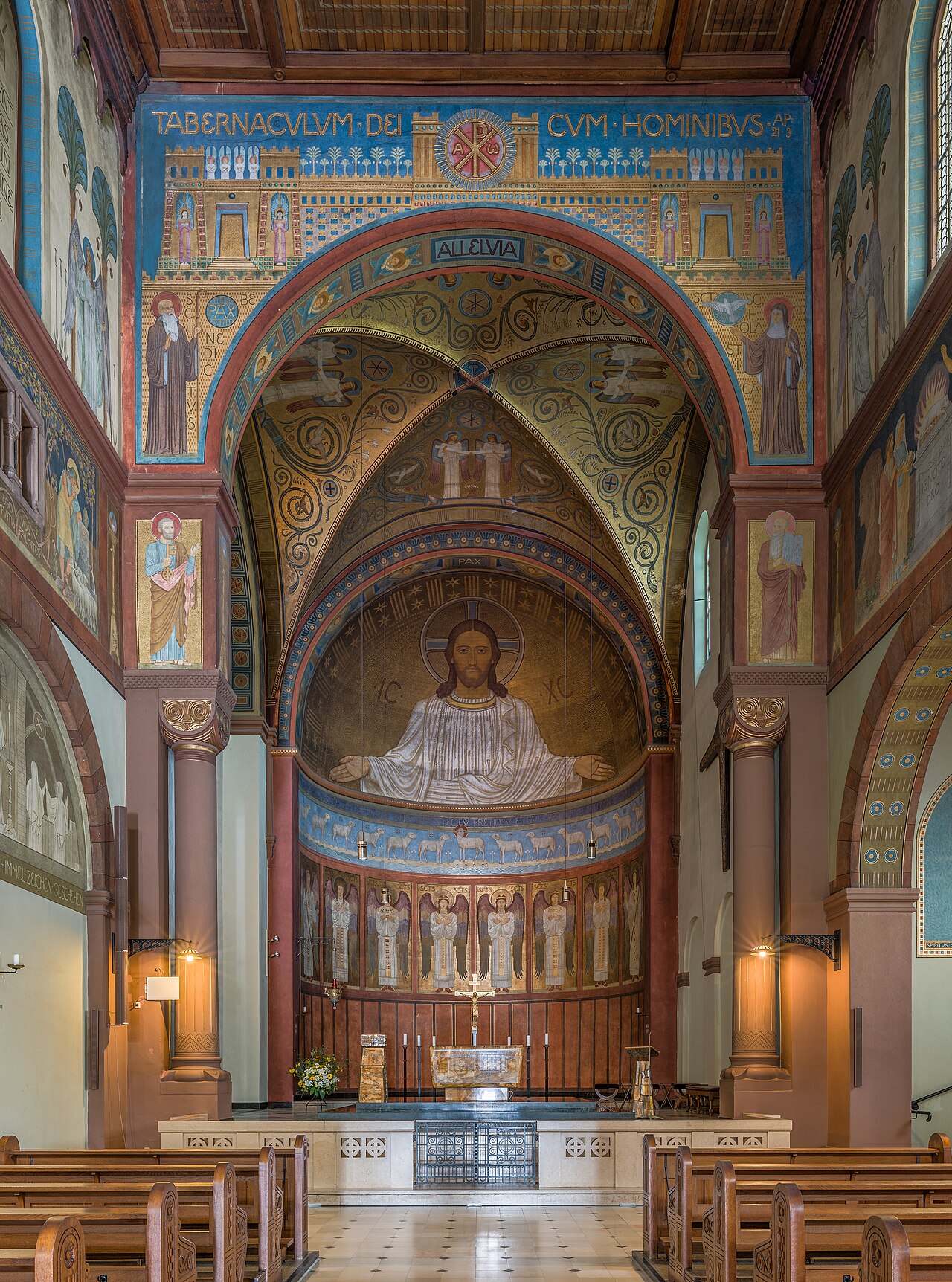
Interior view of the sanctuary of Eibingen Abbey, also known as Abtei St. Hildegard.Artifact

Secondary source

Sanctuary of Eibingen Abbey

DXR · 22 September 2014

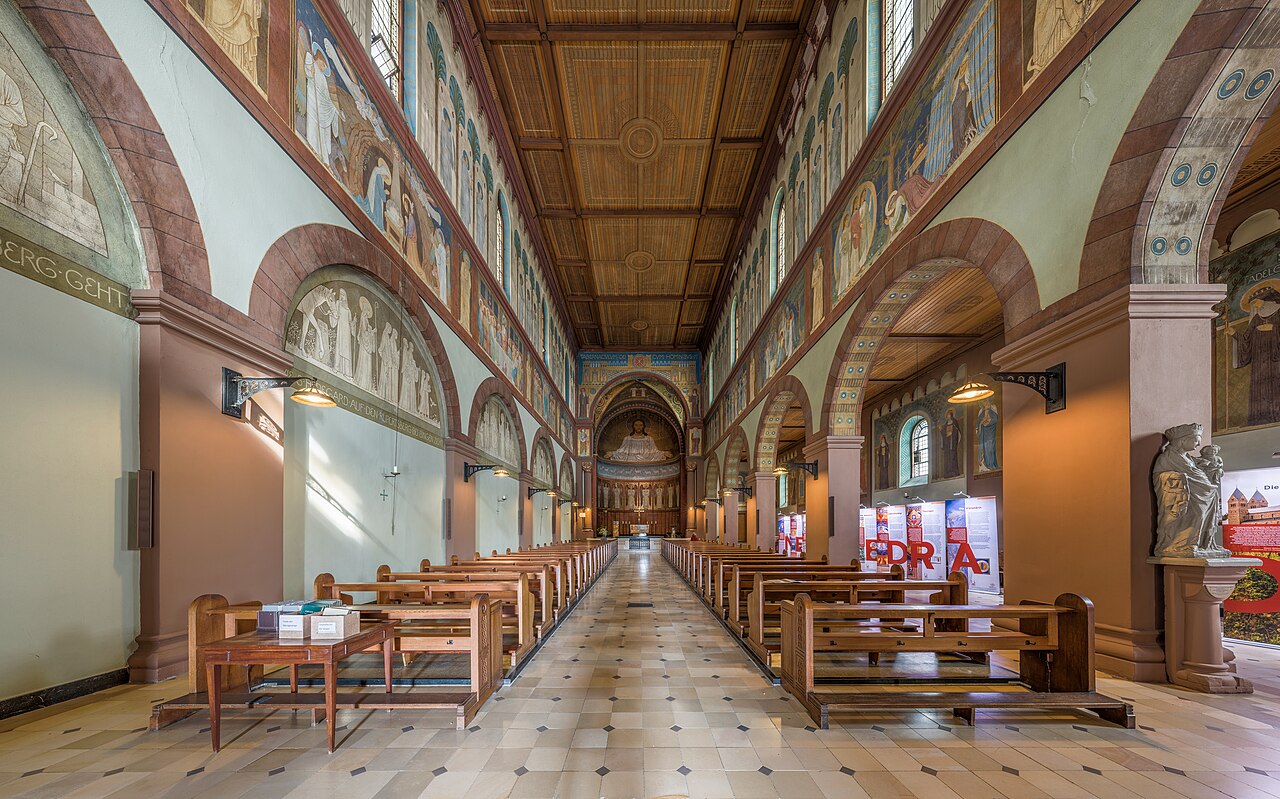
Interior view of the nave of Eibingen Abbey, also known as Abtei St. Hildegard.Artifact

Secondary source

Nave of Eibingen Abbey

DXR · 22 September 2014

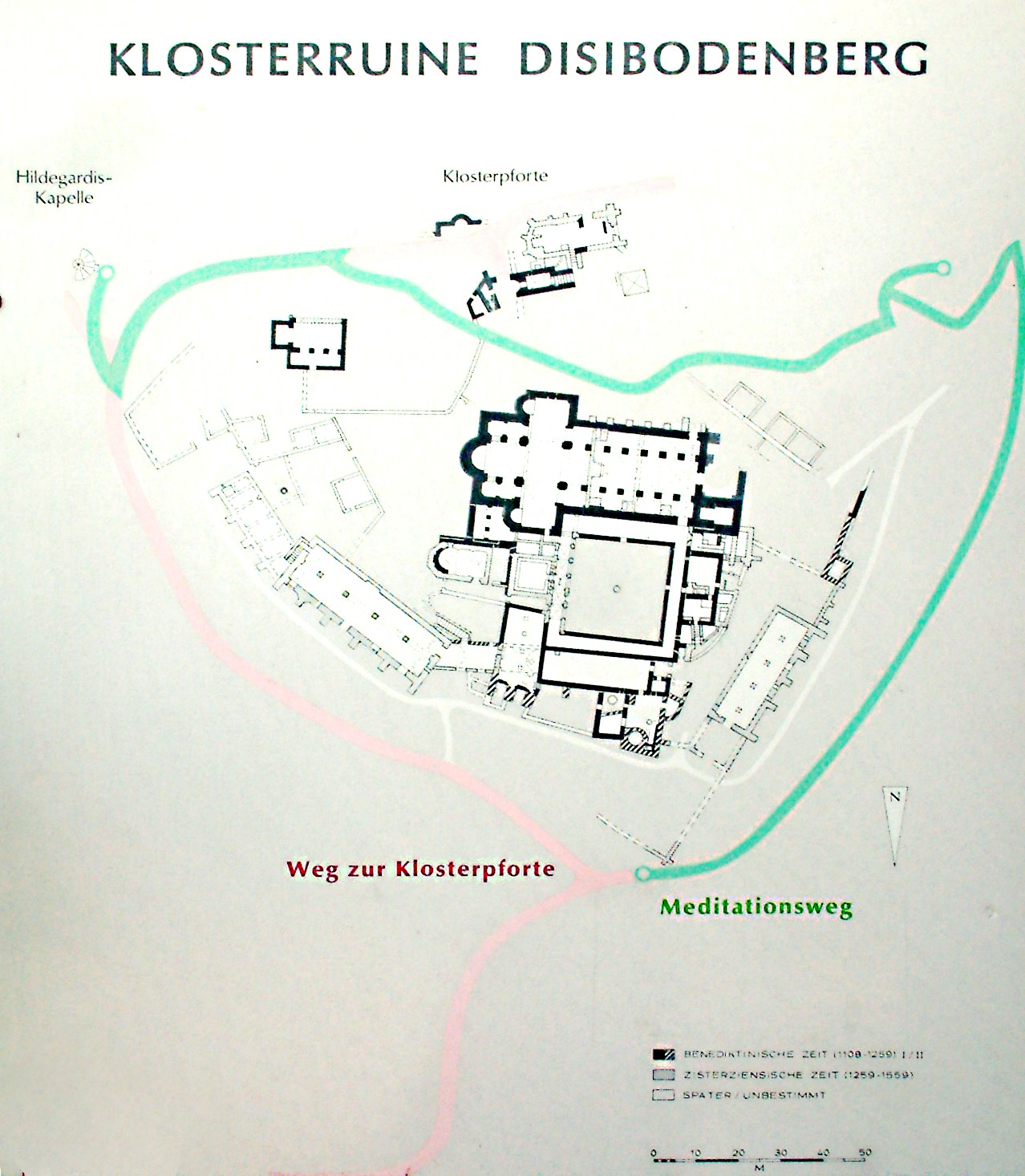
Site plan diagram of the Disibodenberg monastery ruin and surrounding park.Document

Secondary source

Plan of the Disibodenberg Monastery Ruin and Park

Travus · 1 August 2008 (original upload date)

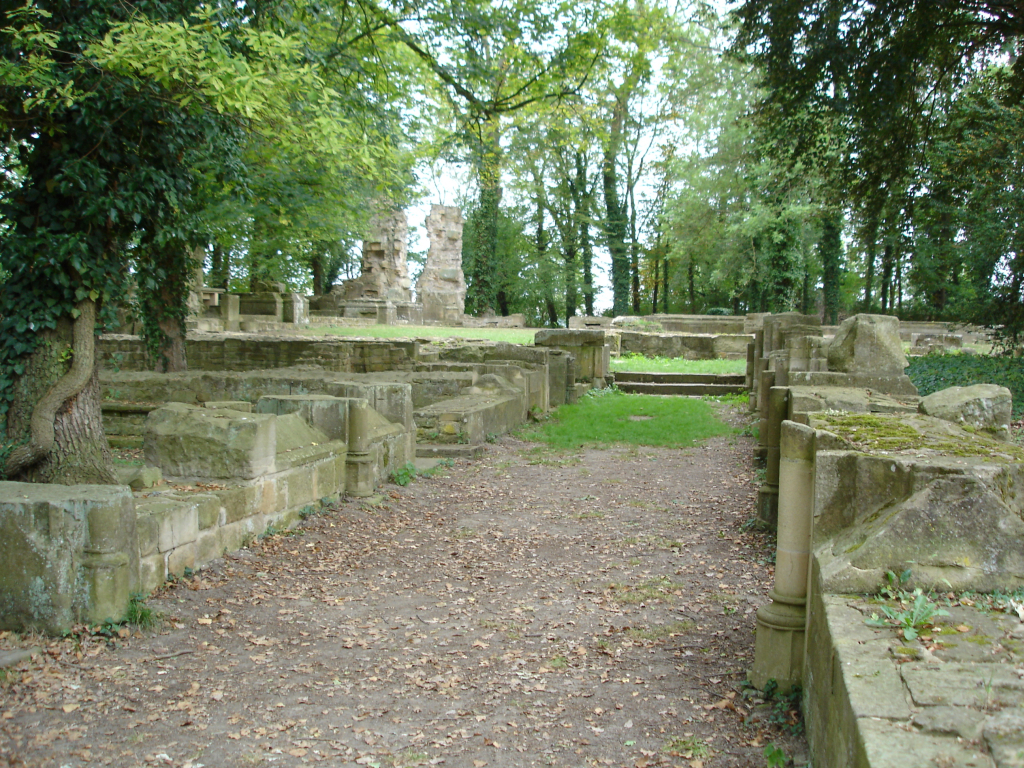
Photograph of ruined cloister remains at the Disibodenberg monastery site.Artifact

Secondary source

Cloister Remains at Disibodenberg Monastery Ruin

Saharadesertfox · 23 July 2005

Photograph of a ruined stone hospice building at Disibodenberg monastery, dating from the 14th century.Photograph

Secondary source

Disibodenberg Monastery Ruin: Lay Brothers' Hospice

E-W · 3 June 2012

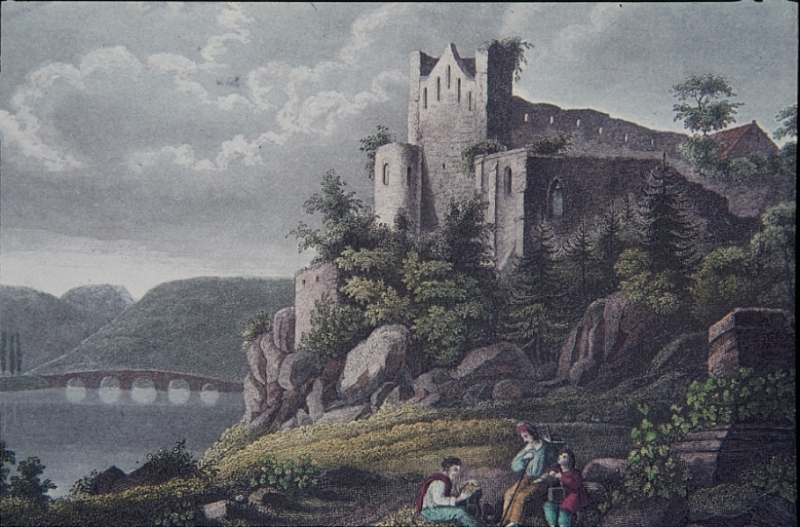
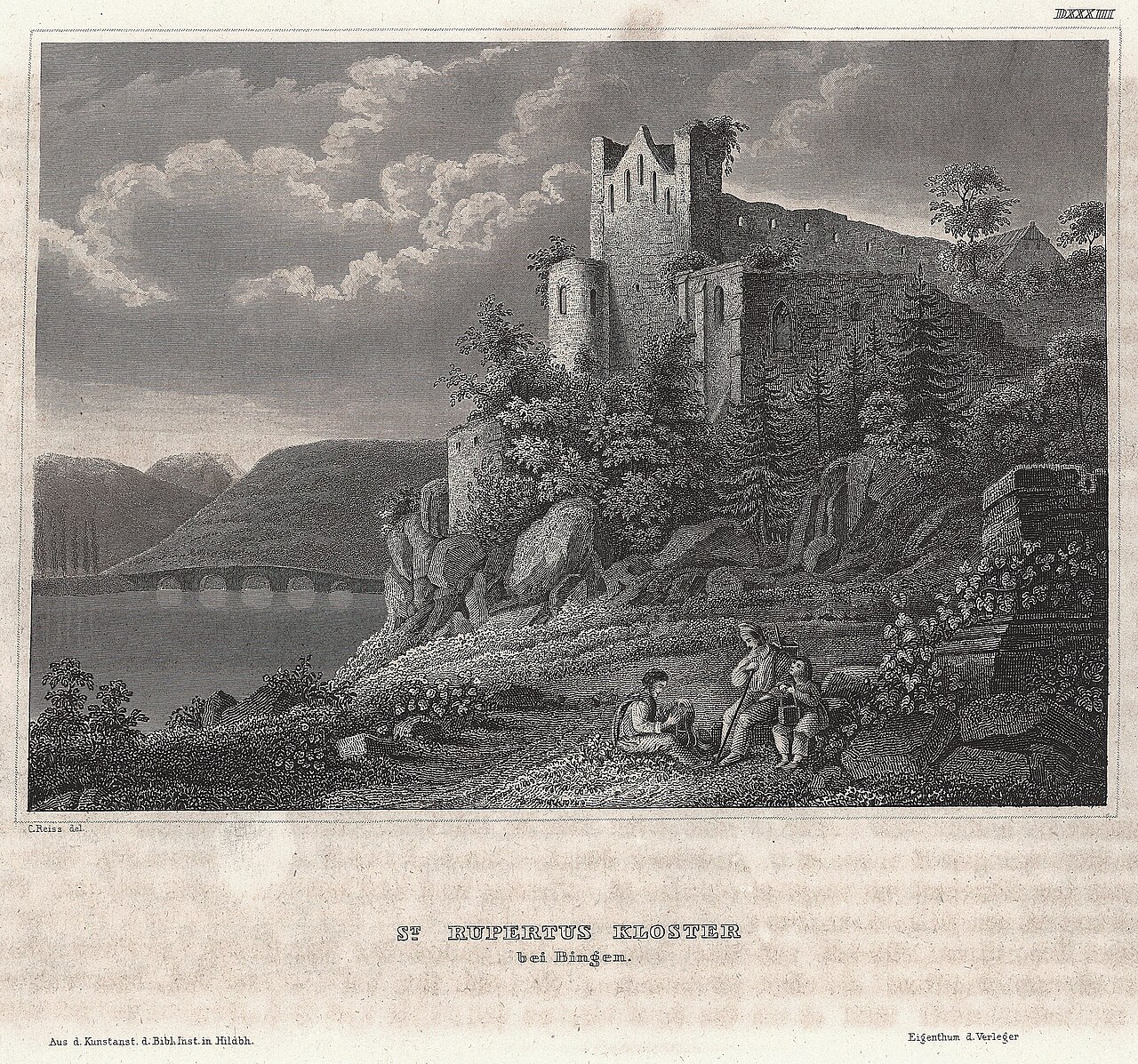
Black-and-white engraving of a ruined medieval monastery on a hillside above a river, with a tower and broken walls among trees. Two figures sit in the foreground, and a distant bridge and hills lie to the left. Caption reads 'St Rupertus Klostier bei Bingen'.Painting

Secondary source

St. Rupertsberg Monastery

C. Reiss (Meyer's Universum) · 1847

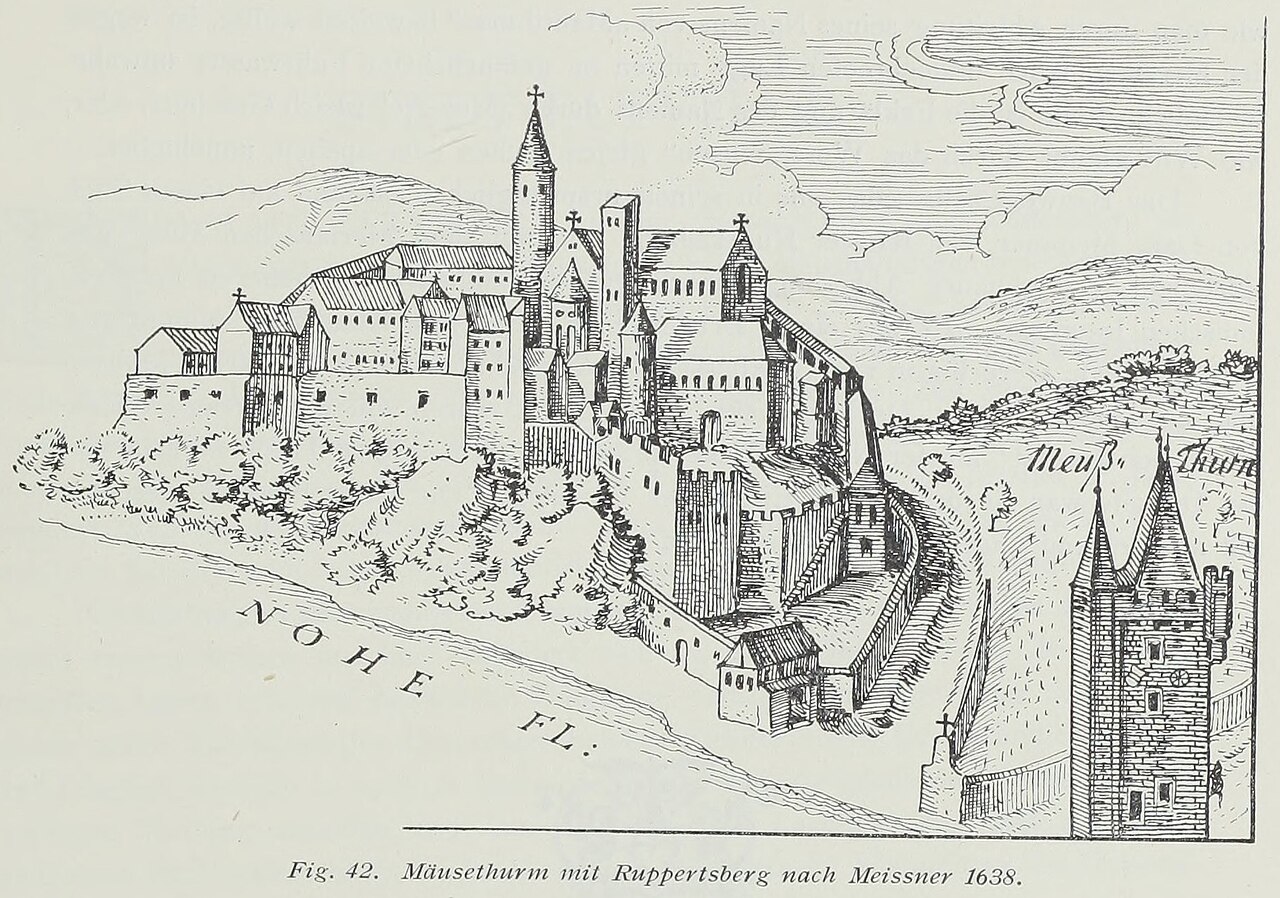
Print showing the Mäuseturm tower and the Rupertsberg monastery buildings, based on a 1638 view.Painting

Secondary source

Mäuseturm with Rupertsberg Monastery, after Meisner 1638

Ferdinand Luthmer · 1902

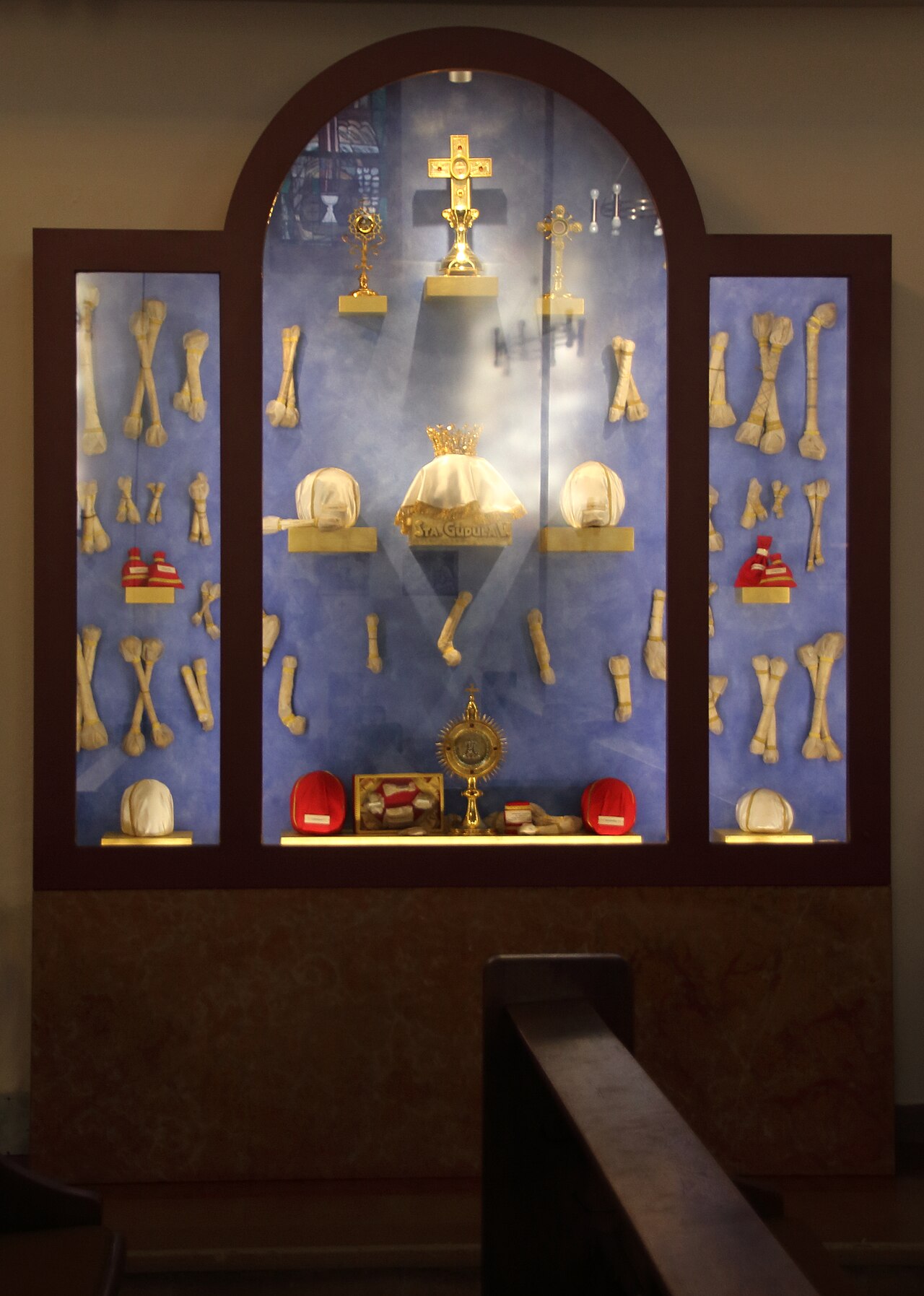
A glass display case in a church interior, designed to hold relics associated with Hildegard of Bingen.Artifact

Secondary source

Eibingen Reliquary Display Case

Marion Halft · 2013

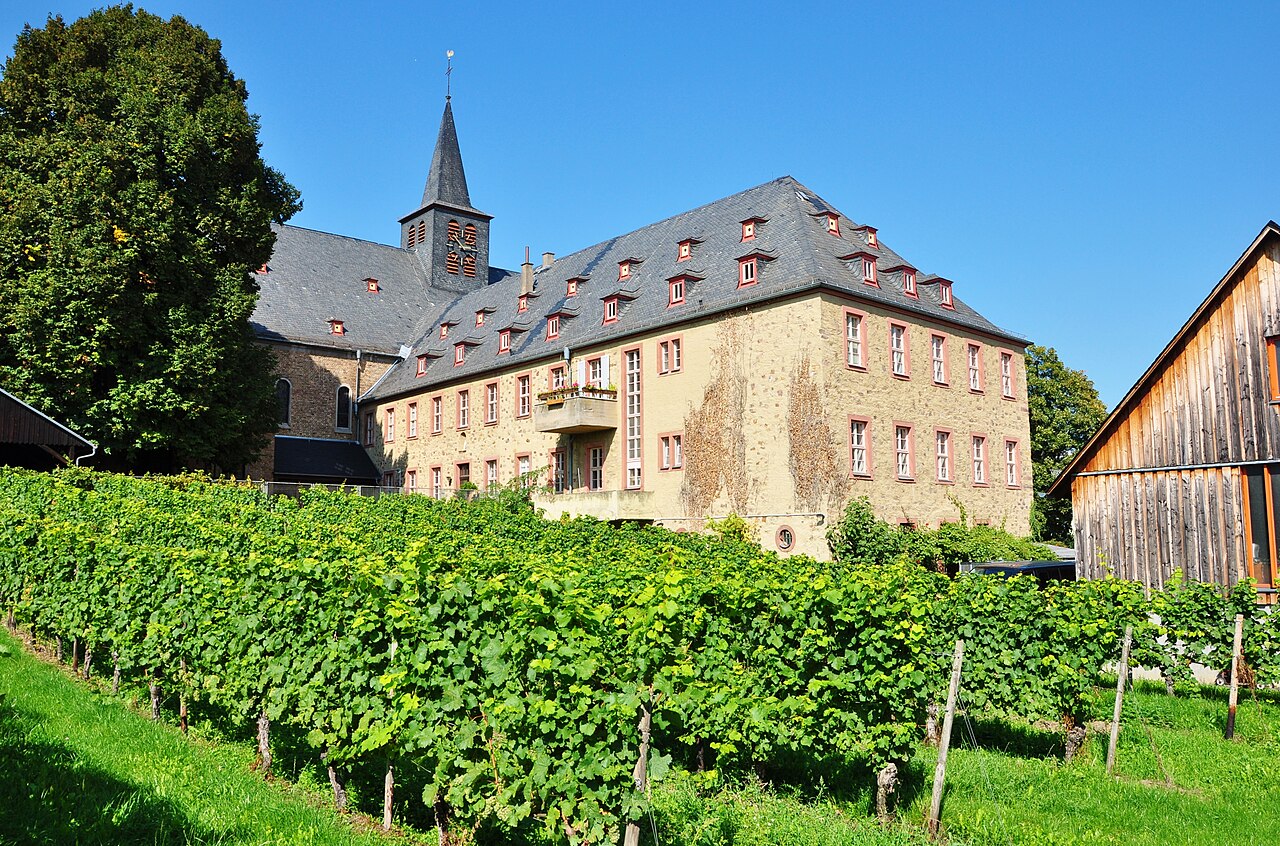
Large cream-colored former convent building with a steep slate roof, many small dormer windows with red frames, and a church tower with a spire on the left. A green vineyard fills the foreground under a clear blue sky, with a wooden barn on the right.Photograph

Tertiary source

Former Convent of St Hildegard, Rüdesheim

Winkelsche · 2014

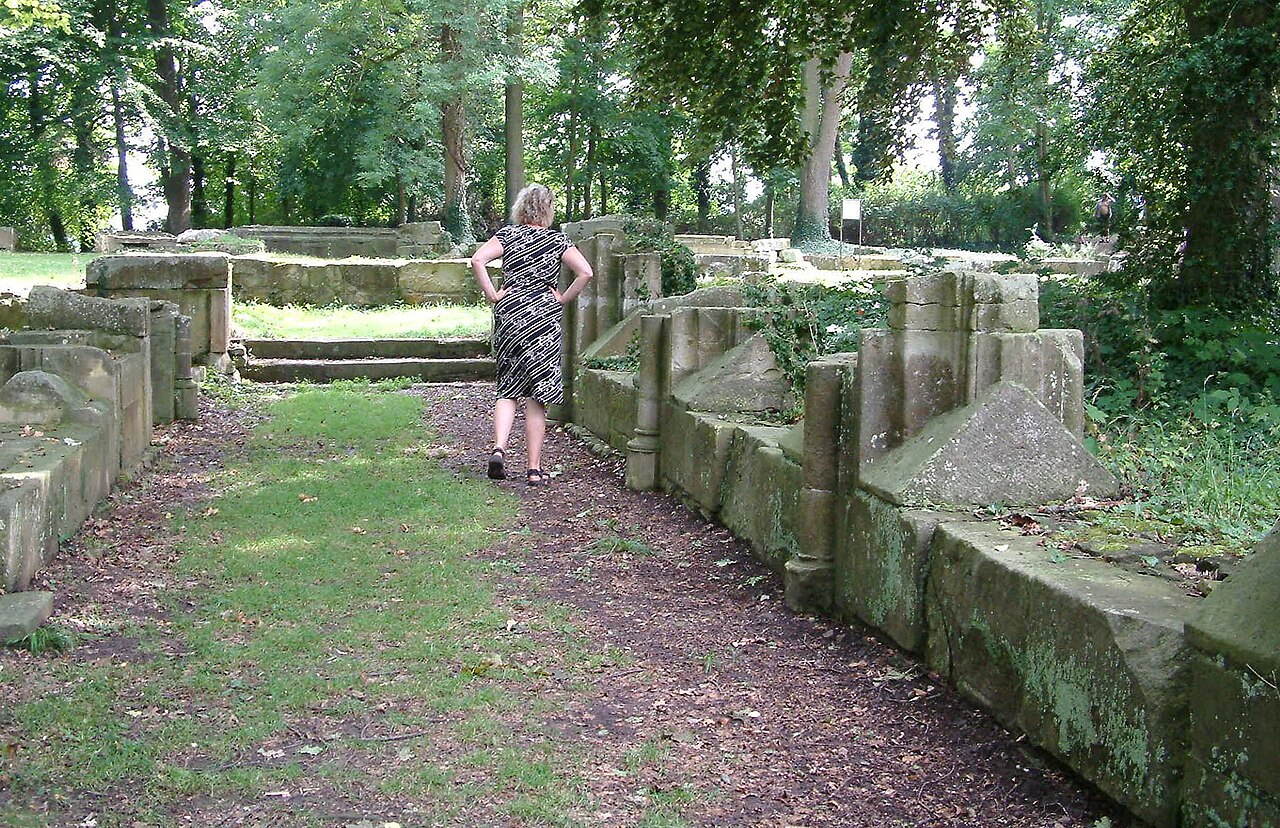
A woman with blonde hair in a black-and-white striped dress walks away from the camera along a grassy path between weathered stone walls and low stone steps in an overgrown ruin, with trees behind.Photograph

Tertiary source

Cloister Walk of Disibodenberg Monastery

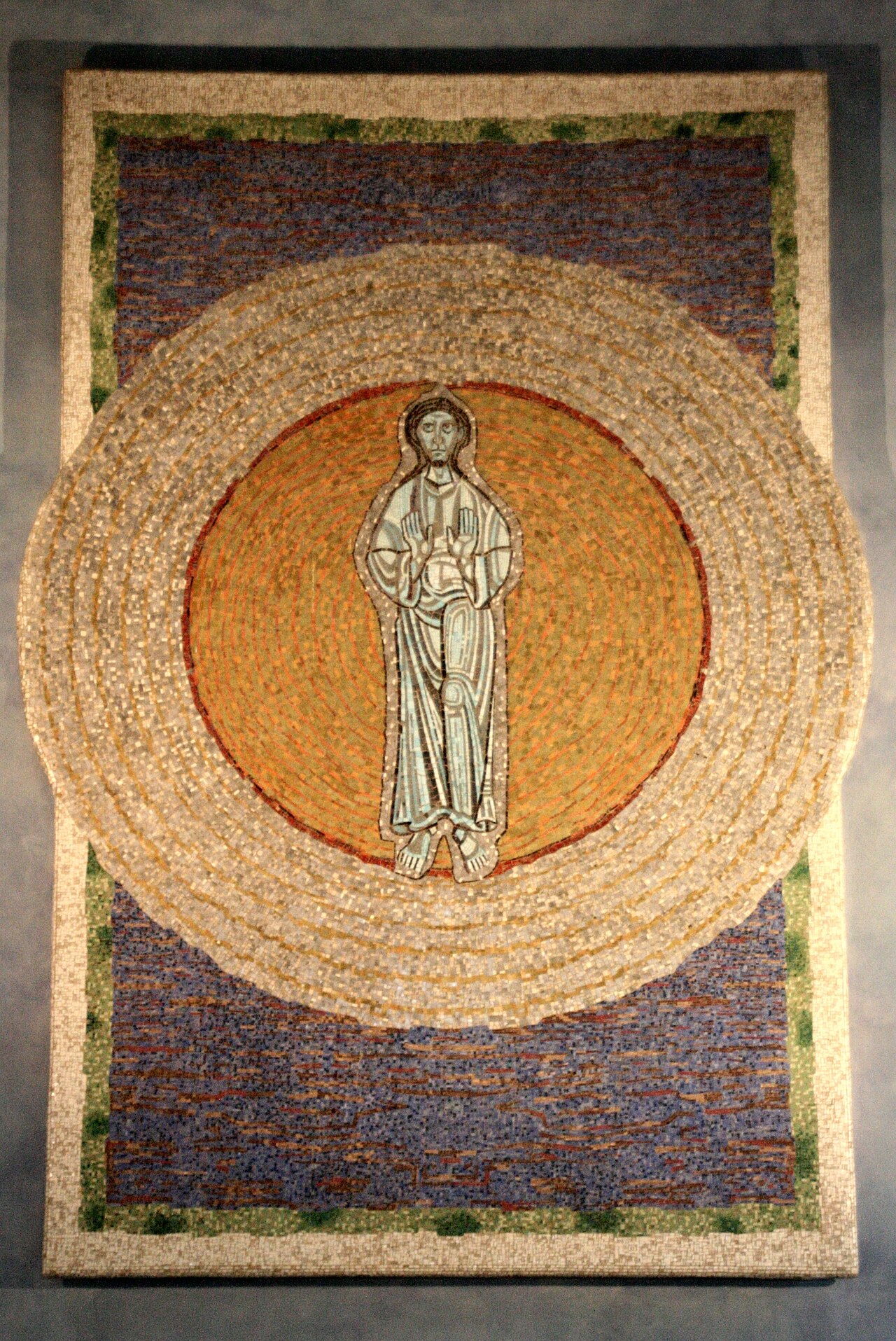
A mosaic altarpiece depicting the Trinity, based on an illumination from Hildegard of Bingen's Scivias manuscript.Painting

Secondary source

Trinity Altar Mosaic Based on a Scivias Illumination

Ludwig Baur · 1965 (design); photographed 2012

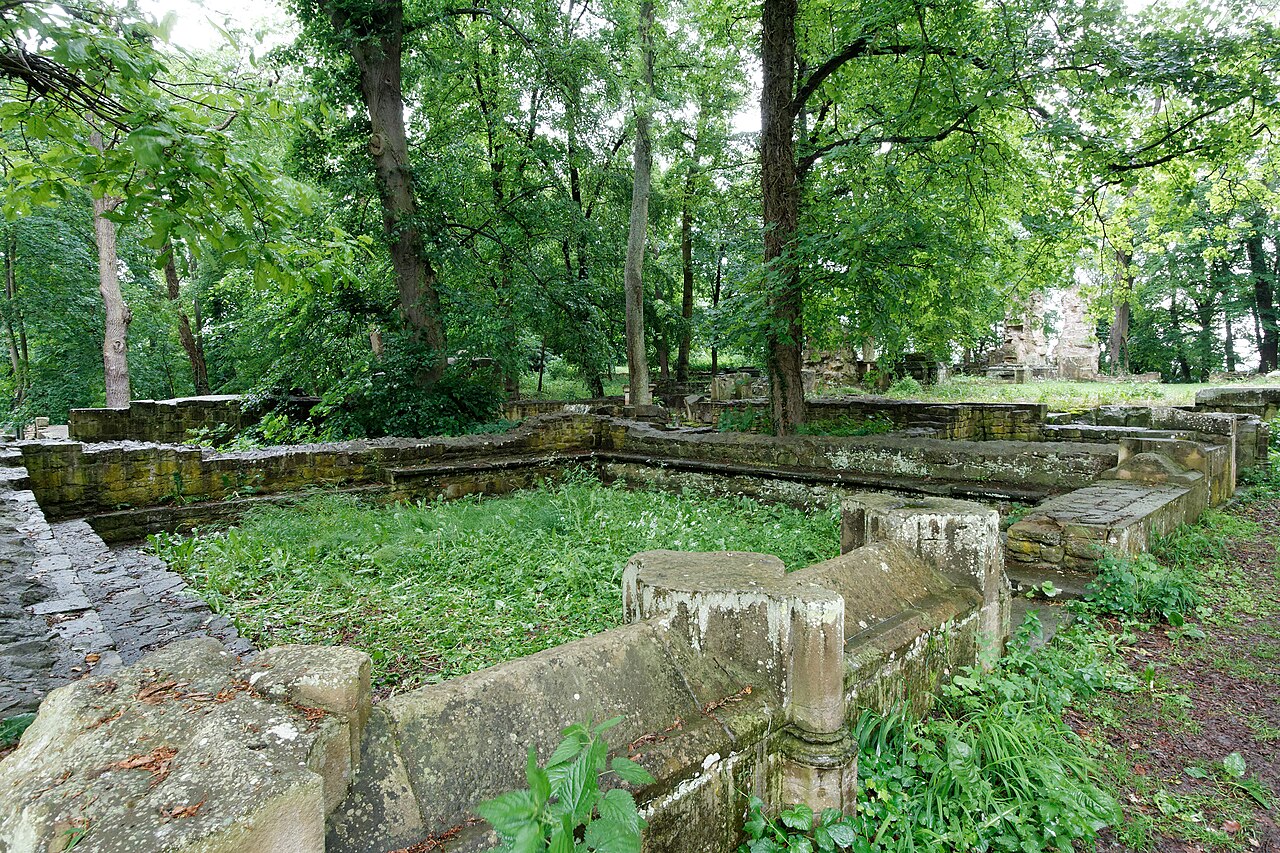
Overgrown stone ruins of a monastery chapter house under tall trees. Low walls with stone benches line a square of grass and weeds. Stone paving lies at the left, and more ruined walls stand in the background.Photograph

Tertiary source

Disibodenberg Monastery Chapter House Ruins

E-W · 3 June 2012

Weathered stone ruins of a medieval building with a tall, partly broken tower on the left and a lower wall with small square openings extending right, set among green trees and grass, with a dark arched doorway at the base.Photograph

Tertiary source

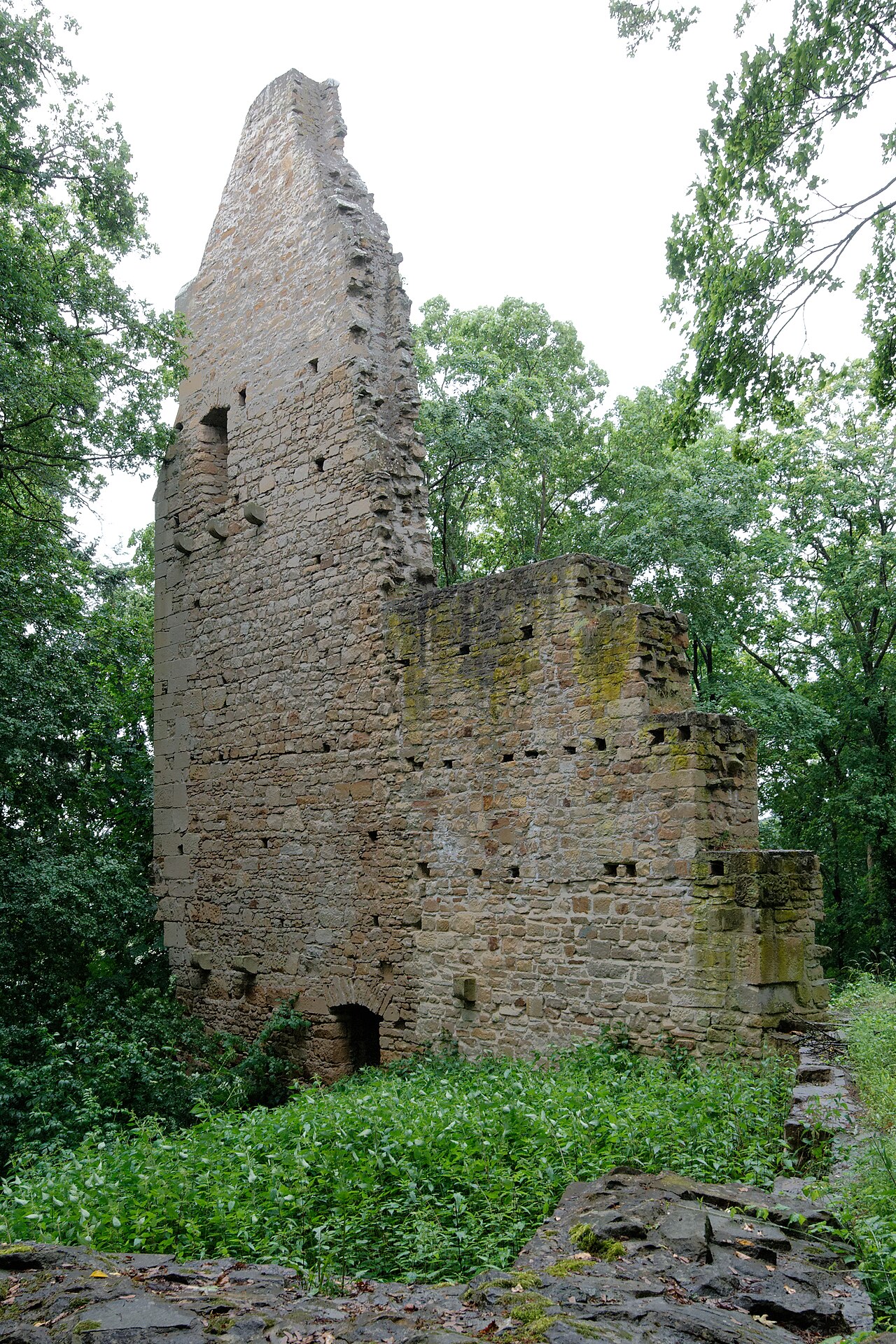
Disibodenberg Abbey Building Ruins

E-W · 3 June 2012

Want the full shelf? Chat with Hildegard of Bingen in the app and open the Sources panel — every quote links back to the original.

Trusted by educators worldwide

Conversations
375,000+
Real exchanges between students and historical figures
Messages exchanged
4,142,000+
Across every figure, classroom and language
Historical figures
100,000+
Each informed by a curated biography and selected sources
Languages supported
50+
From English and Spanish to Arabic and Korean

Paying customers

Used by 98 schools and universities

Partner school logo
Tecnológico de Monterrey logo
Hyper Island logo
Partner school logo
Chambersburg Area School District logo
Broward County Public Schools logo
Nebo School District logo
National Louis University logo
South Florida PBS logo
Punahou School logo
University of Wisconsin–River Falls logo
Partner school logo
Partner school logo
Archbishop Mitty High School logo
Kingsburg High School logo
Norwalk Public Schools logo
Partner school logo
Connections logo
Partner school logo
Moore Public Schools logo
Partner school logo
Partner school logo
Partner school logo
Partner school logo
Robbinsville Public Schools logo
Partner school logo
Partner school logo
Partner school logo
Tecnológico de Monterrey logo
Hyper Island logo
Partner school logo
Chambersburg Area School District logo
Broward County Public Schools logo
Nebo School District logo
National Louis University logo
South Florida PBS logo
Punahou School logo
University of Wisconsin–River Falls logo
Partner school logo
Partner school logo
Archbishop Mitty High School logo
Kingsburg High School logo
Norwalk Public Schools logo
Partner school logo
Connections logo
Partner school logo
Moore Public Schools logo
Partner school logo
Partner school logo
Partner school logo
Partner school logo
Robbinsville Public Schools logo
Partner school logo
Partner school logo

What educators are saying

“We enjoyed the program last year and used it frequently.”
“My students say it’s a welcome change of pace. I’m not a fan of the “sage on the stage” model, so I try to incorporate research-oriented and self-paced activities. With Humy, students have to take charge of their learning. They’ve become more adept at critical thinking, forming better questions, and improving their reading comprehension. The interview feature has been my go-to tool. I create assignments where students must ask historical figures a set number of questions, then summarize the responses to ensure they’re truly absorbing the material. This approach lets them actively explore the past rather than passively consuming information.”
“Humy has helped me bring historical figures, sometimes long past, to life. When my students interact with these figures in real-time, it eliminates some of the perceived “ancient” characteristics of my curriculum. This has shifted my students’ thinking away from viewing history as abstract or irrelevant. Real-time interactions make historical figures relatable, even allowing students to ask off-topic questions that help put historical lives in a more relevant context for 13-year-olds. The feature I use the most is the interview feature. After teaching a topic, most recently Gandhi and Joan of Arc, I have the students ask pointed, focused questions. We practice good conversation techniques beforehand, teaching them to listen (or read) carefully and formulate thoughtful follow-up questions rather than just interrogating. It helps students practice effective conversation skills.”

FAQ

Frequently asked questions

Who is Hildegard of Bingen?
German Benedictine abbess, polymath, mystic and Doctor of Church On Humy.ai you can chat with an AI version of Hildegard of Bingen that draws on a short biography and selected historical sources during the conversation — by text or voice, in 50+ languages.
How historically accurate is the AI version of Hildegard of Bingen?
Each figure uses a short biography and a small set of selected historical sources as context (retrieval-augmented generation), so answers stay closer to known material than the model's general knowledge alone. It isn't a citation-grade research tool — like any LLM, the AI can get details wrong or extrapolate. Treat it as a strong starting point for inquiry and cross-reference important claims.
Can I talk to Hildegard of Bingen by voice?
Yes. In addition to text chat, you can call Hildegard of Bingen and hear their voice respond in real time — useful for auditory learners, interview practice and Socratic dialogue.
Is Humy.ai free to try?
Yes. A free account includes 20 messages a month with the free library's figures, and teacher tools draw on the same messages. No credit card is needed.
Is Humy.ai safe and compliant for schools?
Yes. Humy.ai is used by more than 100 schools, universities and organisations. The platform is FERPA- and GDPR-aligned, supports SSO, and offers an IT-approval pack tailored for school procurement teams.

Cross-reference Hildegard of Bingen

Like any LLM, the AI version of Hildegard of Bingen can get details wrong. Open one of these sources in a new tab to verify what you’ve read.

Ready when you are

Start chatting with Hildegard of Bingen now.

20 messages free · No credit card · Available in 50+ languages.