


Secondary sourcePainting1965 (design); photographed 2012
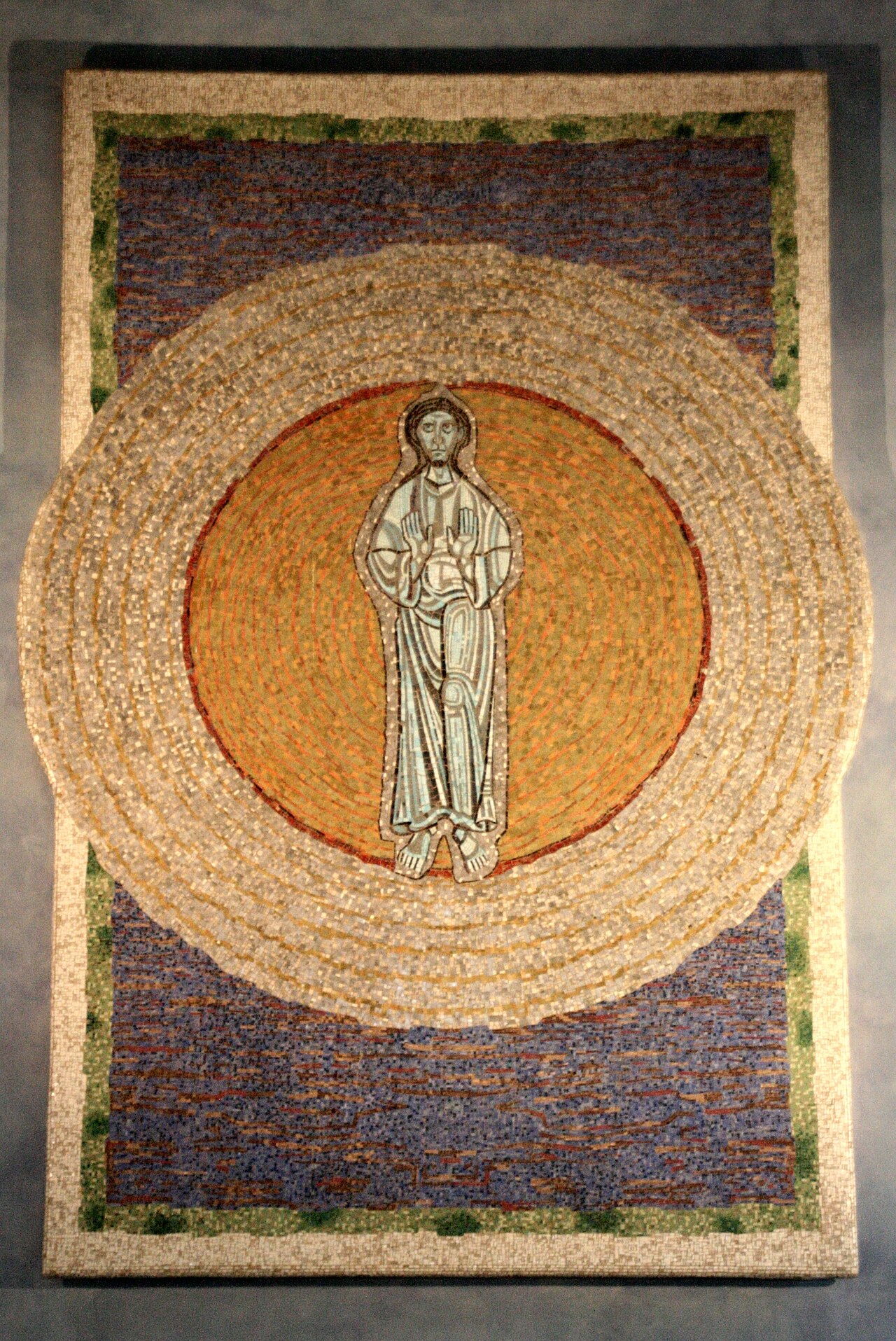
Trinity Altar Mosaic Based on a Scivias Illumination
Ludwig Baur · 1965 (design); photographed 2012
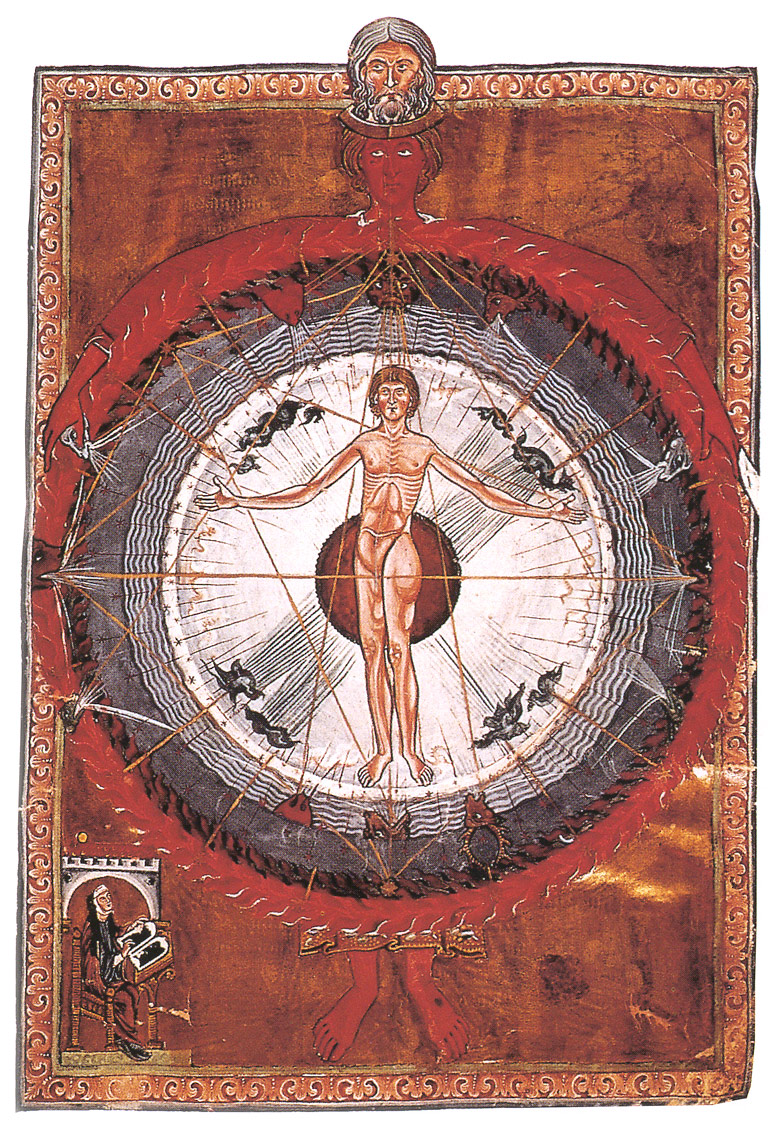
A 1965 mosaic in Eibingen's parish church copying an illustration from Hildegard's own manuscript Scivias.
A later artwork copying an illumination from Hildegard's own Scivias manuscript, showing her lasting influence.
About this source
What it is
This mosaic altar image in the Catholic parish church of St. Hildegard at Eibingen was designed in 1965 by the artist Ludwig Baur. It is based directly on a plate from the Scivias manuscript, a visionary text written by Hildegard of Bingen, specifically the illumination showing the Trinity.
Why it matters
The mosaic demonstrates how Hildegard's original visionary artwork, created centuries earlier, continued to inspire religious art long after her death. It connects her written and illustrated theological visions to a modern church setting, showing her lasting influence on Christian art and spirituality.
Look closer
- Why might a church in the 1960s choose to base new artwork on a medieval manuscript illumination?
- What might be gained or lost when an image is copied from a manuscript page into a large mosaic?
- What does this mosaic suggest about how later Christians understood and valued Hildegard's visions?
This painting is part of the curated material that grounds the AI version of Hildegard of Bingen on Humy.ai — when students ask about related events, the AI can quote it and cite it.
More Hildegard of Bingen sources
Meet the AI Hildegard of Bingen →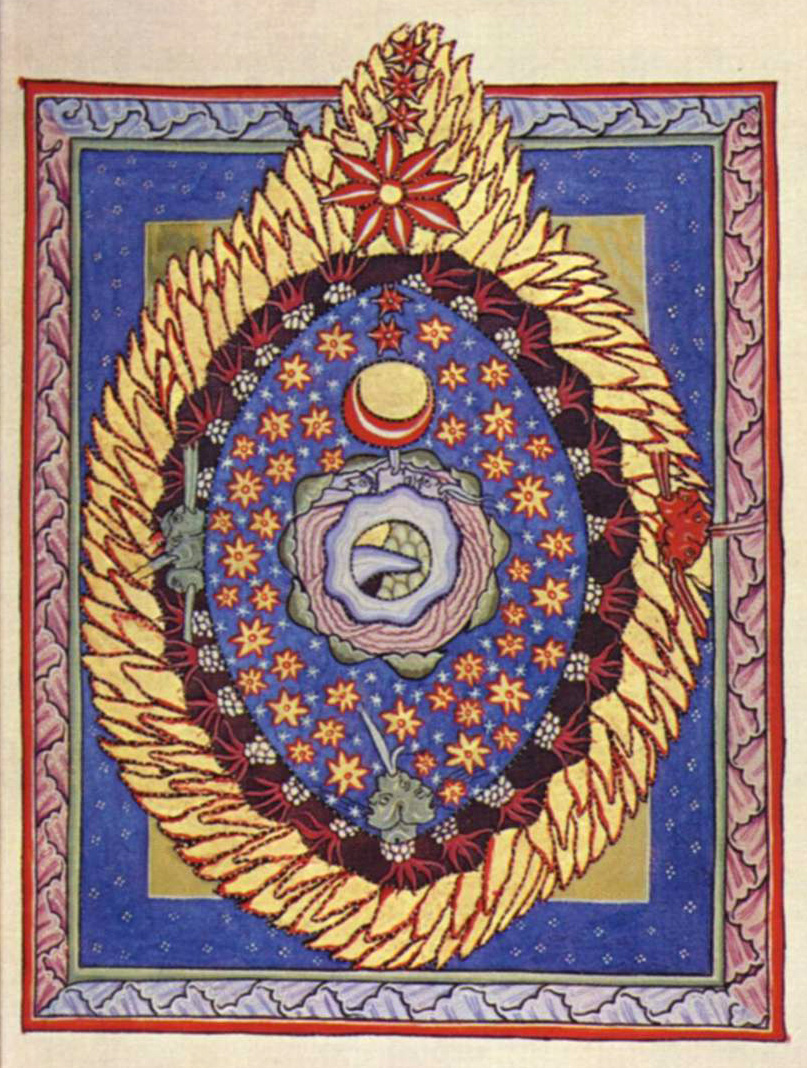 Book
Primary source
Scivias
Hildegard of Bingen · 1151-1152
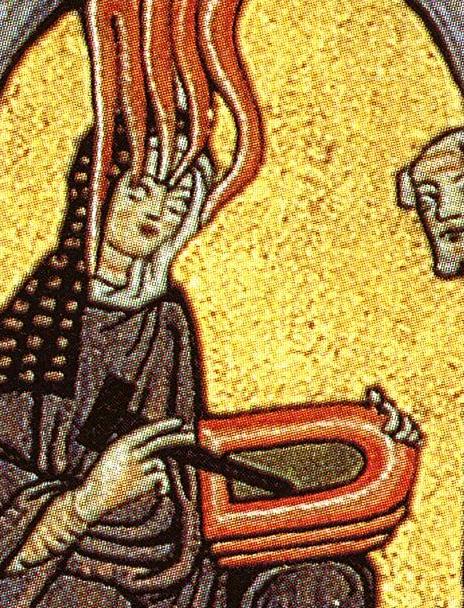 Painting
Primary source
Scivias Frontispiece Miniature
12th century
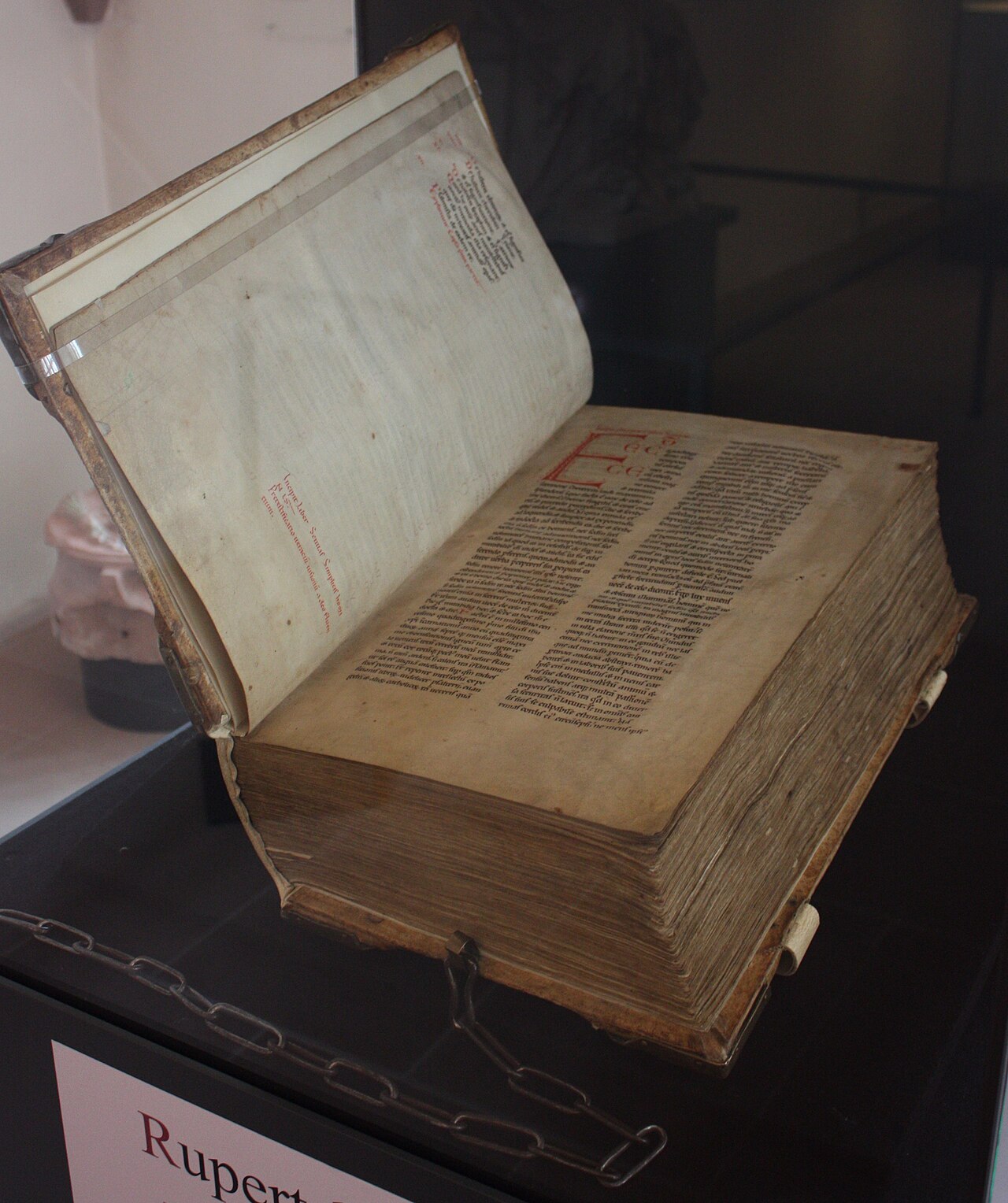 Book
Primary source
Wiesbaden Codex
Hildegard of Bingen · c. 1200
 Book
Primary source
Liber divinorum operum
Hildegard of Bingen · c. 1163-1174
 Document
Primary source
Dendermonde Codex
Hildegard of Bingen · c. 1175
Ready when you are
Start chatting with Hildegard of Bingen now.
20 messages free · No credit card · Available in 50+ languages.