


Secondary sourcePainting1900
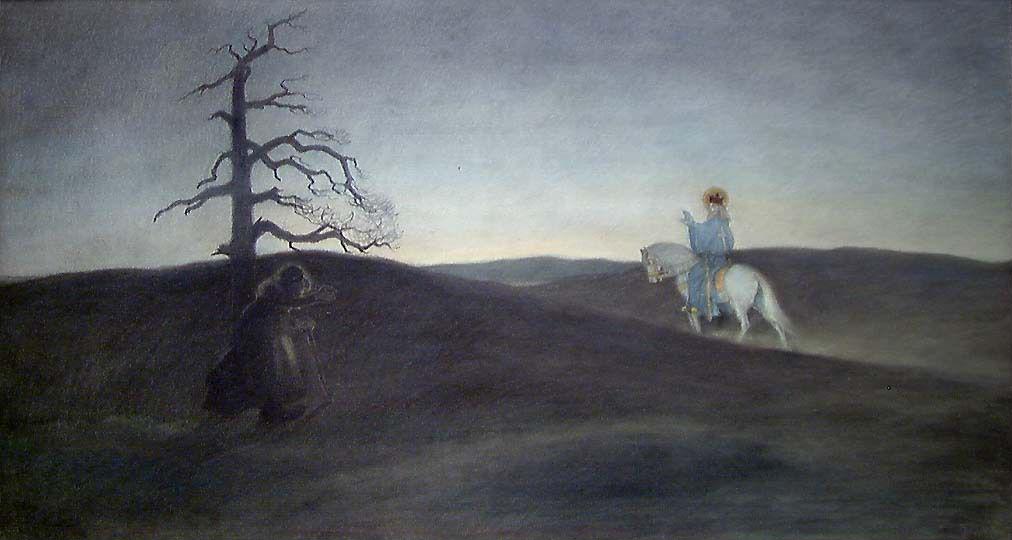
St. Olaf and Gjogola in an Evening Landscape
Christian Skredsvig · 1900
A 1900 painting by Christian Skredsvig showing Olaf II as a legendary rider in a Norwegian folk-tale scene.
This painting shows Olaf II living on as a legendary figure in Norwegian folklore long after his death.
About this source
What it is
This painting was made in 1900 by Christian Skredsvig and is held at the National Museum of Art, Architecture and Design. It shows a dim evening landscape with a cloaked figure kneeling by a bare tree, and a haloed rider on a white horse moving along a hill.
Why it matters
Olaf II became a central figure in Norwegian folklore after his death, appearing in legends alongside other folk characters. This painting shows how, centuries later, Norwegian artists like Skredsvig continued to imagine him not just as a historical king but as a figure from folk tales, blending saintly imagery with fantasy landscape.
Look closer
- What details in the painting suggest Olaf is meant to be read as holy or legendary?
- Why might an artist in 1900 choose to paint a medieval king in a folk-tale setting?
- What does this painting tell you about how Olaf's story changed over time, compared to historical accounts?
This painting is part of the curated material that grounds the AI version of Olaf II of Norway on Humy.ai — when students ask about related events, the AI can quote it and cite it.
More Olaf II of Norway sources
Browse all 87 →Secondary source
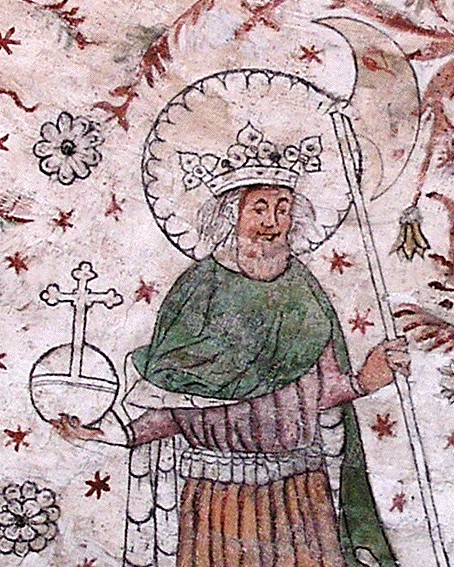
Óláfs saga helga in Heimskringla
Snorri Sturluson · c. 1230
 Book
Secondary source
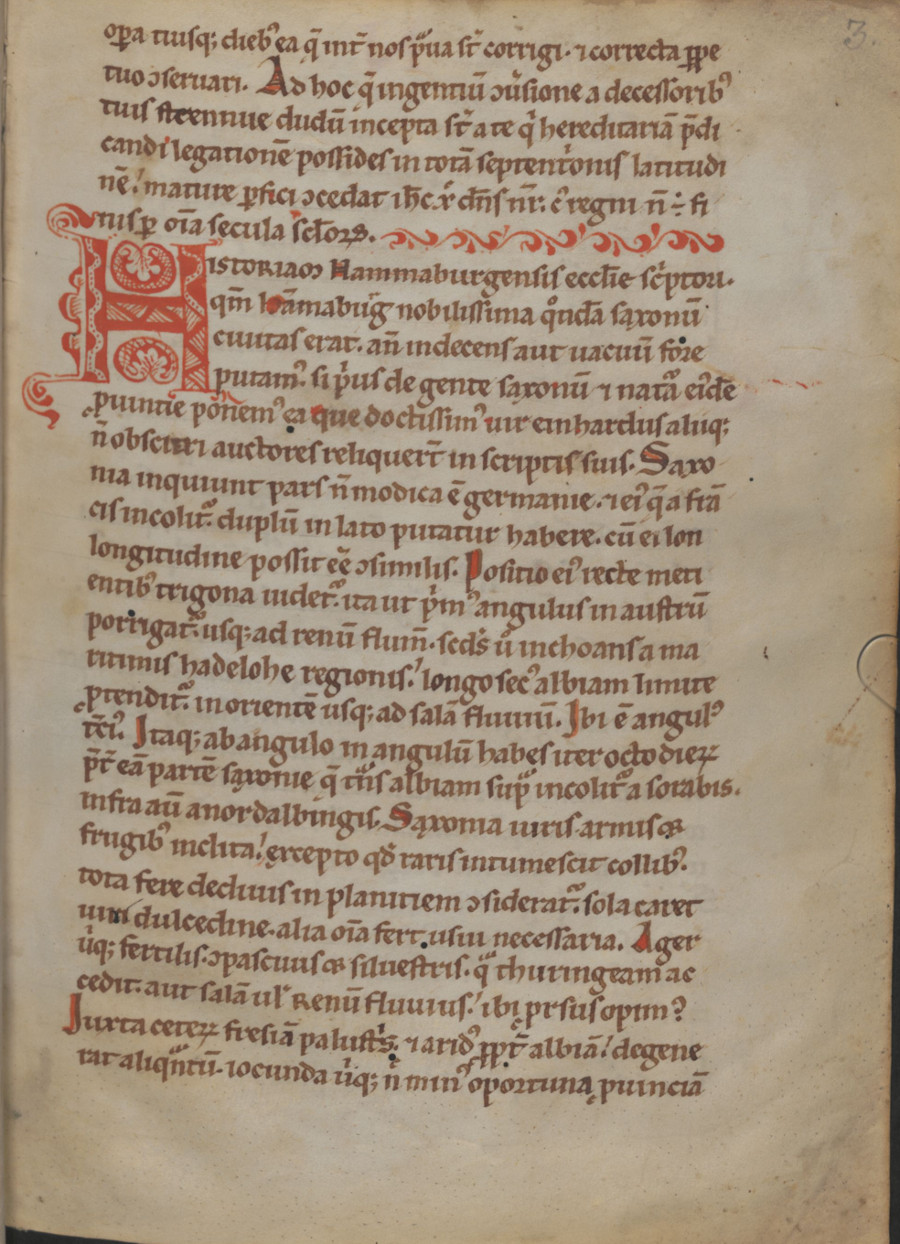
Gesta Hammaburgensis ecclesiae pontificum
Adam of Bremen · 1073-1076
 Artifact
Secondary source
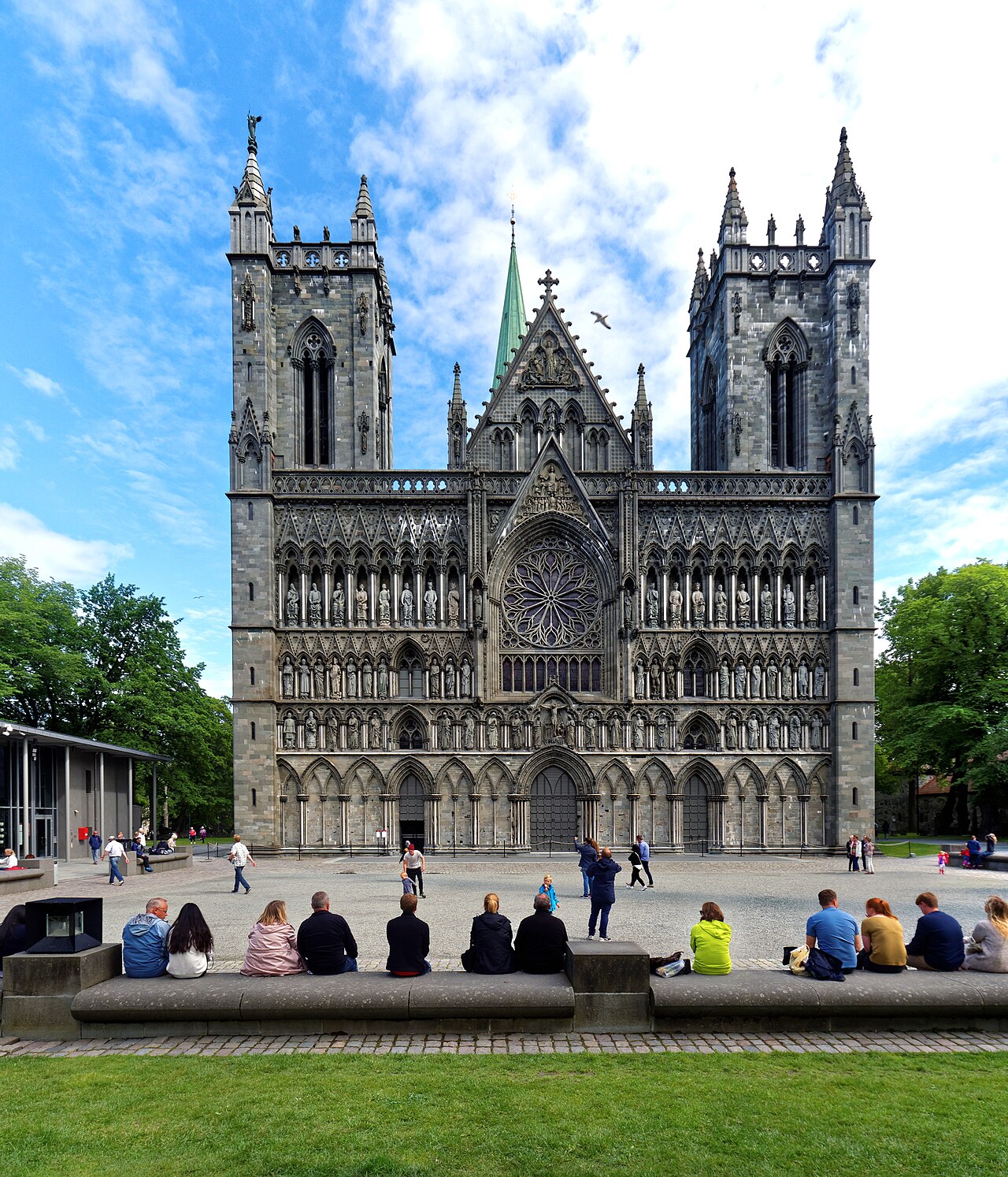
Nidaros Cathedral
1070-1300 (begun)
 Artifact
Primary source
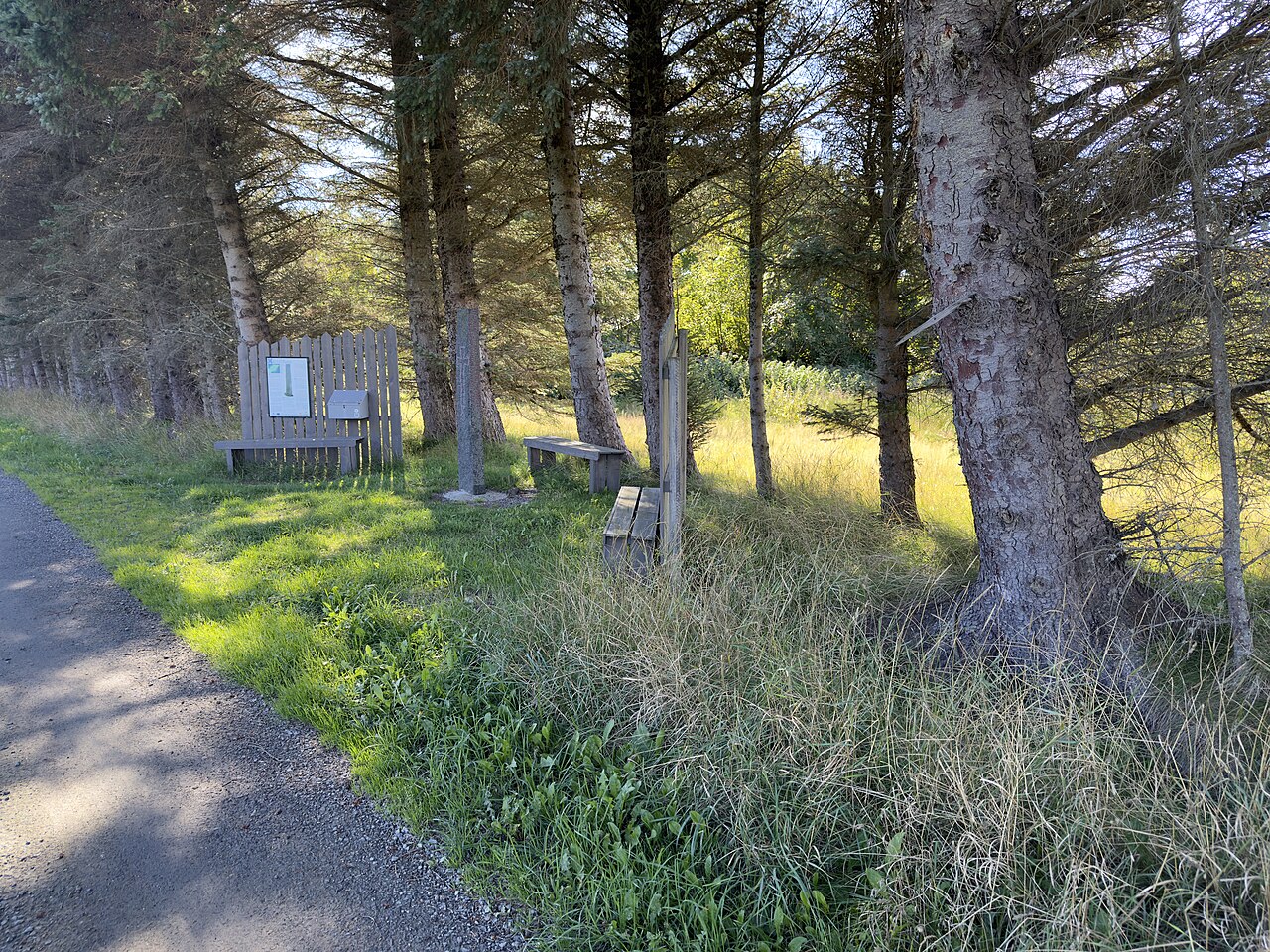
Kuli Stone
c. 1034
Free account
Read every Olaf II of Norway source
Sign up free →
Ready when you are
Start chatting with Olaf II of Norway now.
20 messages free · No credit card · Available in 50+ languages.