


Secondary sourcePainting1884
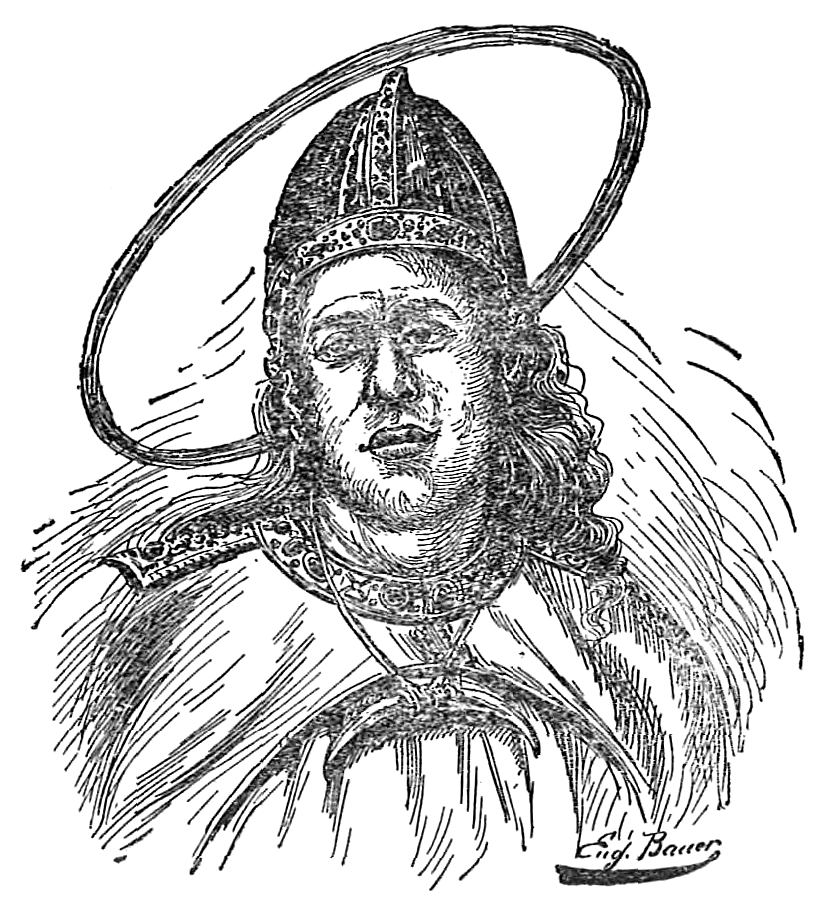
St. Olaf illustration
Annie Klingensmith · 1884
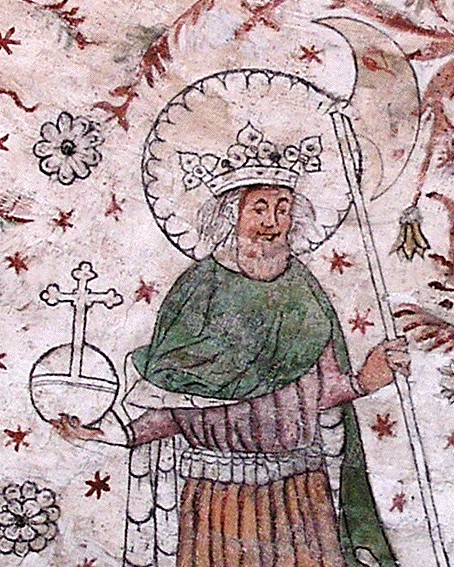
A black-and-white children's book engraving of St Olaf, made by Annie Klingensmith in 1884, long after his death.
Shows how a late nineteenth-century children's book pictured Olaf as a haloed saint.
About this source
What it is
This is a black-and-white engraving of a bearded man with long wavy hair. He wears an ornate pointed mitre-like headdress, a large ring-shaped halo and an ornamented collar. It is signed Eng. Bauer at the lower right. The Commons record credits Annie Klingensmith as the creator and dates the work to 1884. It was made as a children's book illustration.
Why it matters
Olaf II was king of Norway from 1015 to 1028. This picture was made about eight centuries after his death, so it shows how later artists and publishers imagined him rather than how he looked. Children's books of the late 1800s often carried such pictures, and they help show how a medieval king was turned into a religious image for a new audience.
Look closer
- Which details, such as the halo and headdress, tell you that this is a saint rather than an ordinary king?
- Why might a book for children use a simple picture like this to present a historical figure?
- What can you not learn about Olaf from this image alone?
This painting is part of the curated material that grounds the AI version of Olaf II of Norway on Humy.ai — when students ask about related events, the AI can quote it and cite it.
More Olaf II of Norway sources
Browse all 87 →Secondary source
Óláfs saga helga in Heimskringla
Snorri Sturluson · c. 1230
 Book
Secondary source
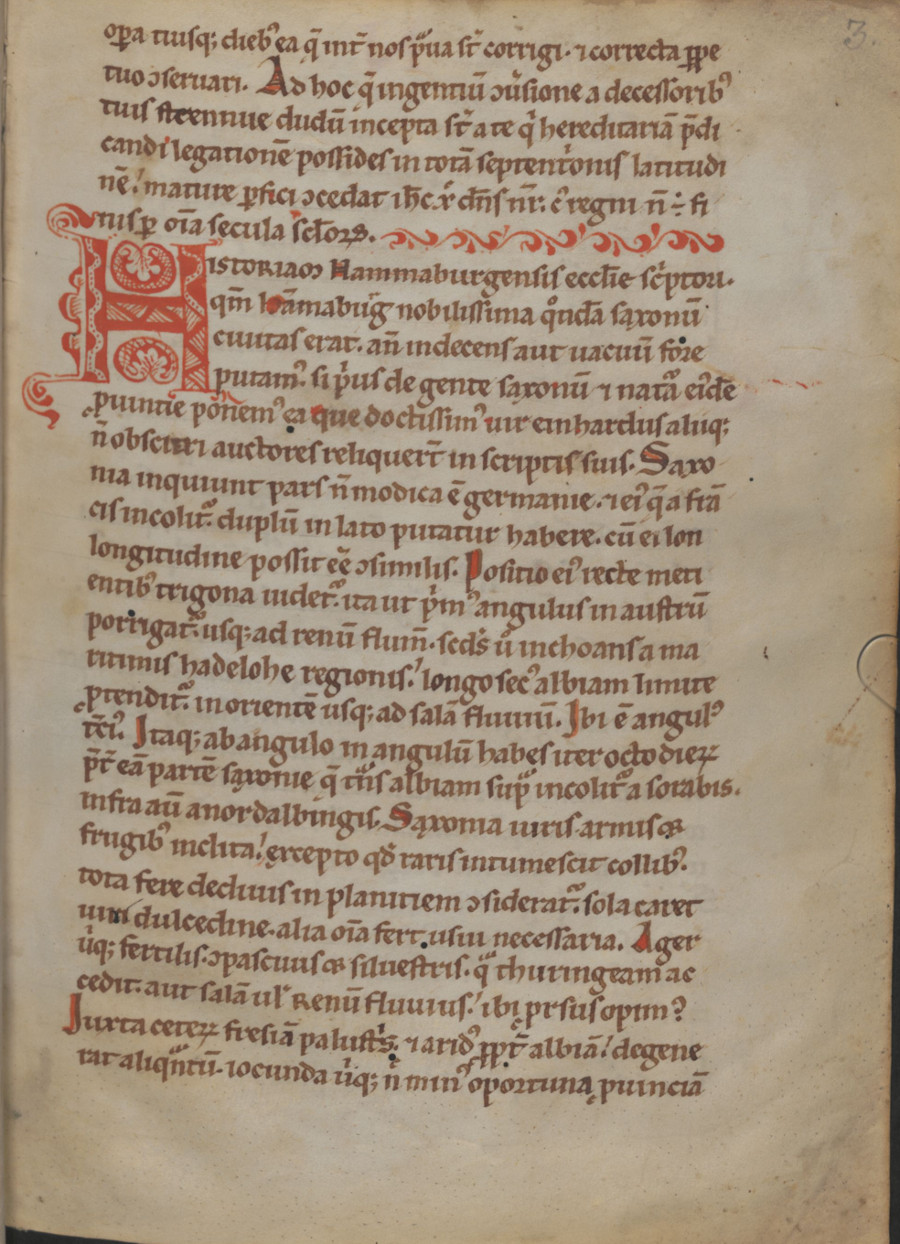
Gesta Hammaburgensis ecclesiae pontificum
Adam of Bremen · 1073-1076
 Artifact
Secondary source
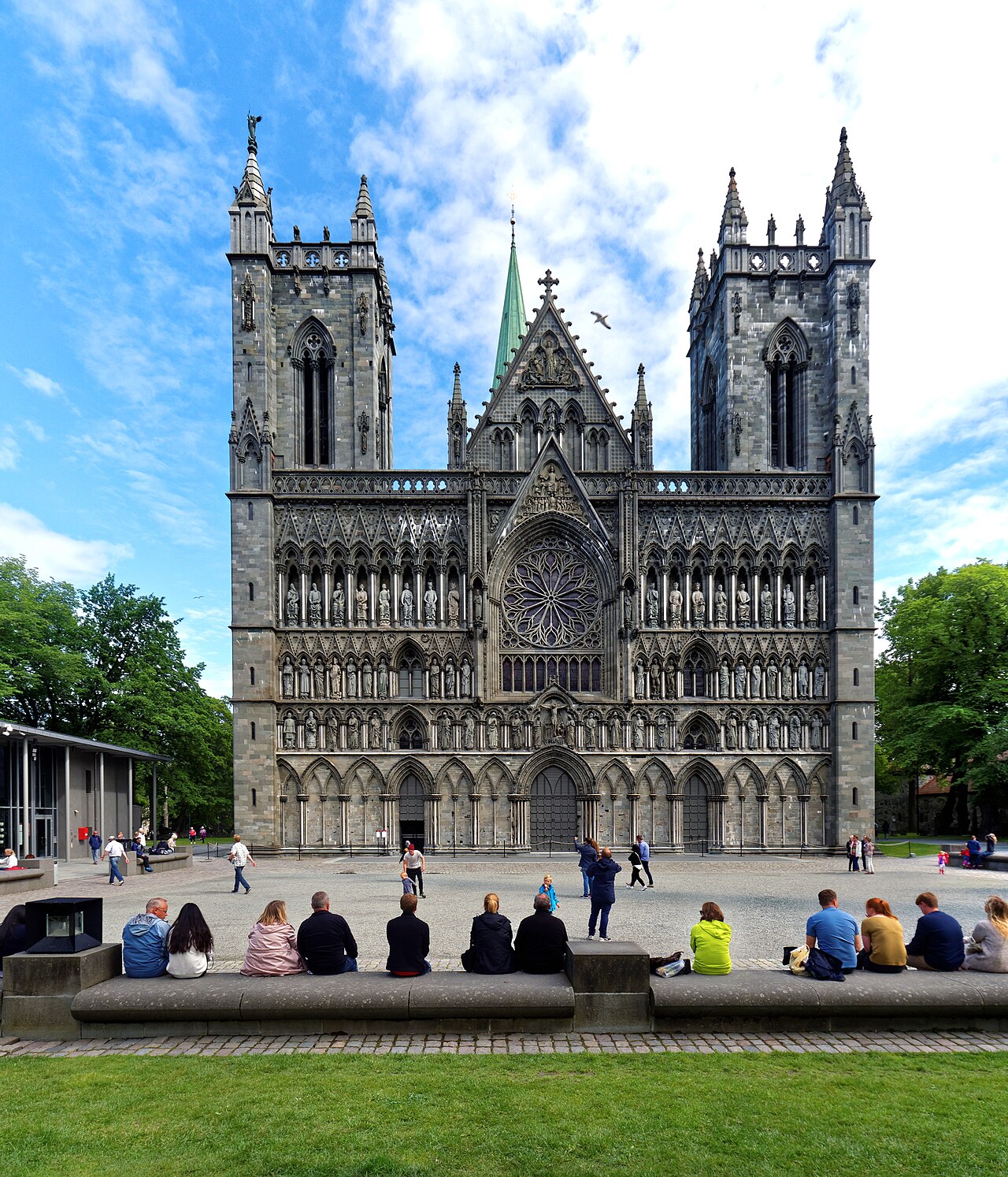
Nidaros Cathedral
1070-1300 (begun)
 Artifact
Primary source
Kuli Stone
c. 1034
Free account
Read every Olaf II of Norway source
Sign up free →
Ready when you are
Start chatting with Olaf II of Norway now.
20 messages free · No credit card · Available in 50+ languages.