


Secondary sourcePainting17th century
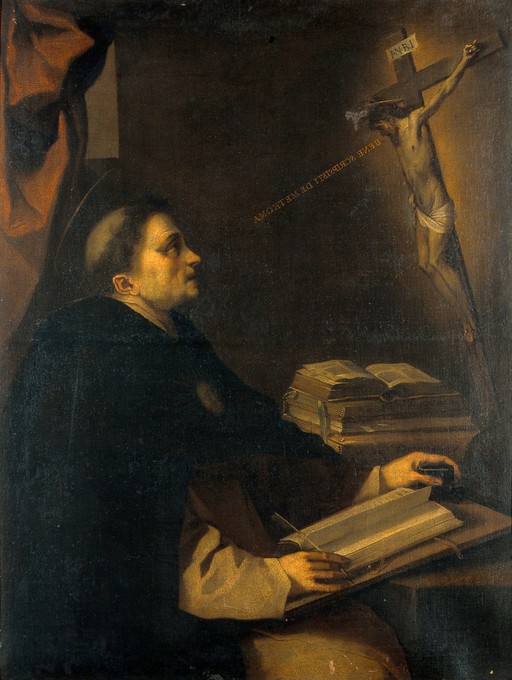
St Thomas Aquinas, 17th-century Italian oil painting
17th century
A 17th-century Italian painting shows Aquinas writing at his desk beneath a crucifix, with an inscription recalling a story of Christ speaking to him.
A later devotional painting imagining Aquinas, reflecting his posthumous reputation rather than his lifetime appearance.
About this source
What it is
This is an oil painting by an unnamed Italian painter from the 17th century, held by the Wellcome Collection. It shows a bearded friar in a dark habit at a desk with books, gazing up at a crucifix, with the inscription "Bene scripsisti de me Thoma" ("You have written well of me, Thomas").
Why it matters
Painted centuries after Aquinas's death, this image reflects how he was remembered and venerated by later generations. The inscription recalls a legend in which Christ praised Aquinas's writings, showing how his reputation as a theologian became wrapped in devotional storytelling.
Look closer
- Why might the painter choose to show Aquinas looking upward at the crucifix rather than down at his book?
- What does the inscription suggest about how the painter wanted viewers to think of Aquinas?
- How does this image differ from a realistic portrait made during his lifetime?
This painting is part of the curated material that grounds the AI version of Saint Thomas Aquinas on Humy.ai — when students ask about related events, the AI can quote it and cite it.
More Saint Thomas Aquinas sources
Meet the AI Saint Thomas Aquinas →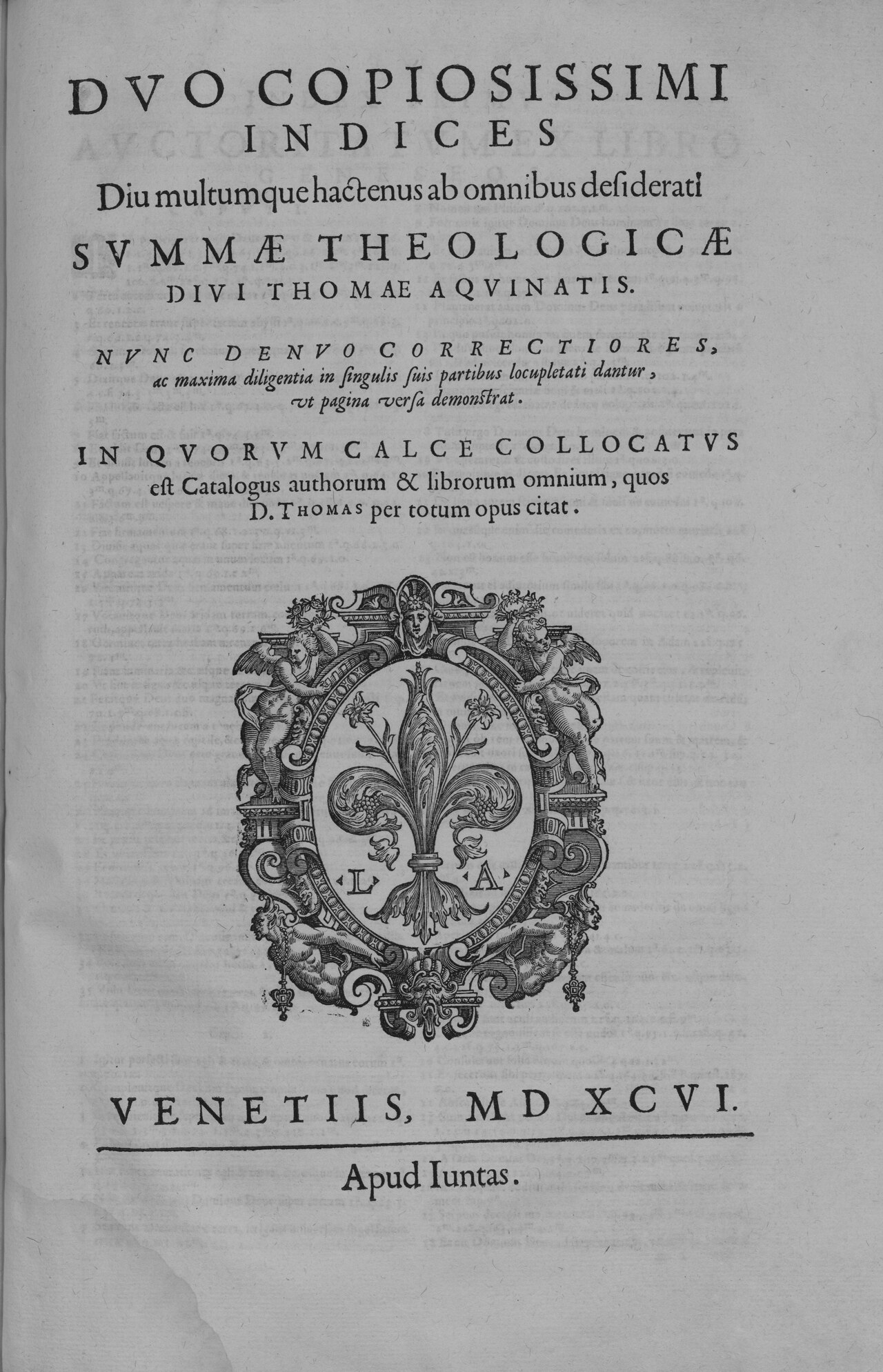 Book
Primary source
Summa Theologica
Thomas Aquinas · 1274
Primary source
Pange Lingua Gloriosi Corporis Mysterium
Thomas Aquinas · 1263
 Painting
Secondary source
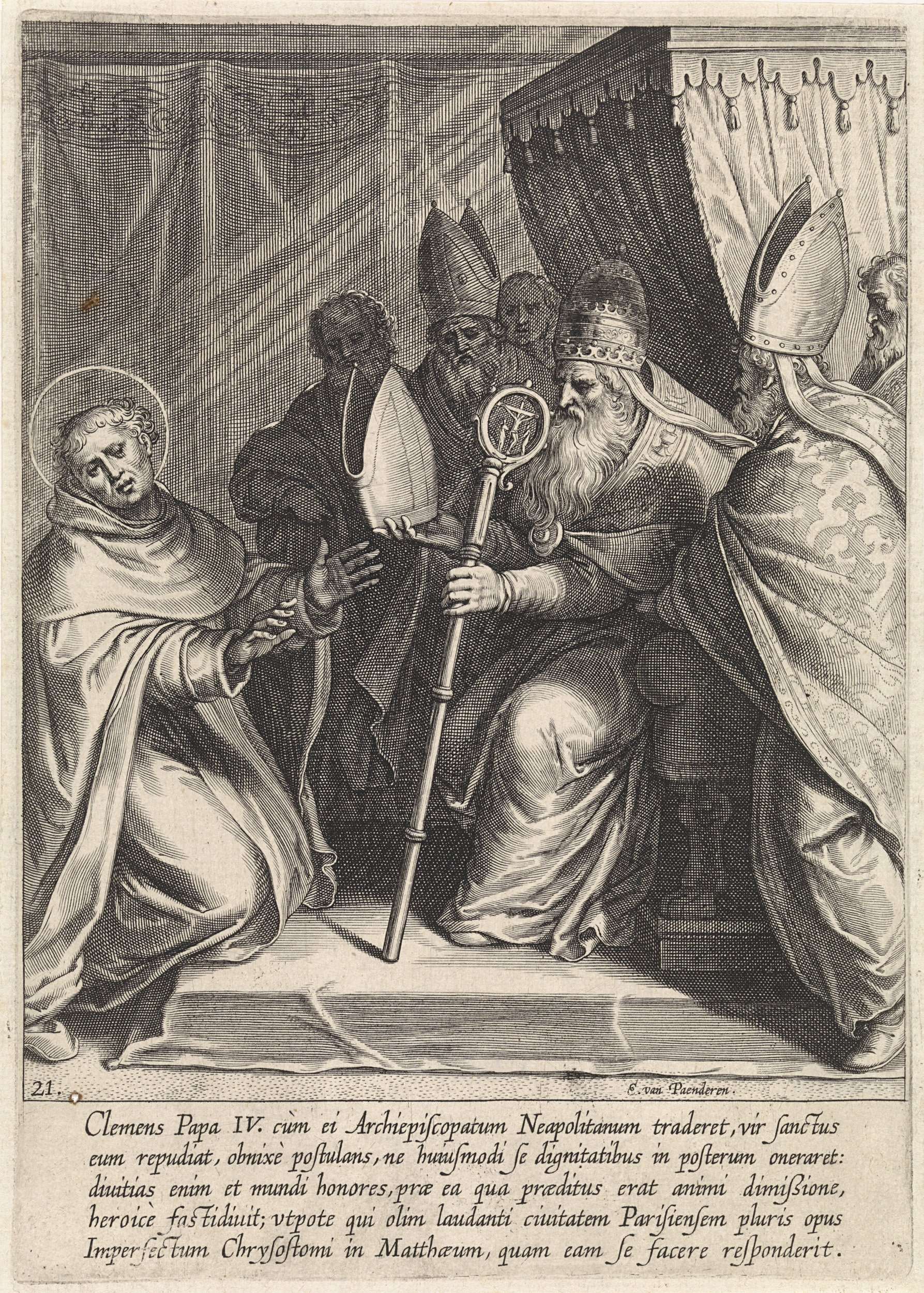
Thomas Aquinas Refuses the Archbishopric of Naples
1610
 Painting
Secondary source
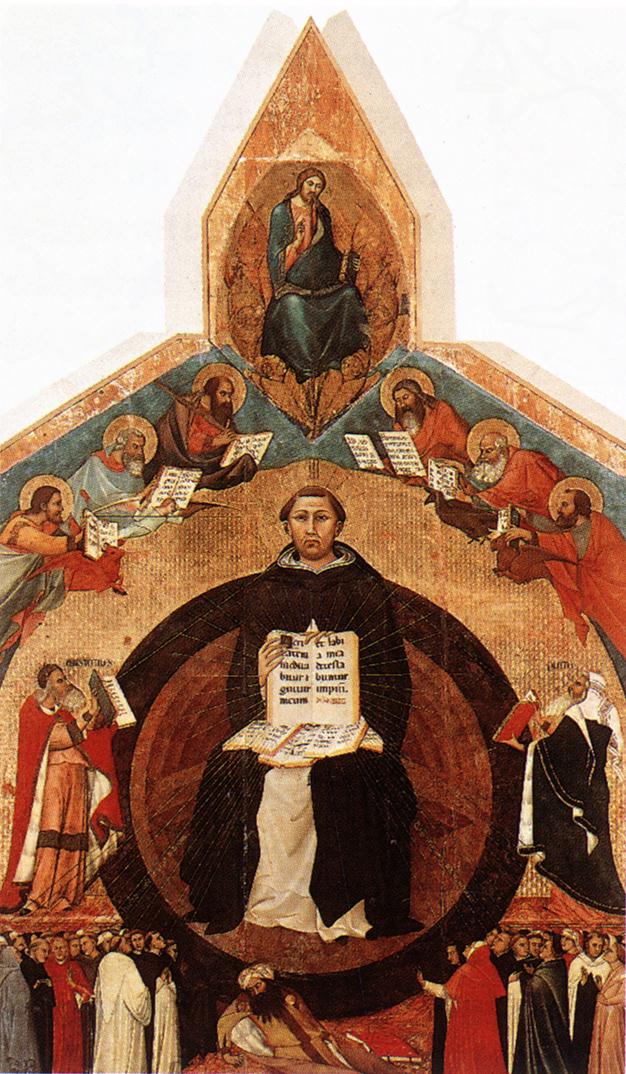
Triumph of Saint Thomas Aquinas
Lippo Memmi · 1340
 Painting
Secondary source
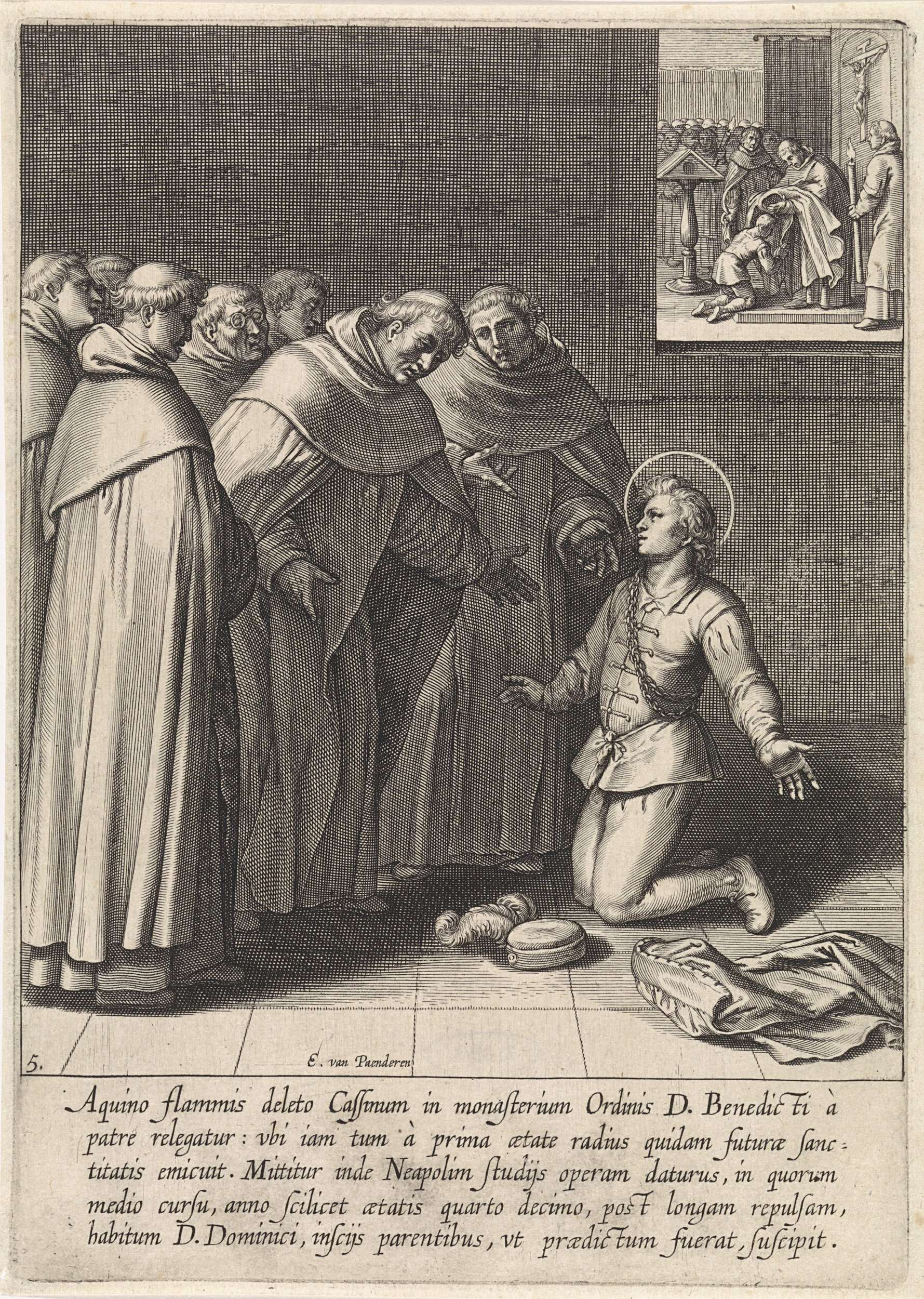
Thomas Aquinas Joins the Dominican Order
1610
Ready when you are
Start chatting with Saint Thomas Aquinas now.
20 messages free · No credit card · Available in 50+ languages.