


Secondary sourceSculpture1905
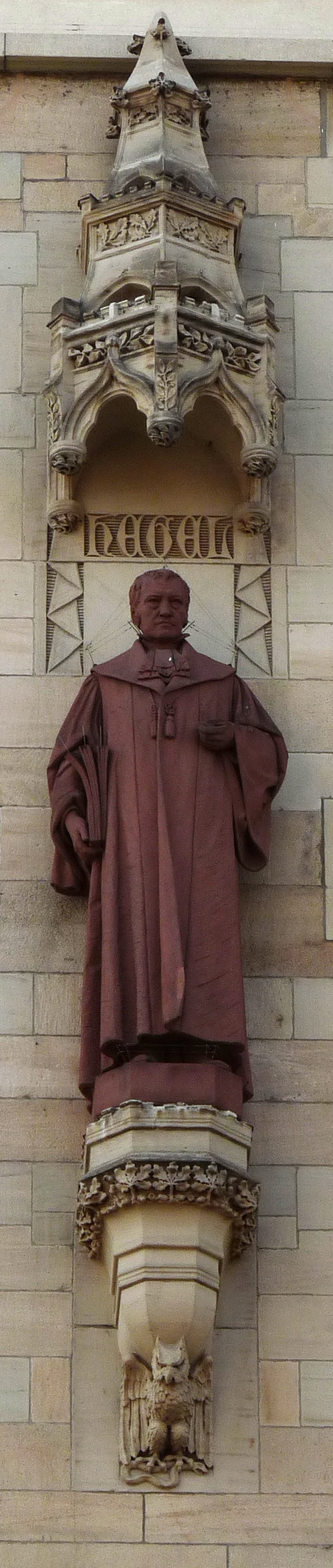
Standbild Georg Wilhelm Friedrich Hegel, Stuttgart Rathaus
Daniel Stocker (after a model by Georg Rhein) · 1905
A 1905 red sandstone statue of Hegel set into the facade of Stuttgart's town hall, honoring him as a famous native son.
A civic monument built in Hegel's native Stuttgart, showing how the city later honored him as a local hero.
About this source
What it is
This is a red sandstone statue of Hegel, made in 1905 by Daniel Stocker after a model by Georg Rhein. It stands in a carved stone niche on the facade of the town hall (Rathaus) in Stuttgart, with his name carved above it.
Why it matters
Hegel was born in Stuttgart, and this statue shows how the city later chose to honor him publicly as one of its most important historical figures. It is a good example of how cities use statues on official buildings to claim famous people as part of their local identity and history.
Look closer
- What does the statue's pose and clothing suggest about how Hegel was remembered?
- Why might a city government put a statue of a philosopher on its own town hall?
- What is left out of a stone statue that a photograph or a written account might show instead?
This sculpture is part of the curated material that grounds the AI version of Georg Wilhelm Friedrich Hegel on Humy.ai — when students ask about related events, the AI can quote it and cite it.
More Georg Wilhelm Friedrich Hegel sources
Meet the AI Georg Wilhelm Friedrich Hegel → Book
Primary source
The Phenomenology of Spirit
Georg Wilhelm Friedrich Hegel · 1807
 Book
Primary source
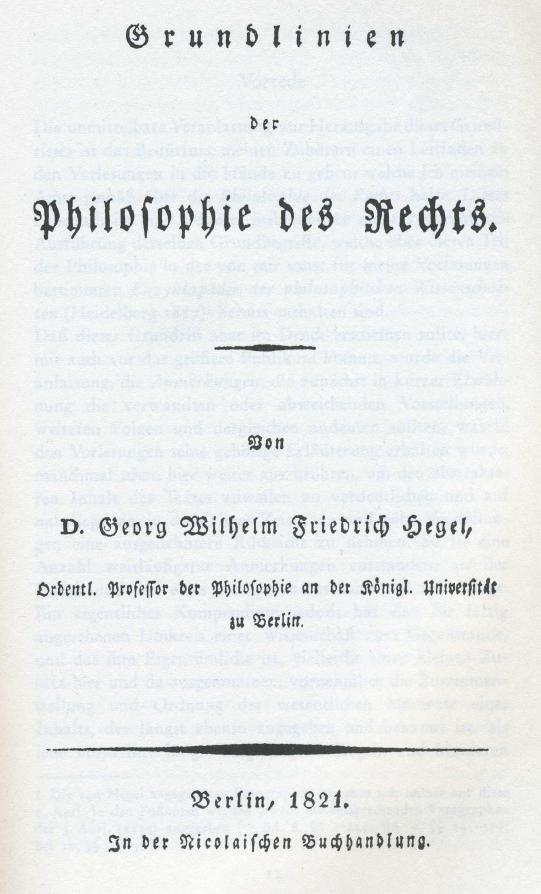
Elements of the Philosophy of Right
Georg Wilhelm Friedrich Hegel · 1821
 Book
Primary source
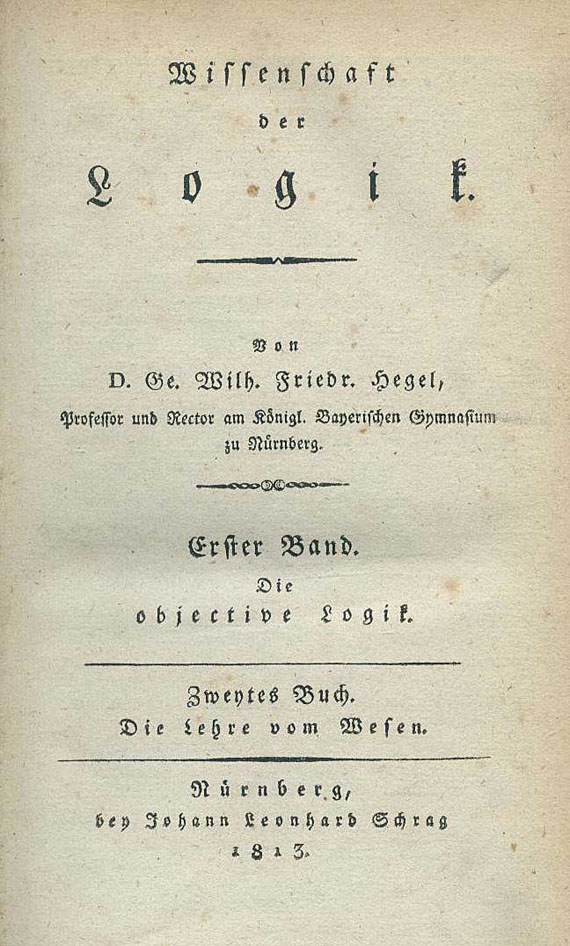
Science of Logic
Georg Wilhelm Friedrich Hegel · 1812-1816
 Book
Primary source
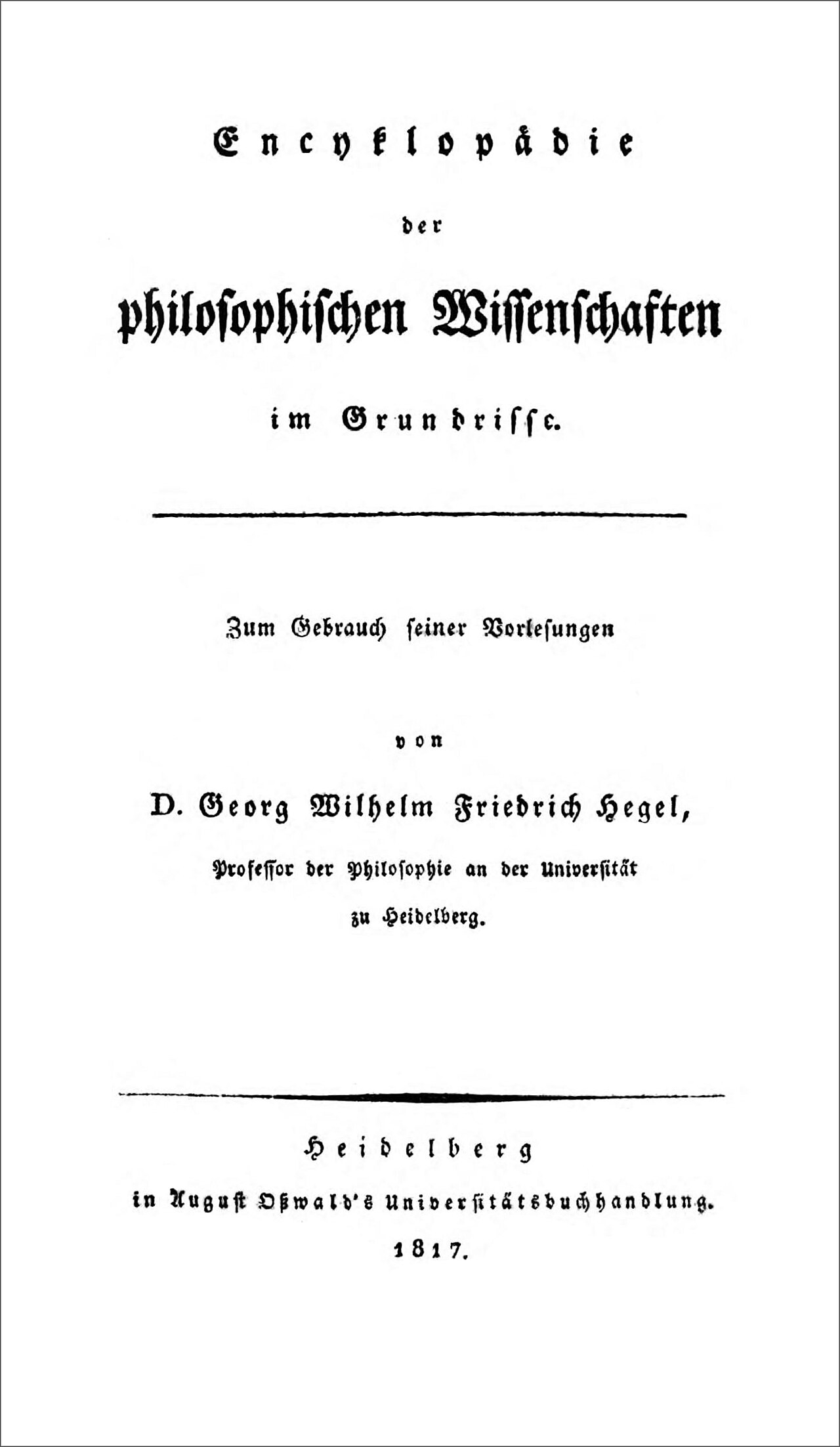
Encyclopedia of the Philosophical Sciences
Georg Wilhelm Friedrich Hegel · 1817
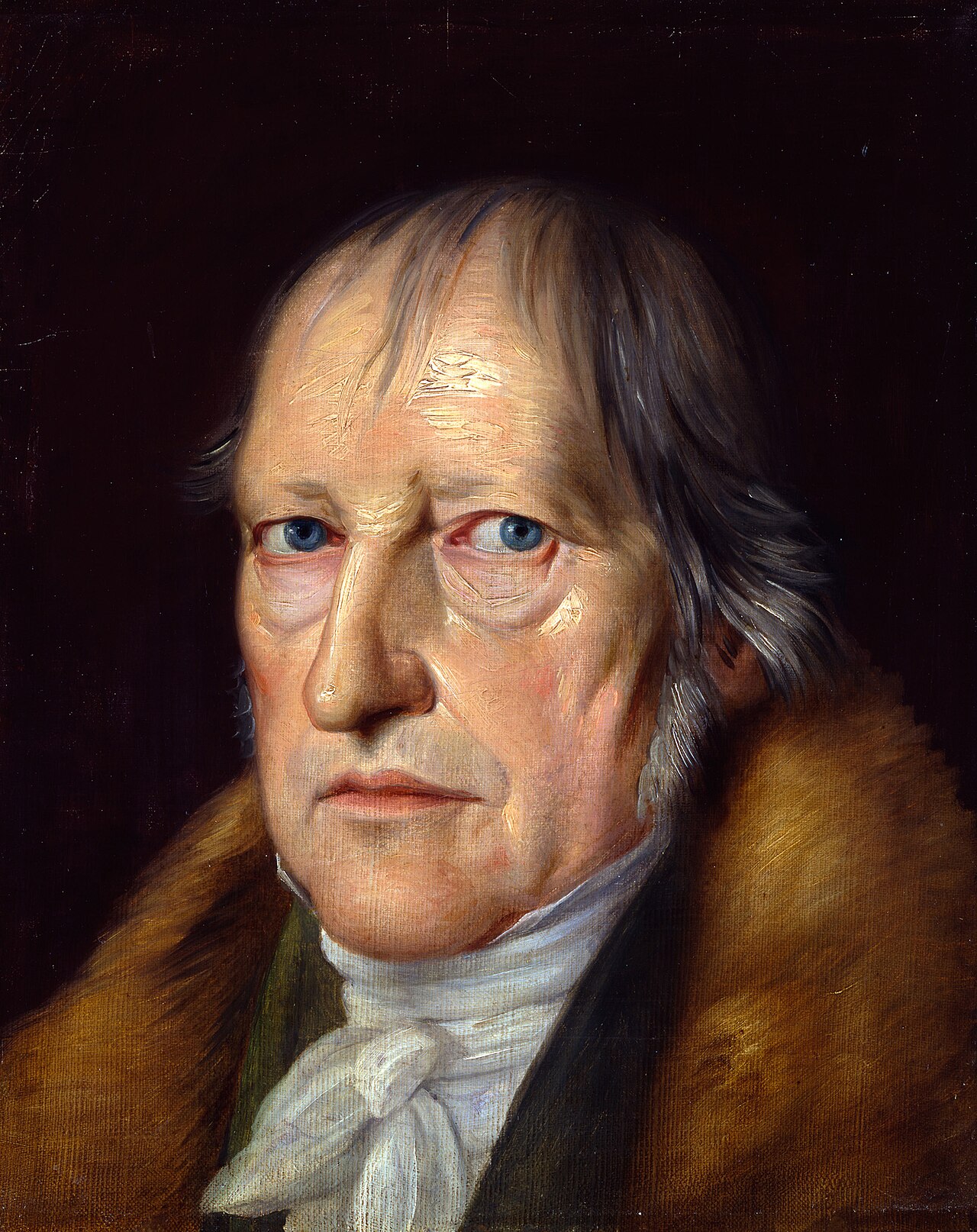 Painting
Primary source
The Philosopher Georg Friedrich Wilhelm Hegel
Jakob Schlesinger · 1831
Ready when you are
Start chatting with Georg Wilhelm Friedrich Hegel now.
20 messages free · No credit card · Available in 50+ languages.