


Secondary sourceArtifact1889
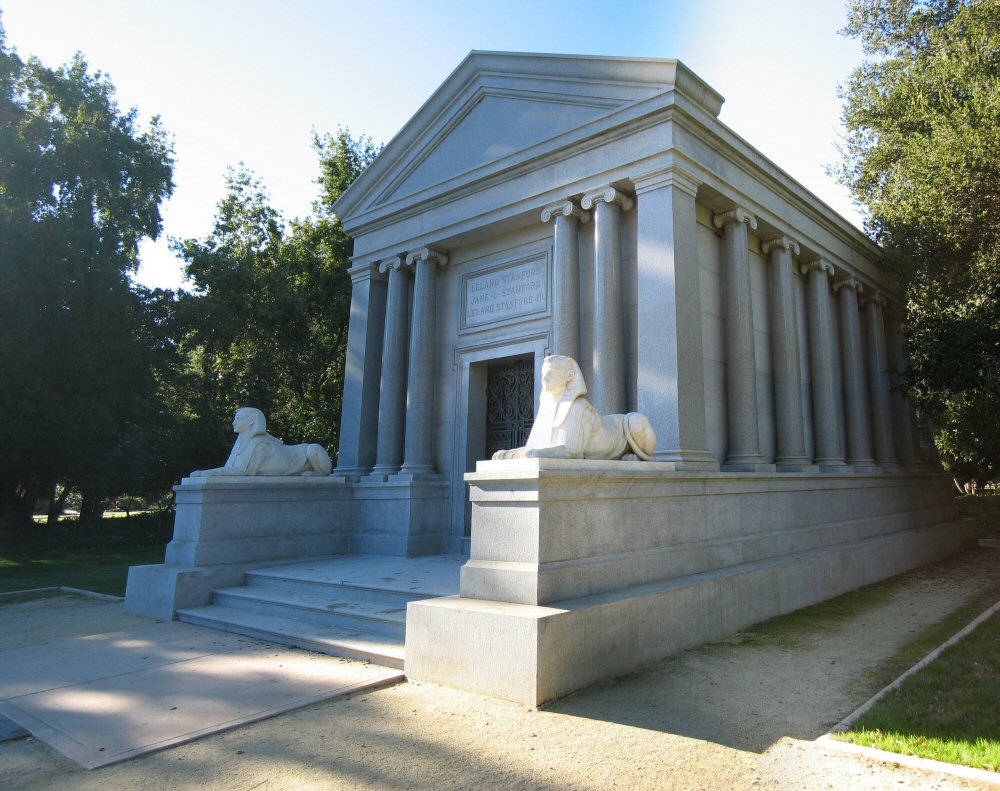
Stanford Mausoleum
1889
The classical-style tomb on the Stanford University campus where Leland Stanford was buried alongside his son.
The family tomb where Stanford was buried, built as part of the memorial purpose behind founding Stanford University.
About this source
What it is
Built in 1889, the Stanford Mausoleum is a white granite building in classical temple style, with a pediment, columns, and two marble sphinx statues flanking its entrance. It stands on the Stanford University campus and holds the Stanford family's graves.
Why it matters
The mausoleum reflects the memorial purpose behind the founding of Stanford University, which Leland and Jane Stanford created partly in memory of their son. Its grand classical style shows how wealthy Americans of the era used architecture to commemorate family and legacy.
Look closer
- Why might the Stanfords have chosen a classical temple design for their family tomb?
- What do the sphinx statues suggest about the meaning the family wanted to convey?
- How does a monument like this shape the way later generations remember a historical figure?
This artifact is part of the curated material that grounds the AI version of Leland Stanford on Humy.ai — when students ask about related events, the AI can quote it and cite it.
More Leland Stanford sources
Meet the AI Leland Stanford → Document
Primary source
Pacific Railway Act
1 July 1862
 Painting
Primary source
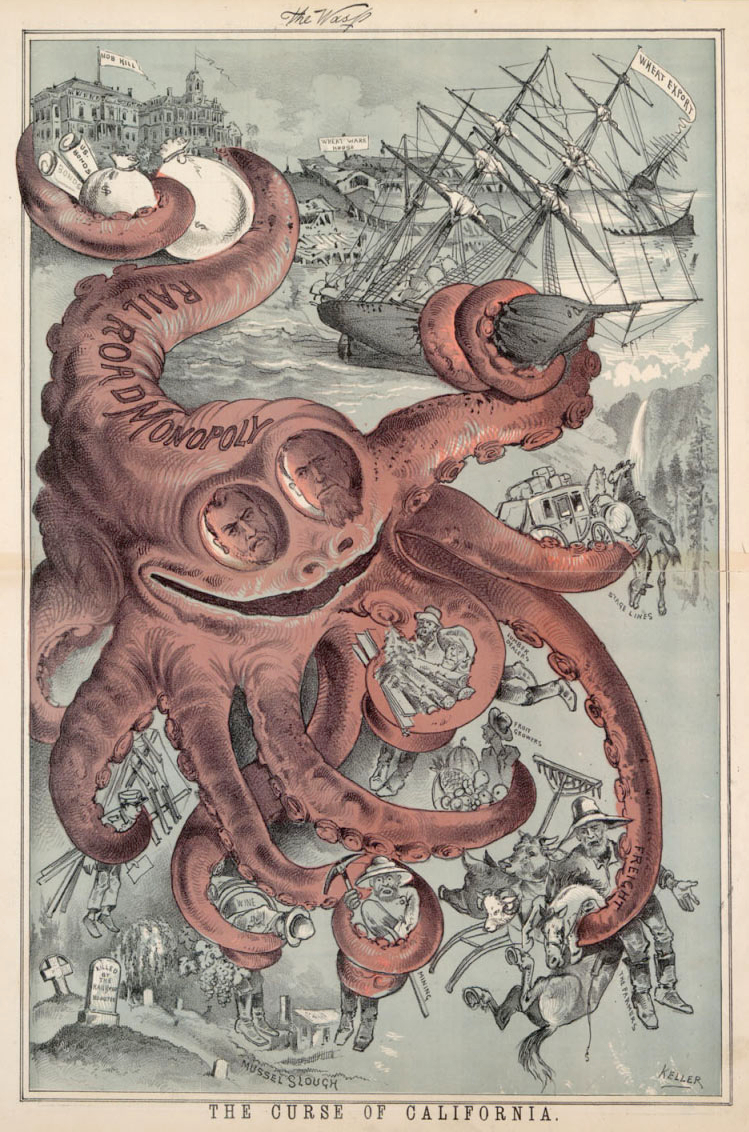
The Curse of California
George Frederick Keller · 1882
 Document
Primary source
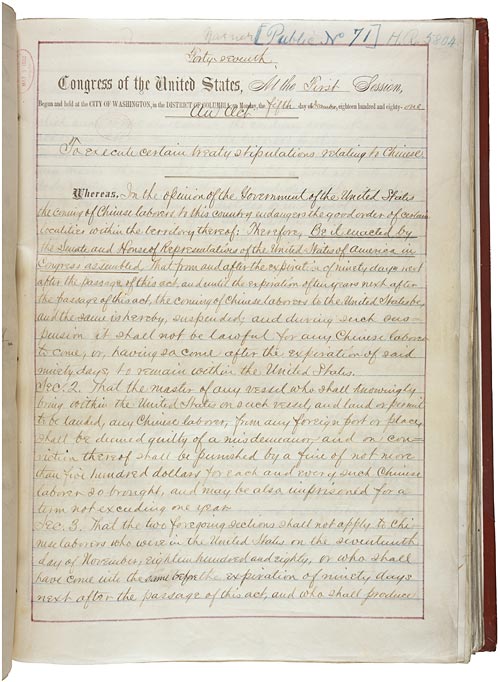
Chinese Exclusion Act
6 May 1882
 Photograph
Primary source
Sallie Gardner at a Gallop
Eadweard Muybridge · 19 June 1878
 Painting
Secondary source
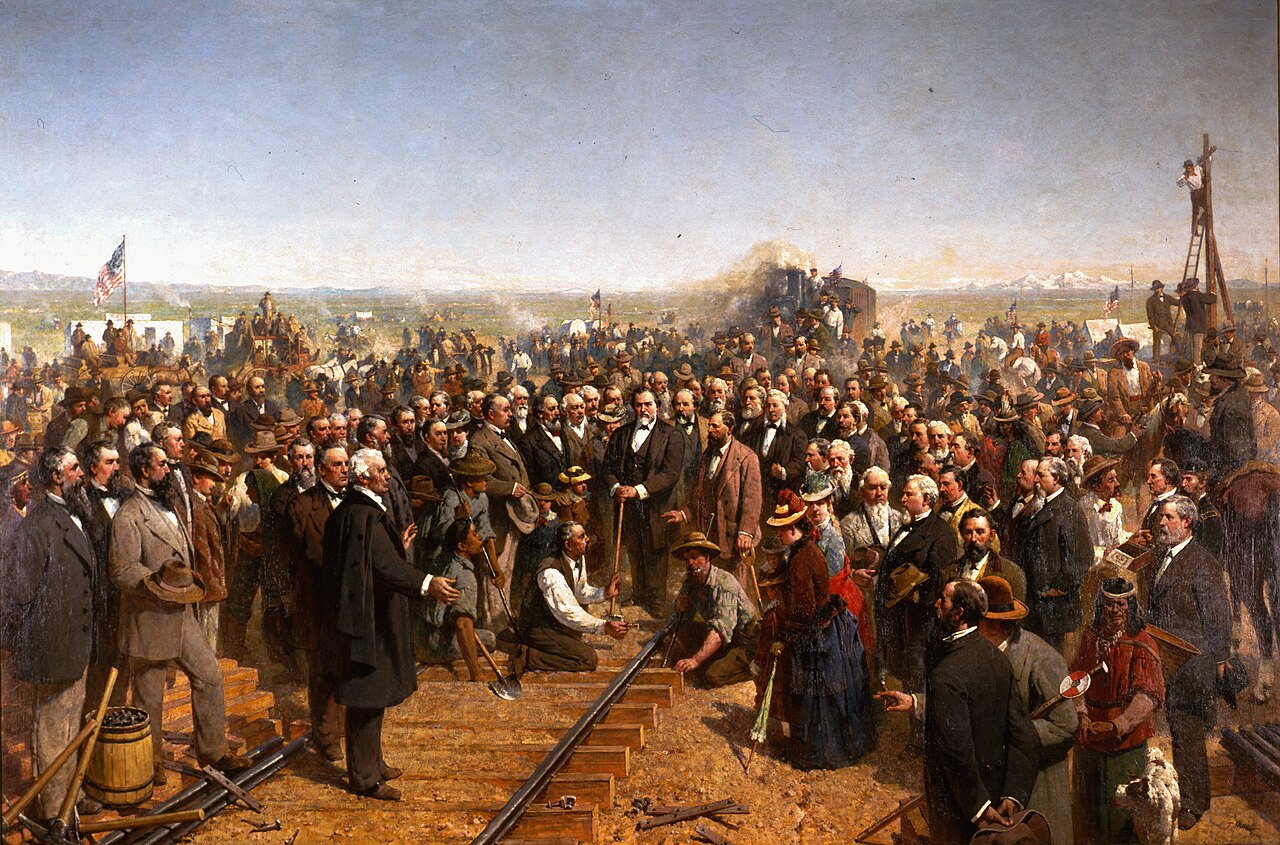
The Last Spike
Thomas Hill · 1881
Ready when you are
Start chatting with Leland Stanford now.
20 messages free · No credit card · Available in 50+ languages.