


Primary sourceDocument1856
Statement Proving Fillmore an Abolitionist
1856
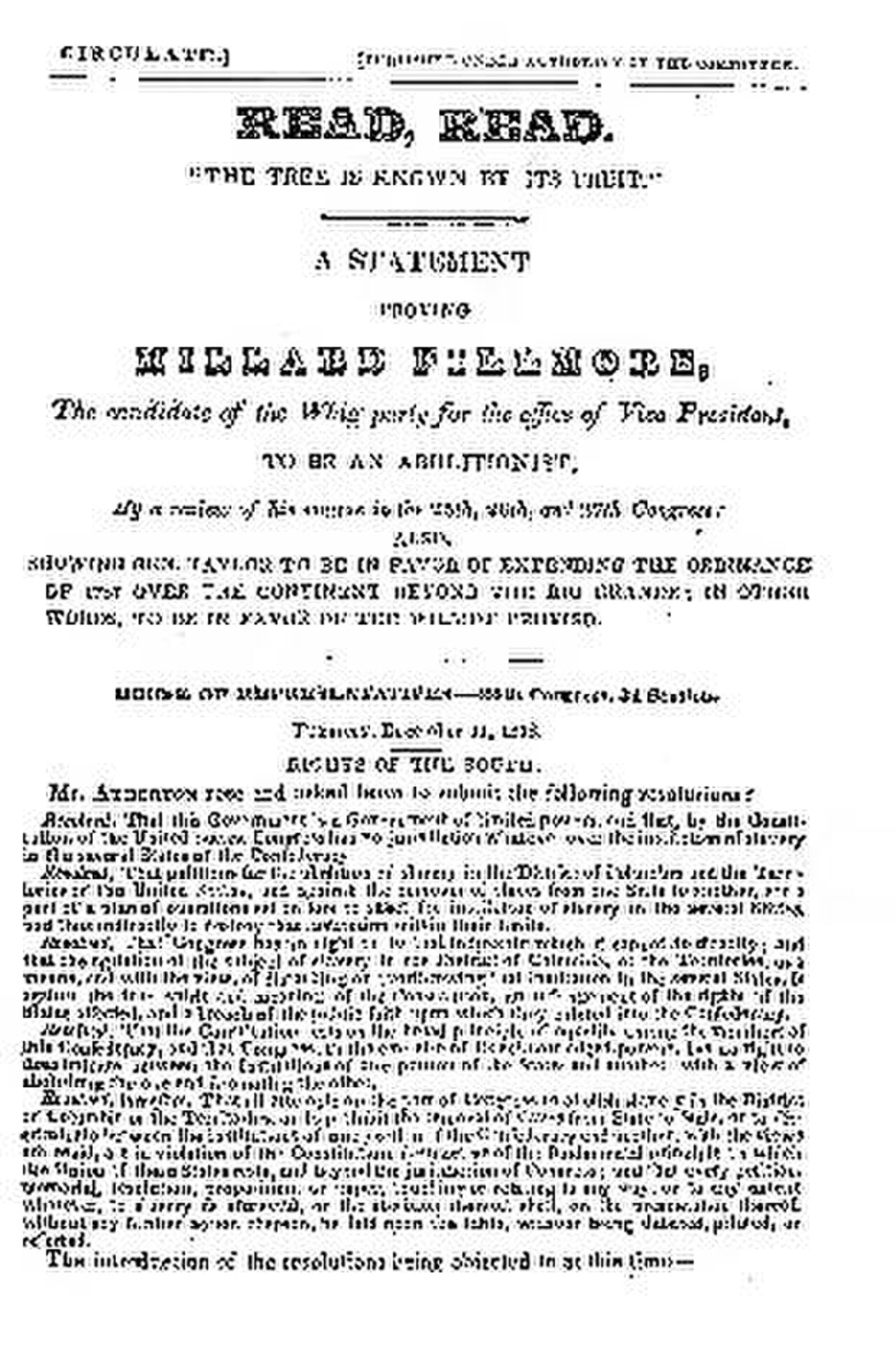
A 1856 Democratic campaign pamphlet arguing that Fillmore, running for vice president, was secretly an abolitionist.
A hostile campaign pamphlet using Fillmore's own congressional votes to attack his candidacy by labeling him an abolitionist.
About this source
What it is
This is a printed pamphlet from 1856, issued during a presidential campaign, arguing through a review of congressional votes that Millard Fillmore should be considered an abolitionist. It also claims General Taylor favored extending the Wilmot Proviso.
Why it matters
The pamphlet illustrates the extreme polarization of 1850s American politics around slavery's extension into new territories. By trying to label Fillmore an abolitionist, his opponents used his earlier congressional record as a political weapon in a society bitterly divided over slavery.
Look closer
- Why would calling a candidate an "abolitionist" be used as an attack in this period?
- What kind of evidence does the pamphlet use to make its case?
- How might a pamphlet like this affect voters who never read the original congressional resolutions themselves?
This document is part of the curated material that grounds the AI version of Millard Fillmore on Humy.ai — when students ask about related events, the AI can quote it and cite it.
More Millard Fillmore sources
Meet the AI Millard Fillmore →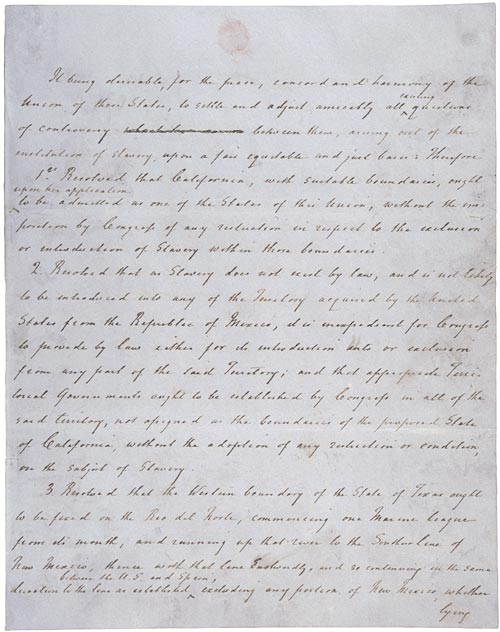 Document
Primary source
Compromise of 1850
Henry Clay · 29 January 1850 (resolutions); statutes enacted September 1850
Primary source
Fugitive Slave Act of 1850
United States Congress · 1850
 Photograph
Primary source
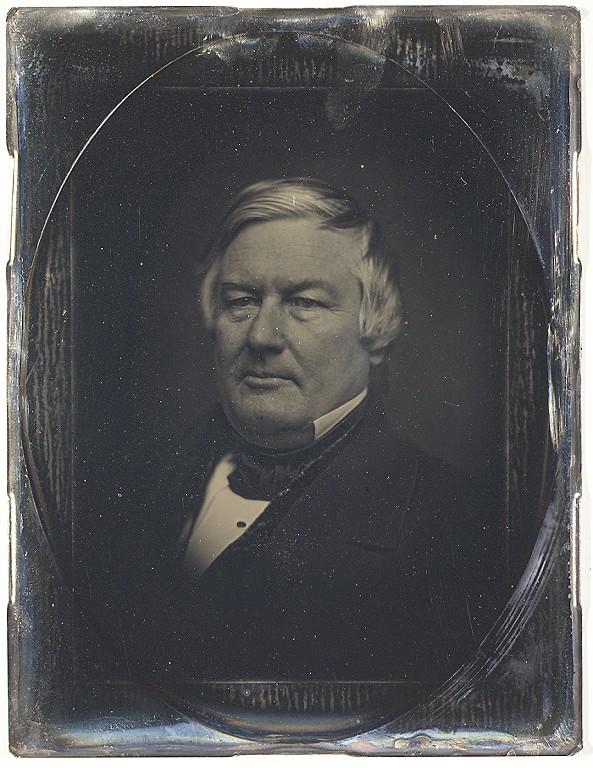
Millard Fillmore
Southworth and Hawes · 1850
Primary source
Millard Fillmore's First Annual Message to Congress
Millard Fillmore · December 2, 1850
Primary source
Millard Fillmore's Second State of the Union Address
Millard Fillmore · December 2, 1851
Ready when you are
Start chatting with Millard Fillmore now.
20 messages free · No credit card · Available in 50+ languages.