


Primary sourceSculpturec. 212-217
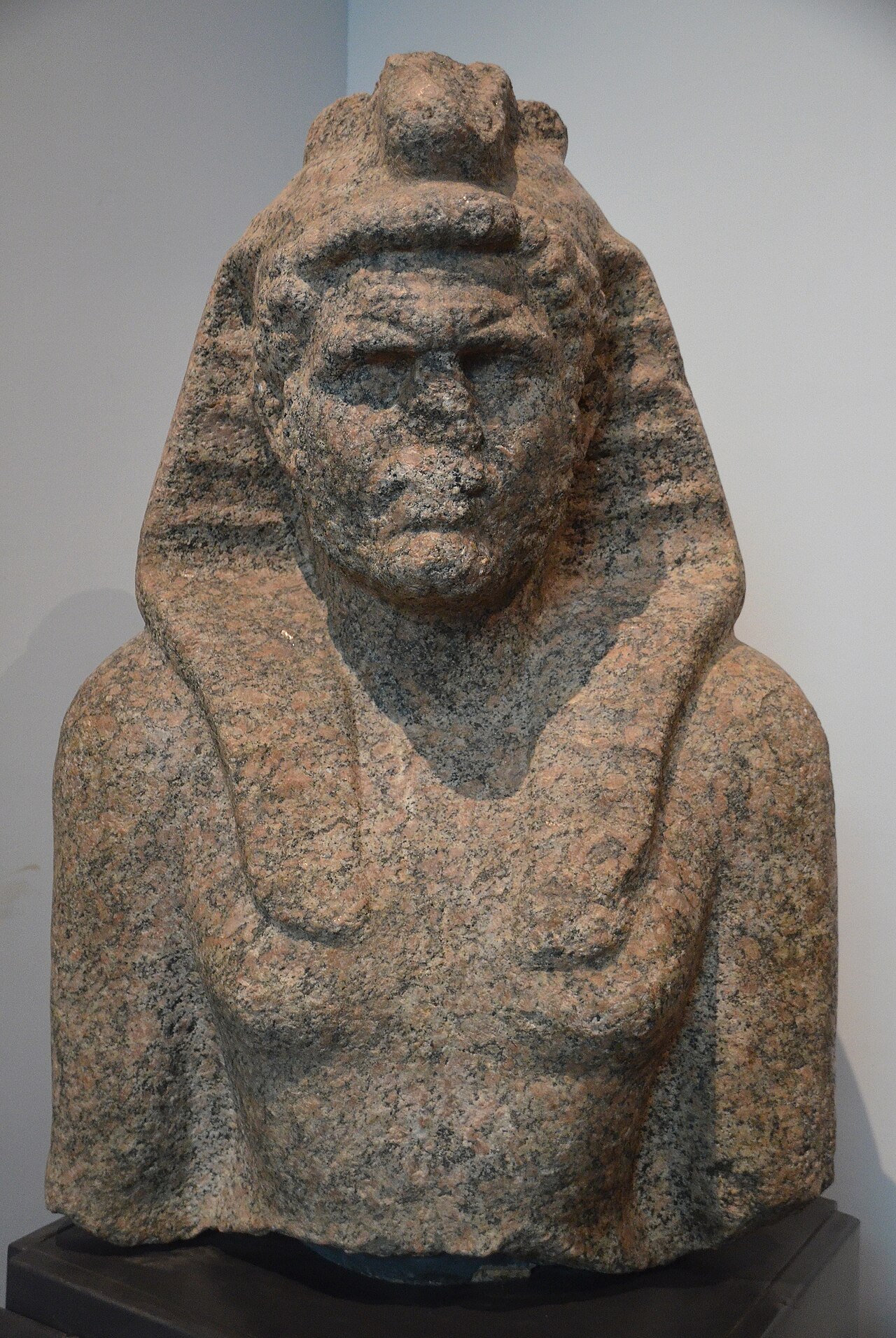
Statue of Caracalla as Egyptian Pharaoh
Egyptian workshop · c. 212-217
A granite statue showing Caracalla dressed as a traditional Egyptian pharaoh, now in the Graeco-Roman Museum in Alexandria.
This statue presents Caracalla as a pharaoh, strikingly at odds with his massacre of Alexandria's people in 215.
Free Humy account · No credit card · 120,912 sources to read
About this source
What it is
This upper portion of a reddish granite statue, made by an Egyptian workshop between about 212 and 217, shows Caracalla wearing the nemes headdress and uraeus cobra traditionally worn by pharaohs. It is held in the Graeco-Roman Museum in Alexandria. The statue's nose, mouth, and part of the cobra are broken off, though an inscribed back pillar survives.
Why it matters
By presenting Caracalla in full pharaonic dress, Egyptian sculptors placed him within a tradition of rulership going back thousands of years, legitimising Roman rule in Egyptian terms. This image stands in sharp contrast with events during his reign: Caracalla was responsible for a massacre at Alexandria, yet he is also remembered for issuing the Constitutio Antoniniana, which extended Roman citizenship widely across the empire's provinces.
Look closer
- Why might Egyptian artists have chosen to show a Roman emperor using traditional pharaonic symbols?
- How does this peaceful, dignified image compare with Caracalla's violent actions at Alexandria?
- What has been damaged or lost from the statue, and how might that affect our understanding of it?
This sculpture is part of the curated material that grounds the AI version of Caracalla on Humy.ai — when students ask about related events, the AI can quote it and cite it.
More Caracalla sources
Browse all 81 →
Ready when you are
Start chatting with Caracalla now.
20 messages free · No credit card · Available in 50+ languages.