


Primary sourcePaintingbefore 1920
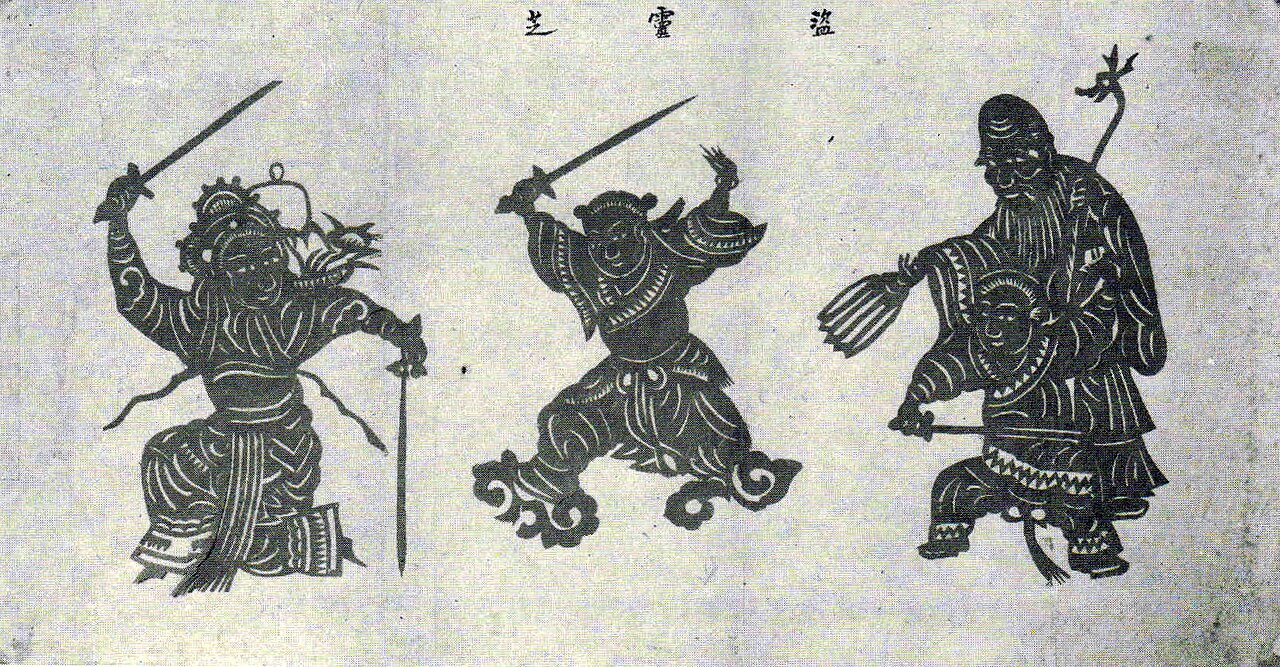
Stealing the Lingzhi
Anonymous · before 1920
A print from Lu Xun's personal collection showing three warrior figures, reflecting his interest in folk and popular art.
This print was part of Lu Xun's personal art collection, reflecting his interest in folk art.
About this source
What it is
This anonymous print, titled 'Stealing the Lingzhi' (盗灵芝), dates from before 1920 and was part of Lu Xun's own collection. It shows three silhouette-style figures of warriors or thieves, one carrying a small figure over his shoulder, with Chinese characters across the top.
Why it matters
Lu Xun was an avid collector of folk prints, woodcuts, and popular art, which influenced his own writing and his support for modern Chinese woodcut artists. This print shows the kind of traditional visual culture he studied and preserved.
Look closer
- What story or scene might this print be illustrating?
- Why might a writer like Lu Xun have been interested in collecting folk prints?
- What can objects a person collects tell us about their interests beyond their own writing?
This painting is part of the curated material that grounds the AI version of Lu Xun on Humy.ai — when students ask about related events, the AI can quote it and cite it.
Ready when you are
Start chatting with Lu Xun now.
20 messages free · No credit card · Available in 50+ languages.