


Primary sourceBook1927
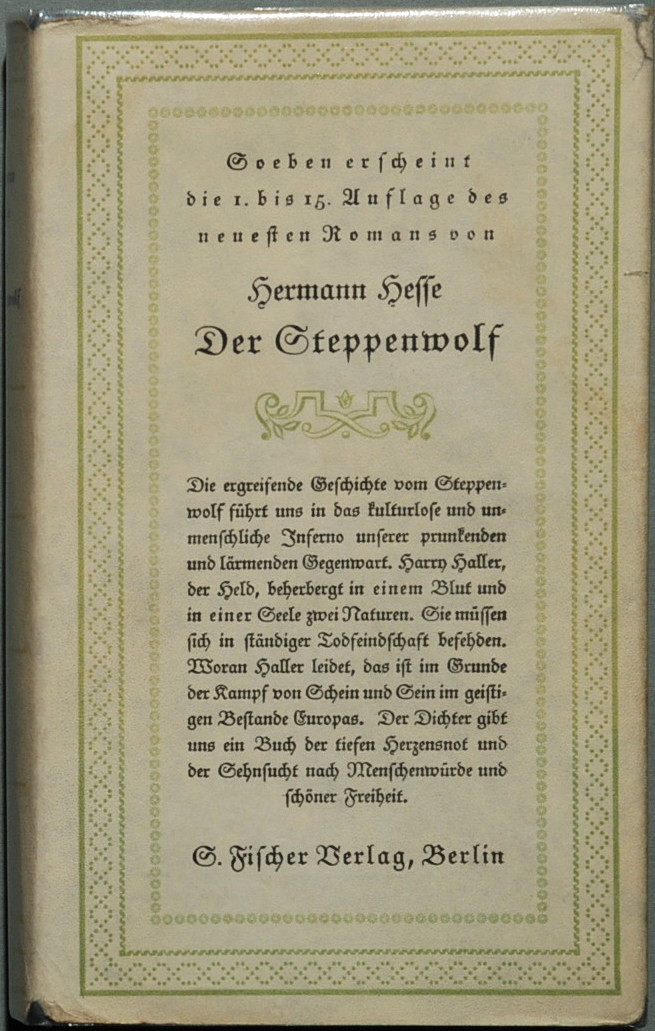
Steppenwolf
Hermann Hesse · 1927
Hesse's 1927 novel exploring a divided self, written during a personal crisis and shaped by Jungian analysis.
Steppenwolf is Hesse's own novel, written out of his mid-1920s personal crisis and psychoanalysis.
Free Humy account · No credit card · 120,288 sources to read
About this source
What it is
Steppenwolf (Der Steppenwolf) is a novel by Hermann Hesse, first published in Germany in 1927 and translated into English in 1929. It tells the story of Harry Haller, a man torn between his civilized and 'wolfish' natures.
Why it matters
Hesse wrote the book during a period of personal crisis in the 1920s, following the breakdown of his marriage to Ruth Wenger and growing isolation. The novel reflects his attacks on bourgeois conformity and militarism, and shows the influence of jazz music he encountered through performers such as Josephine Baker and Sidney Bechet. Though it became hugely popular, Hesse later said readers often misunderstood it.
Look closer
- Why might Hesse have presented the story as a 'manuscript' left behind by its narrator rather than writing it in his own voice?
- What does the split between Harry's 'two natures' suggest about how Hesse saw himself?
- Why do you think a novel about despair and alienation became so popular?
This book is part of the curated material that grounds the AI version of Hermann Hesse on Humy.ai — when students ask about related events, the AI can quote it and cite it.
More Hermann Hesse sources
Browse all 92 →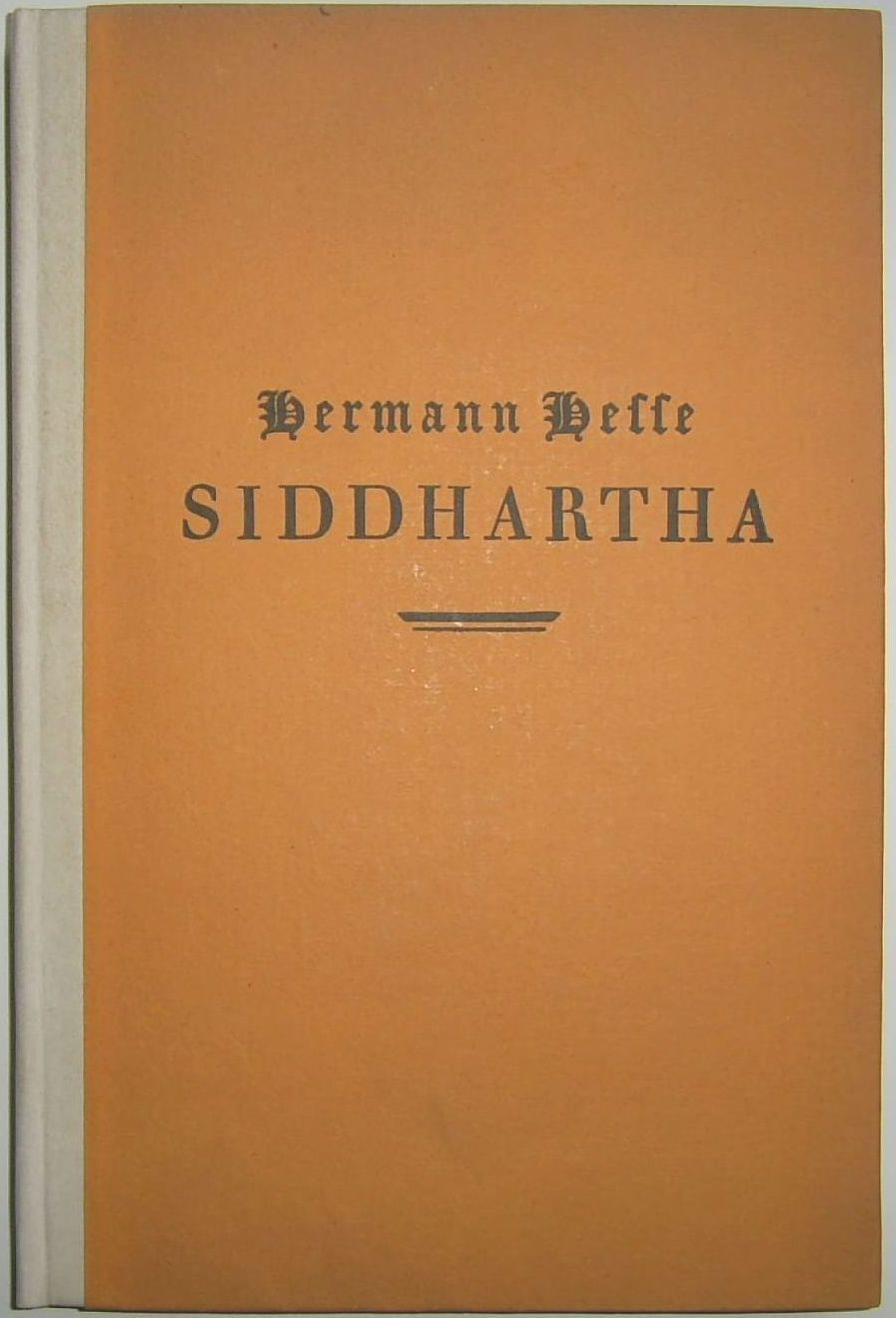 Book
Primary source
Siddhartha
Hermann Hesse · 1922
 Book
Primary source
Demian
Hermann Hesse · 1919
 Photograph
Primary source
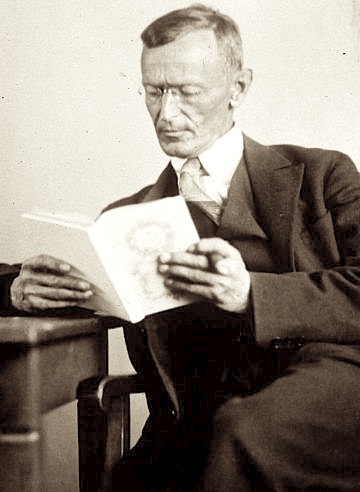
Portrait of Hermann Hesse, 1927
Gret Widmann · 1927
 Photograph
Primary source
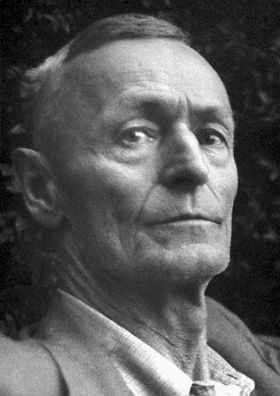
Portrait of Hermann Hesse, 1946
Nobel Foundation · 1946
Free account
Read every Hermann Hesse source
Sign up free →
Ready when you are
Start chatting with Hermann Hesse now.
20 messages free · No credit card · Available in 50+ languages.