


Primary sourceDocument1551
Stoglav
1551
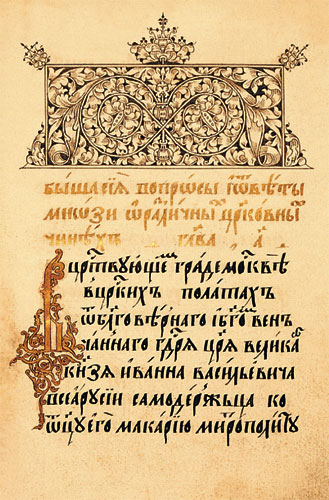
The church law code produced by the 1551 council that Ivan the Terrible opened with a hundred questions on church life and ritual.
Ivan the Terrible's questions to the 1551 church council produced this code, showing his direct role in regulating Orthodox practice.
About this source
What it is
The Stoglav, or 'Book of One Hundred Chapters', is a collection of decisions from a Russian church council held in 1551. It is written as answers to about a hundred questions posed by Tsar Ivan IV, covering canon law and the everyday life of the clergy. Manuscript copies survive, all produced later by Old Believers.
Why it matters
The Stoglav shows Ivan directly shaping religious life in his realm, standardizing Muscovite church rituals over Greek and other Orthodox practices. It later became central to disputes within the Russian church, as Old Believers used it to challenge reforms by Patriarch Nikon, and it was eventually condemned and banned for two centuries.
Look closer
- Why might a tsar want to pose questions that shape church law?
- What does the later banning of this book tell us about conflict within the Russian church?
- How might the fact that all surviving copies come from Old Believers affect how we read this source?
This document is part of the curated material that grounds the AI version of Ivan the Terrible on Humy.ai — when students ask about related events, the AI can quote it and cite it.
More Ivan the Terrible sources
Browse all 95 → Artifact
Primary source
St. Basil's Cathedral
Barma and Postnik Yakovlev (traditional attribution) · 1555-1561
 Painting
Secondary source
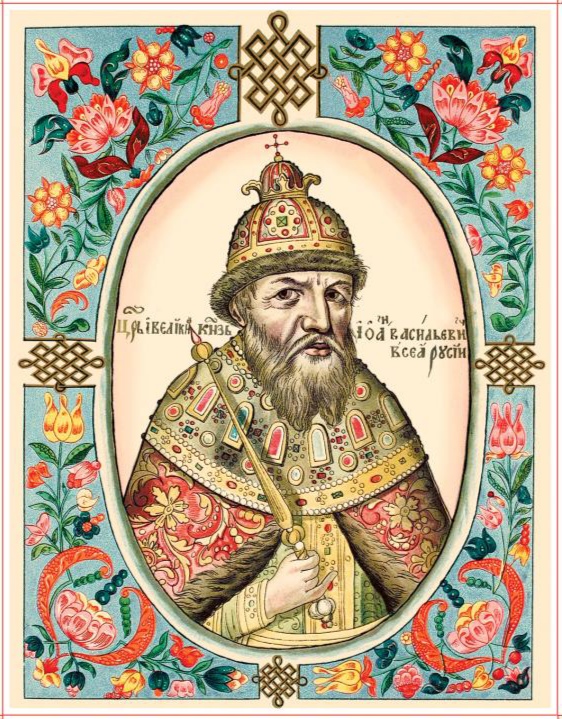
Portrait of Ivan the Terrible
Unknown · reproduced 1903, after a 1672 original
 Artifact
Primary source
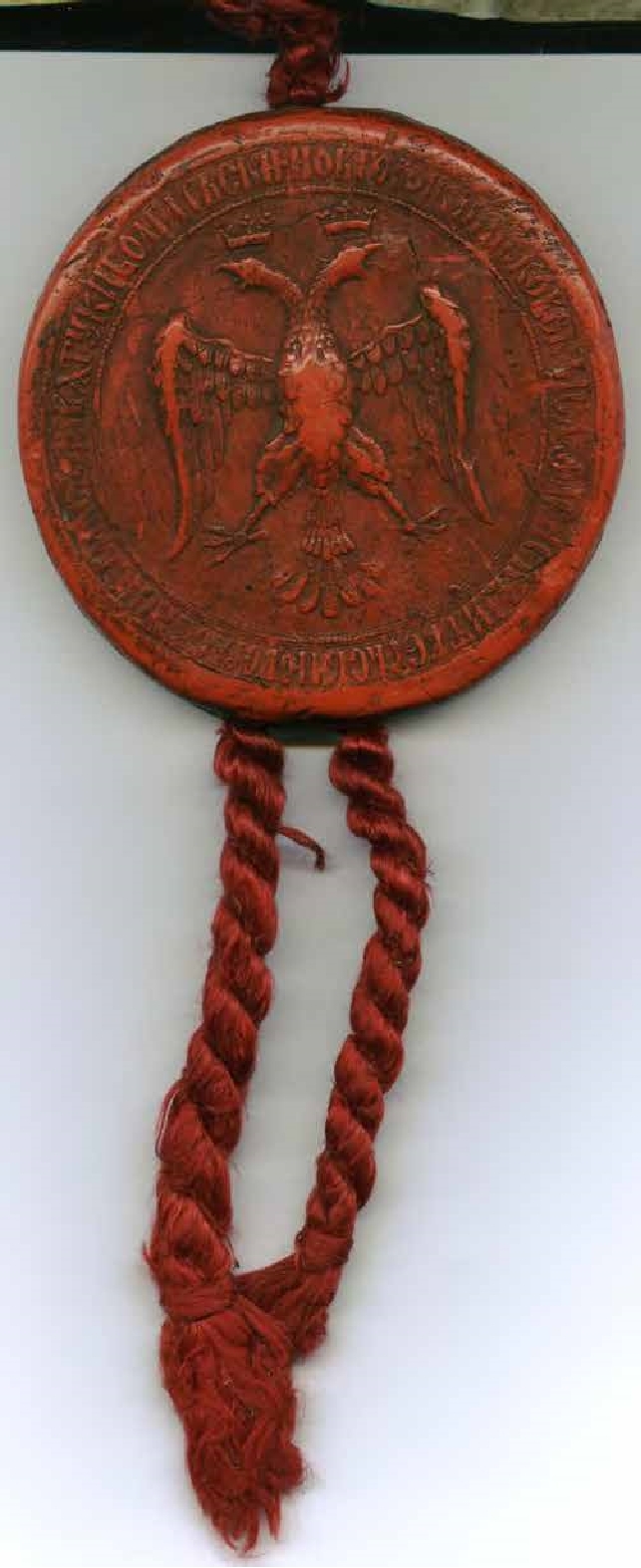
Seal of Ivan the Terrible
 Artifact
Primary source
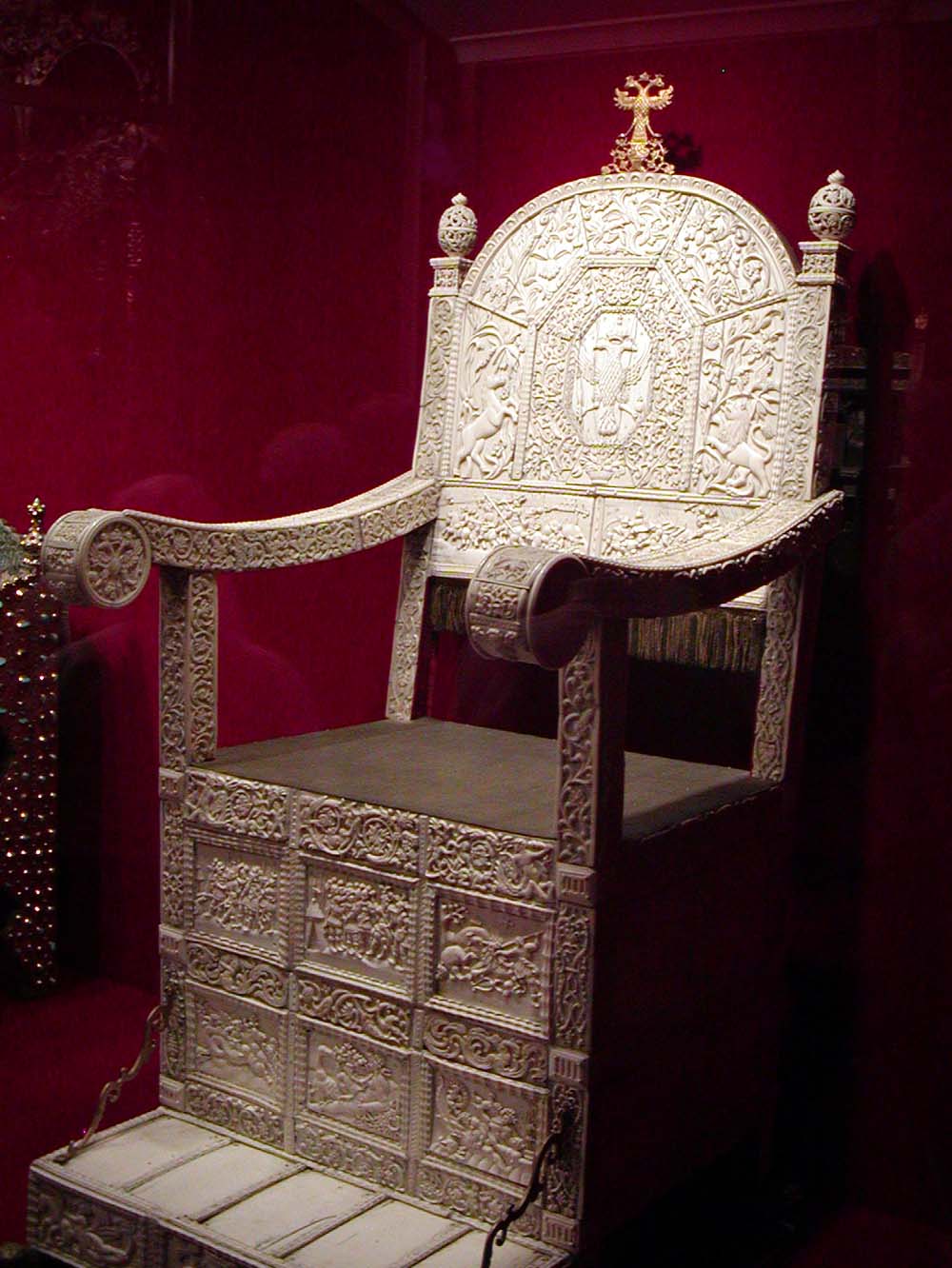
Ivory Throne of Ivan the Terrible
Unknown (Western European carvers) · 16th century
Free account
Read every Ivan the Terrible source
Sign up free →
Ready when you are
Start chatting with Ivan the Terrible now.
20 messages free · No credit card · Available in 50+ languages.