


Secondary sourceSculpture2021-03-12
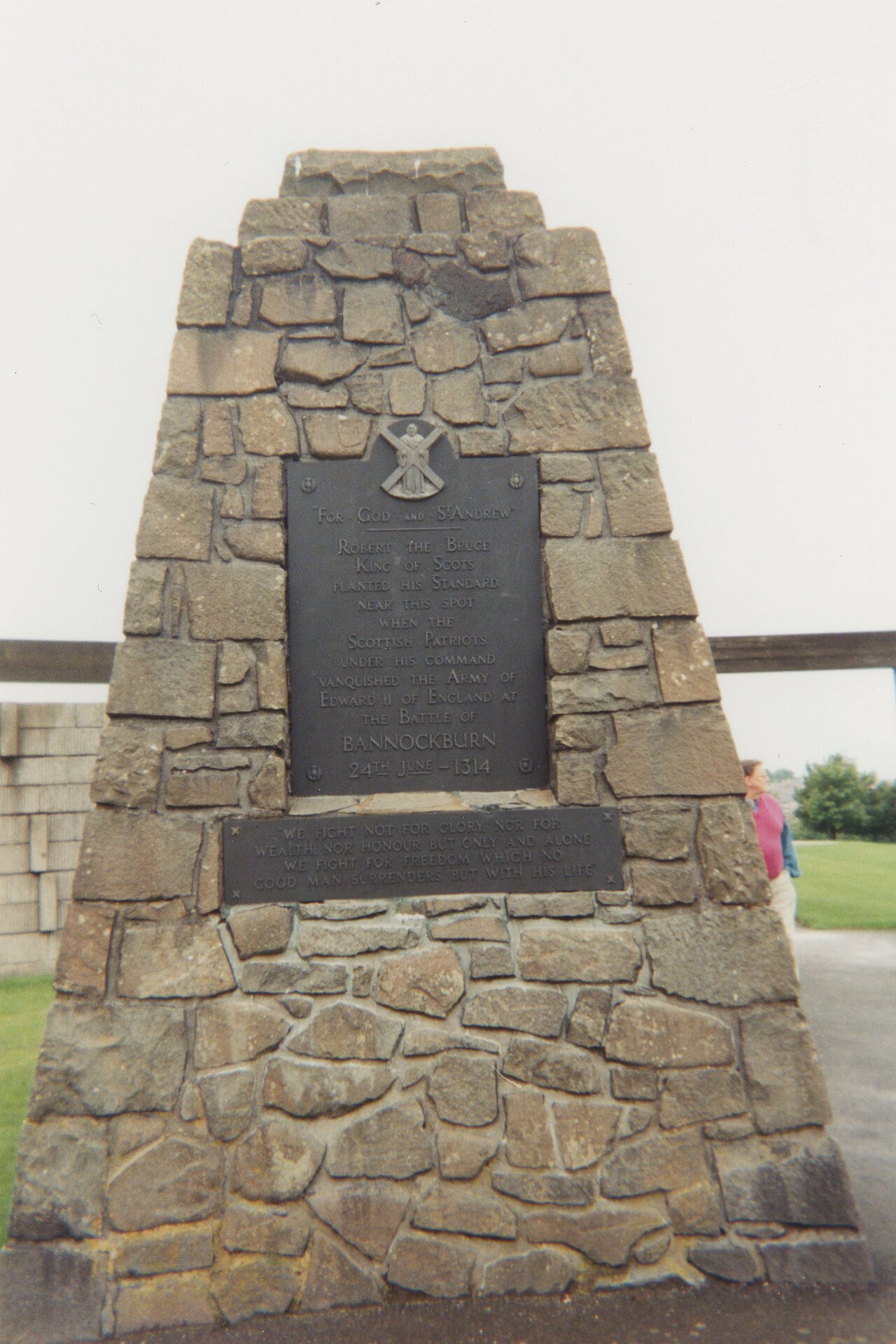
Stone Monument Marking Bruce's Banner at Bannockburn
Libasstref · 2021-03-12
A monument at Bannockburn marking the spot where Robert the Bruce planted his banner during his 1314 victory over Edward II.
Marks the spot where Robert I planted his banner during his decisive 1314 victory at Bannockburn.
About this source
What it is
This photograph shows a stone monument with two bronze plaques at Bannockburn. One plaque names Robert the Bruce and the Battle of Bannockburn, fought on 24 June 1314, and the other carries a motto about fighting for freedom. It marks the spot where, according to tradition, Bruce planted his banner after defeating King Edward II of England.
Why it matters
Bannockburn was the decisive battle that secured Robert the Bruce's position as King of Scots and became central to Scotland's story of independence. Monuments like this show how later generations have kept the memory of Bruce and Edward II's clash alive.
Look closer
- Why might this exact spot have been chosen for a monument?
- What feelings does the motto about freedom try to create in visitors?
- How reliable is a stone marker, placed centuries later, as evidence for exactly what happened in 1314?
This sculpture is part of the curated material that grounds the AI version of Robert the Bruce on Humy.ai — when students ask about related events, the AI can quote it and cite it.
More Robert the Bruce sources
Browse all 83 →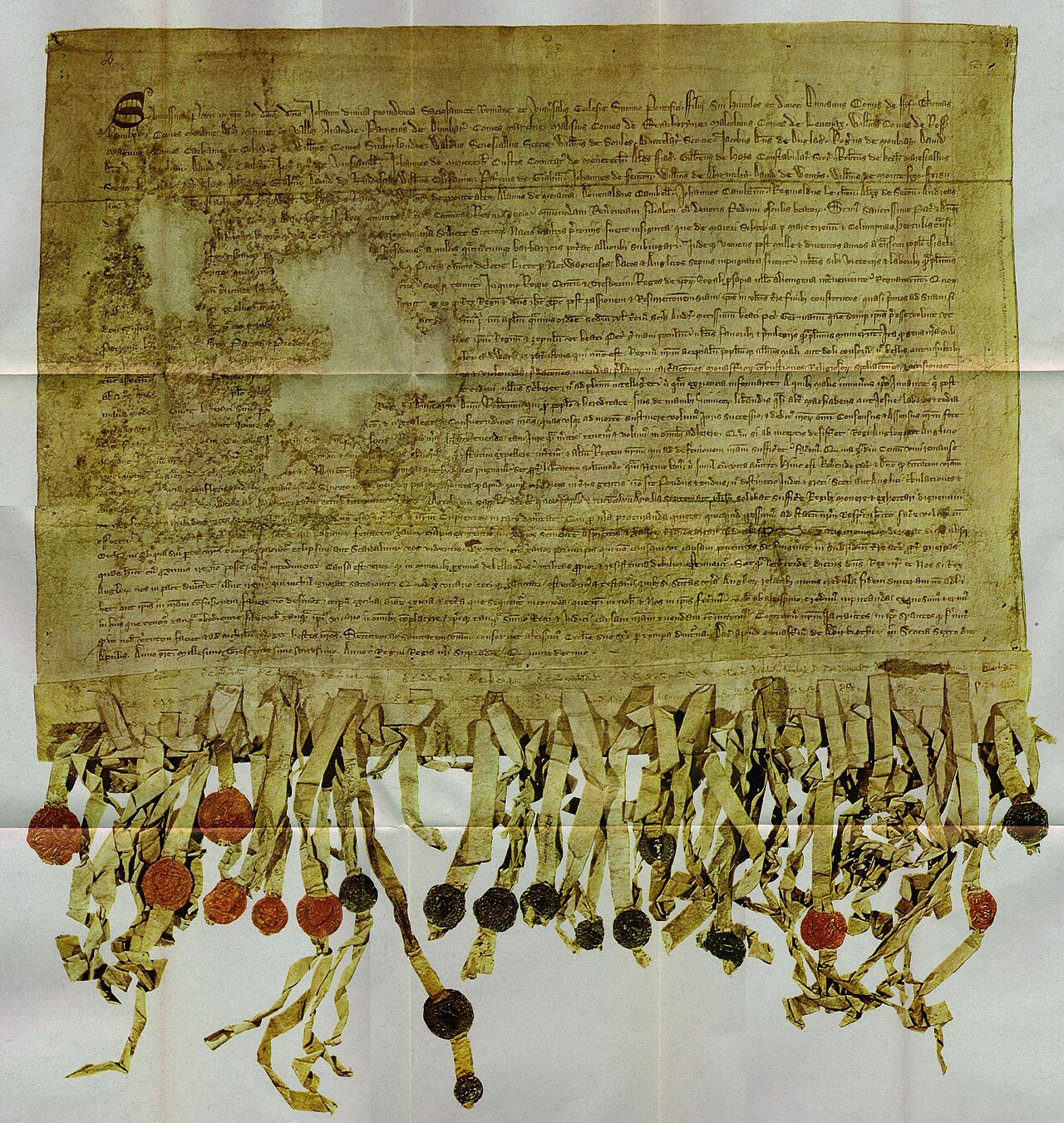 Document
Primary source
Declaration of Arbroath
Bernard of Kilwinning (attributed) · 6 April 1320
 Artifact
Primary source
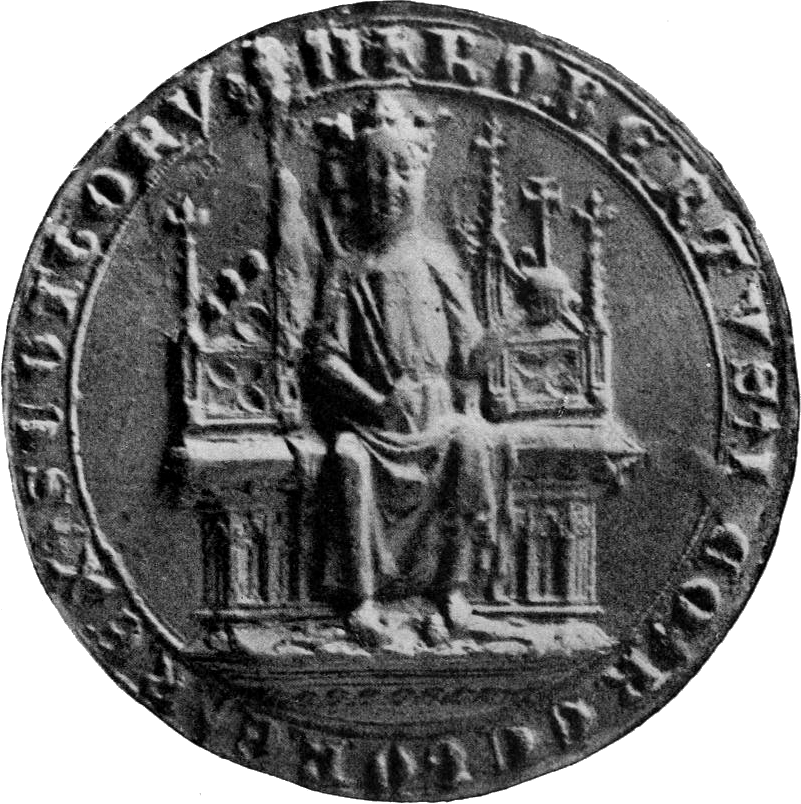
Great Seal of Robert I, King of Scotland
1306-1329
Primary source
Treaty of Edinburgh–Northampton
1328
 Document
Primary source
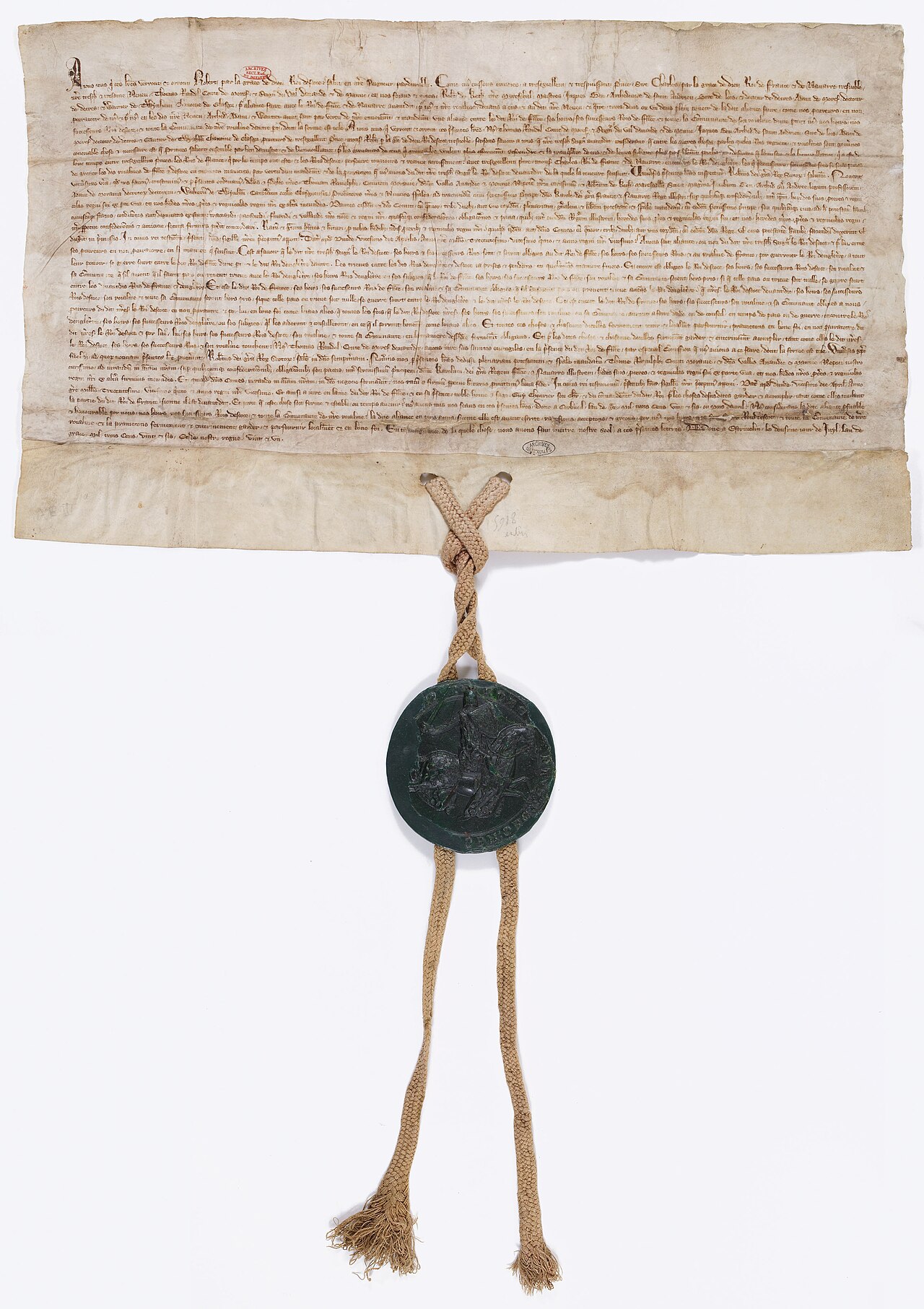
Ratification of the Treaty of Corbeil
12 July 1326
Free account
Read every Robert the Bruce source
Sign up free →
Ready when you are
Start chatting with Robert the Bruce now.
20 messages free · No credit card · Available in 50+ languages.