


Primary sourceArtifactc. 995
Stone of Eric
c. 995
A runestone raised by a household man of King Sveinn for his comrade Eric, recording an attack on Hedeby while Swein campaigned in England.
Records an attack on Hedeby exploiting Swein's absence while campaigning in England.

About this source
What it is
The Stone of Eric, catalogued as DR 1, is a runestone found in 1796 at Danevirke and now in Schleswig, likely raised around 995. It was raised by a man named Thorulf, described as Sveinn's heimþegi or 'home-receiver', in memory of his comrade Eric.
Why it matters
The inscription describes an attack on Hedeby by the Swedish king Eric the Victorious, who struck while Swein Forkbeard was away campaigning in England. It shows that Swein's followers organised themselves into households of men bound to him by gifts of land, and that his absence abroad had real consequences for Denmark's defence at home.
Look closer
- What does this stone reveal about the risks of Swein's long campaigns away from Denmark?
- What does the term 'home-receiver' tell you about loyalty and reward in Viking society?
- How is a monument raised by a follower different from one commissioned by a king himself?
This artifact is part of the curated material that grounds the AI version of Sweyn Forkbeard on Humy.ai — when students ask about related events, the AI can quote it and cite it.
More Sweyn Forkbeard sources
Browse all 36 → Document
Primary source
Anglo-Saxon Chronicle
c. 890 (Common Stock)
 Document
Primary source
Sveinn Haraldsson name entry, Cotton MS Tiberius B I
11th century
 Artifact
Primary source
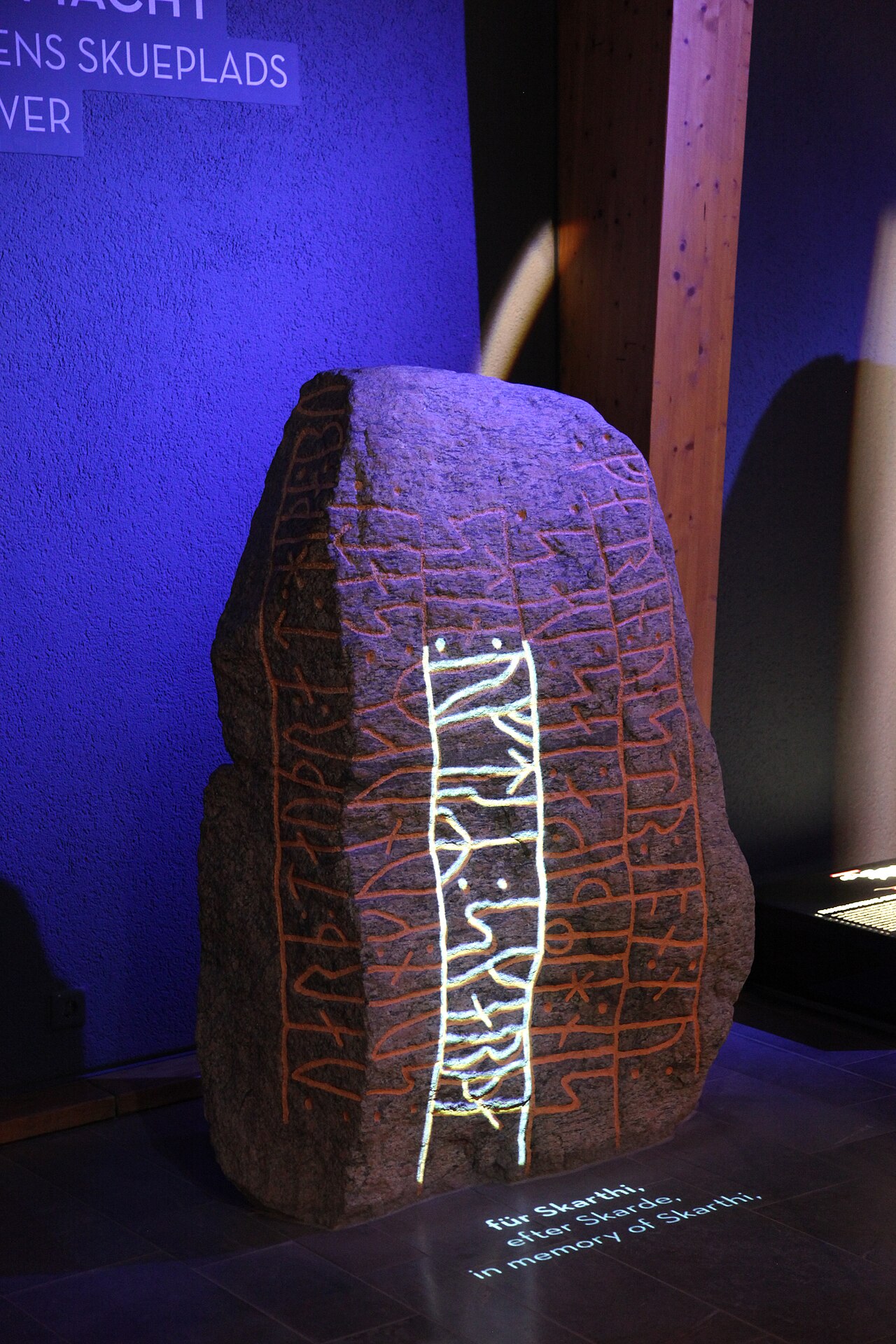
Skarthi Stone
c. 982
 Speech
Primary source
Sermo Lupi ad Anglos
Wulfstan II, Archbishop of York · c. 1010-1016



Free account
Read every Sweyn Forkbeard source
Sign up free →
Ready when you are
Start chatting with Sweyn Forkbeard now.
20 messages free · No credit card · Available in 50+ languages.