


Primary sourceSculpture141-87 BC (Han dynasty); photographed 2012
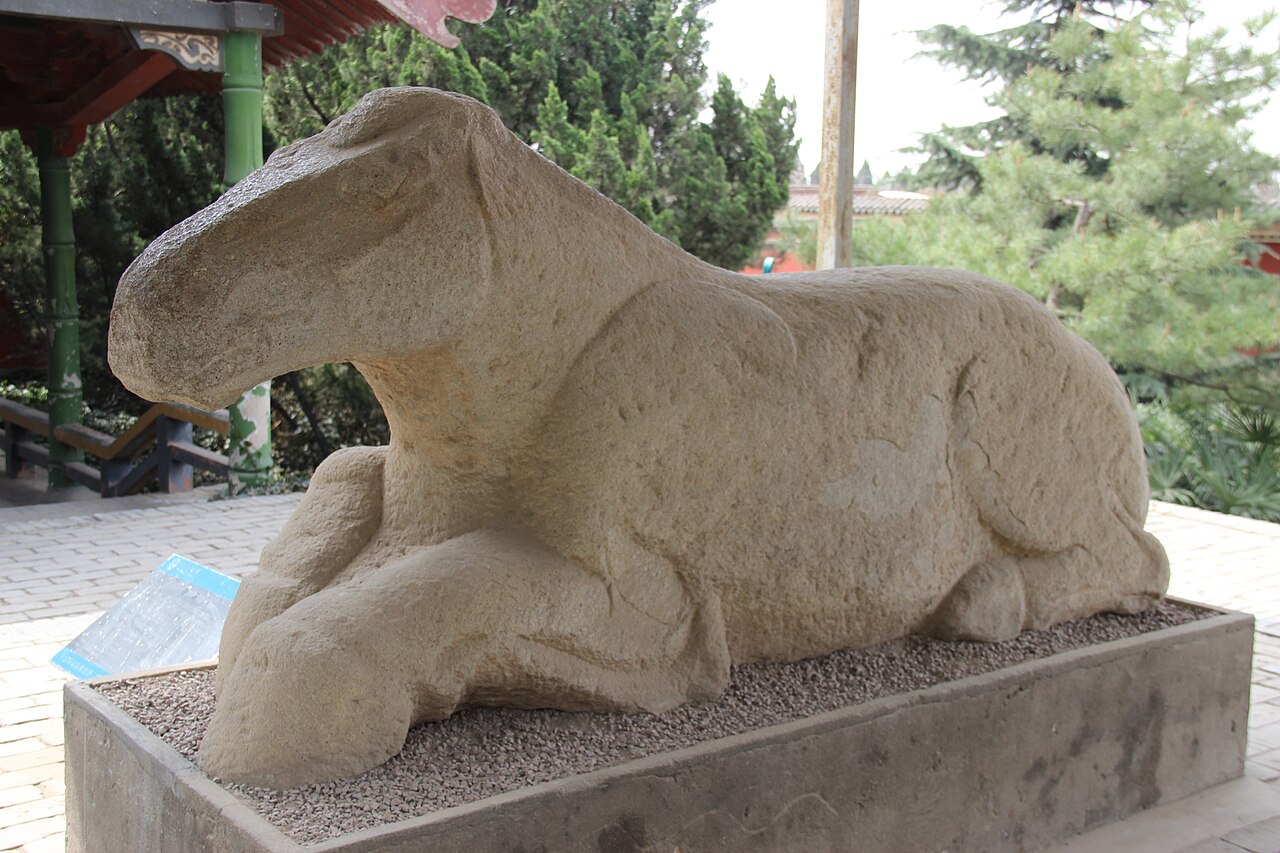
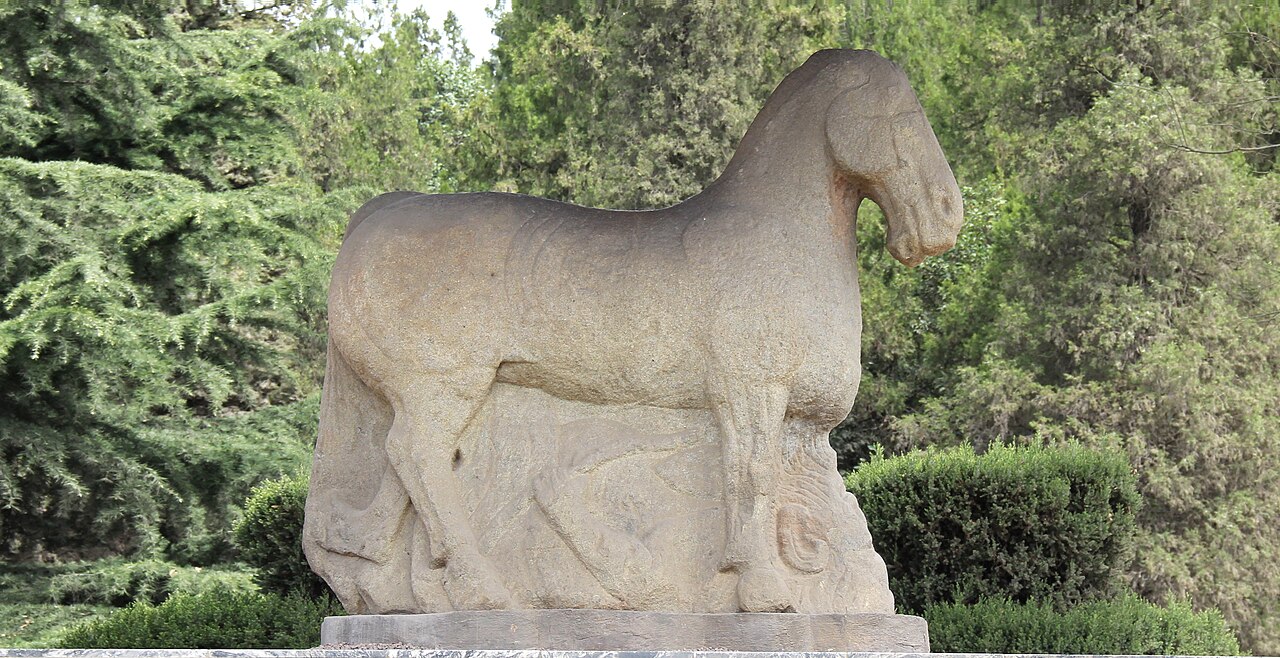
Stone Sculpture: Horse Squatting for Action, Maoling Tomb
Unknown Han dynasty sculptor; photograph by Gary Lee Todd · 141-87 BC (Han dynasty); photographed 2012
A stone carving of a crouching horse from the tomb complex built for Emperor Wu of Han at Maoling.
This horse sculpture was part of the funerary art built for Emperor Wu's tomb at Maoling.
About this source
What it is
This photograph shows a carved pale stone sculpture of a horse lying down with its forelegs folded and head raised, as if ready to spring into action. It stands at Maoling, the tomb complex of Emperor Wu of the Han dynasty, in Shaanxi Province, China, and was photographed in 2012.
Why it matters
Horses held great importance in Han China, both militarily and symbolically. This sculpture, part of the funerary art at Emperor Wu's tomb, reflects the value placed on horses during his reign, a period associated with campaigns to secure strong cavalry mounts.
Look closer
- How has the sculptor captured a sense of movement in a resting pose?
- Why might horses have been chosen as tomb guardians or symbols?
- What does the setting around the sculpture tell you about how the site is preserved today?
This sculpture is part of the curated material that grounds the AI version of Emperor Wu of Han on Humy.ai — when students ask about related events, the AI can quote it and cite it.
More Emperor Wu of Han sources
Browse all 91 →Primary source
Annals of Emperor Xiaowu (Shiji, Vol. 12)
Sima Qian · c. 100 BCE
Primary source
Autumn Wind Rhapsody
Emperor Wu of Han · 2nd century BCE
 Book
Secondary source
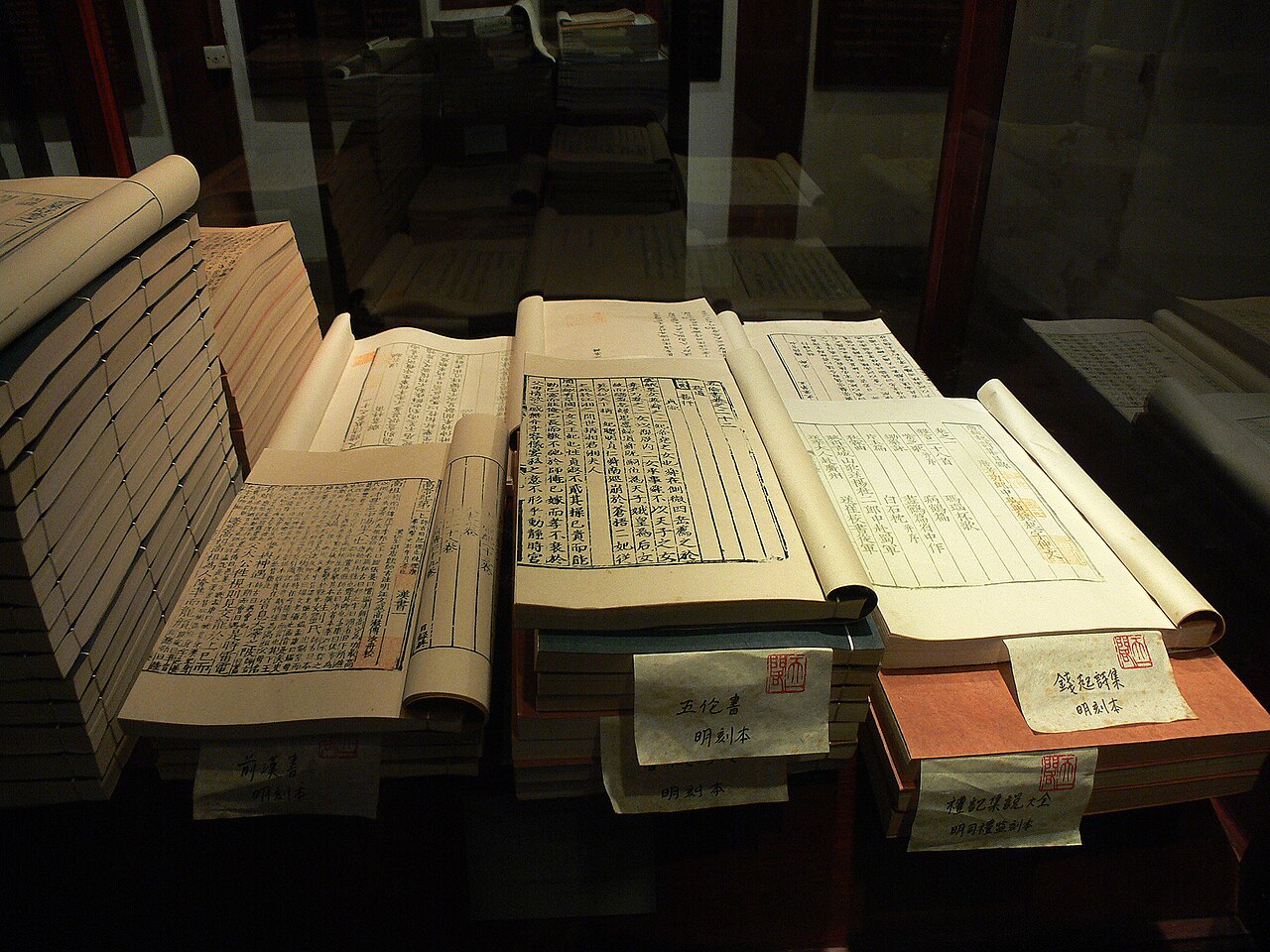
Book of Han
Ban Gu (with Ban Zhao and Ban Biao) · finished 111 CE
 Artifact
Primary source
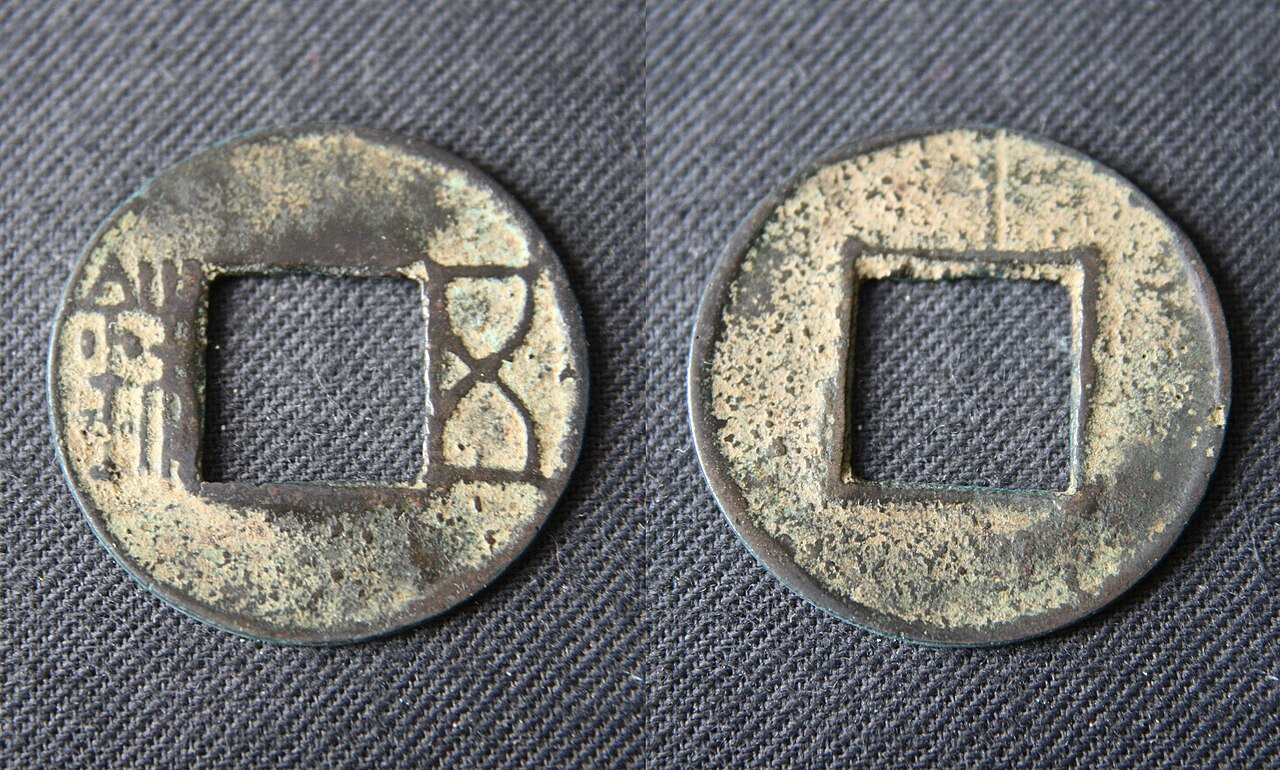
Han Wu Zhu Coin of Emperor Wu
after 118 BCE
Free account
Read every Emperor Wu of Han source
Sign up free →
Ready when you are
Start chatting with Emperor Wu of Han now.
20 messages free · No credit card · Available in 50+ languages.