


Primary sourceBook1897
Suicide
Émile Durkheim · 1897
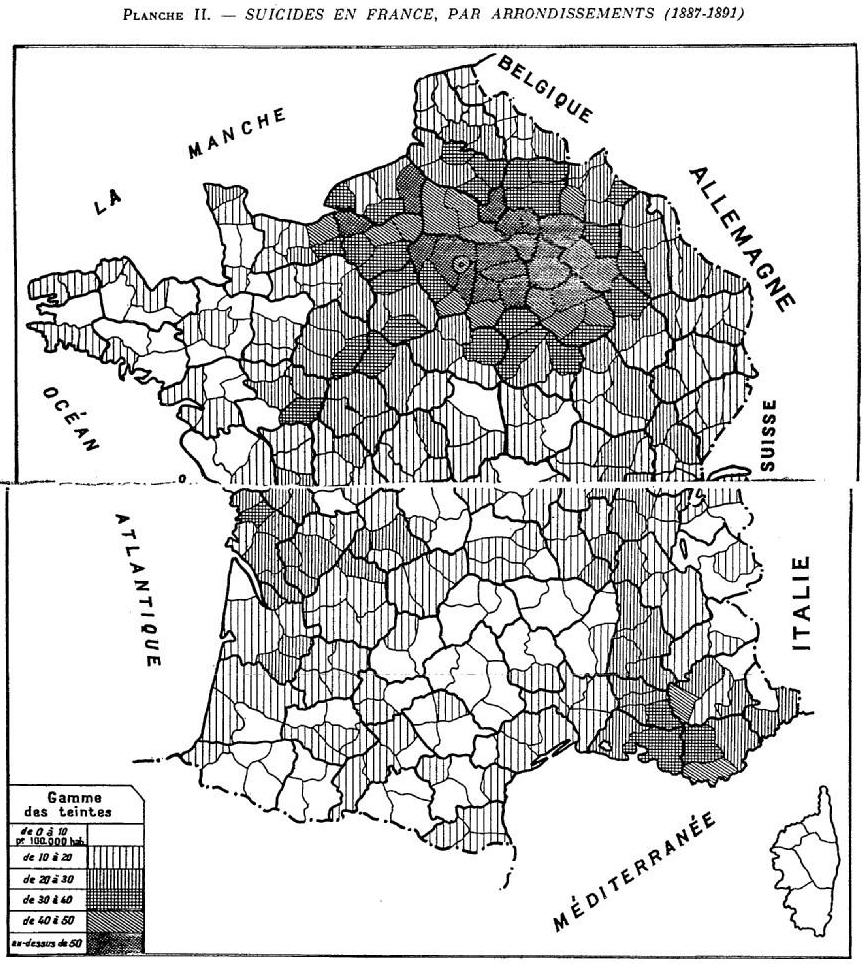
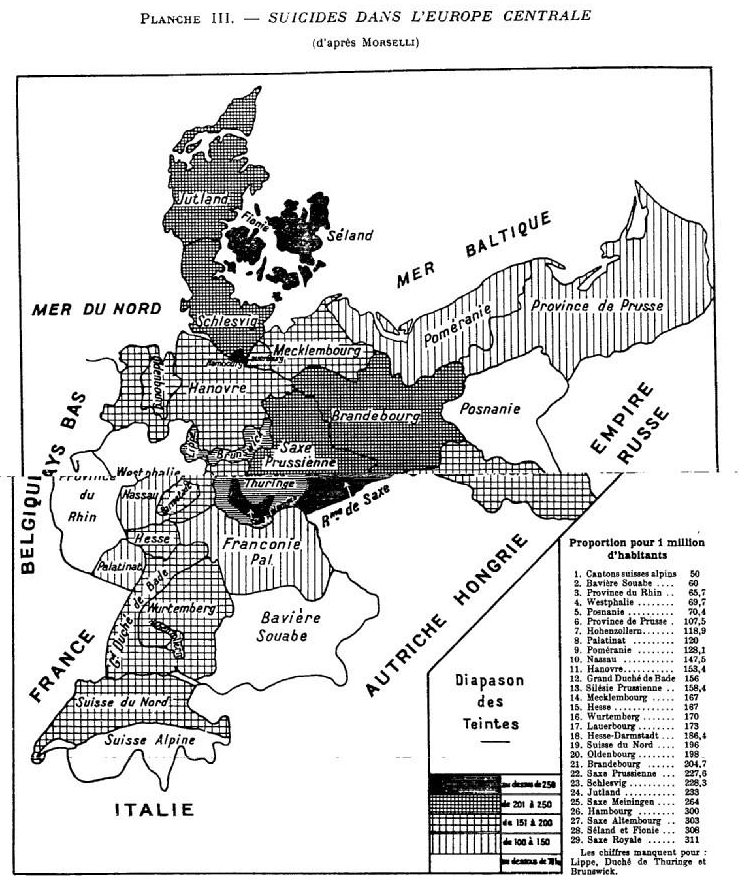
Durkheim's 1897 statistical study of suicide across religions, families and regions, arguing that even private acts have social causes.
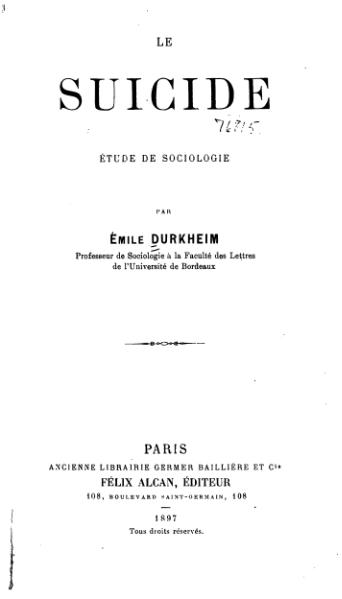
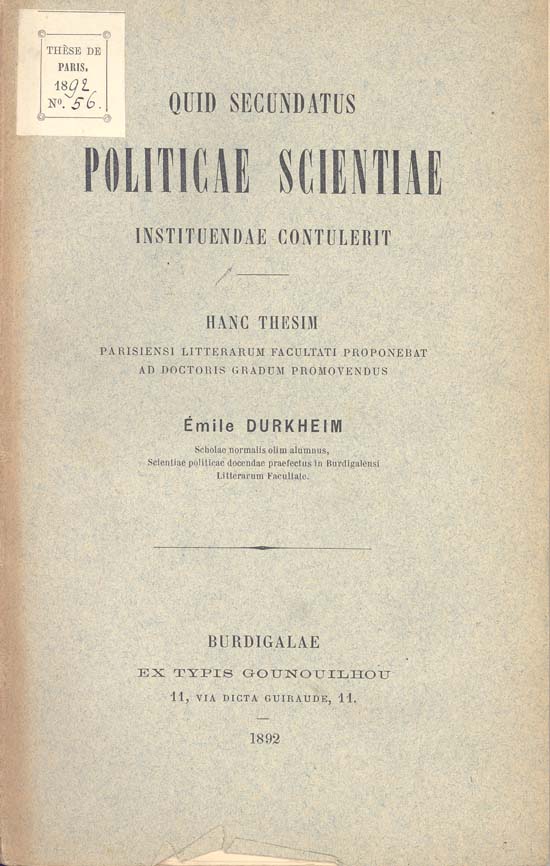
Durkheim's own authored work, the second of his major sociological studies, shown here as the title page he published.
Free Humy account · No credit card · 118,535 sources to read
About this source
What it is
This is a book written by the French sociologist Émile Durkheim, published in 1897. It is a case study examining suicide rates across different groups: religions, families, genders and regions.
Why it matters
Durkheim treated suicide, seemingly the most personal of acts, as a social fact shaped by forces outside the individual. He classified suicides as egoistic, altruistic, anomic and fatalistic, depending on how strongly a person was bound to society. The book helped establish sociology as a rigorous discipline using statistics and comparison rather than speculation, and it remains a foundational text for understanding how social scientists study human behaviour.
Look closer
- Why might a sociologist study something as personal as suicide using statistics rather than individual stories?
- What does Durkheim's method tell you about what counted as 'scientific' in his time?
- What groups or factors does his analysis leave out?
This book is part of the curated material that grounds the AI version of Emile Durkheim on Humy.ai — when students ask about related events, the AI can quote it and cite it.
More Emile Durkheim sources
Browse all 59 → Book
Primary source
The Division of Labour in Society
Émile Durkheim · 1893
 Book
Primary source
The Rules of Sociological Method
Émile Durkheim · 1895
 Book
Primary source
The Elementary Forms of the Religious Life
Émile Durkheim · 1912
 Photograph
Primary source
Emile Durkheim
Unknown
Free account
Read every Emile Durkheim source
Sign up free →
Ready when you are
Start chatting with Emile Durkheim now.
20 messages free · No credit card · Available in 50+ languages.