


Primary sourceBook1893
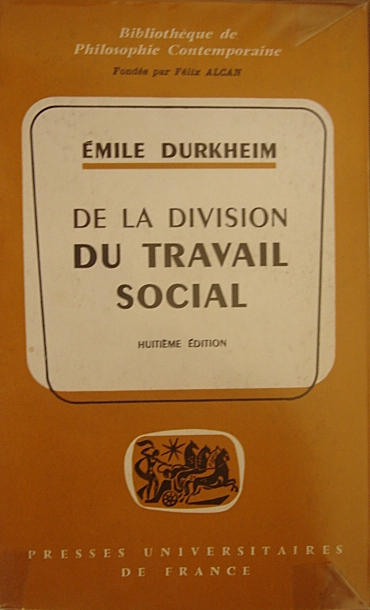
The Division of Labour in Society
Émile Durkheim · 1893
Durkheim's 1893 doctoral thesis on mechanical and organic solidarity, explaining how modern societies hold together.
Durkheim's doctoral thesis, introducing core concepts of his sociology.
Free Humy account · No credit card · 120,912 sources to read
About this source
What it is
This is the doctoral dissertation of Émile Durkheim, published in 1893 in French as De la division du travail social. It is one of his foundational theoretical works.
Why it matters
Durkheim contrasted 'mechanical solidarity', found in small traditional societies where people think alike, with 'organic solidarity', found in complex industrial societies where people depend on each other through specialised roles. He argued that moral regulation was needed alongside economic change to keep order, and he saw disorder as a temporary problem rather than, as Karl Marx did, a sign that a new kind of society would emerge. This book shaped how sociologists think about social change and cohesion.
Look closer
- What examples from your own society show people depending on each other through different jobs and roles?
- How does Durkheim's view of change differ from a thinker who expects society to be overturned?
- Why might a thesis on this topic have mattered so much when industrial society was new?
This book is part of the curated material that grounds the AI version of Emile Durkheim on Humy.ai — when students ask about related events, the AI can quote it and cite it.
More Emile Durkheim sources
Browse all 59 → Book
Primary source
Suicide
Émile Durkheim · 1897
 Book
Primary source
The Rules of Sociological Method
Émile Durkheim · 1895
 Book
Primary source
The Elementary Forms of the Religious Life
Émile Durkheim · 1912
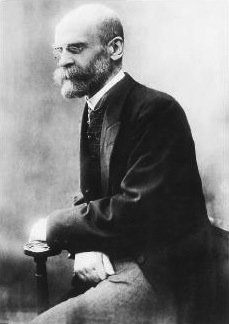 Photograph
Primary source
Emile Durkheim
Unknown
Free account
Read every Emile Durkheim source
Sign up free →
Ready when you are
Start chatting with Emile Durkheim now.
20 messages free · No credit card · Available in 50+ languages.