


Secondary sourcePainting18th/19th century
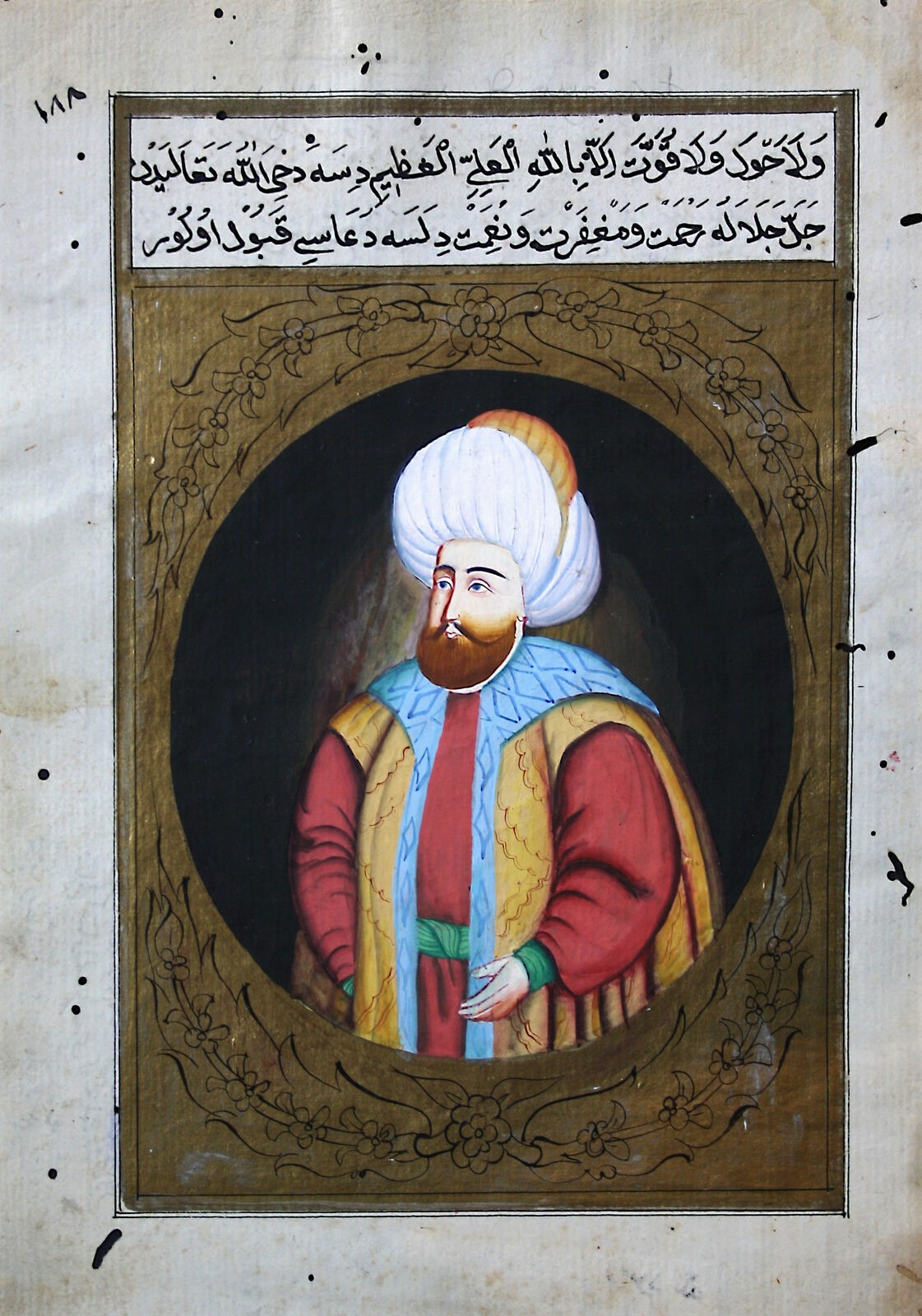
Sultan Bayezid I (Arabic manuscript gouache)
18th/19th century
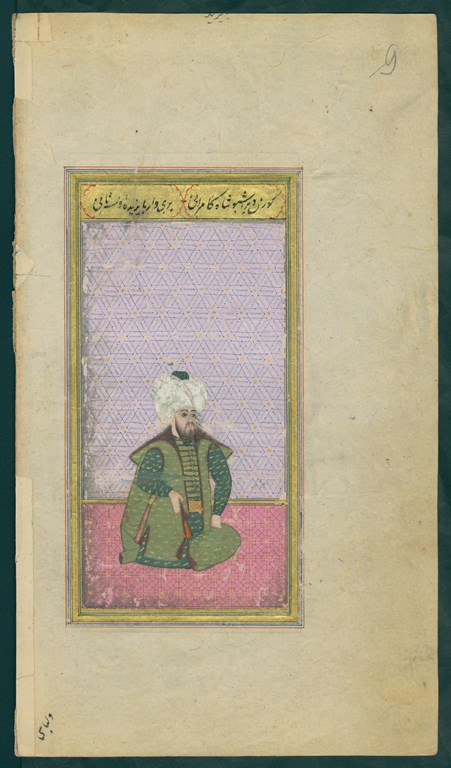
A gouache portrait of Bayezid I painted for an 18th- or 19th-century Arabic manuscript, showing how the sultan was imagined centuries after his reign.
An imagined later portrait showing how Bayezid I was pictured centuries after his reign.
About this source
What it is
This is a small gouache painting cut from an Arabic manuscript dated to the 18th or 19th century. It shows a bearded man in a white turban, a red and gold robe, a blue collar and a green sash, framed in an oval within a gold floral border. Arabic calligraphy appears in a panel above. The artist is not credited. The sheet is slightly stained and has minor wormholes. It is now in the Commons collection.
Why it matters
Bayezid I ruled the Ottoman Empire from 1389 to 1402. This portrait was made long after his death, so it reflects how later artists chose to picture an Ottoman sultan, not how he looked. Images like this help historians study memory and the way rulers were remembered in later centuries.
Look closer
- What clothing and colours does the artist use to show the sultan's power?
- Why might a painter working centuries later create a likeness without a model?
- What does the painting leave out about Bayezid's wars and rule?
This painting is part of the curated material that grounds the AI version of Bayezid I on Humy.ai — when students ask about related events, the AI can quote it and cite it.
More Bayezid I sources
Browse all 91 →

Ready when you are
Start chatting with Bayezid I now.
20 messages free · No credit card · Available in 50+ languages.