


Secondary sourceArtifact1926-1929
Sun Yat-sen Mausoleum
Lü Yanzhi · 1926-1929
The monumental tomb built in Nanjing between 1926 and 1929 to honor Sun Yat-sen after his death.
This mausoleum was built to honor Sun Yat-sen after his death and became a national symbol of his legacy.
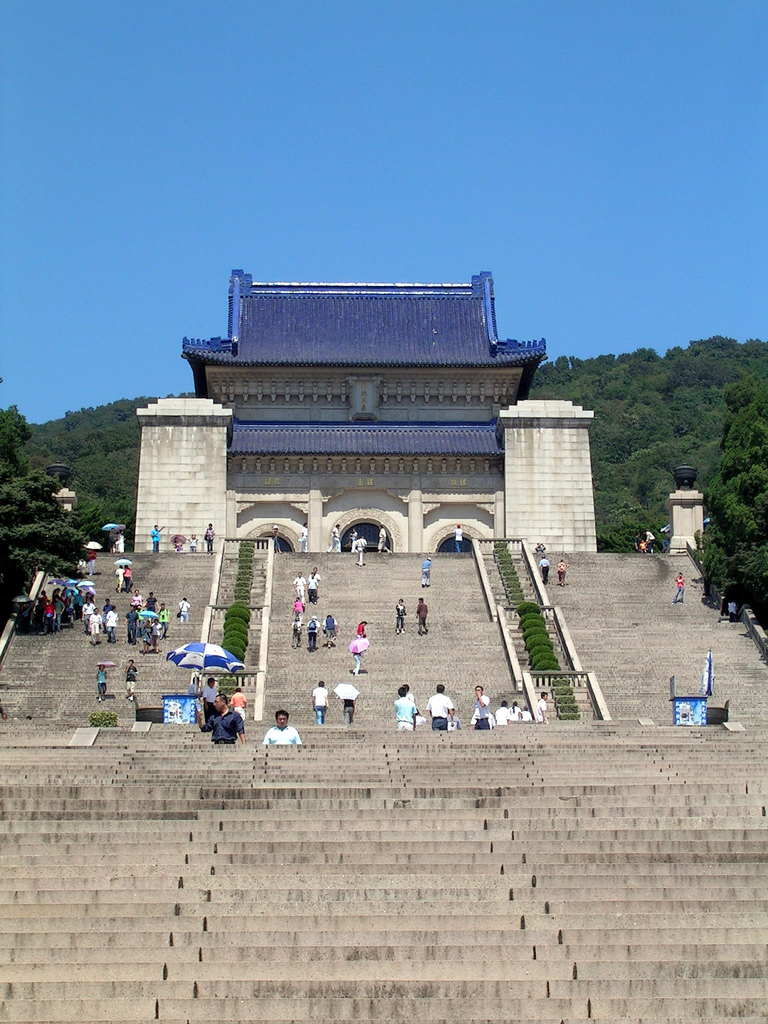
About this source
What it is
This mausoleum on Purple Mountain in Nanjing was built between 1926 and 1929, designed by architect Lü Yanzhi, to hold the remains of Sun Yat-sen. It includes a large marble statue of Sun and a hall decorated with the Kuomintang flag.
Why it matters
Sun is honored in China and Taiwan as the "Father of Modern China" for his role in ending imperial rule and founding the Republic. The mausoleum shows how the Nationalist government under figures like the Kuomintang turned Sun into a founding symbol of the new state, using grand architecture to shape his memory.
Look closer
- Why might a government choose to build such a large monument to a political leader?
- What do the size and materials of the mausoleum tell you about how Sun was viewed after his death?
- What does a monument like this not tell us about the real, complicated life of the person it honors?
This artifact is part of the curated material that grounds the AI version of Sun Yat-sen on Humy.ai — when students ask about related events, the AI can quote it and cite it.
More Sun Yat-sen sources
Browse all 97 →Primary source
Three Principles of the People
Sun Yat-sen · 1924
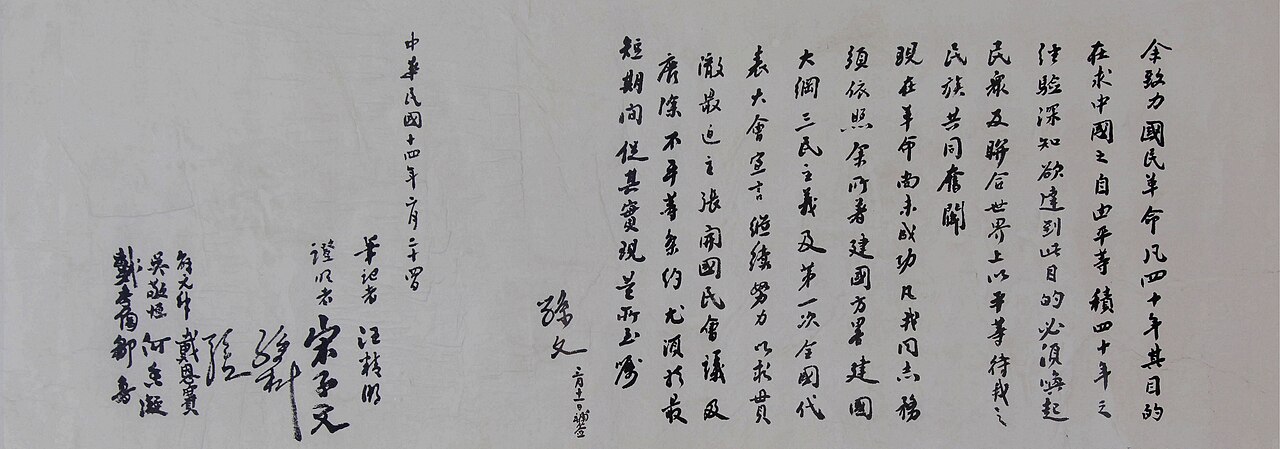 Document
Primary source
Last Will and Testament of Sun Yat-sen
Sun Yat-sen · 1925
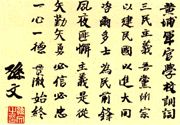 Document
Primary source
National Anthem of the Republic of China
Cheng Maoyun · 1928 (lyrics from 1924 speech)
 Photograph
Primary source
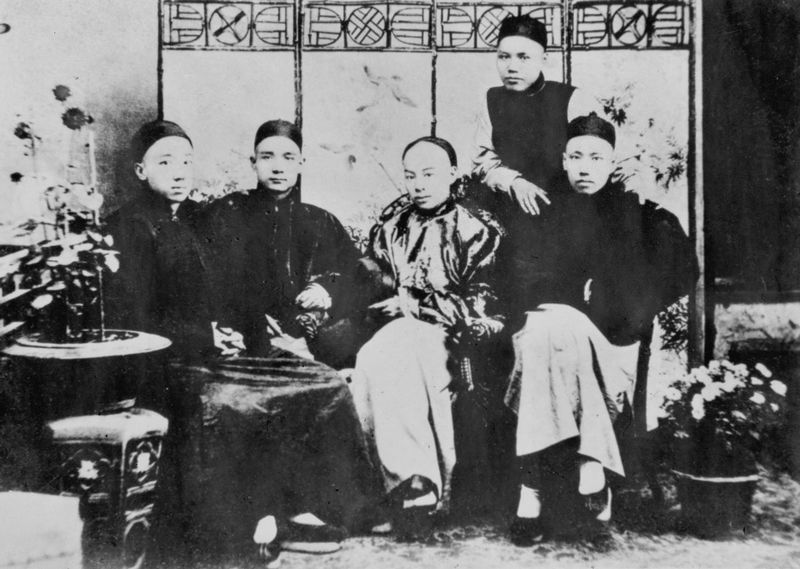
Photograph of the Four Bandits with Guan Jingliang
c. 1888
Free account
Read every Sun Yat-sen source
Sign up free →
Ready when you are
Start chatting with Sun Yat-sen now.
20 messages free · No credit card · Available in 50+ languages.