


Secondary sourcePainting
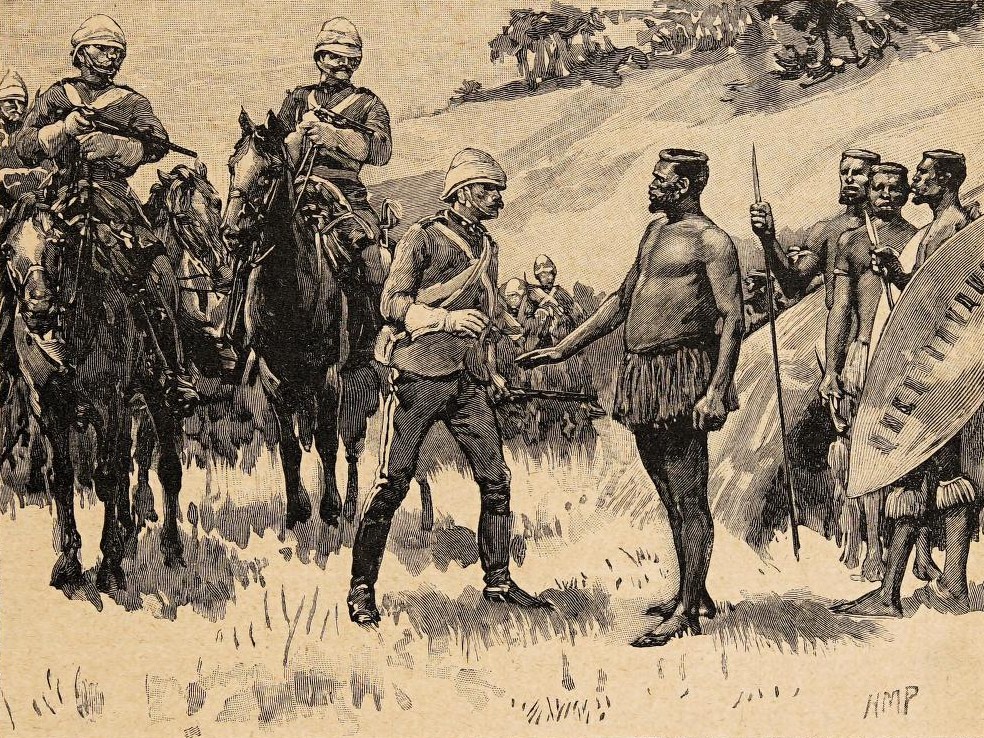
Surrender of Cetewayo
Henry Marriott Paget
A Victorian engraving by Henry Marriott Paget dramatising the moment of Cetshwayo's capture by British forces.
This engraving dramatises the capture of Cetshwayo by British forces, a turning point that ended his reign.
About this source
What it is
A black-and-white engraving by illustrator Henry Marriott Paget, depicting the surrender of King Cetshwayo. It shows a European officer reaching toward a bare-chested African man holding a spear, surrounded by armed warriors and mounted British soldiers.
Why it matters
This is a dramatised Victorian illustration rather than an eyewitness sketch, created to tell the story of Cetshwayo's capture for a British audience. It reveals how British illustrators portrayed the end of the Anglo-Zulu War and shaped public images of the Zulu king and his people during the imperial conflict.
Look closer
- What differences do you notice between how the officer and the king are drawn?
- Since the artist likely was not present, how might imagination have shaped this scene?
- What does the image suggest about the relationship between the British and the Zulu at this moment?
This painting is part of the curated material that grounds the AI version of Cetshwayo kaMpande on Humy.ai — when students ask about related events, the AI can quote it and cite it.
More Cetshwayo kaMpande sources
Meet the AI Cetshwayo kaMpande →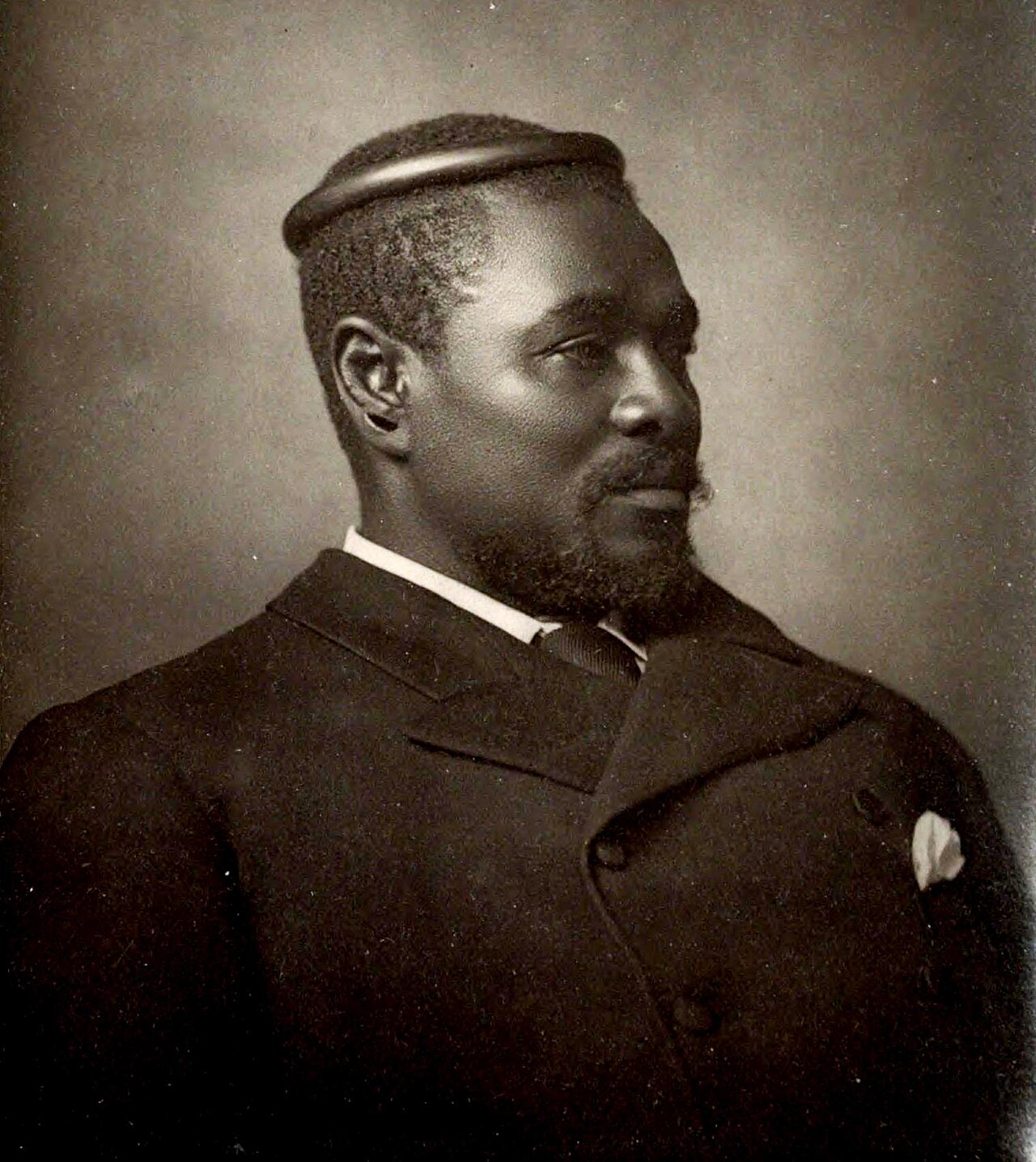 Photograph
Primary source
Portrait of Cetshwayo kaMpande, London 1882
Alexander Bassano · 1882
 Photograph
Primary source
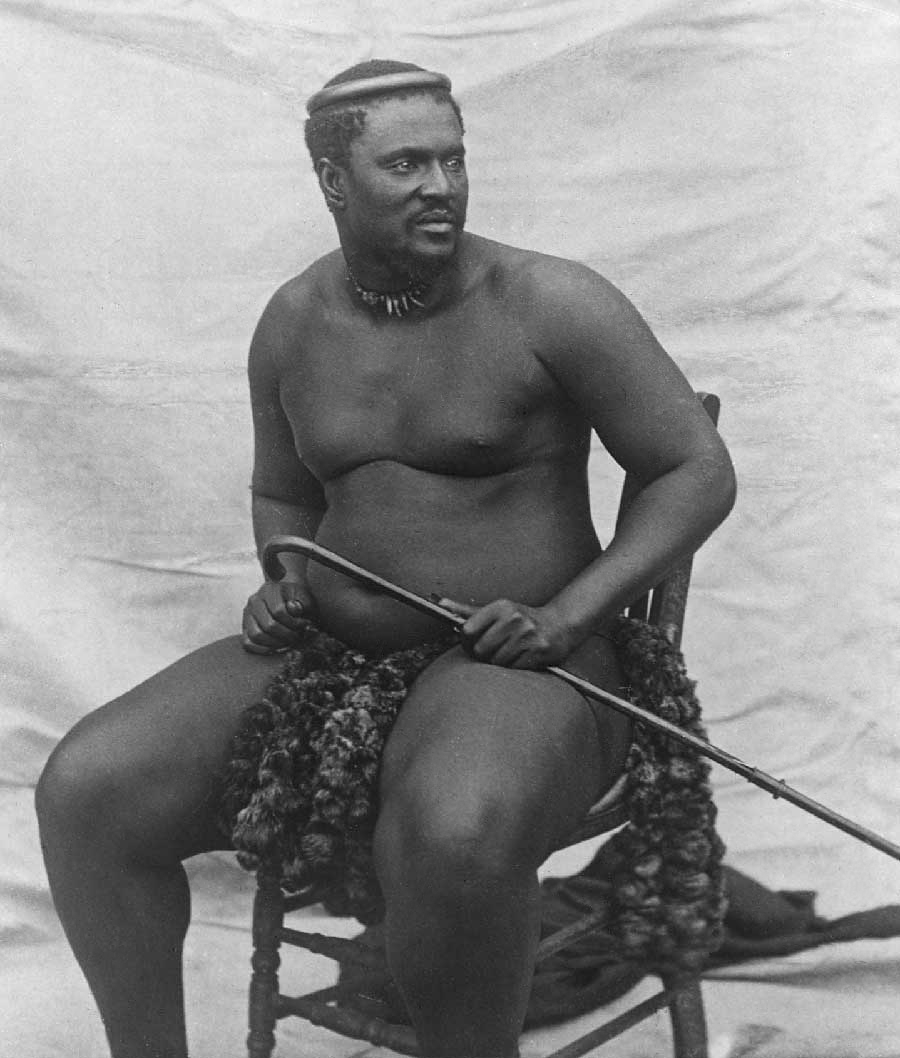
Photograph of Cetshwayo kaMpande, c. 1875
c. 1875
 Painting
Primary source
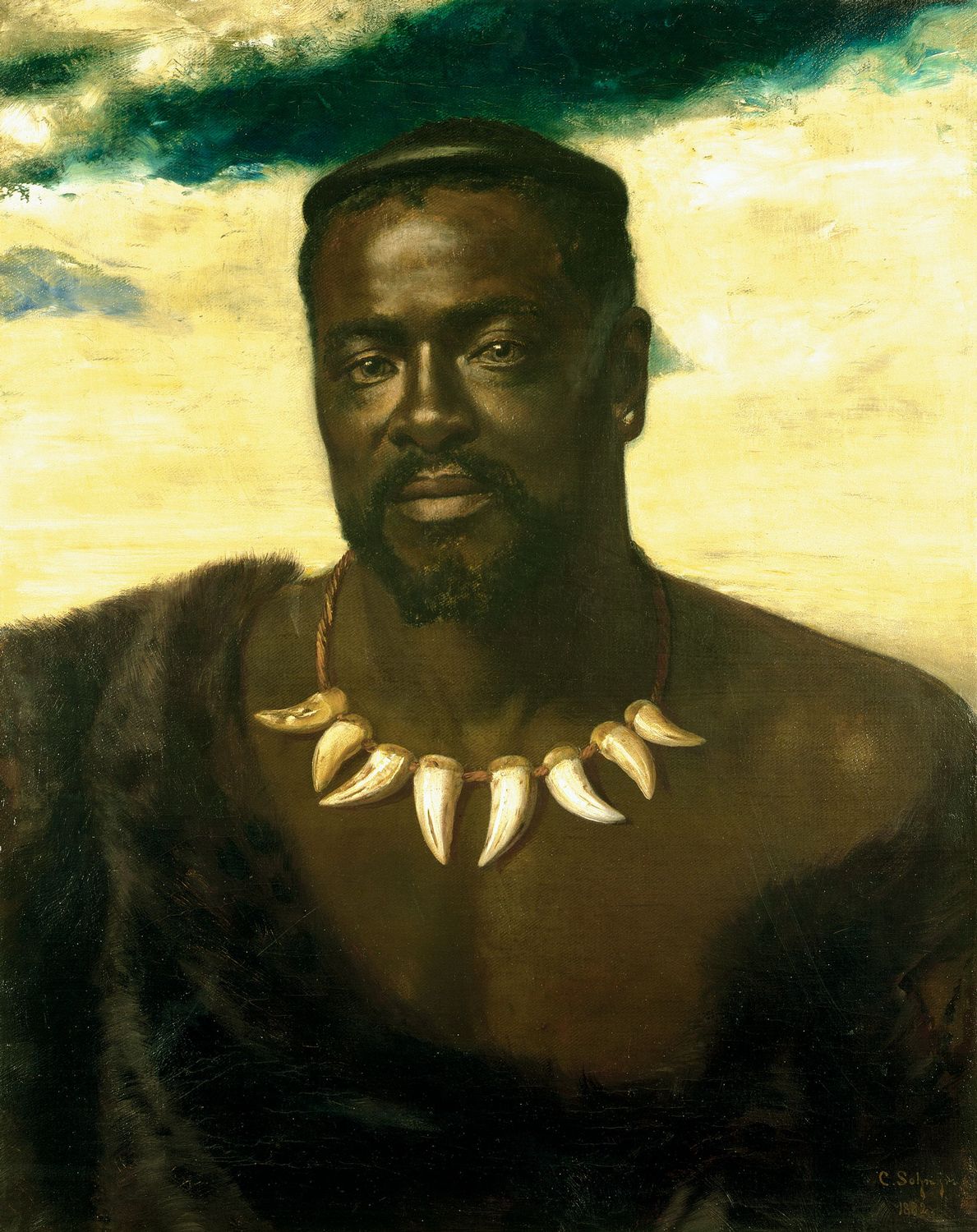
Cetshwayo, King of the Zulus
Carl Rudolph Sohn · 1882
 Painting
Primary source
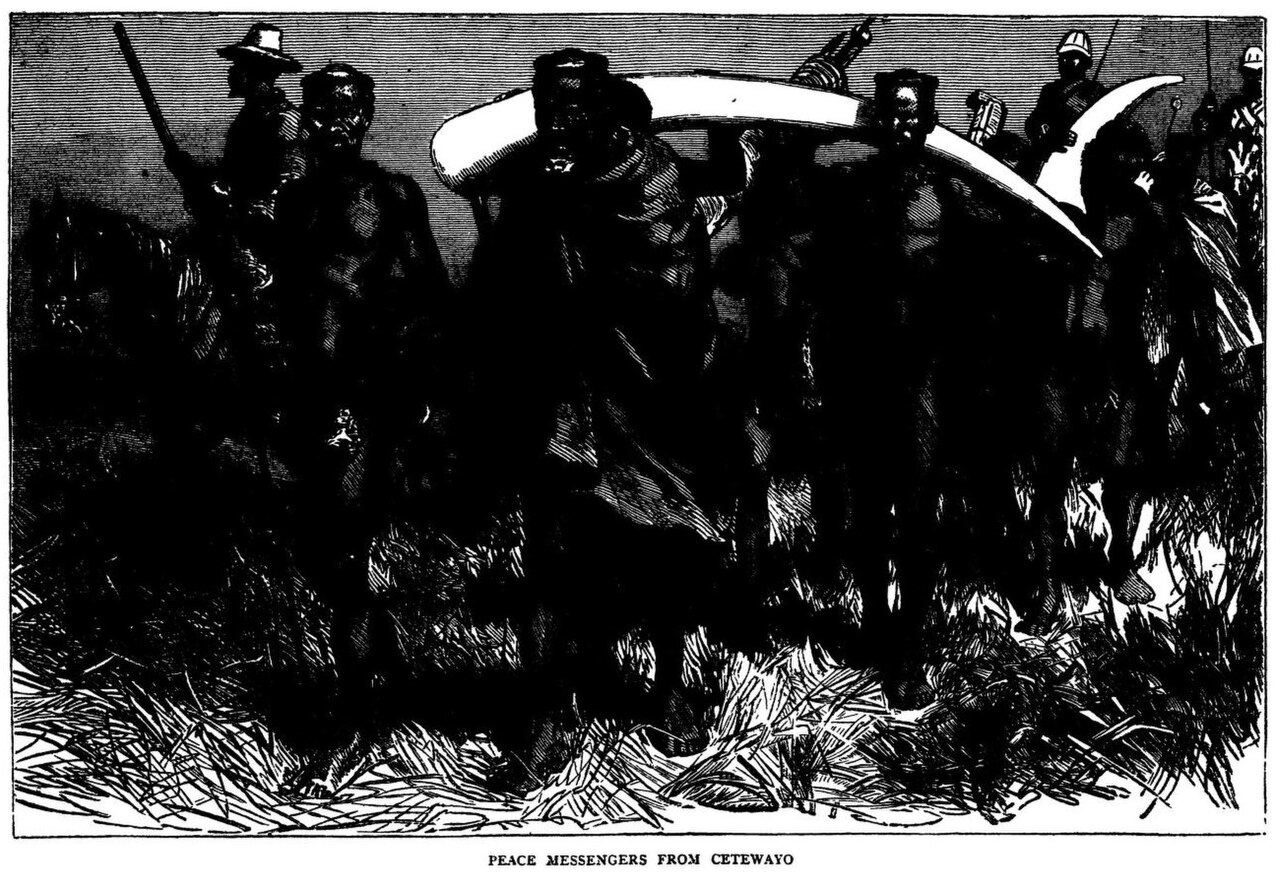
Peace Messengers from Cetawayo
1879
Secondary source
History of the Zulu War and Its Origin
Frances Ellen Colenso and Edward Durnford · 1880
Ready when you are
Start chatting with Cetshwayo kaMpande now.
20 messages free · No credit card · Available in 50+ languages.