


Secondary sourcePaintingbetween 1931 and 1932
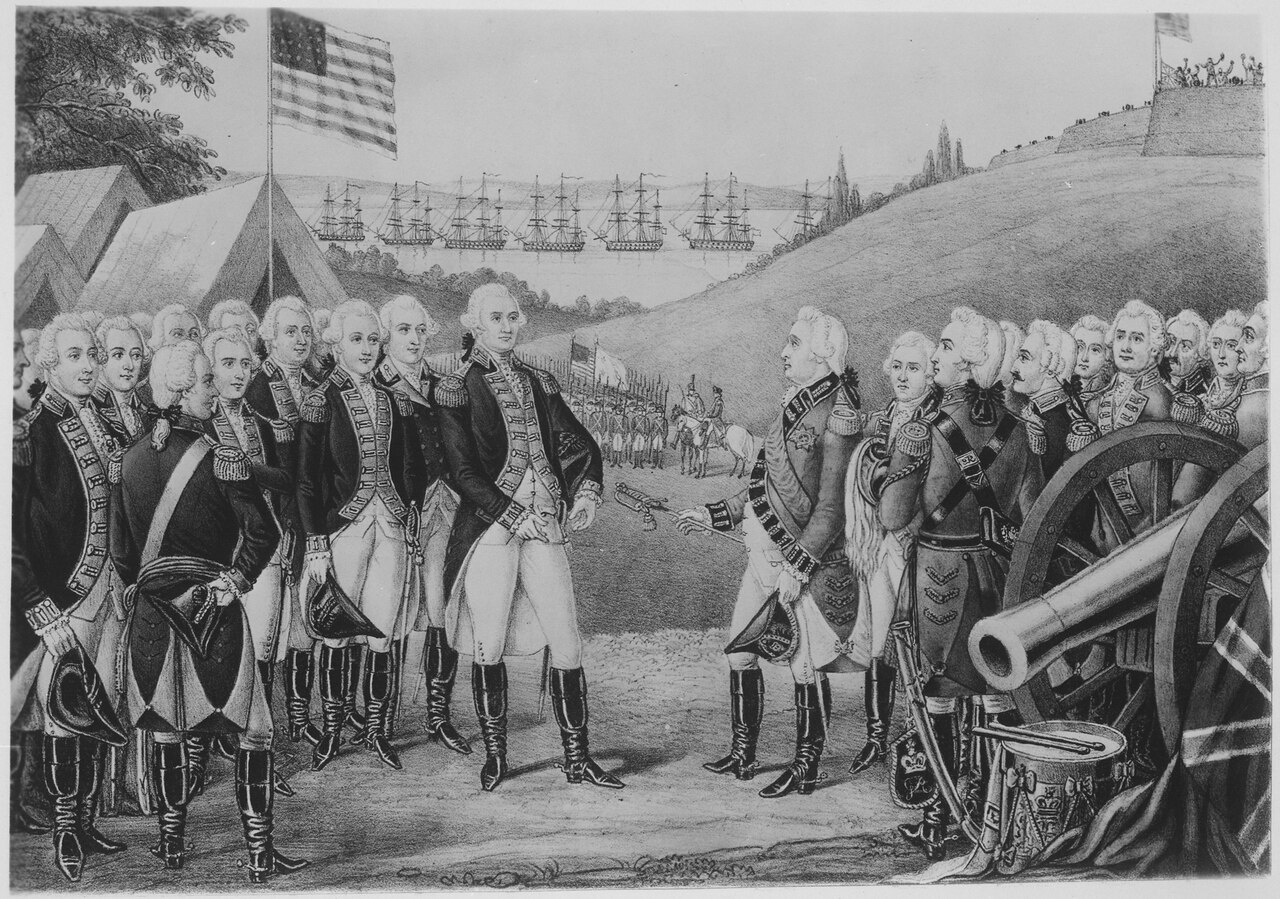
Surrender of Cornwallis at Yorktown, 1781 (copy of Baillie lithograph)
between 1931 and 1932
A photograph of a lithograph copy, made around 1931 to 1932, of an image of the 1781 Yorktown surrender. It shows the event rather than Cornwallis in detail.
Shows the Yorktown surrender Cornwallis led, in a later copy of an earlier print rather than in detail on him.
About this source
What it is
This is a black and white photograph of a print showing the surrender of Cornwallis at Yorktown in 1781. The original image is a lithograph, and this is a later copy made between 1931 and 1932. The image shows a figure in a three-cornered hat standing at the center with an arm extended toward a British officer in a lighter coat, with officers in ornate uniforms on both sides, an American flag, ships on water and a cannon. The copy is held in a collection with the note that a catalogue number, War and Conflict Number 51, is used to order reproductions.
Why it matters
The image records how the Yorktown surrender was pictured more than a century and a half after it happened. Because it is a copy of a copy, it shows how pictures of the Revolution were reproduced and passed on in the twentieth century. It concentrates on the act of surrender rather than on any single person, which tells us how the event was remembered as a national story.
Look closer
- Who stands at the center of the scene, and how does the artist show who is giving up and who is accepting?
- Why might a copy made in the 1930s have been useful to people who wanted pictures of the Revolution?
- What does this picture leave out, such as the soldiers who were not officers or the people of Yorktown?
This painting is part of the curated material that grounds the AI version of Charles Cornwallis on Humy.ai — when students ask about related events, the AI can quote it and cite it.
More Charles Cornwallis sources
Meet the AI Charles Cornwallis →Primary source
Articles of Capitulation, Yorktown
Charles Cornwallis; George Washington; Comte de Rochambeau; Comte de Barras · 19 October 1781
 Painting
Secondary source
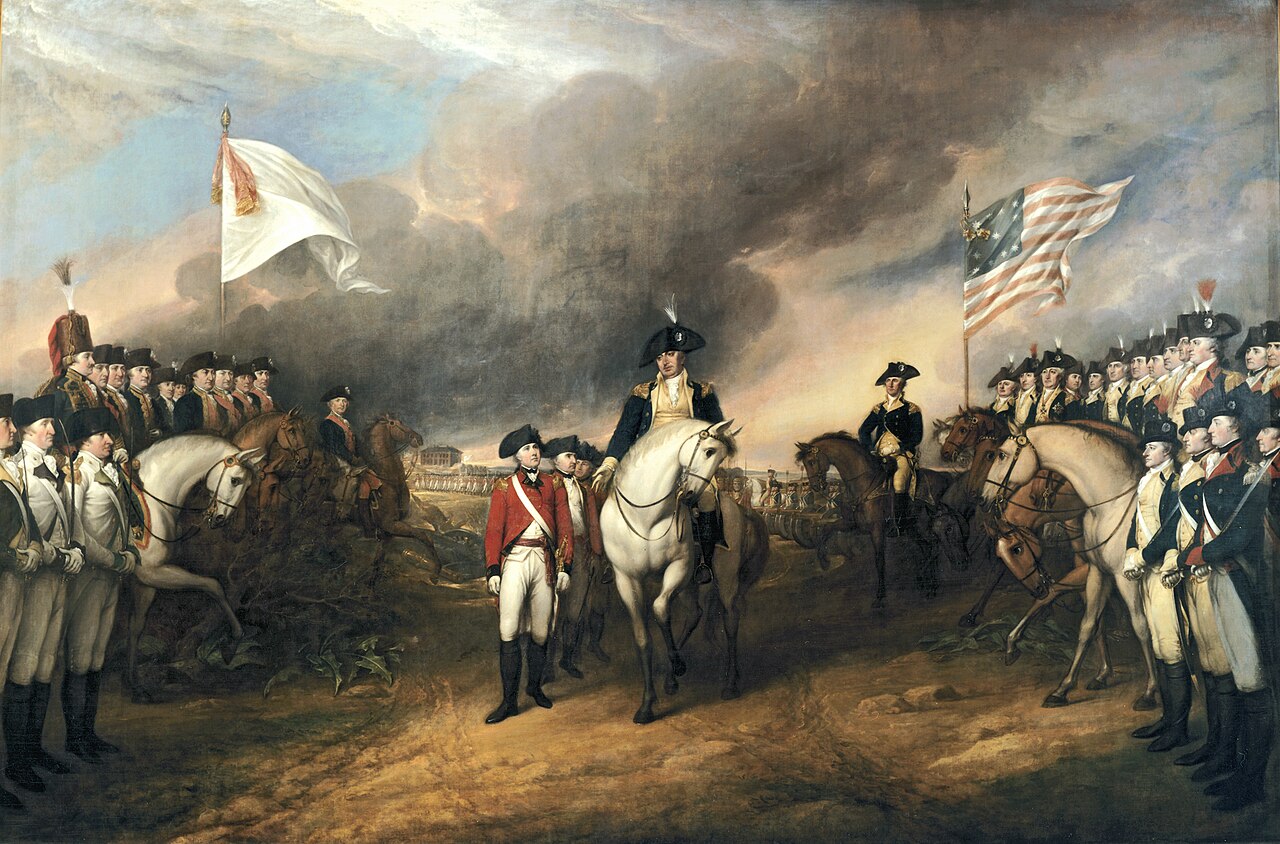
Surrender of Lord Cornwallis
John Trumbull · 1819
 Painting
Primary source
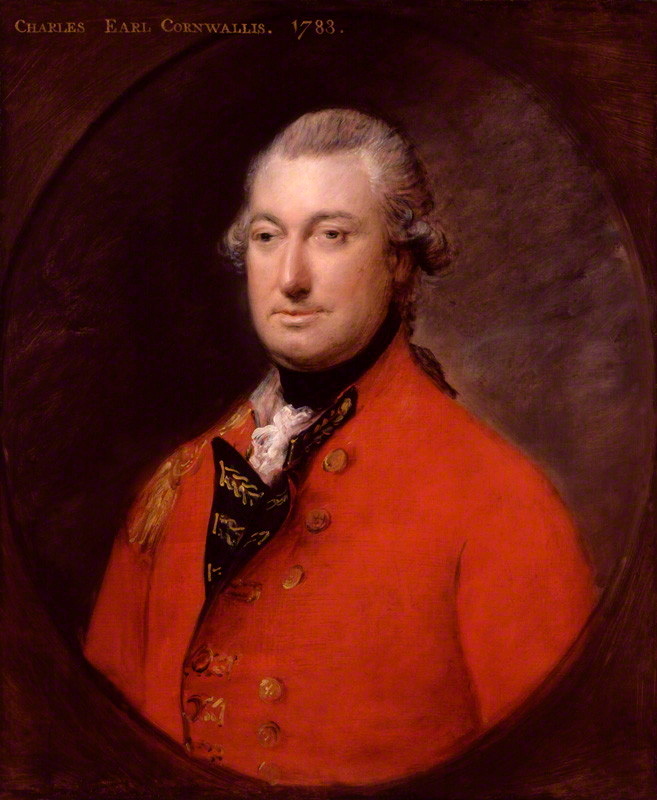
Charles Cornwallis, 1st Marquess Cornwallis
Thomas Gainsborough · 1783
 Painting
Secondary source
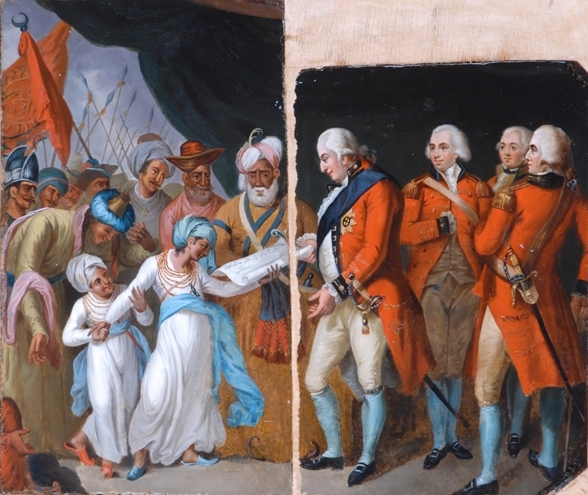
Lord Cornwallis receiving the Hostage Princes
Mather Brown · 1793
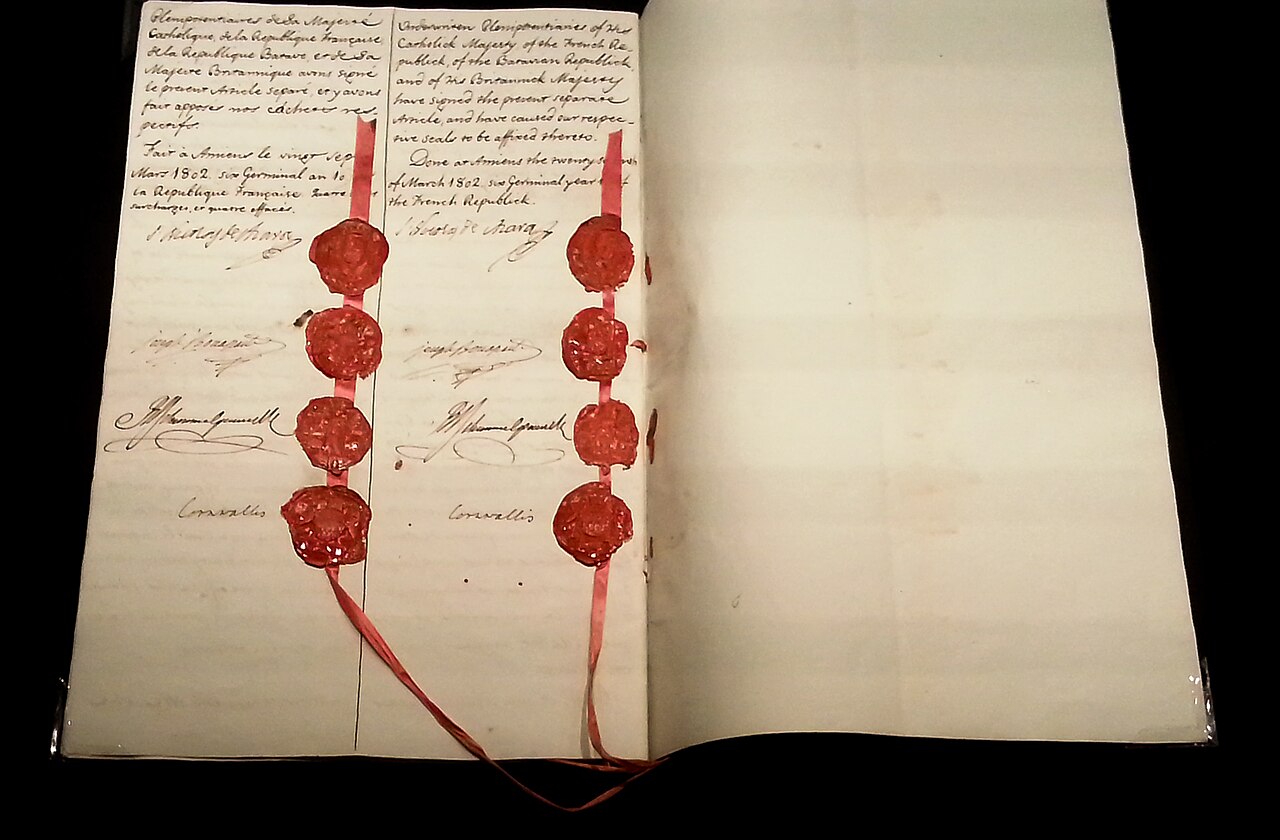 Document
Primary source
Treaty of Amiens
25 March 1802
Ready when you are
Start chatting with Charles Cornwallis now.
20 messages free · No credit card · Available in 50+ languages.