


Primary sourcePaintingc. 1832
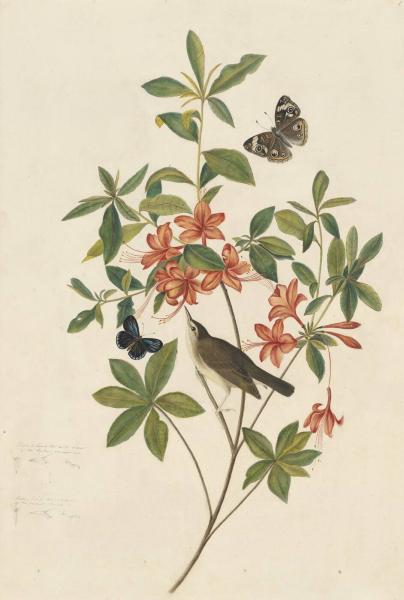
Swainson's Warbler study with bill and claw sketches
John James Audubon · c. 1832
A preparatory watercolor by Audubon of a small warbler on an azalea branch, made for a plate in The Birds of America.
This preparatory drawing is Audubon's own working study, showing his detailed method before finalizing a published plate.
About this source
What it is
This watercolor shows a small brownish warbler perched among red-orange azalea flowers, with two butterflies nearby and faint handwritten notes on the paper. It was painted by John James Audubon around 1832 as a preparatory study for one of the engraved plates later published in The Birds of America, engraved by Robert Havell.
Why it matters
Studies like this show Audubon's careful working process: he painted detailed studies of birds in natural settings before they were turned into finished engraved plates. The handwritten notes hint at the scientific observations he recorded alongside his artwork.
Look closer
- Why might Audubon have included butterflies and specific plants in this study?
- What might the handwritten notes have been used for?
- How does a preparatory study like this differ from a finished, published plate?
This painting is part of the curated material that grounds the AI version of John James Audubon on Humy.ai — when students ask about related events, the AI can quote it and cite it.
More John James Audubon sources
Meet the AI John James Audubon →
Ready when you are
Start chatting with John James Audubon now.
20 messages free · No credit card · Available in 50+ languages.