


Primary sourceArtifact1220s
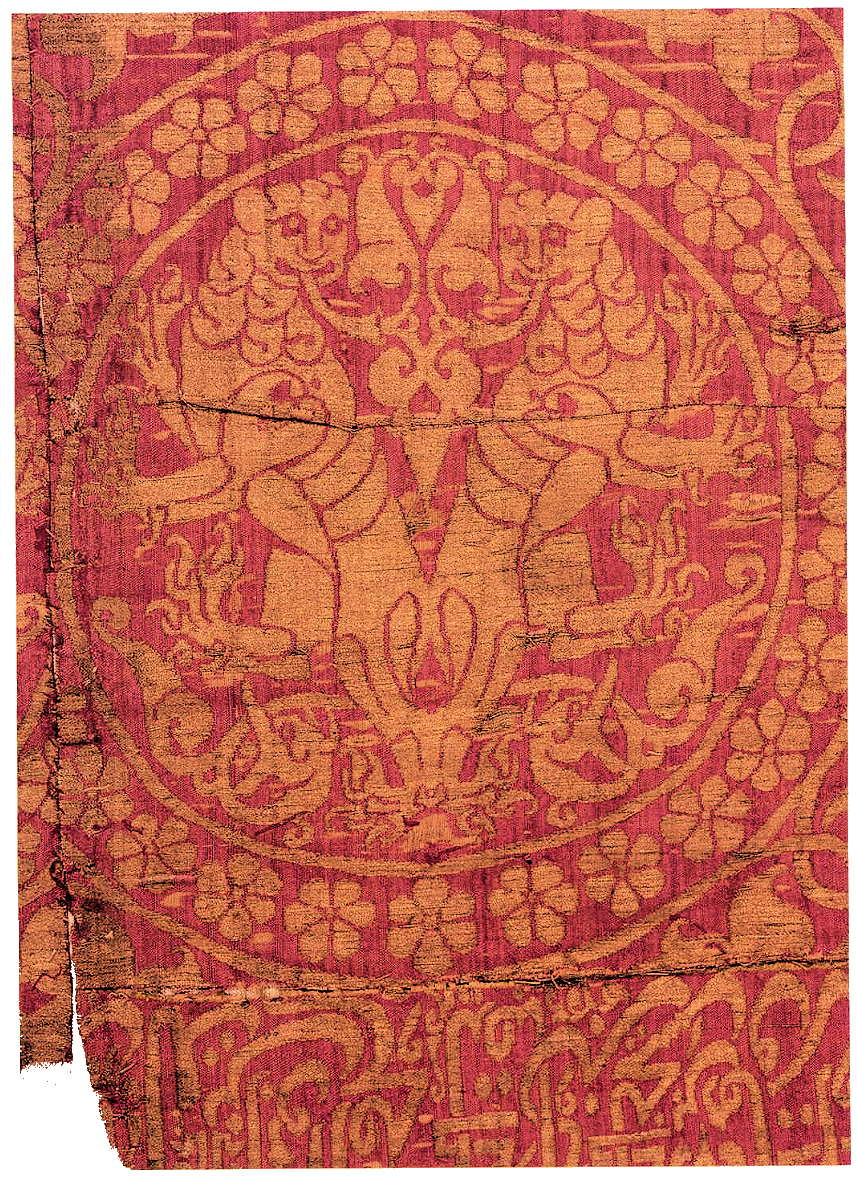
Tapestry in the Name of Kayqubad I
Unknown Seljuk weaver · 1220s
A luxury silk tapestry fragment woven with Kayqubad I's name, titles, and heraldic lions, held at the Museum of Textiles and Decorative Arts in Lyon.
The tapestry bears Kayqubad's own name and caliphal title, showing how he used luxury textiles to project royal authority.
About this source
What it is
This is a fragment of a red silk tapestry woven with gold designs, made in the Seljuk Sultanate of Rum in the 1220s. It shows two addorsed lions inside a roundel, surrounded by rosettes and vines, with a band of inscription naming Sultan Kayqubad I and his titles. It is kept at the Museum of Textiles and Decorative Arts in Lyon.
Why it matters
Luxury textiles like this were a common way for medieval rulers to display power, and this piece names Kayqubad directly, calling him a defender of religion and conqueror. Lions were a widely used symbol of royal strength across the medieval Mediterranean, shared by both Muslim and Christian rulers. Pieces like this sometimes left Anatolia through trade or through looting, such as after the sack of Constantinople in 1204.
Look closer
- What does the choice of lions tell you about how Kayqubad wanted to be seen?
- Why might a ruler put his name and titles directly onto cloth?
- What does this textile suggest about trade and artistic exchange in this period?
This artifact is part of the curated material that grounds the AI version of Kayqubad I on Humy.ai — when students ask about related events, the AI can quote it and cite it.
More Kayqubad I sources
Browse all 87 →
Ready when you are
Start chatting with Kayqubad I now.
20 messages free · No credit card · Available in 50+ languages.