


Primary sourceSpeech12 June 1987
Tear down this wall!
Ronald Reagan · 12 June 1987
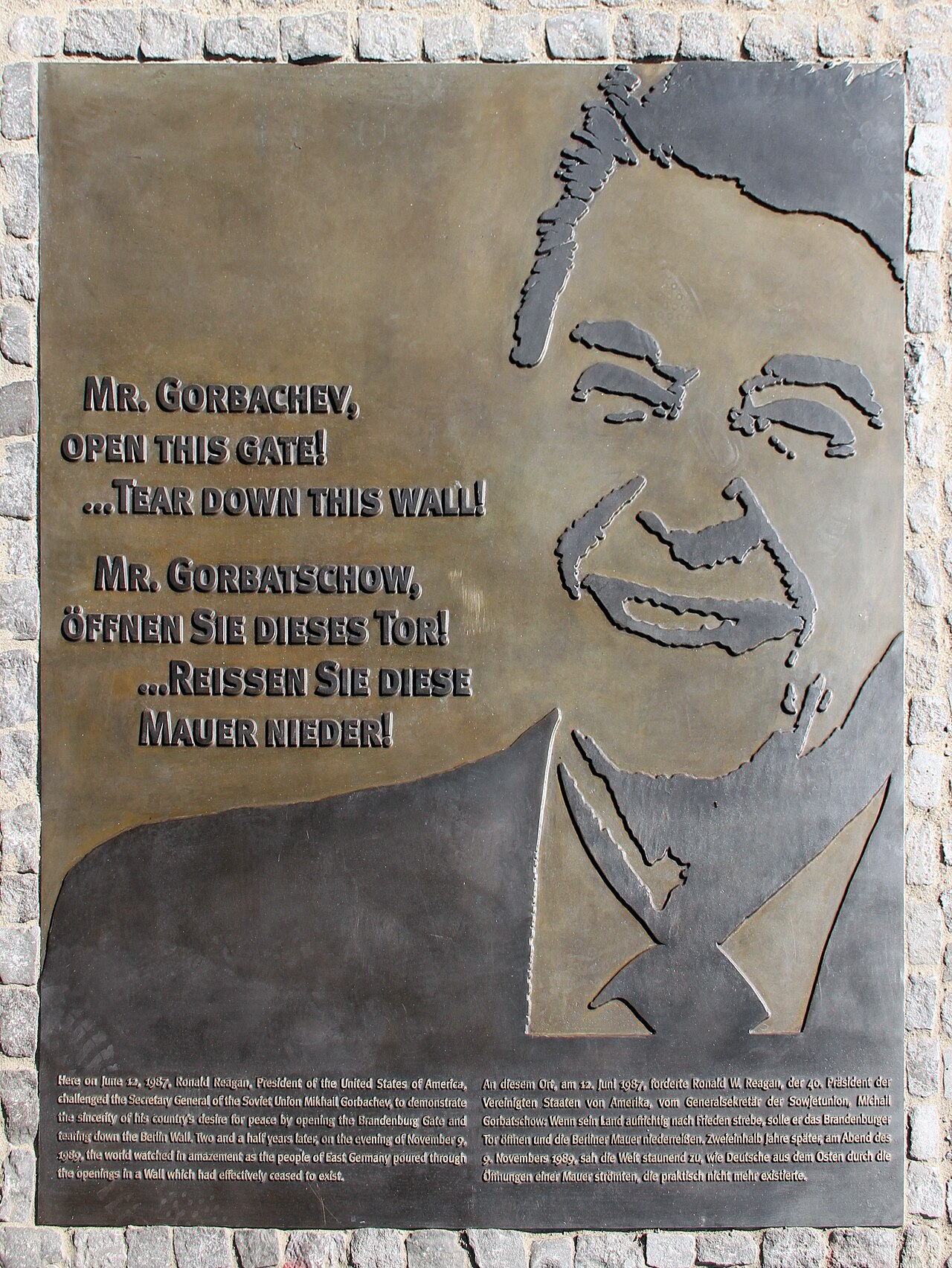
Reagan's June 1987 speech at the Brandenburg Gate challenging Soviet leader Gorbachev to open the Berlin Wall.
Reagan delivered this speech himself, making it a defining primary statement of his Cold War policy.
About this source
What it is
On 12 June 1987, President Ronald Reagan delivered a speech at the Brandenburg Gate in West Berlin, written chiefly by speechwriter Peter Robinson. In it Reagan called on Soviet leader Mikhail Gorbachev to tear down the Berlin Wall, which had divided the city since 1961. A bronze memorial plaque now marks the spot.
Why it matters
The speech became one of the most quoted moments of the late Cold War, though it drew little attention at the time and only gained its famous status after the Wall fell in 1989. It shows Reagan's confrontational approach toward the Soviet Union and reveals internal disagreement among his own staff, some of whom wanted the line removed for fear of embarrassing Gorbachev.
Look closer
- Why might advisers have wanted this line cut, and why did Reagan insist on keeping it?
- How did the speech's reputation change between 1987 and 1989?
- What does the plaque, made decades later, add or leave out compared with the speech itself?
This speech is part of the curated material that grounds the AI version of Ronald Reagan on Humy.ai — when students ask about related events, the AI can quote it and cite it.
More Ronald Reagan sources
Meet the AI Ronald Reagan →Primary source
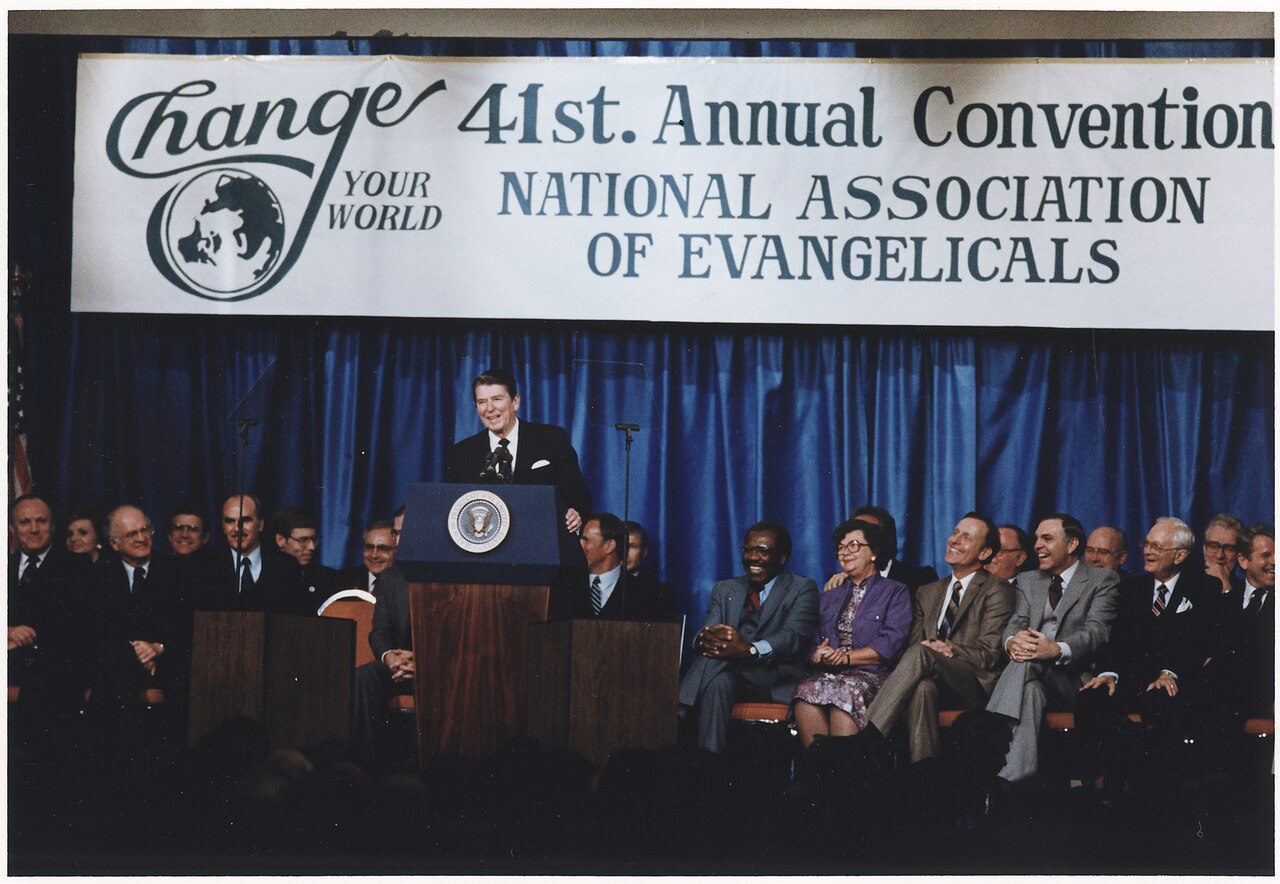
Ronald Reagan's Inaugural Address, January 20, 1981
Ronald Reagan · 20 January 1981
 Speech
Primary source
Evil Empire speech
Ronald Reagan · 8 March 1983
Primary source
A Time for Choosing
Ronald Reagan · 27 October 1964
 Document
Primary source
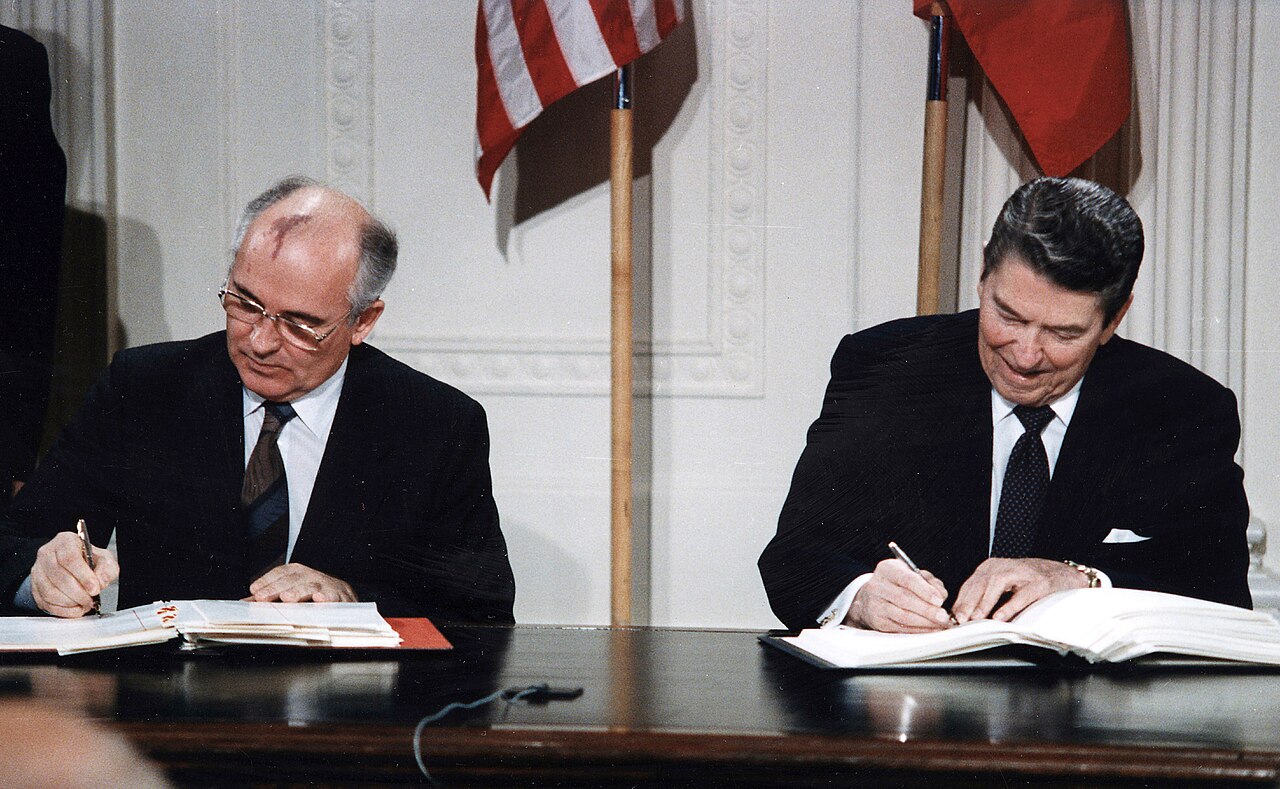
Intermediate-Range Nuclear Forces Treaty
8 December 1987
 Speech
Primary source
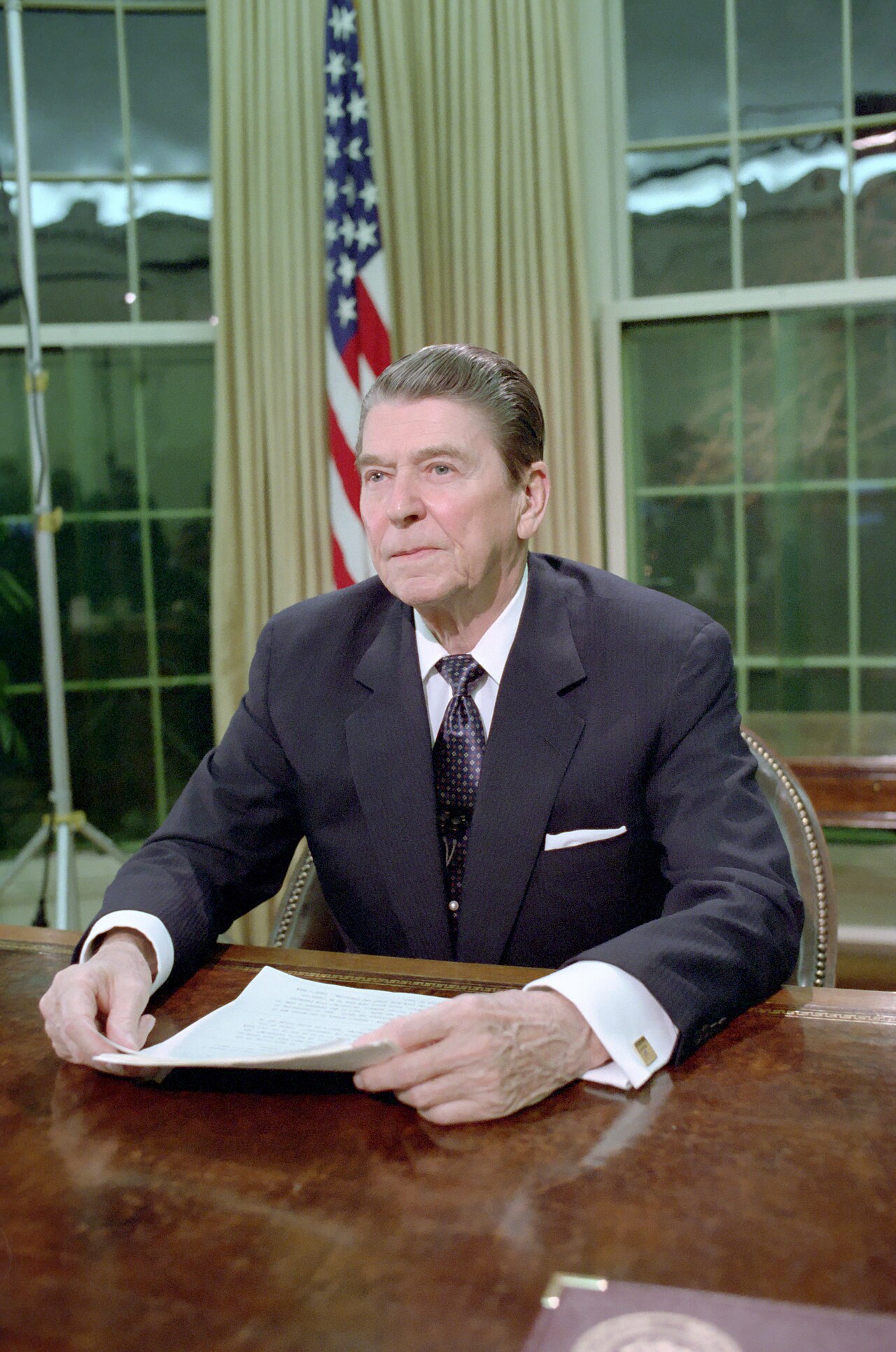
Address to the Nation on the Iran-Contra Affair
Ronald Reagan · 4 March 1987
Ready when you are
Start chatting with Ronald Reagan now.
20 messages free · No credit card · Available in 50+ languages.