


Primary sourceArtifact10 February 1853
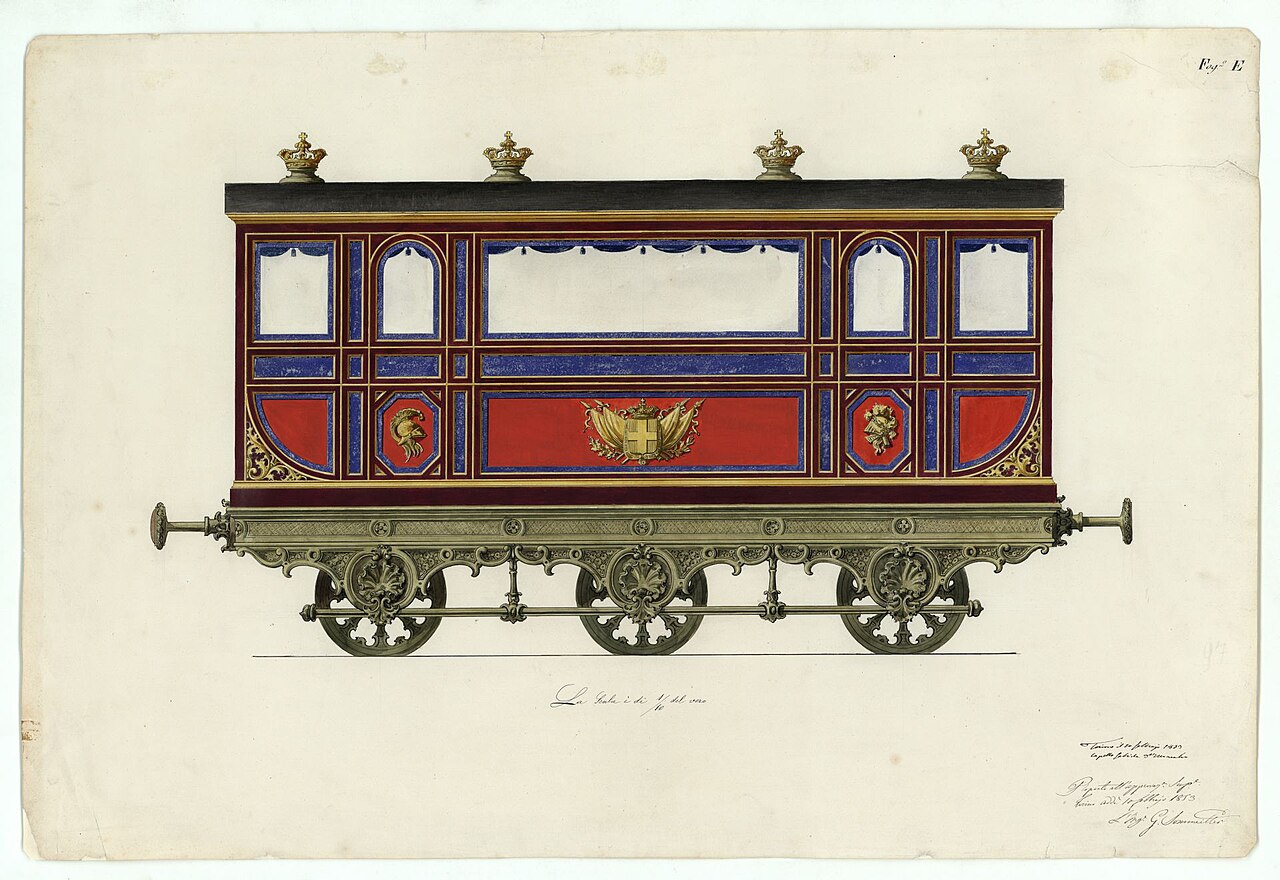
Technical Drawing of the Royal Carriage
Gabriele Capello · 10 February 1853
A colored 1853 technical drawing by Gabriele Capello showing the side elevation of a royal railway carriage made for the Savoy court.
The carriage was commissioned for Victor Emmanuel II, showing the material splendor surrounding his royal household.
About this source
What it is
This is a colored technical drawing made in Turin in 1853 by Gabriele Capello, showing the side elevation of a royal railway carriage decorated with a coat of arms. It is kept in the Turin state archives, among records of the early Italian railways.
It shows a carriage with dark red and blue panels, gold trim, crowns on the roof, and a central coat of arms, with handwritten notes in the corners.
Why it matters
The drawing records the material culture of the royal court at a time when railways were new and symbols of modern power. It was made for a carriage commissioned for Victor Emmanuel II, King of Sardinia, showing how rulers used design and craftsmanship to display status.
Look closer
- What details in the drawing show this carriage was meant for royalty?
- Why might a king want his own special railway carriage?
- What does this document tell us about technology and status in the mid-1800s?
This artifact is part of the curated material that grounds the AI version of Victor Emmanuel II on Humy.ai — when students ask about related events, the AI can quote it and cite it.
More Victor Emmanuel II sources
Browse all 92 →Primary source
Proclamation of 27 March 1849
Victor Emmanuel II of Italy · 27 March 1849
 Document
Primary source
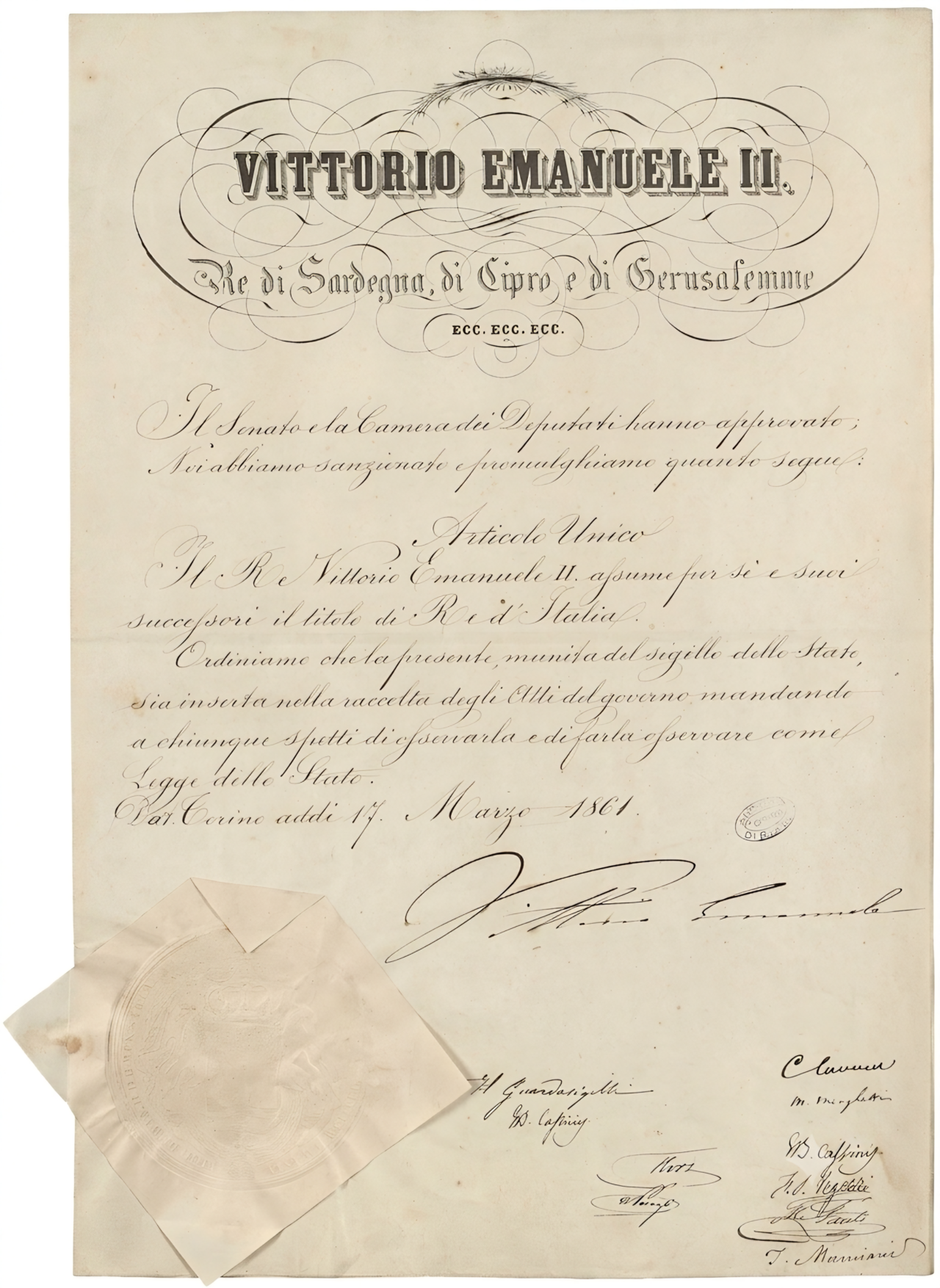
Law proclaiming the Kingdom of Italy
Victor Emmanuel II of Italy · 17 March 1861
 Painting
Secondary source
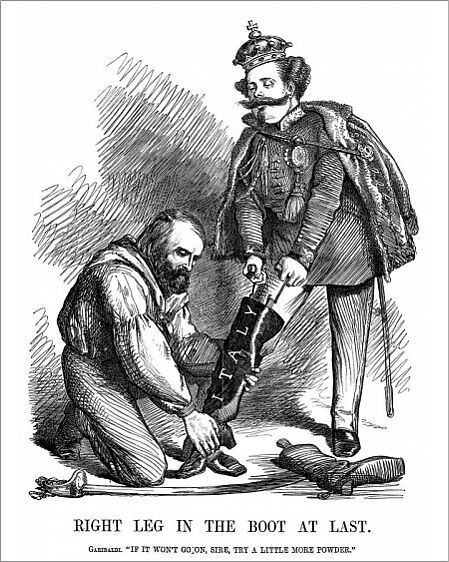
Right Leg in the Boot at Last
John Tenniel · 17 November 1860
 Document
Primary source
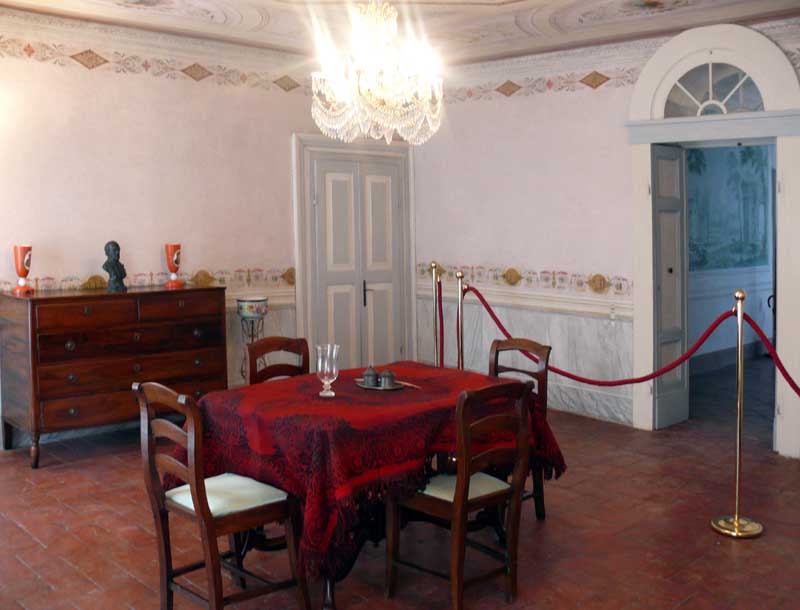
Treaty of Villafranca
11-12 July 1859
Free account
Read every Victor Emmanuel II source
Sign up free →
Ready when you are
Start chatting with Victor Emmanuel II now.
20 messages free · No credit card · Available in 50+ languages.