


Primary sourceSculpturec. 1820
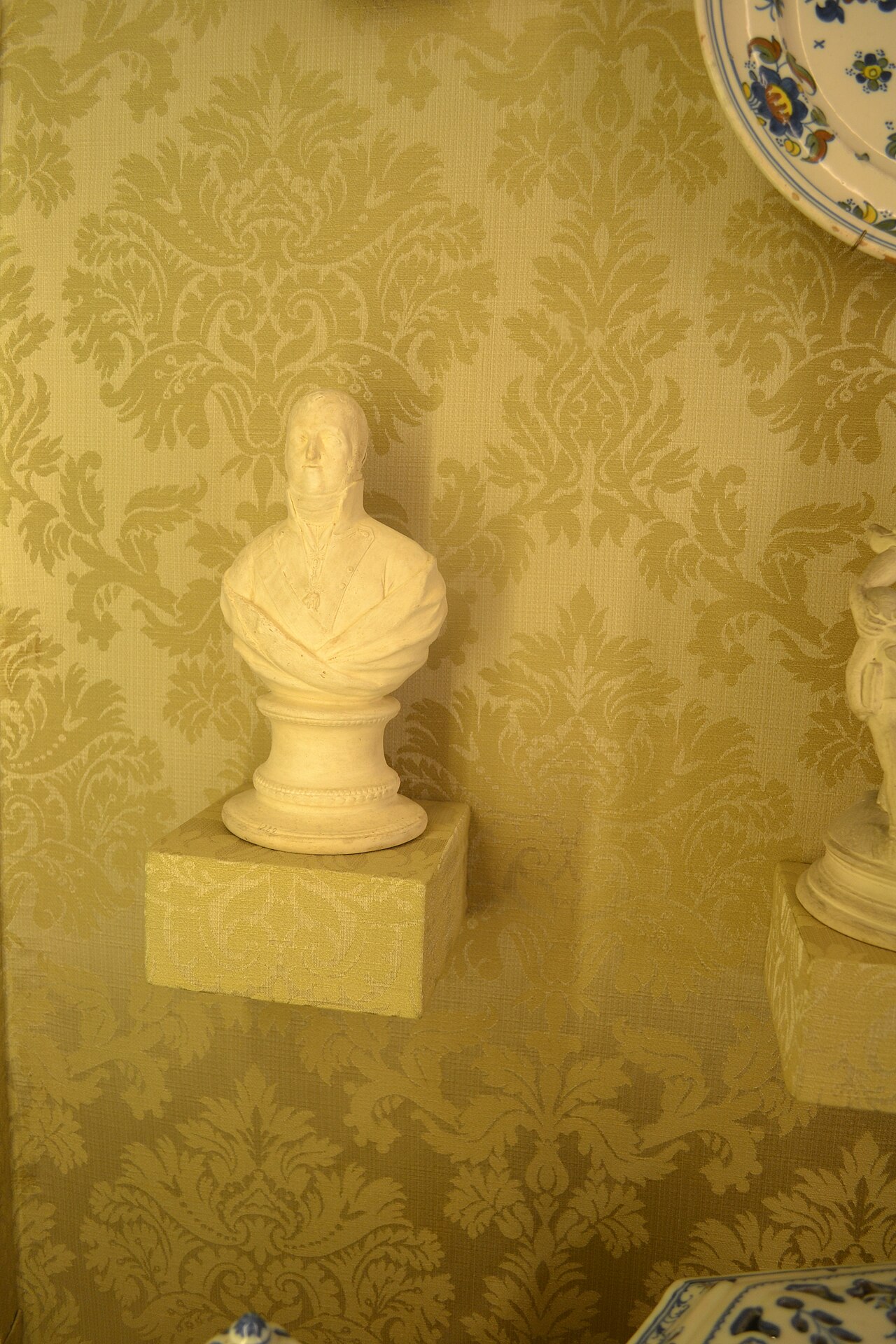
Terracotta bust of Ferdinand VII from Alcora
Dorieo · c. 1820
A terracotta bust of the king made around 1820 at the Alcora factory, held in the Palacio del marqués de Dos Aguas.
It is a made-in-lifetime likeness of Ferdinand VII, showing how his image was reproduced as a decorative object.
About this source
What it is
This is a terracotta bust of Ferdinand VII made at the Alcora factory around 1820. The record gives the catalogue number CE1/01220 and places it in the hall of the palace of the marqués de Dos Aguas. The image shows a small white bust of a man with short hair, a high collar, and a jacket with a draped cloak. It stands on a round pedestal set on a square plinth.
Why it matters
Portrait busts were a way to show a ruler in three dimensions, and they were displayed in palaces and homes. An object like this shows how the king's likeness was reproduced in everyday materials. Ceramic works from factories like Alcora also show the craft and taste of the period.
Look closer
- What details of clothing and hair does the sculptor choose to show?
- Why would a household want a bust of the king on display?
- What can a small object like this tell us that a large painting cannot?
This sculpture is part of the curated material that grounds the AI version of Ferdinand VII on Humy.ai — when students ask about related events, the AI can quote it and cite it.
More Ferdinand VII sources
Browse all 94 →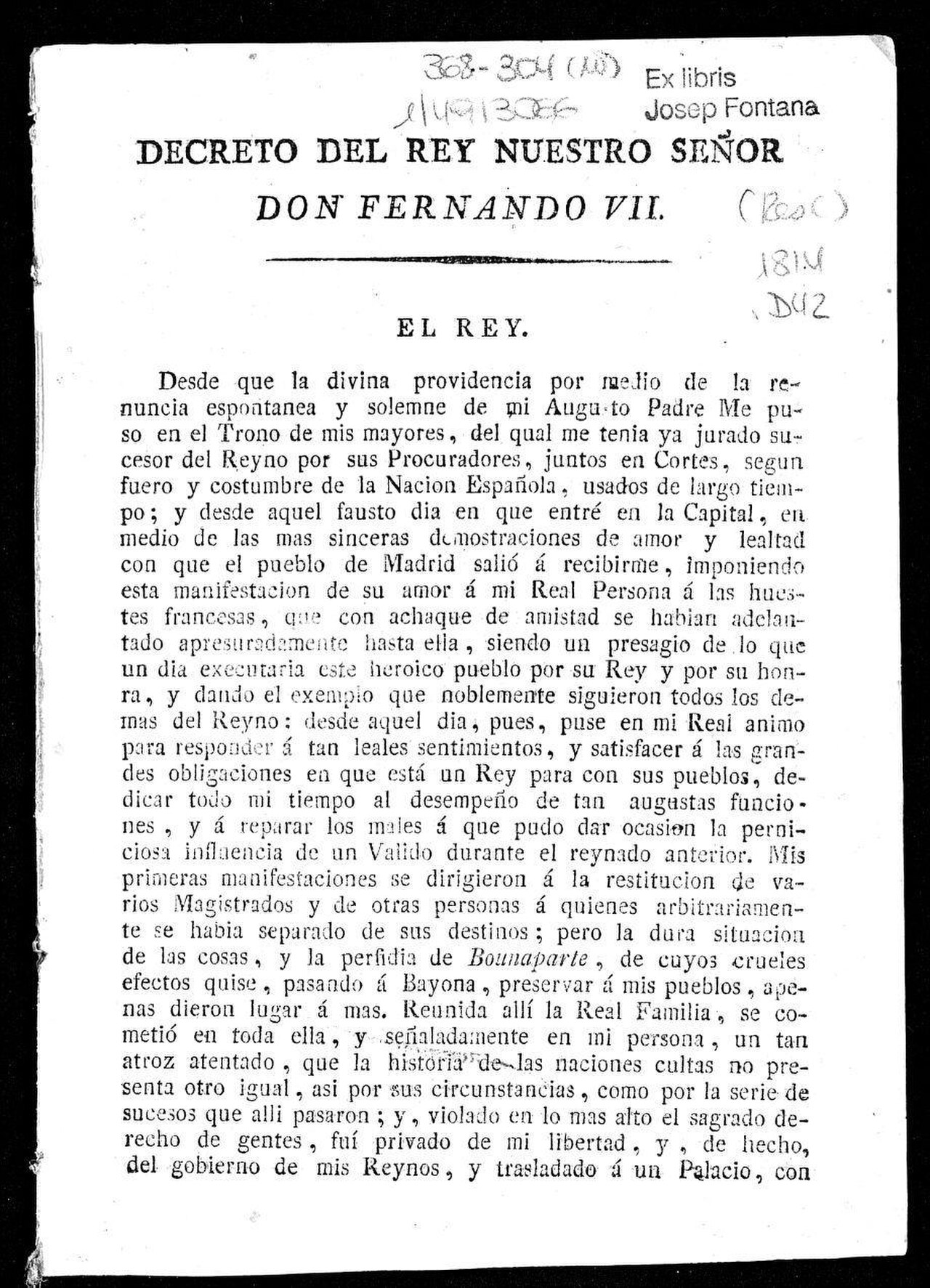 Document
Primary source
Decree Abolishing the Constitution of 1812
Ferdinand VII of Spain · 4 May 1814
Primary source
Pragmatic Sanction of 1830
Ferdinand VII of Spain · 29 March 1830
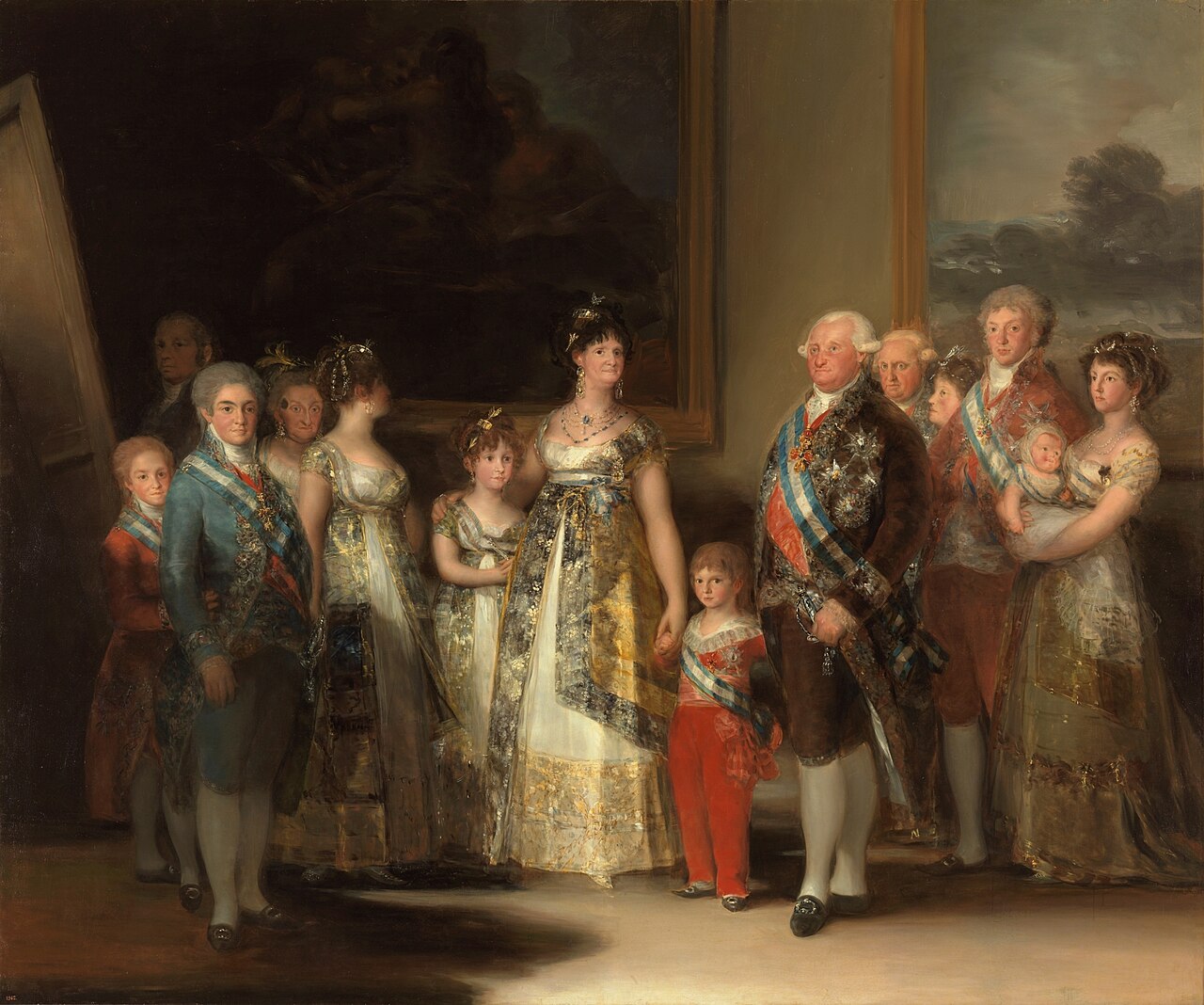 Painting
Primary source
Charles IV of Spain and His Family
Francisco Goya · 1800-1801
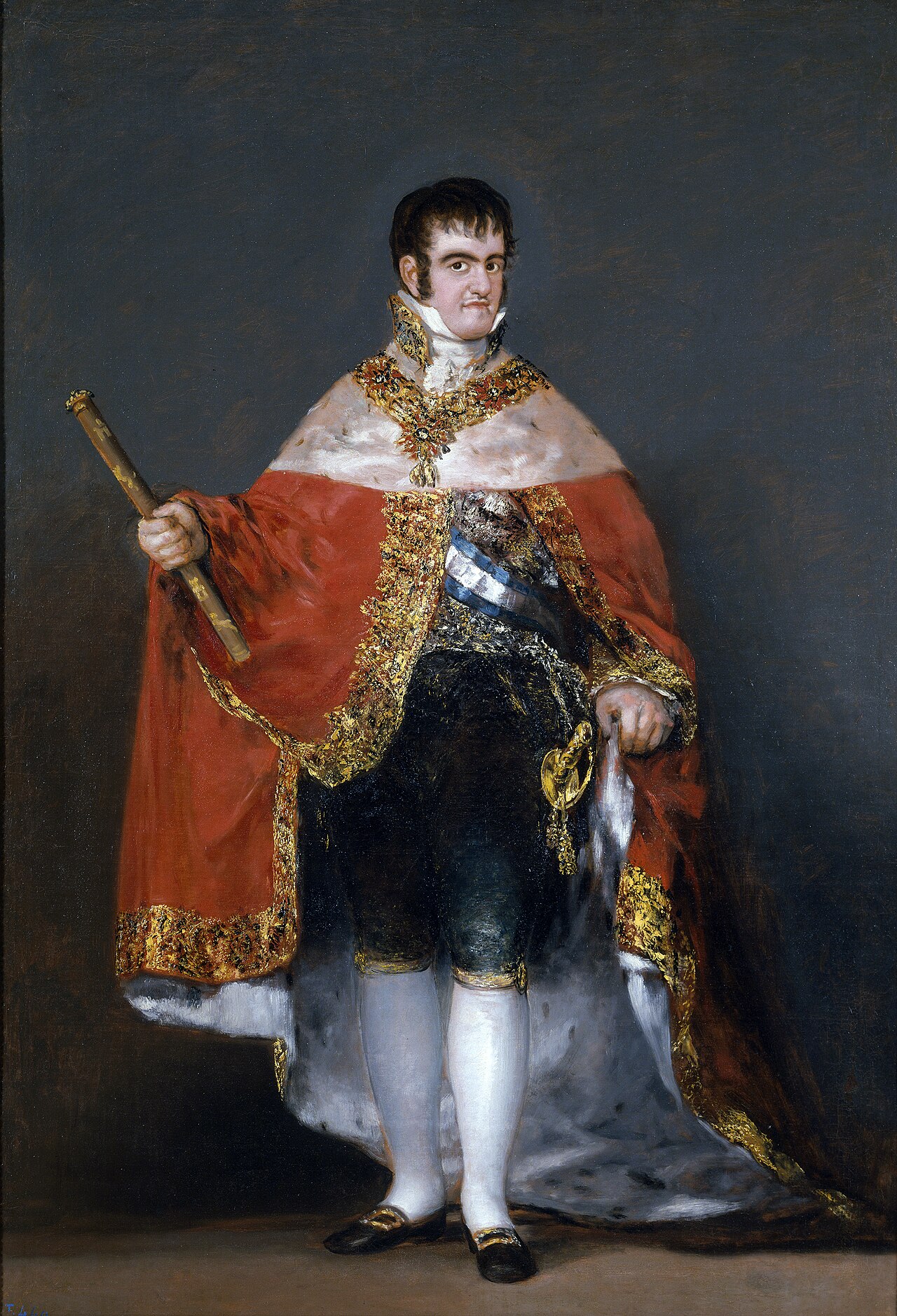 Painting
Primary source
Ferdinand VII in Court Dress
Francisco Goya · 1814-1815
Free account
Read every Ferdinand VII source
Sign up free →
Ready when you are
Start chatting with Ferdinand VII now.
20 messages free · No credit card · Available in 50+ languages.