


Primary sourceArtifactAD 215-217
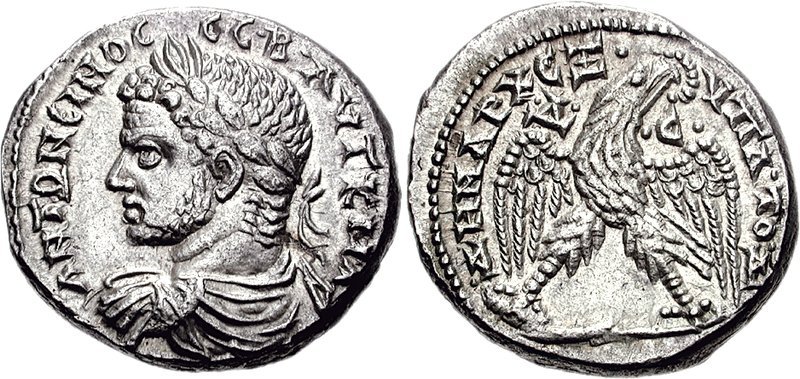
Tetradrachm of Caracalla, Antioch mint
AD 215-217
A silver coin struck at the Antioch mint between AD 215 and 217 with Caracalla's portrait on one side and an eagle with a wreath on the other. It shows how imperial coinage in the eastern provinces presented the emperor.
Shows Caracalla as the portrayed ruler on official silver coinage struck at Antioch, part of the imperial image in the eastern provinces.
About this source
What it is
This is a silver tetradrachm, a large coin, struck at the Antioch mint between AD 215 and 217. The obverse shows a laureate, draped and cuirassed bust of Caracalla facing right, with a Greek inscription around the edge. The reverse shows an eagle standing, facing forward with its head turned right, wings displayed and a wreath in its beak, with its foot on the thigh of a sacrificial animal. The image comes from a dealer's catalogue record, and the coin itself is a physical object.
Why it matters
Caracalla ruled from 198 to 217. Coins like this one were issued in the provinces as well as in Rome, so they show how imperial power was announced in the Greek-speaking East. The eagle and wreath are symbols of victory and honour. The coin is one small piece of the official image that the emperor and his government wanted people to see.
Look closer
- What words are written around the portrait, and what do they tell you about the emperor's title?
- Why might a city mint use an eagle and a wreath rather than a portrait on the reverse?
- What does this coin leave out about the people who used it every day?
This artifact is part of the curated material that grounds the AI version of Caracalla on Humy.ai — when students ask about related events, the AI can quote it and cite it.
More Caracalla sources
Browse all 81 →
Ready when you are
Start chatting with Caracalla now.
20 messages free · No credit card · Available in 50+ languages.