


Primary sourcePainting1776
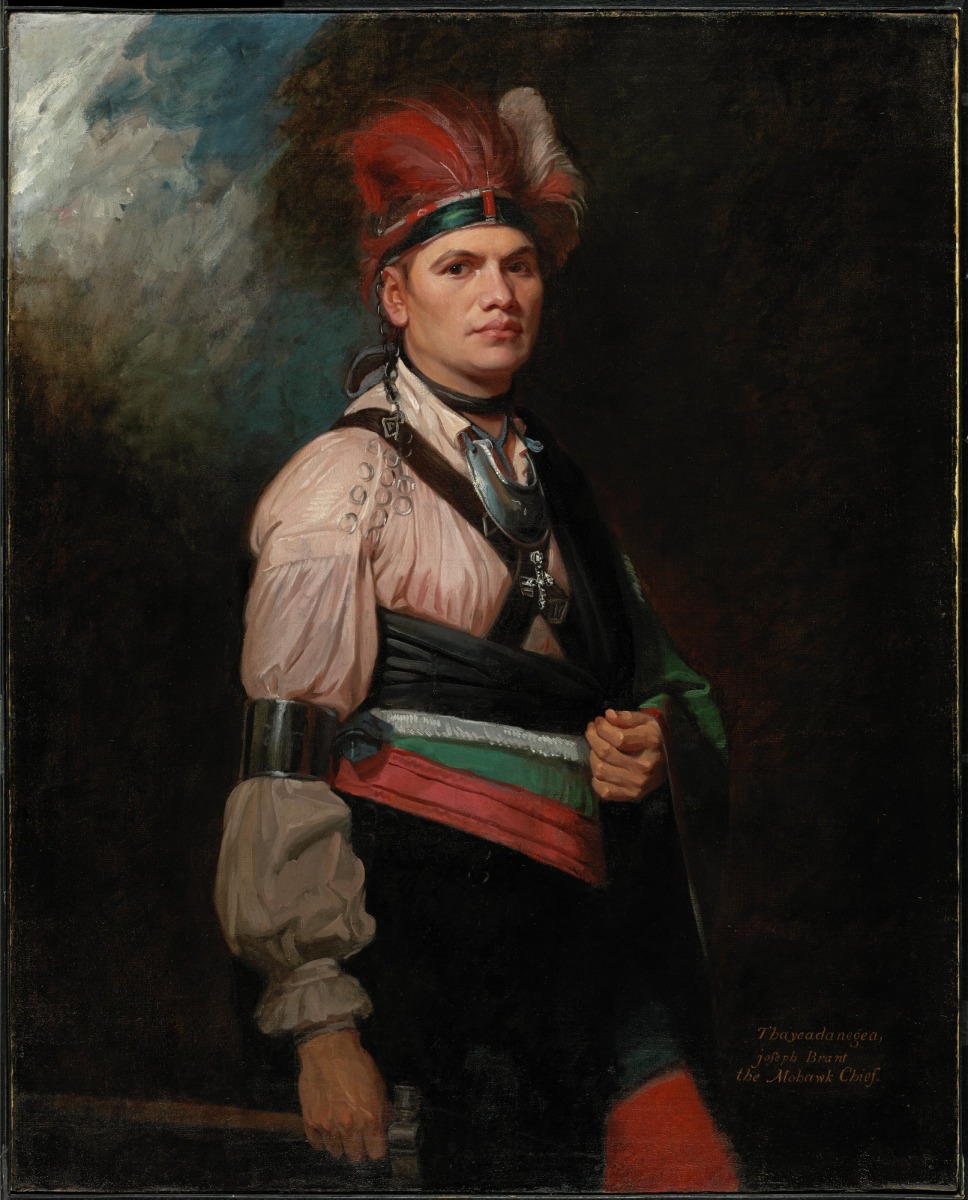
Thayendanegea (Joseph Brant)
George Romney · 1776
A 1776 London portrait of Joseph Brant painted from life by George Romney, made the year Brant met George III.
Painted from life in London in 1776, the year Brant pledged Mohawk support to the British Crown.
About this source
What it is
This oil painting of Joseph Brant (Thayendanegea) was painted from life by the English artist George Romney in London in 1776. It is now held by the National Gallery of Canada.
Brant is shown wearing a feathered headdress, a ruffled shirt, a silver gorget and an Indian blanket.
Why it matters
Brant sat for Romney while visiting England with Guy Johnson, during the same trip in which he met King George III and pledged Mohawk support to the British Crown against the American rebels. The portrait reflects how British society wanted to see an important Indigenous ally — dignified, exotic and loyal — at a moment of high political stakes for both Britain and the Mohawk.
Look closer
- What details in Brant's clothing mix European and Mohawk styles, and why might that be?
- Why would a British painter be asked to paint an Indigenous leader at this exact moment?
- What does the portrait not tell us about Brant's own views or voice?
This painting is part of the curated material that grounds the AI version of Joseph Brant (Thayendanegea) on Humy.ai — when students ask about related events, the AI can quote it and cite it.
More Joseph Brant (Thayendanegea) sources
Meet the AI Joseph Brant (Thayendanegea) →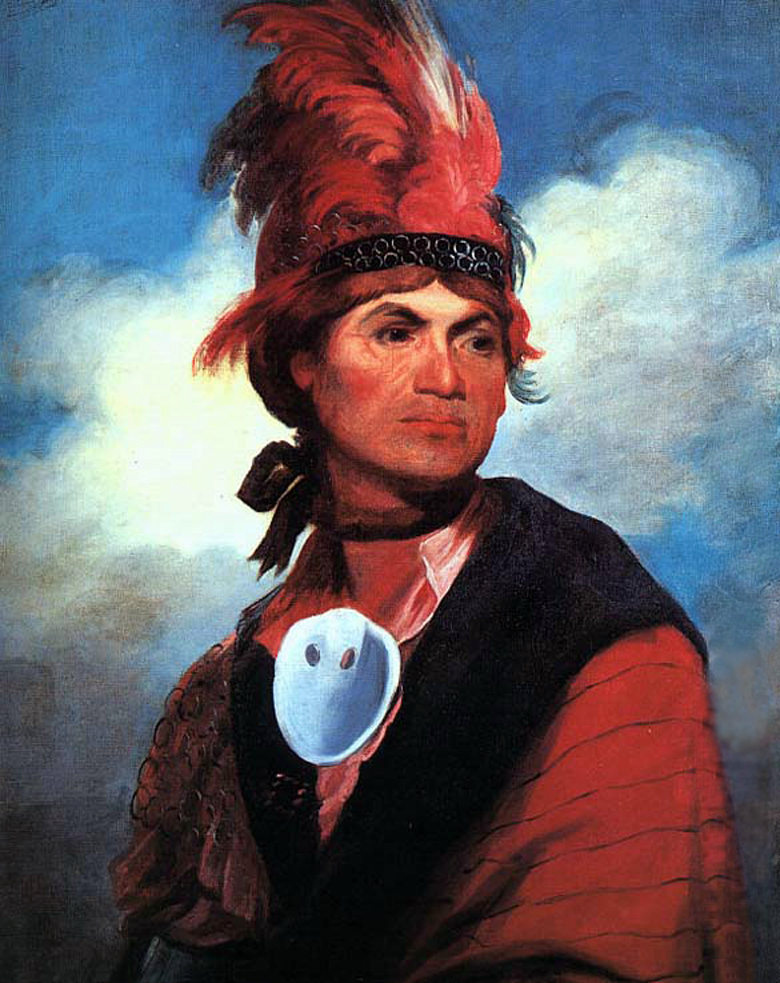 Painting
Primary source
Joseph Brant by Gilbert Stuart
Gilbert Stuart · 1786
 Painting
Primary source
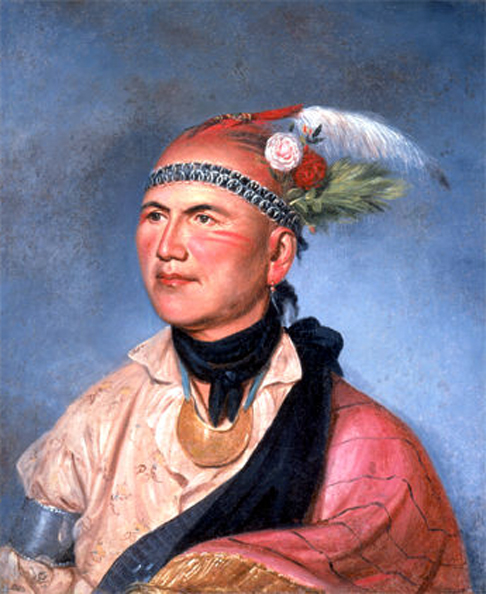
Joseph Brant by Charles Willson Peale
Charles Willson Peale · 1797
 Painting
Secondary source
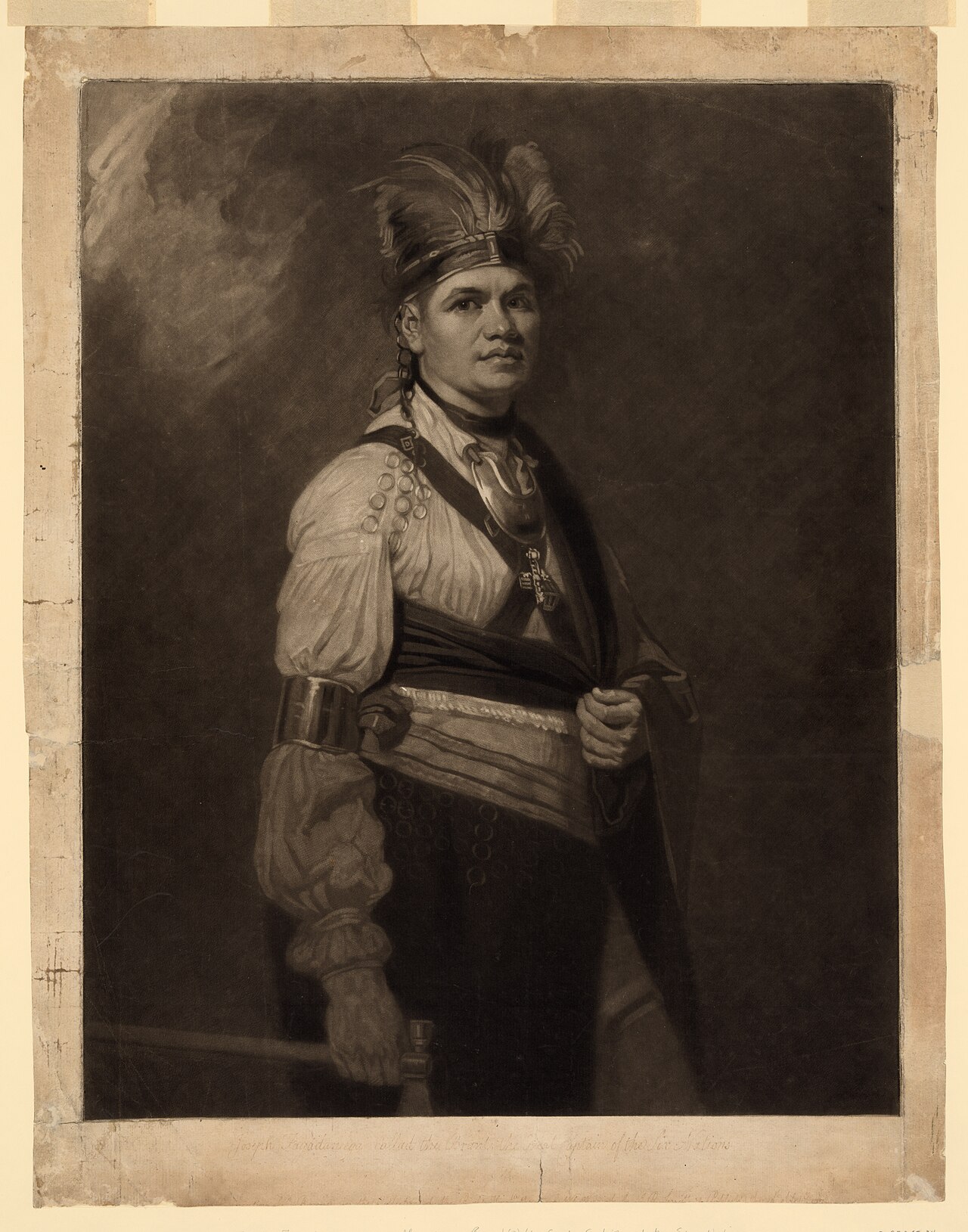
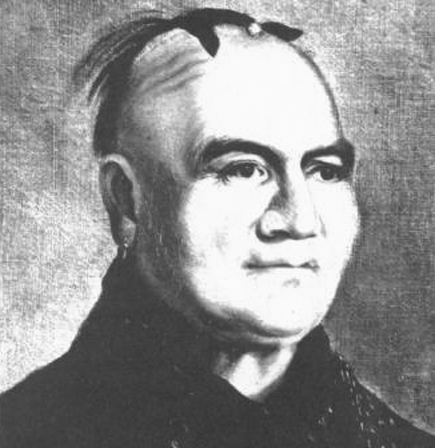
Joseph Fayadaneega, called the Brant, the Great Captain of the Six Nations
John Raphael Smith, after George Romney · 1779
 Painting
Primary source
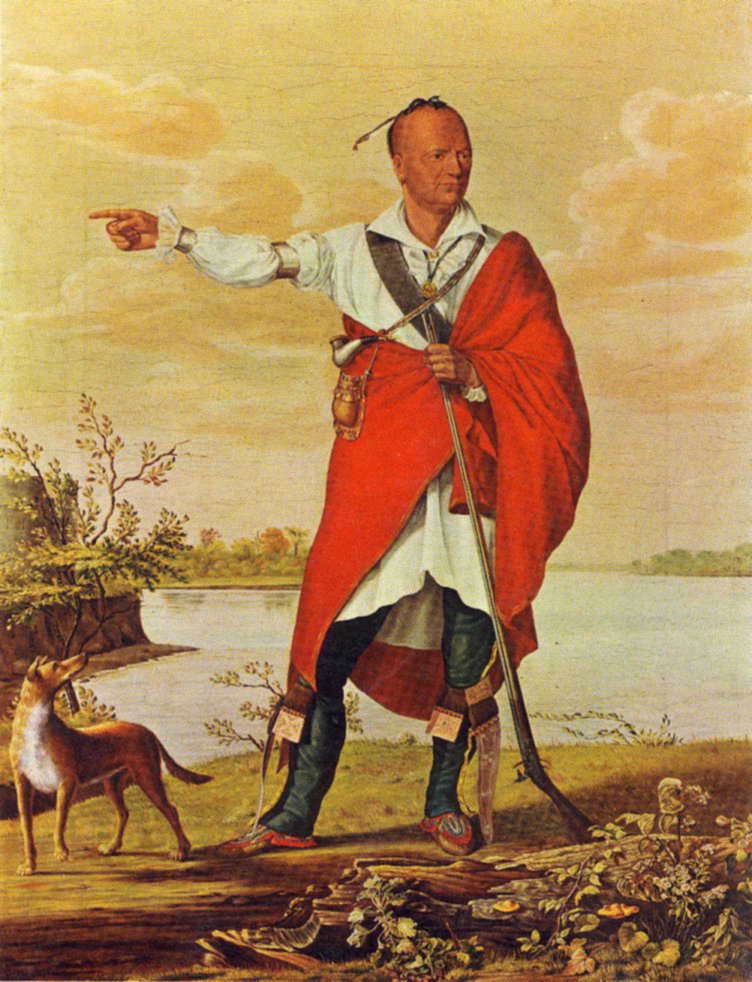
Joseph Brant by Ezra Ames
Ezra Ames · 1806
 Painting
Primary source
Joseph Brant by William Berczy
William Berczy · c. 1807
Ready when you are
Start chatting with Joseph Brant (Thayendanegea) now.
20 messages free · No credit card · Available in 50+ languages.