


Primary sourcePaintingc. 1577-1580
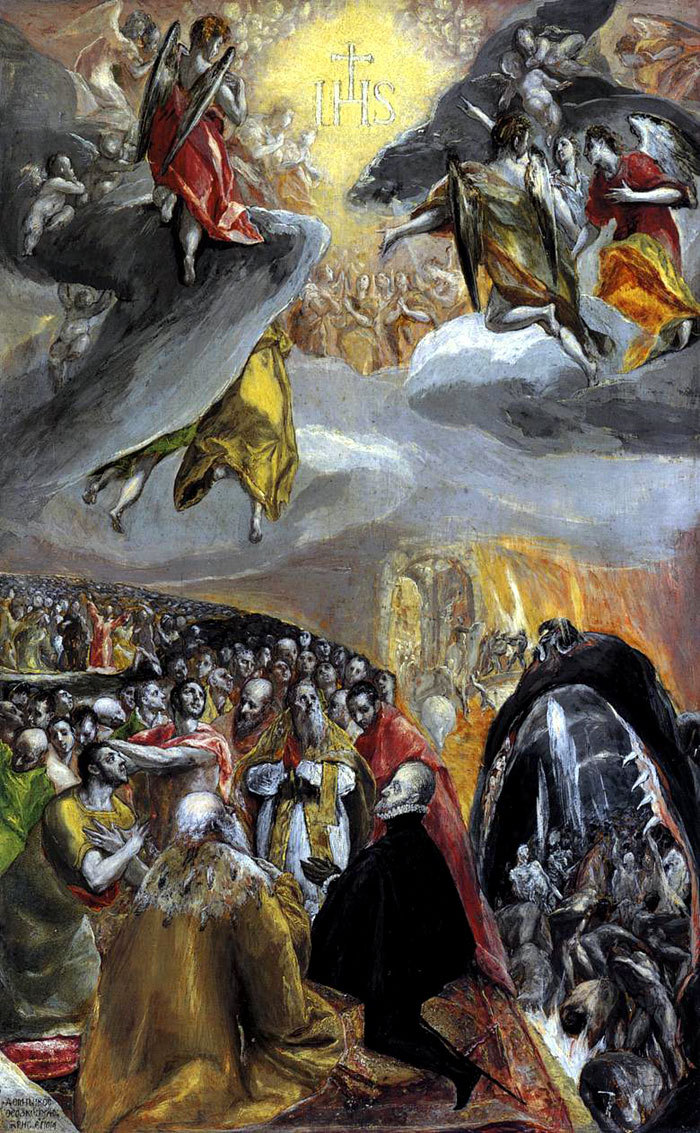
The Adoration of the Name of Jesus
El Greco · c. 1577-1580
El Greco's painting places a kneeling Philip II among Catholic leaders celebrating the victory at Lepanto.
Philip appears kneeling among Catholic leaders, reflecting his self-image as defender of the faith after Lepanto.
About this source
What it is
Painted around 1577–1580 by El Greco, this work shows a heavenly scene with angels and the glowing monogram of Jesus' name above a crowd of kneeling figures. Versions are held at the Royal Monastery of San Lorenzo de El Escorial and the National Gallery, London.
Why it matters
The man in black is identified as King Philip II, shown alongside a doge of Venice, the pope, and Don John of Austria, commander at the Battle of Lepanto. El Greco may have painted it hoping to win Philip's favour, though he never seems to have succeeded. The painting reflects Philip's self-image as a defender of the Catholic faith, with a fiery pit of tormented figures below representing damnation.
Look closer
- Why might an artist create a painting hoping to please a king?
- What does placing Philip among religious and political leaders suggest about his view of his own role?
- How does the contrast between heaven and the fiery pit shape the painting's message?
This painting is part of the curated material that grounds the AI version of Philip II of Spain on Humy.ai — when students ask about related events, the AI can quote it and cite it.
More Philip II of Spain sources
Meet the AI Philip II of Spain →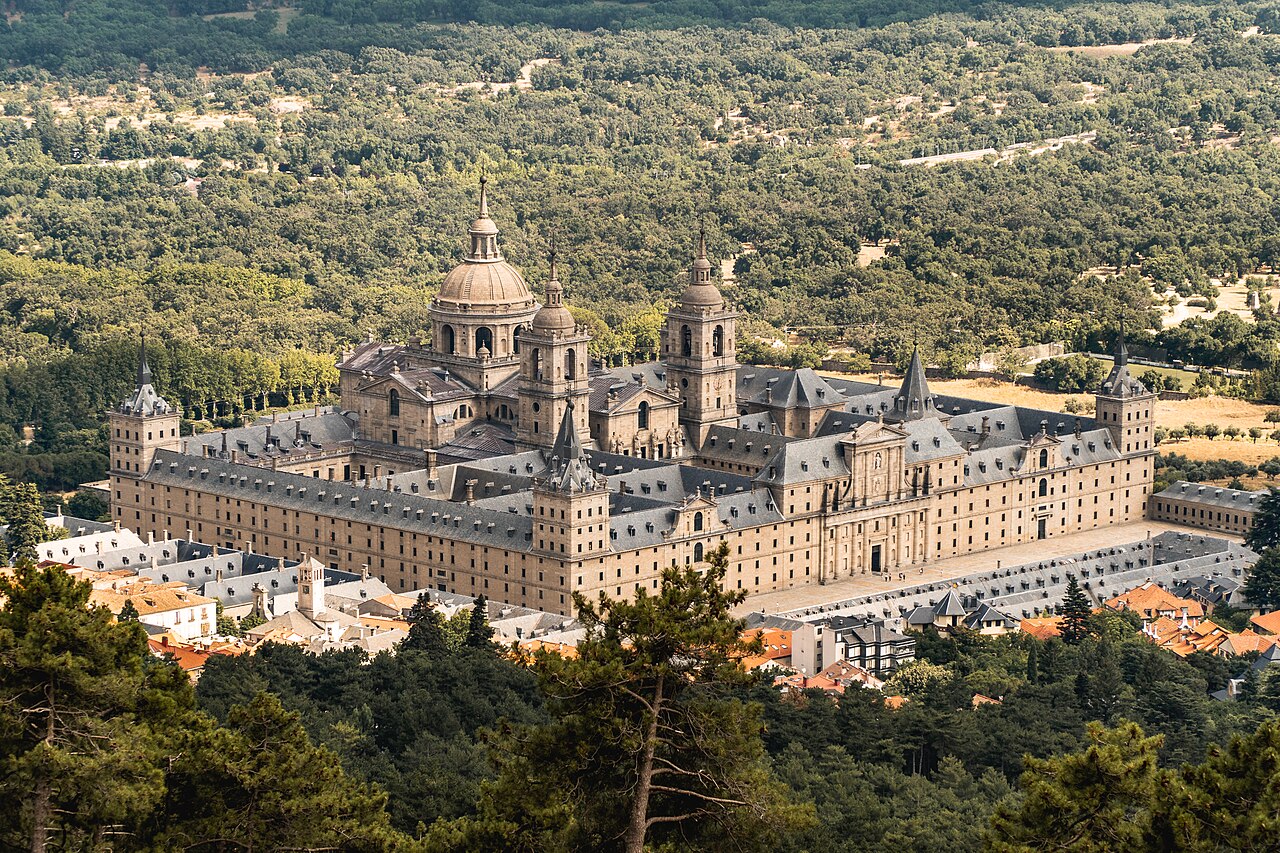 Artifact
Primary source
Royal Monastery of San Lorenzo de El Escorial
Juan Bautista de Toledo · 1563-1584
 Painting
Primary source
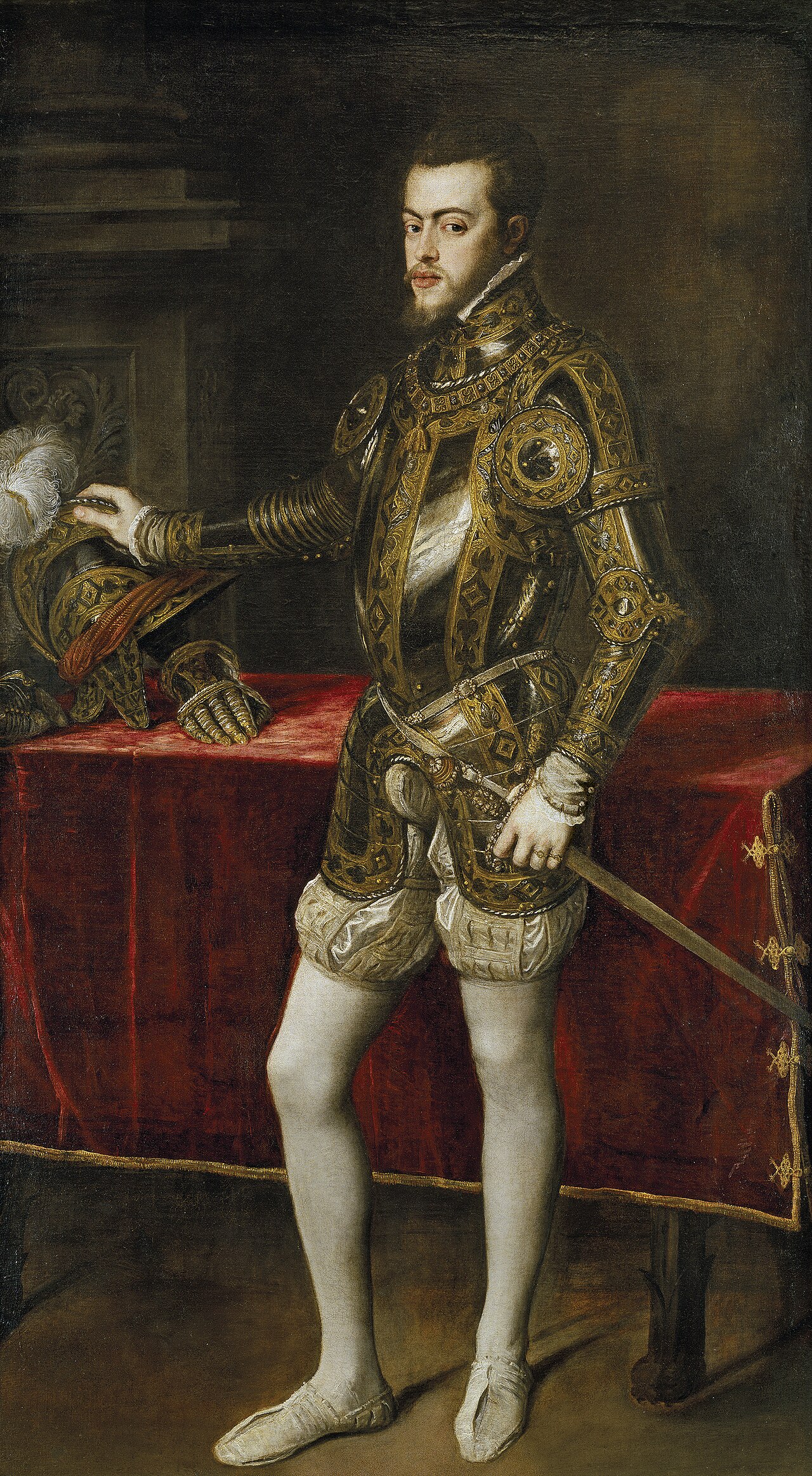
Philip II in Armour
Titian · 1551
 Painting
Secondary source
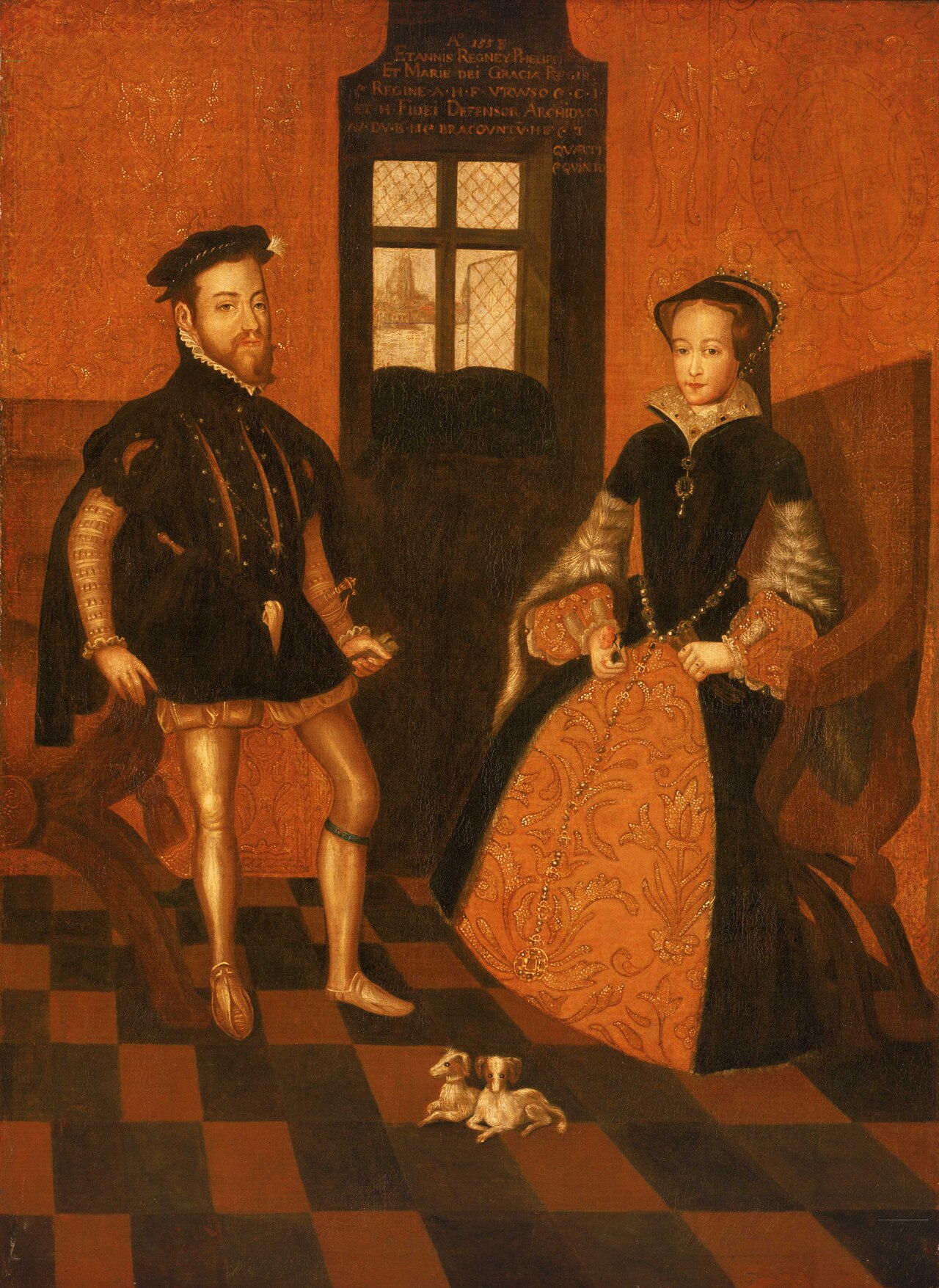
Mary I of England and Philip II of Spain Double Portrait
anonymous, after Lucas de Heere · after 1558
 Letter
Primary source
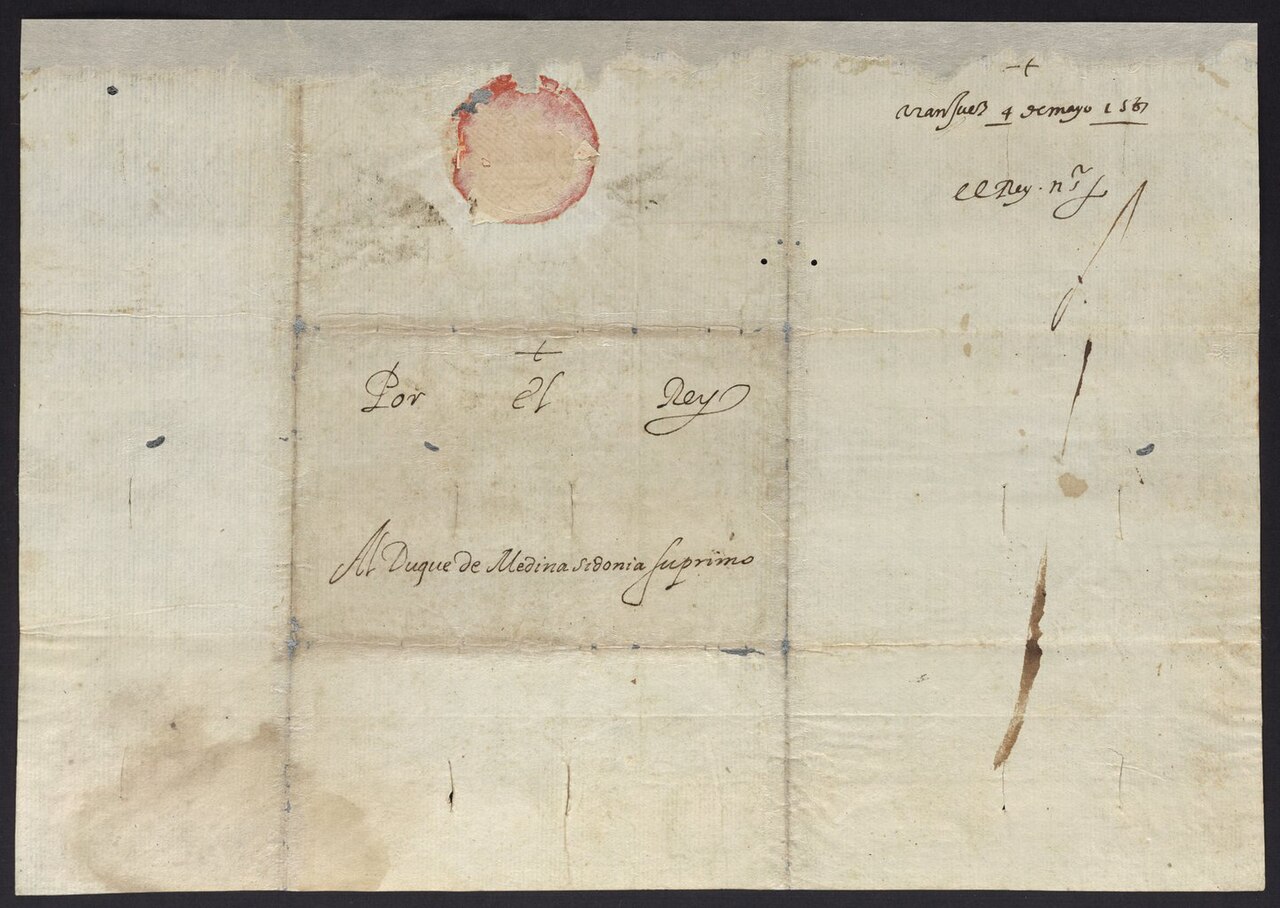
Philip II's Instructions to the Duke of Medina Sidonia
Philip II of Spain · 4 May 1587
 Painting
Primary source
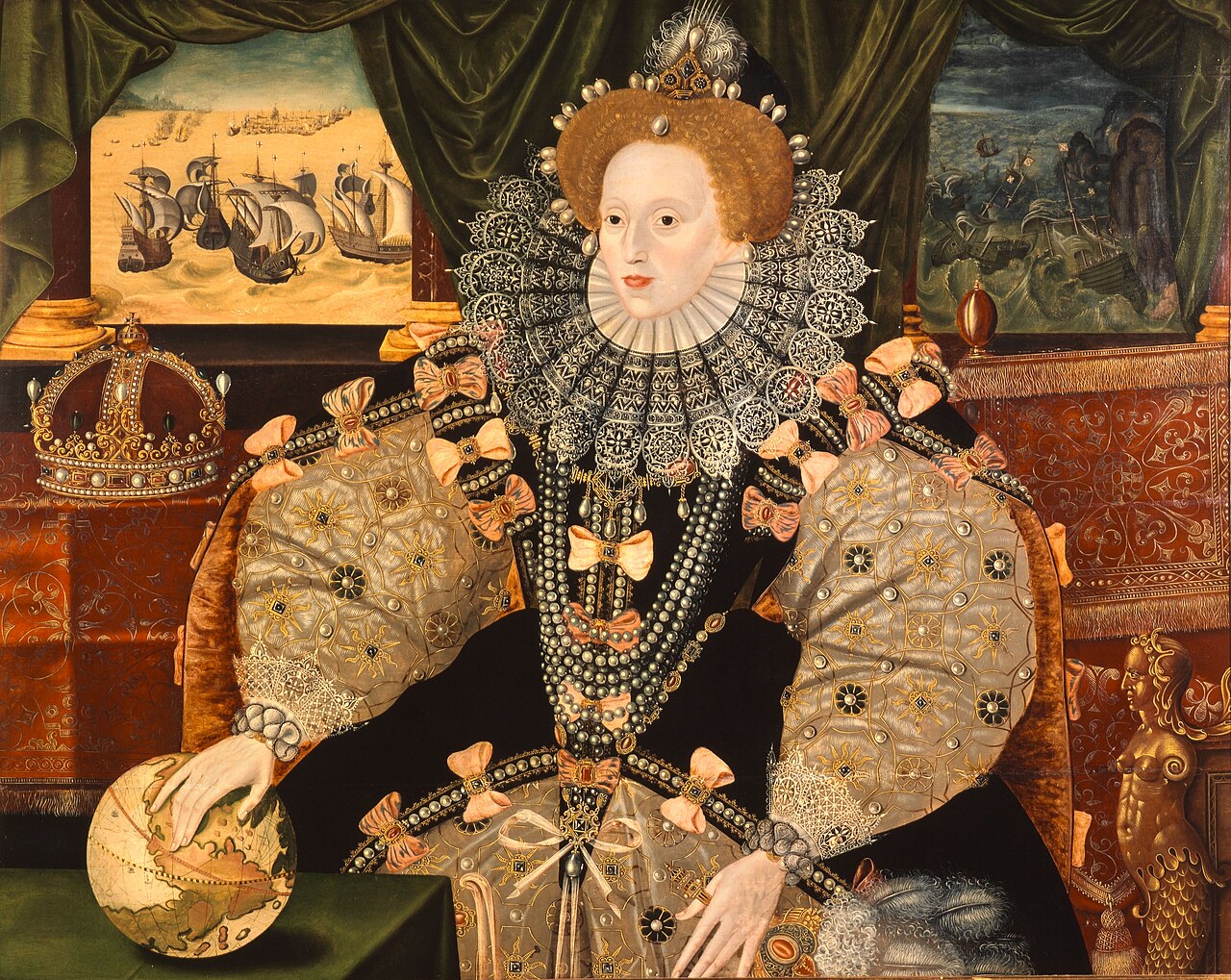
Armada Portrait
Unknown English artist · 1588
Ready when you are
Start chatting with Philip II of Spain now.
20 messages free · No credit card · Available in 50+ languages.