


Primary sourcePainting13 April 1931
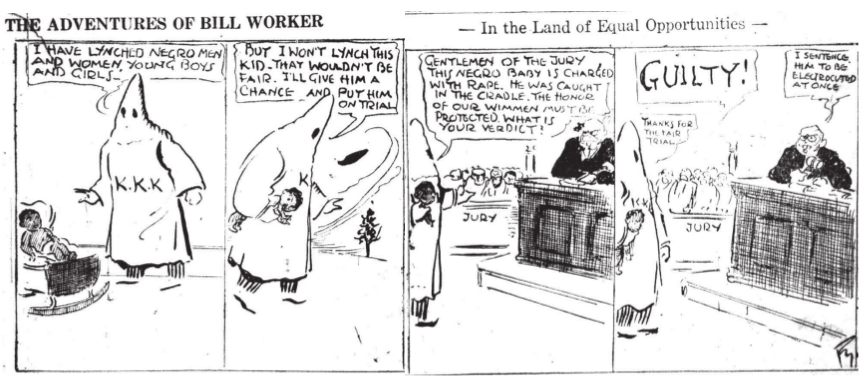
The Adventures of Bill Worker, In the Land of Equal Opportunities
Ryan Walker · 13 April 1931
A 1931 editorial cartoon on the Scottsboro case, a civil rights matter Hughes later wrote about, though it is not his own work.
This cartoon addresses the Scottsboro case, a civil rights cause Hughes wrote about, providing context for his activism.
About this source
What it is
This is a four-panel editorial cartoon drawn by Ryan Walker in 1931, titled 'The Adventures of Bill Worker, In the Land of Equal Opportunities.' It satirizes racial injustice in the American South, using the Ku Klux Klan and a courtroom scene to criticize the unfair treatment of Black defendants, echoing the Scottsboro case.
Why it matters
The cartoon is a sharp piece of political commentary from the period of the Scottsboro trials, when nine Black teenagers were falsely accused and faced an unjust legal system. Langston Hughes wrote about the Scottsboro case and civil rights, placing his work in the same historical moment as this cartoon, though the cartoon itself is not shown to be connected to him directly.
Look closer
- What does the cartoonist want readers to feel about the legal system shown here?
- Why might an artist use exaggeration and satire to make a political point?
- What does this cartoon leave out about the real people affected by cases like Scottsboro?
This painting is part of the curated material that grounds the AI version of Langston Hughes on Humy.ai — when students ask about related events, the AI can quote it and cite it.
More Langston Hughes sources
Meet the AI Langston Hughes →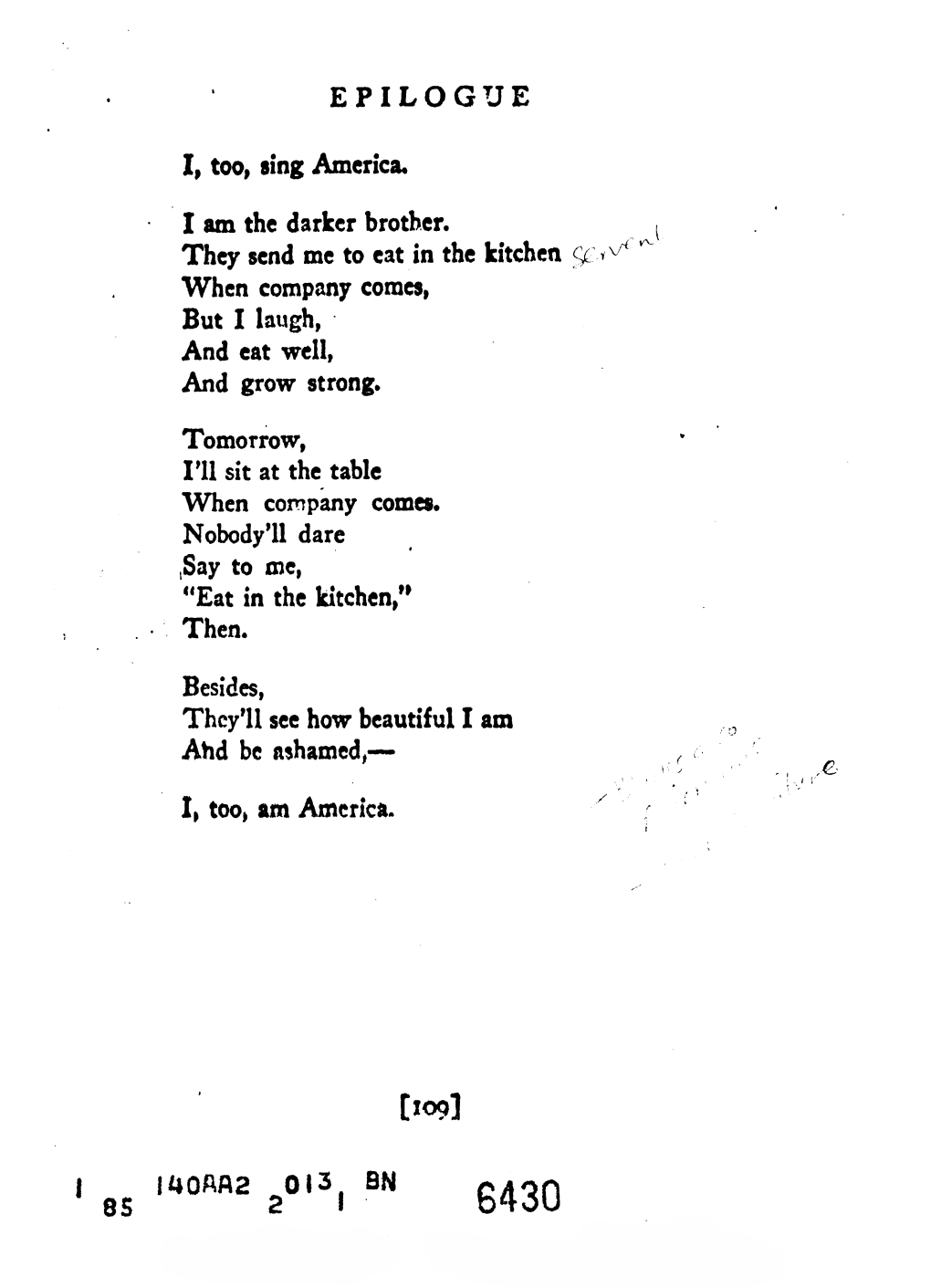
Ready when you are
Start chatting with Langston Hughes now.
20 messages free · No credit card · Available in 50+ languages.