


Secondary sourceBook4 January 1912
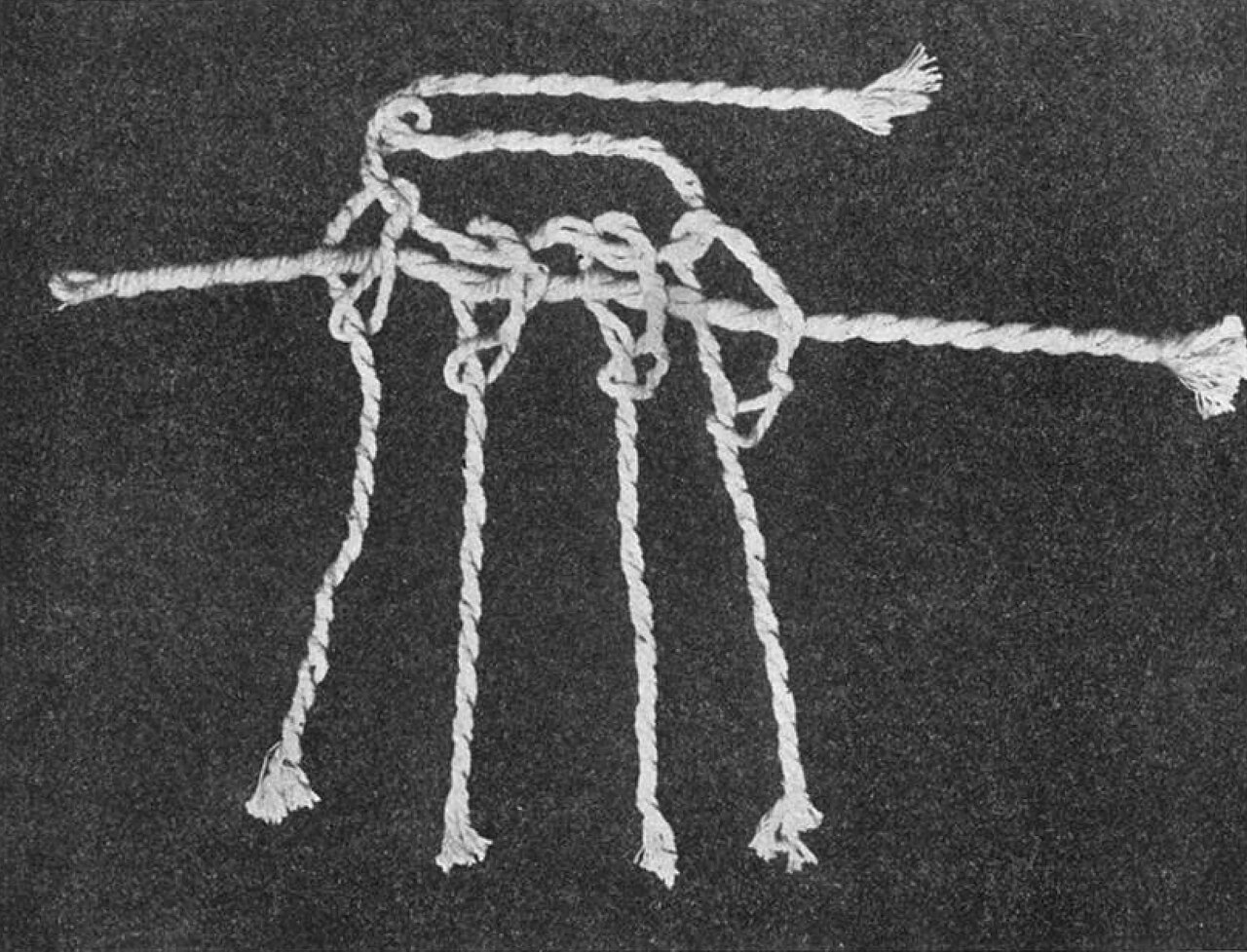
The Ancient Quipu, Figure 45
Leslie Leland Locke · 4 January 1912
A 1912 scholarly figure from Leslie Leland Locke's study of quipus. It shows a horizontal main cord with hanging pendant cords and knots.
Gives context on the knotted-cord records of the Inca state that Atahualpa governed.
About this source
What it is
This is Figure 45 from Leslie Leland Locke's 1912 work on quipus, an Andean knotted-cord record. The image is a black-and-white photograph of a horizontal main cord with several pendant cords hanging down. Each pendant has tassel ends and several knots are tied along the cords. One cord ends in a frayed tip at the upper right. The record dates the work to 4 January 1912.
Why it matters
Quipus were the Inca method of keeping records with knotted cords. Studies like Locke's, published in 1912, helped record how these objects were built. Quipus were part of the administration of the empire Atahualpa ruled, so this figure provides context on that system. It is a modern scholarly illustration, not an object from Atahualpa's time.
Look closer
- How are the pendant cords attached to the main cord, and what might that structure suggest?
- Why would a 1912 scholar include a close photograph like this in a book?
- What does a single figure leave out of the full record a quipu could hold?
This book is part of the curated material that grounds the AI version of Atahualpa on Humy.ai — when students ask about related events, the AI can quote it and cite it.
More Atahualpa sources
Meet the AI Atahualpa →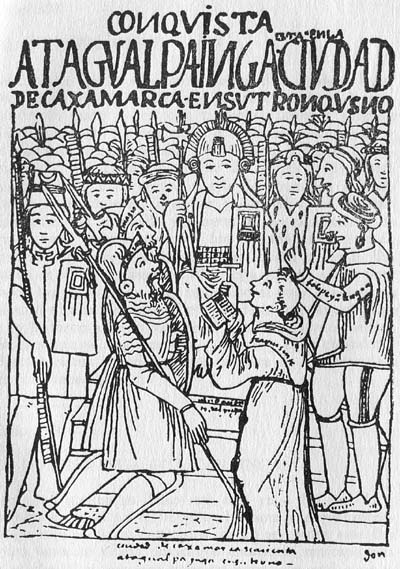 Painting
Secondary source
Atawallpa Pizarro tinkuy
Felipe Guaman Poma de Ayala · 1532 (depicted); drawing later
 Book
Primary source
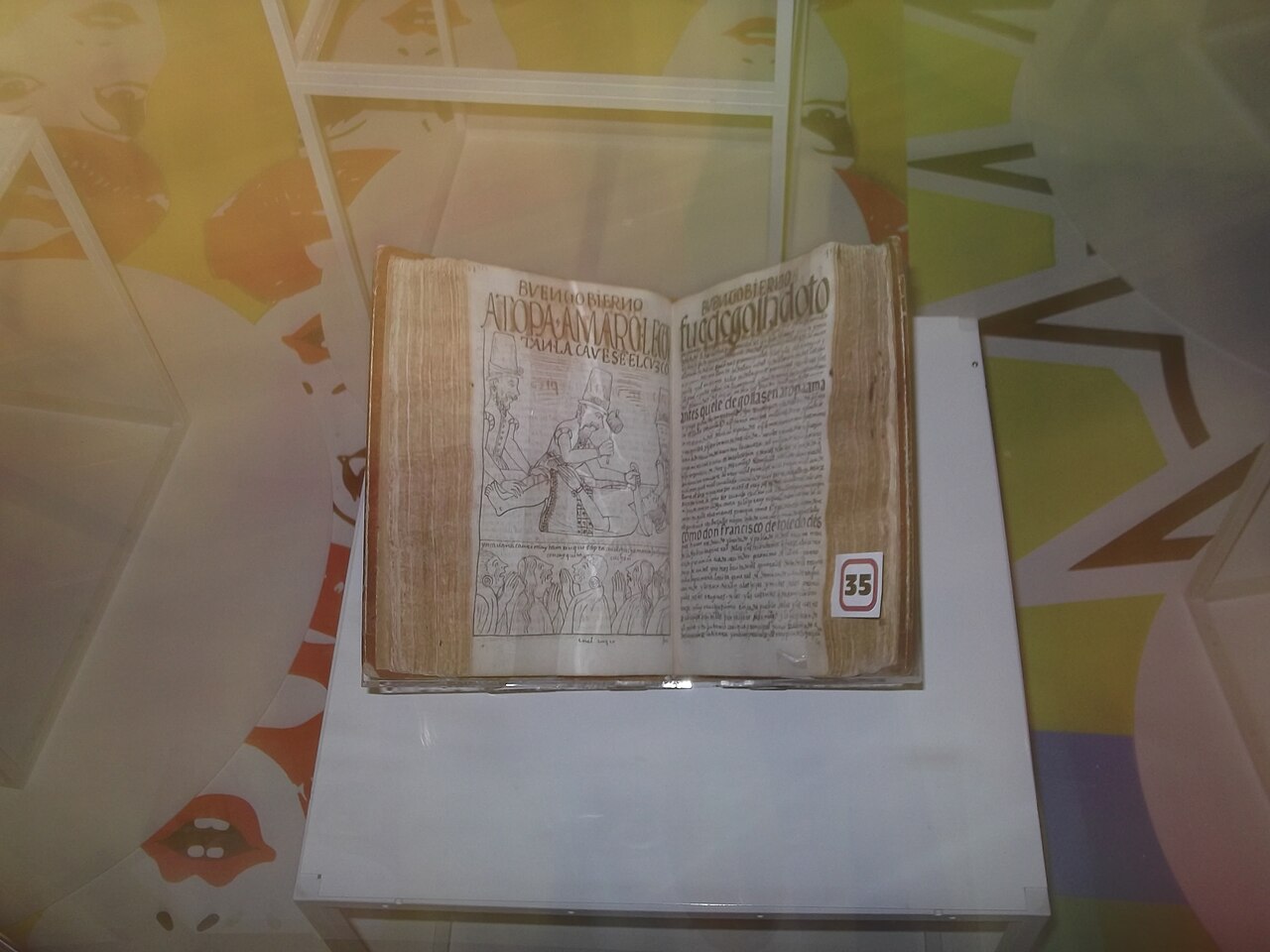
El primer nueva corónica y buen gobierno
Felipe Guaman Poma de Ayala · c. 1615
 Painting
Secondary source
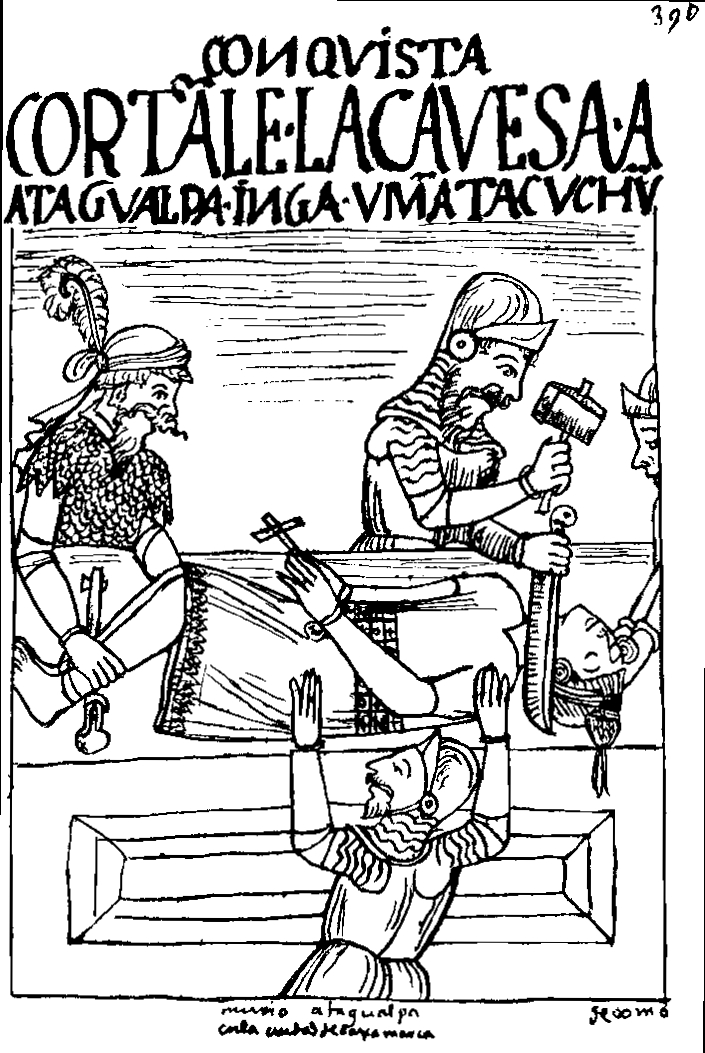
Muerte de Atagualpa Inca
Felipe Huaman Puma de Ayala · c. 1615
 Artifact
Secondary source
Ransom Room
Secondary source
Suma y Narración de los Incas
Juan de Betanzos · 1551
Ready when you are
Start chatting with Atahualpa now.
20 messages free · No credit card · Available in 50+ languages.