


Secondary sourceBook1 April 1912
The Ancient Quipu, Plate XXIII
Leslie Leland Locke · 1 April 1912
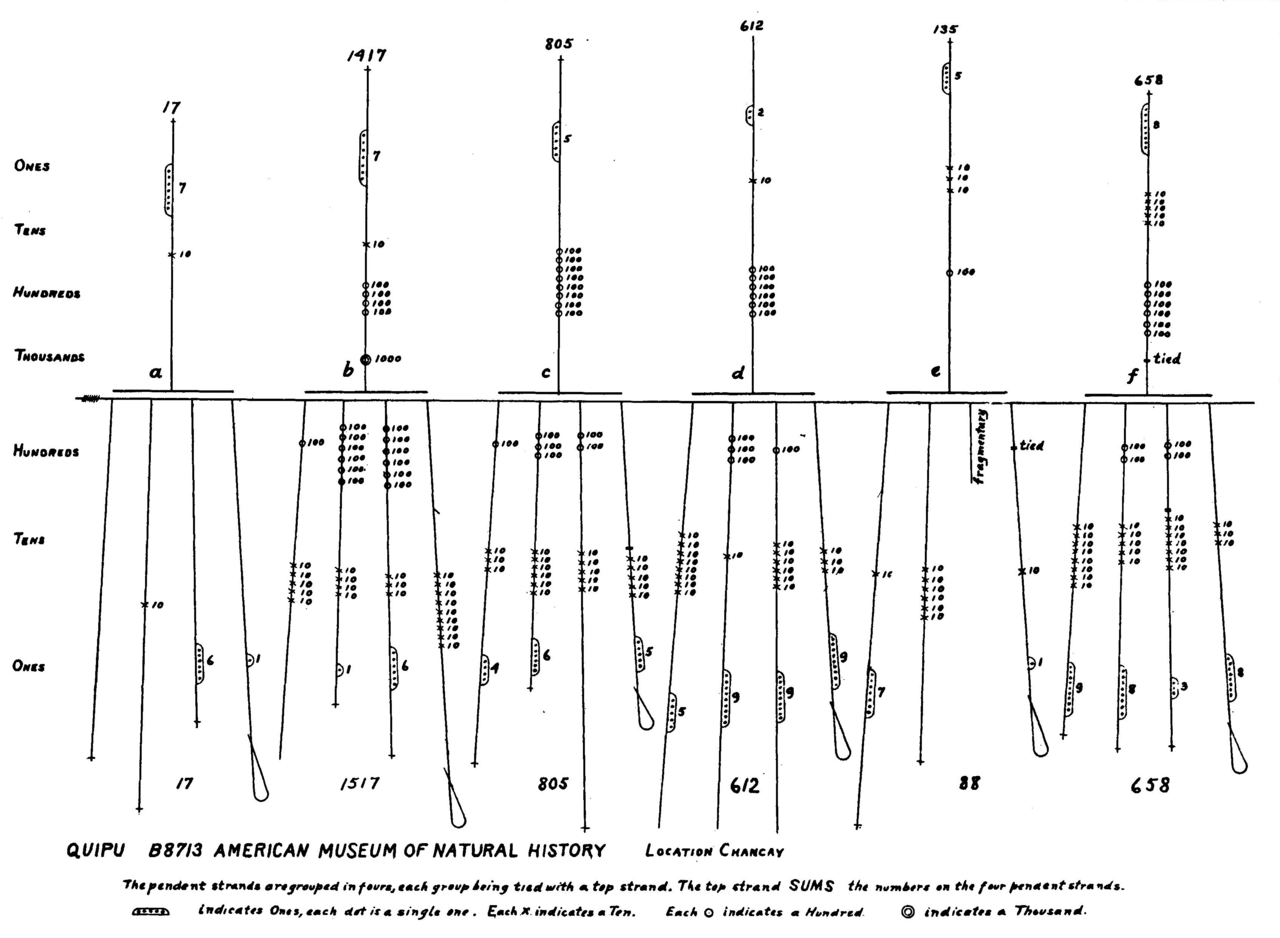
A 1912 line diagram from Leslie Leland Locke's study of quipus. It shows cords labeled for ones, tens, hundreds and thousands, from the Chancay location.
Shows how quipu records of the Inca state were interpreted, giving context on the empire Atahualpa ruled.
About this source
What it is
This is Plate XXIII from The Ancient Quipu, A Peruvian Knot Record, a book by Leslie Leland Locke. The plate is a line diagram rather than a photograph. Many vertical cords hang from horizontal top strands, and the knots are drawn as tens, hundreds and thousands symbols, with numbers printed above and below. Labels reading Ones, Tens, Hundreds, Thousands and Location Chancay appear at the left and bottom. A caption identifies the quipu as American Museum of Natural History B8713. The record dates the plate to 1 April 1912.
Why it matters
Quipus were the Inca system for recording numbers and other information with knots. Diagrams like this one tried to show how the knot values were arranged, helping scholars compare objects. The Chancay location in the label shows that quipus were found across the region, not only at Inca centers. Quipus were part of the administration of the empire Atahualpa ruled. This is a 1912 scholarly drawing, not an Inca original.
Look closer
- How do the labels for ones, tens, hundreds and thousands help a reader understand the cords?
- Why would a scholar draw a quipu rather than photograph it, and what does the drawing show or hide?
- Who decided how the knots should be read, and how sure can we be of that reading?
This book is part of the curated material that grounds the AI version of Atahualpa on Humy.ai — when students ask about related events, the AI can quote it and cite it.
More Atahualpa sources
Meet the AI Atahualpa →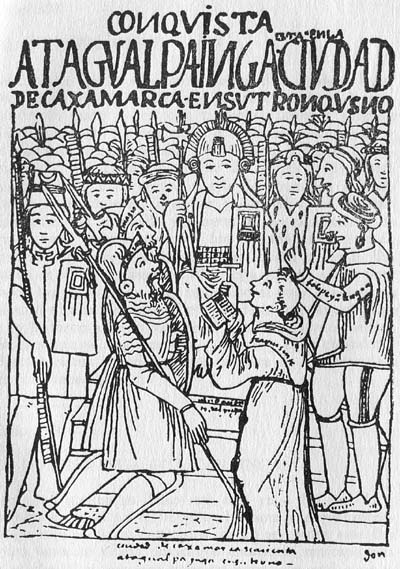 Painting
Secondary source
Atawallpa Pizarro tinkuy
Felipe Guaman Poma de Ayala · 1532 (depicted); drawing later
 Book
Primary source
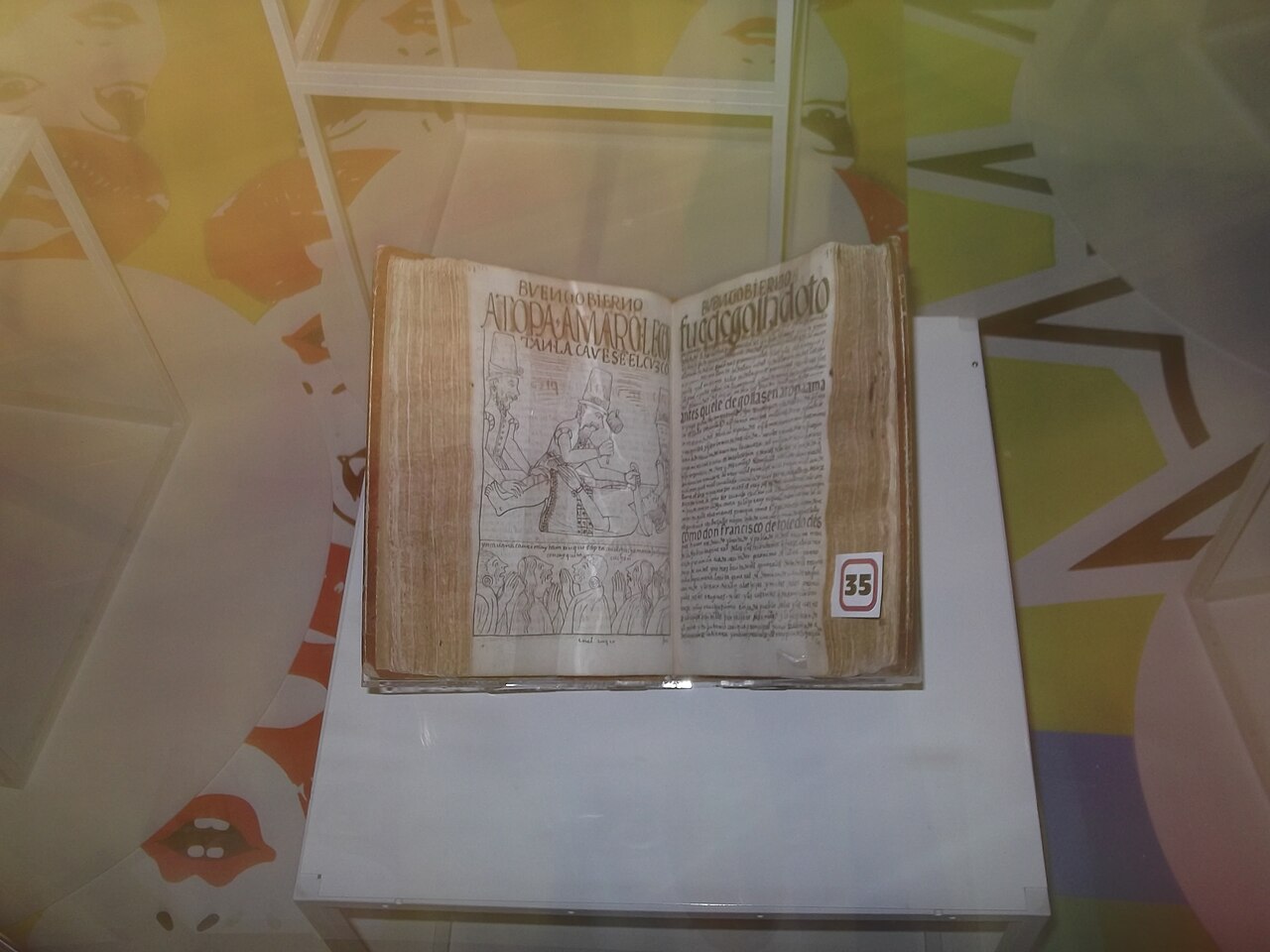
El primer nueva corónica y buen gobierno
Felipe Guaman Poma de Ayala · c. 1615
 Painting
Secondary source
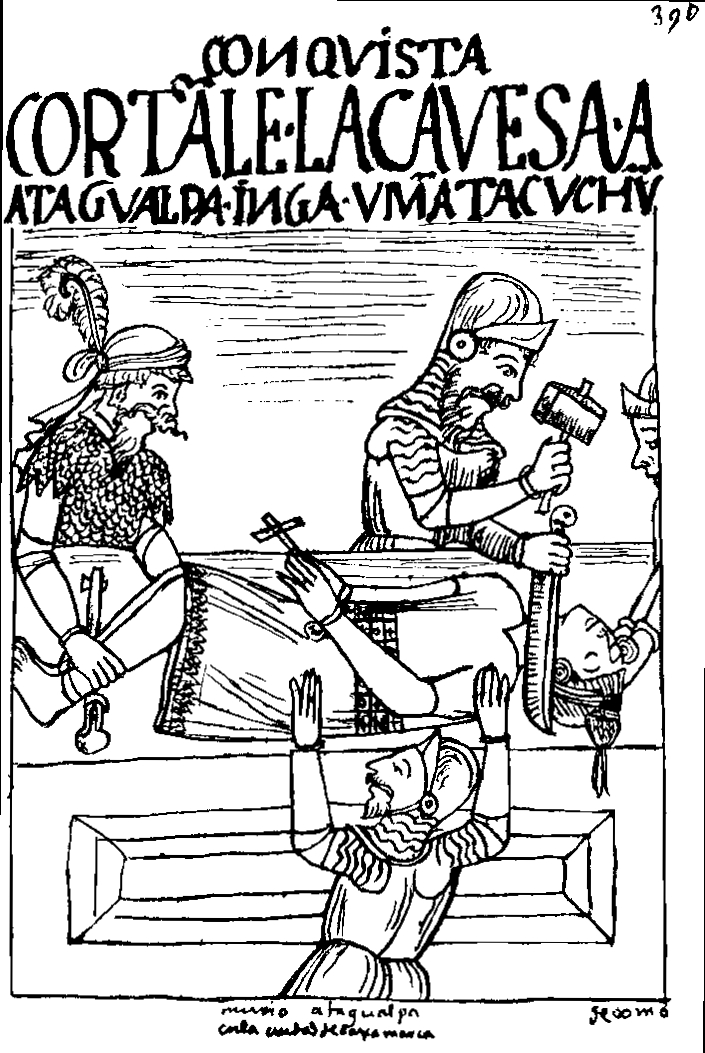
Muerte de Atagualpa Inca
Felipe Huaman Puma de Ayala · c. 1615
 Artifact
Secondary source
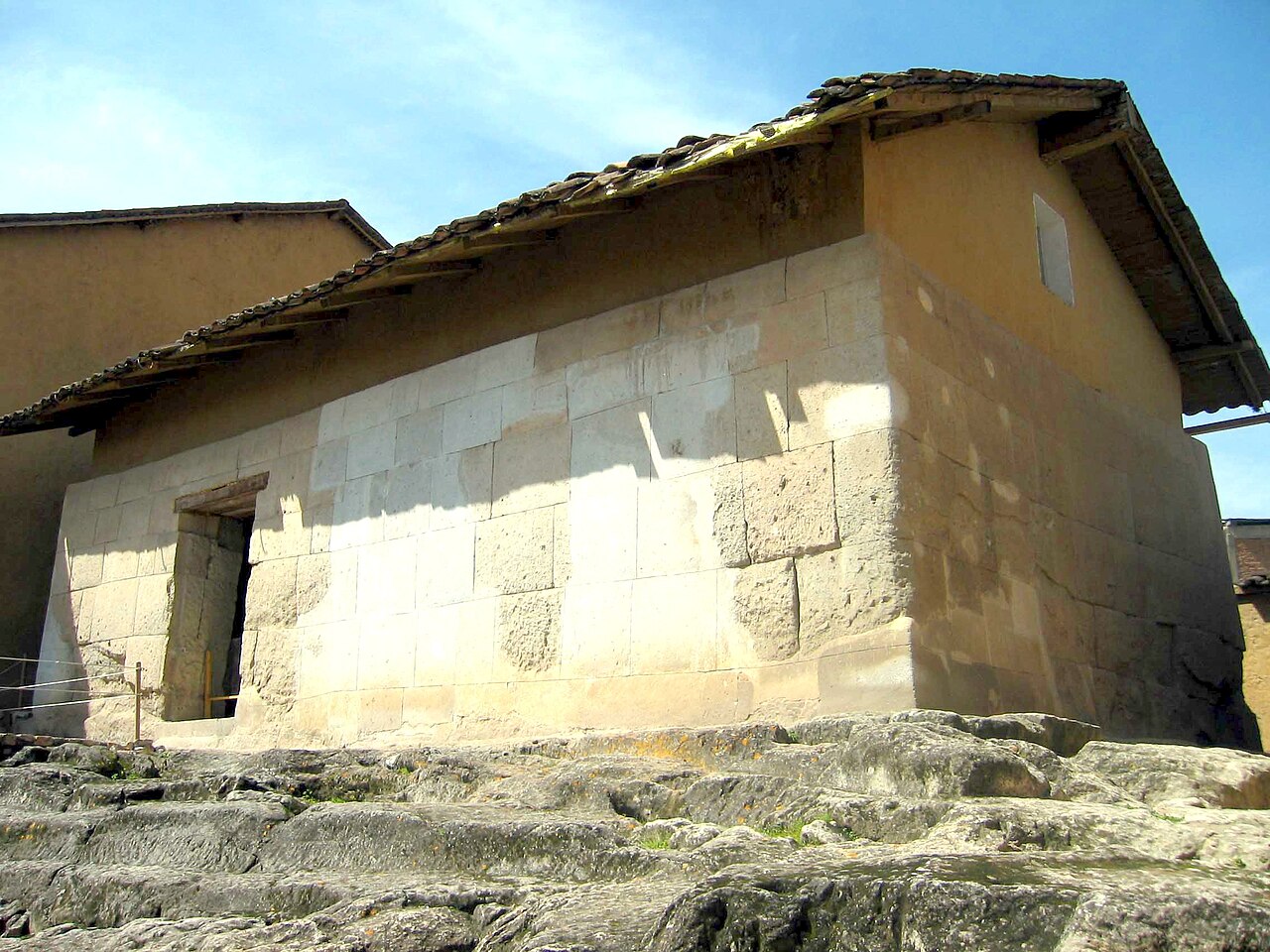
Ransom Room
Secondary source
Suma y Narración de los Incas
Juan de Betanzos · 1551
Ready when you are
Start chatting with Atahualpa now.
20 messages free · No credit card · Available in 50+ languages.