


Secondary sourceBook4 January 1912
The Ancient Quipu, Plate XXIV
Leslie Leland Locke · 4 January 1912
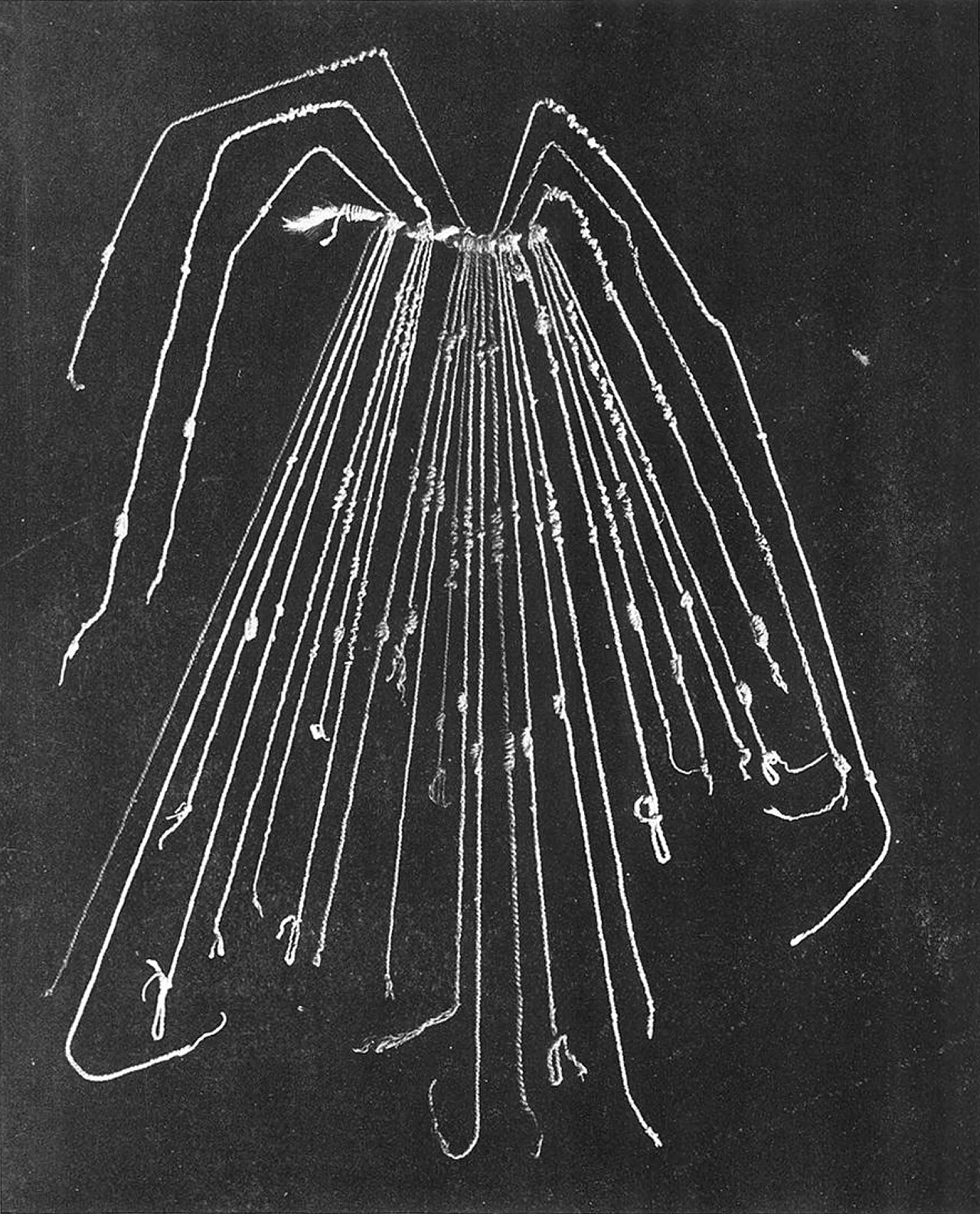
A 1912 scholarly plate from Leslie Leland Locke's study of quipus. It shows white knotted cords fanning downward from a top attachment point.
Provides context on the knotted-cord record system of the Inca state that Atahualpa ruled.
About this source
What it is
This is Plate XXIV from The Ancient Quipu, A Peruvian Knot Record, a book by Leslie Leland Locke published in 1912. The plate is a black-and-white photograph of a khipu, an Andean knotted-cord record, on a dark background. White cords hang from a top attachment point and fan downward. Knots are tied along them, and pendant cords end in loose fringed ends. The record dates the plate to 4 January 1912.
Why it matters
Quipus were the Inca system for recording information with knots on cords. Locke's book was an early study of them in English-language scholarship. Quipus were part of the administration of the empire Atahualpa ruled, so this plate gives context on that system. It shows a 1912 scholar's photograph, not an Inca original from Atahualpa's time.
Look closer
- How do the cords fan out from the top, and what might that layout have helped people do?
- Who would have read or made a quipu like this, and what does the book not tell us?
- What is lost when a three-dimensional cord record is shown as a flat photograph?
This book is part of the curated material that grounds the AI version of Atahualpa on Humy.ai — when students ask about related events, the AI can quote it and cite it.
More Atahualpa sources
Meet the AI Atahualpa →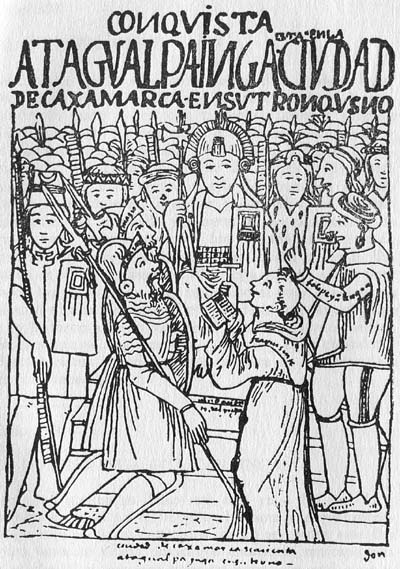 Painting
Secondary source
Atawallpa Pizarro tinkuy
Felipe Guaman Poma de Ayala · 1532 (depicted); drawing later
 Book
Primary source
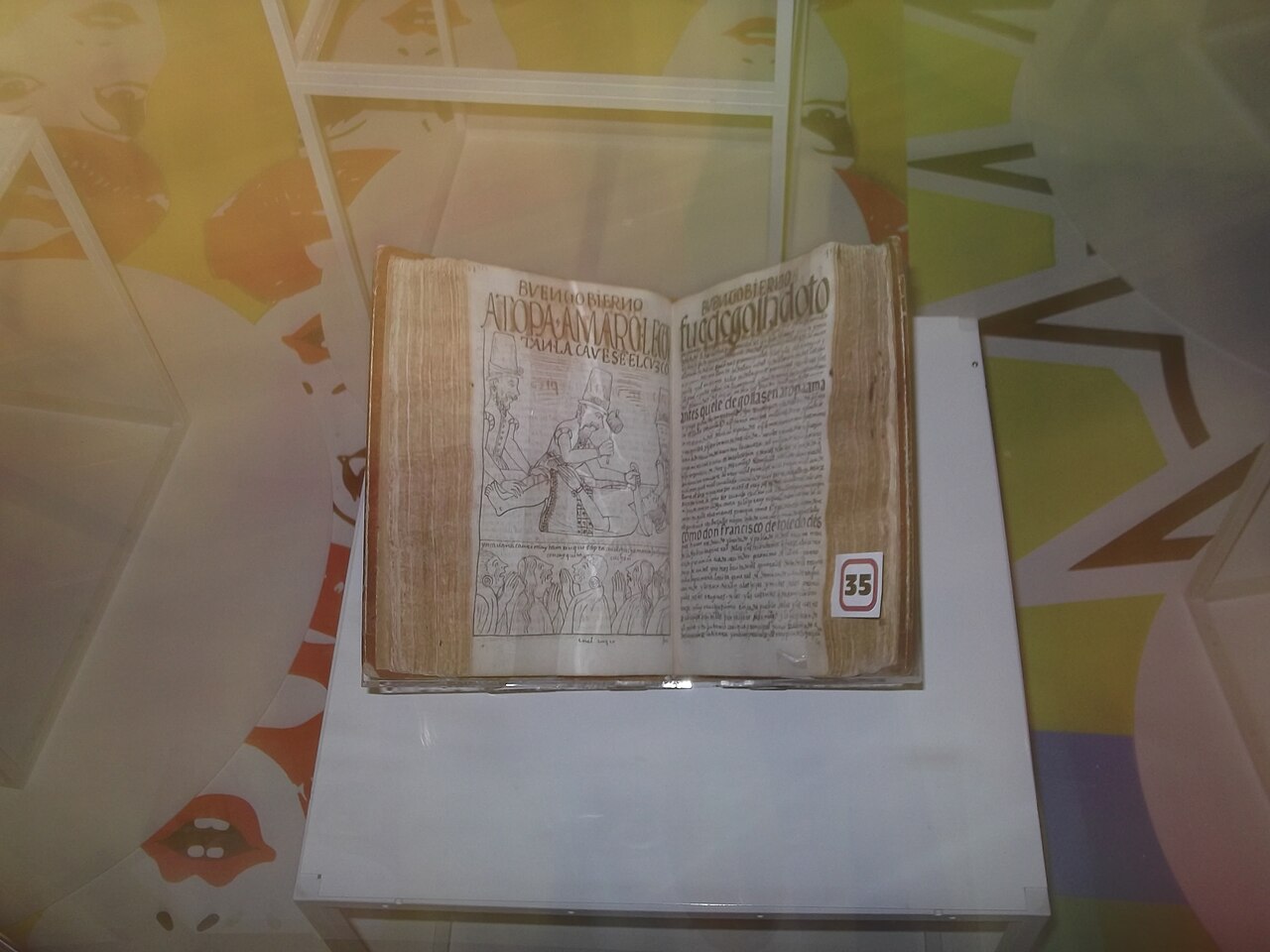
El primer nueva corónica y buen gobierno
Felipe Guaman Poma de Ayala · c. 1615
 Painting
Secondary source
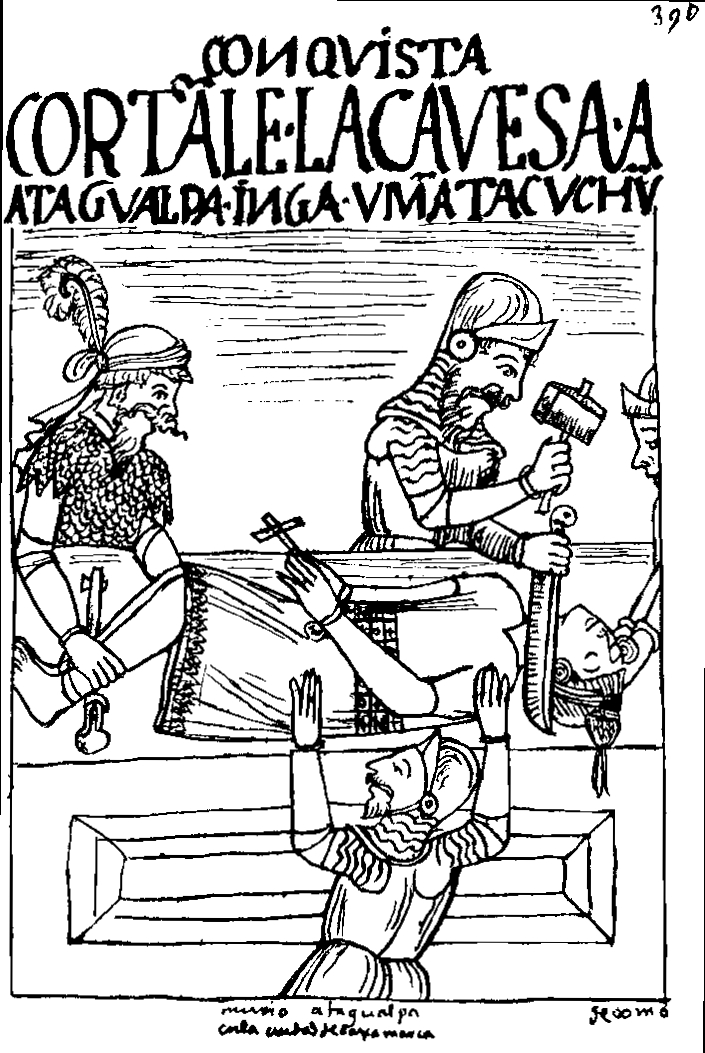
Muerte de Atagualpa Inca
Felipe Huaman Puma de Ayala · c. 1615
 Artifact
Secondary source
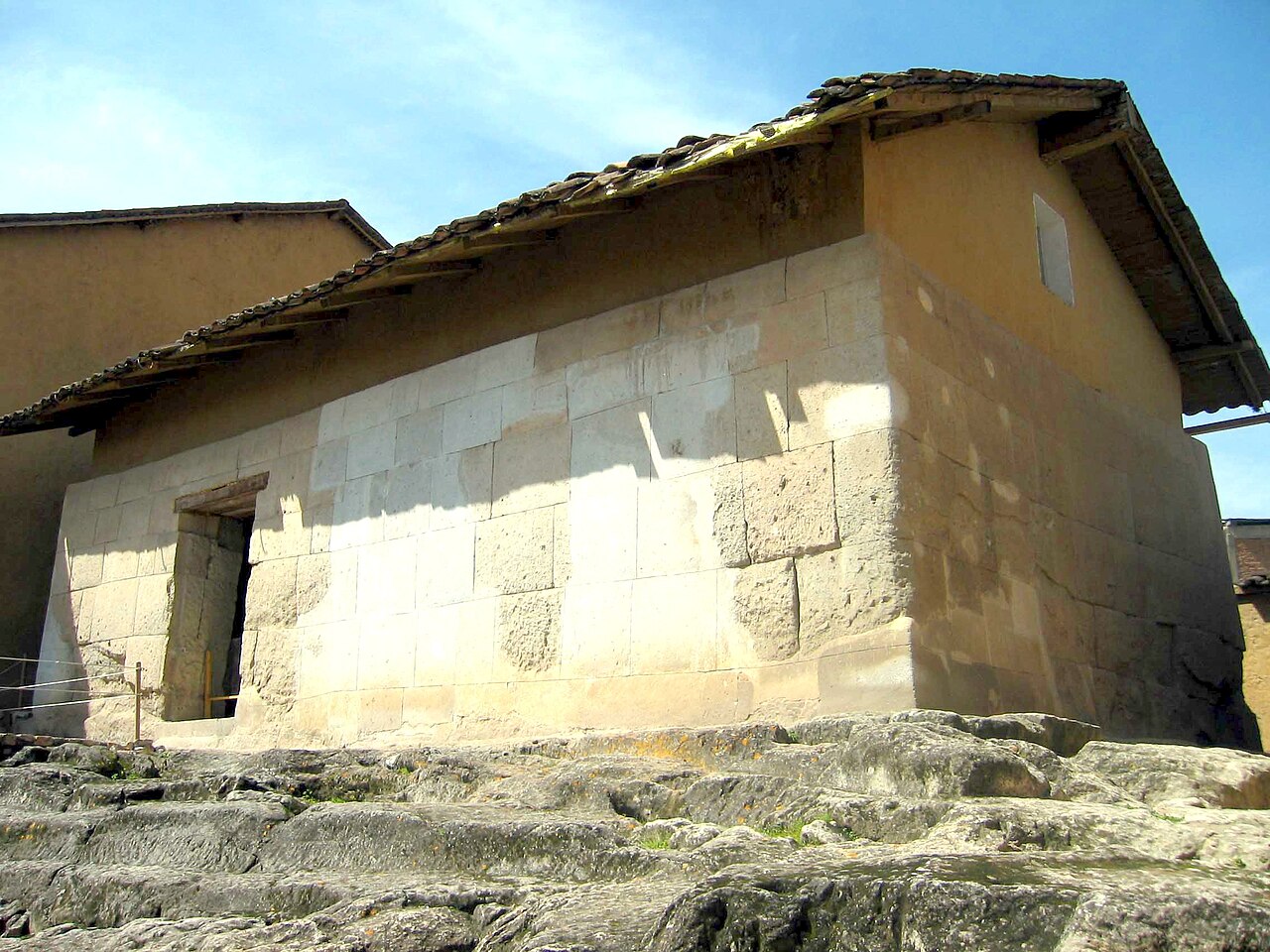
Ransom Room
Secondary source
Suma y Narración de los Incas
Juan de Betanzos · 1551
Ready when you are
Start chatting with Atahualpa now.
20 messages free · No credit card · Available in 50+ languages.