


Secondary sourcePaintingCommissioned for 2000; photograph taken 5 October 2019
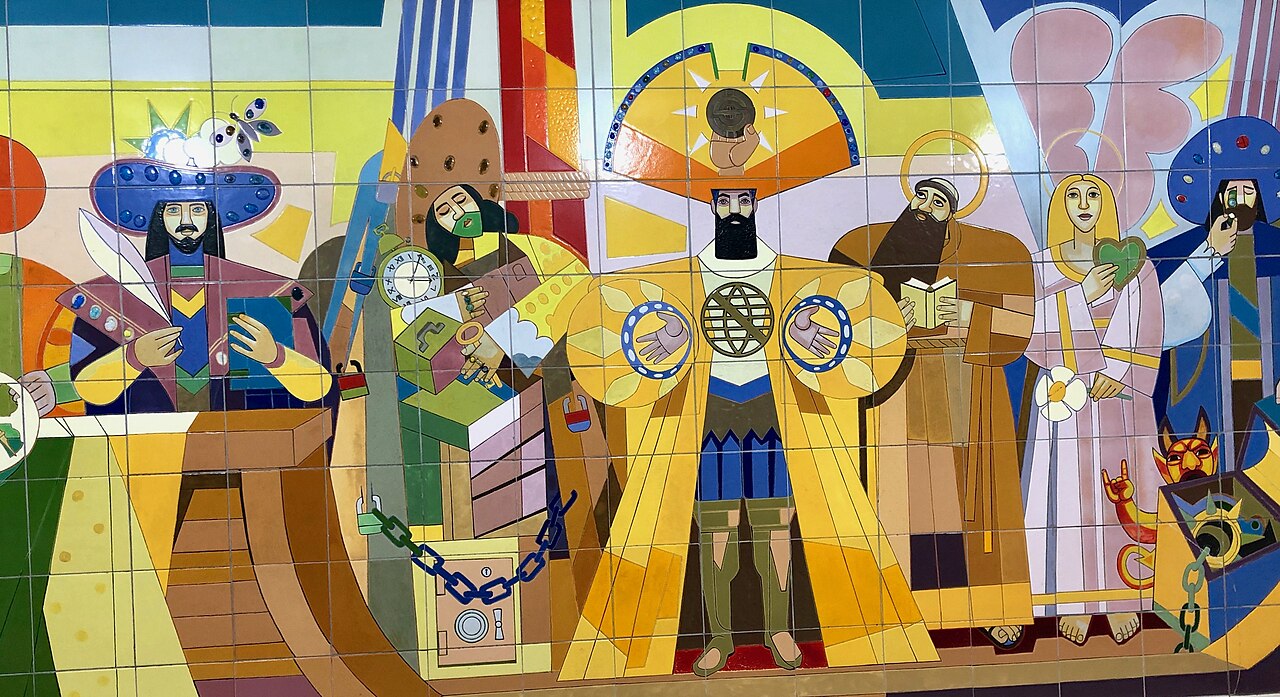
The Arrival azulejo panel, Restauradores metro
Commissioned for 2000; photograph taken 5 October 2019
A modern tile mural in a Lisbon metro station, commissioned in 2000 to mark the 500th anniversary of the arrival in Brazil. It probably shows the 1500 landing, though the record does not name Cabral.
A modern mural that probably shows the 1500 arrival, not a record from Cabral's lifetime; the record does not name him.
About this source
What it is
This is a colourful azulejo mural, a painted ceramic tile panel, in a Lisbon metro station. According to the Commons record, it was commissioned to honour the visit of the Brazilian president for the 500th anniversary of the discovery of Brazil in 2000. The image shows a central robed figure with a bearded face and a halo-like sun above. Other figures include a bearded man in a feathered hat, a man with a sextant or instrument, a monk reading a book, and a woman holding a green heart. Chains and a treasure chest appear at the lower sides. The photograph was taken on 5 October 2019.
Why it matters
The panel is a modern work made centuries after the events it shows. Its figures show how the arrival in Brazil was imagined in the year 2000: navigation, religion, Indigenous peoples and wealth are all present. The record does not name Cabral, so this panel should not be read as a portrait of him. Such art shows how a later generation chose to remember a colonial encounter.
Look closer
- Which figures in the mural seem to represent Portugal and which seem to represent Brazil, and how can you tell?
- Why might the artist have included chains and a treasure chest beside the central figure?
- What does the mural leave out, and who might have wanted to be included?
This painting is part of the curated material that grounds the AI version of Pedro Álvares Cabral on Humy.ai — when students ask about related events, the AI can quote it and cite it.
More Pedro Álvares Cabral sources
Browse all 83 →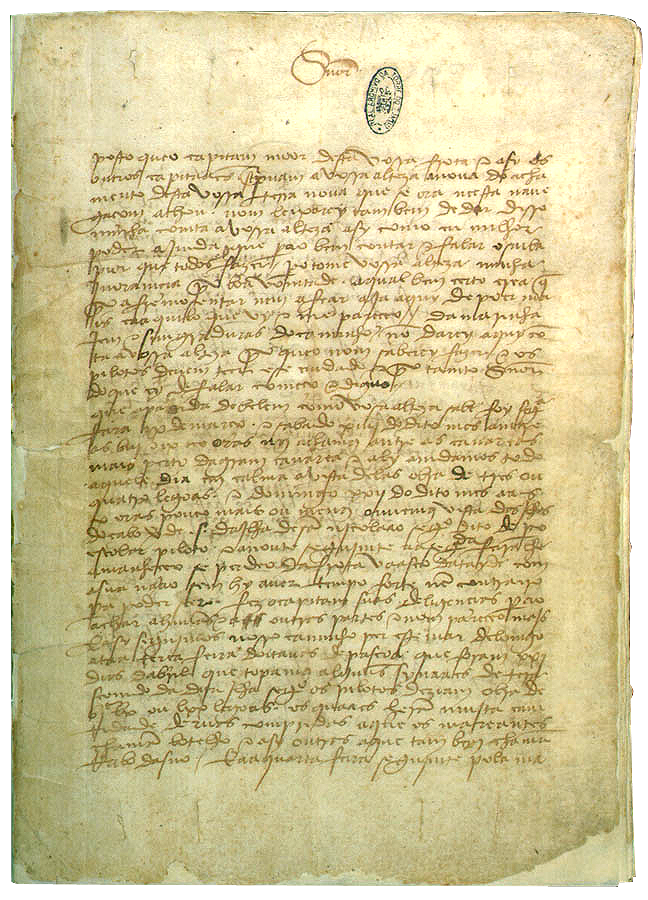 Letter
Primary source
Letter of Pero Vaz de Caminha
Pero Vaz de Caminha · 1 May 1500
 Letter
Primary source
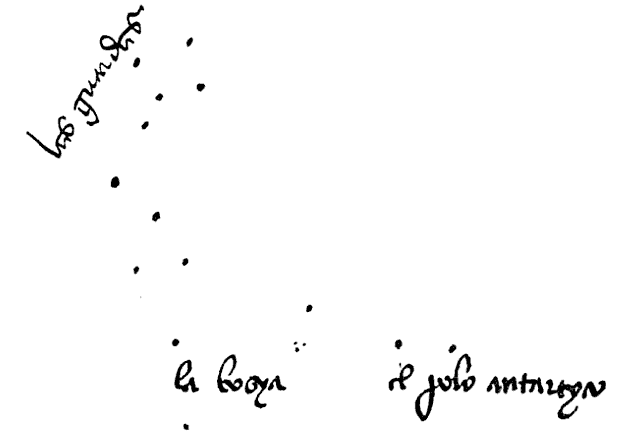
Letter of Mestre João Faras to King Manuel I
Mestre João Faras · 1 May 1500
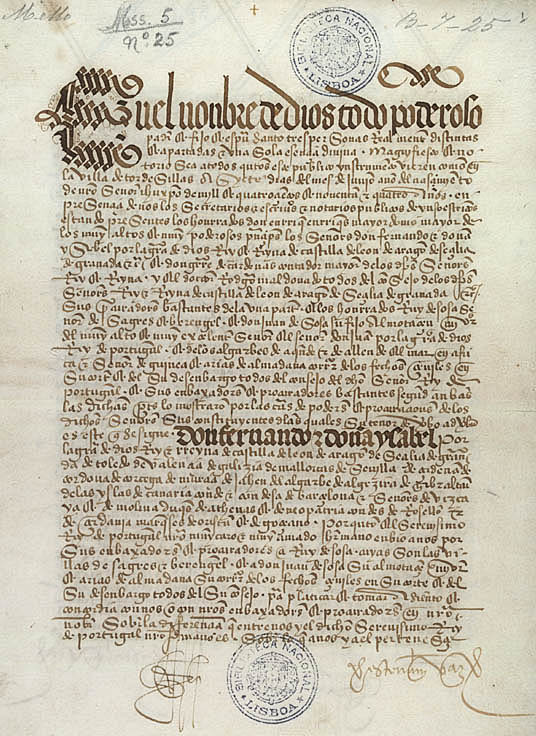
 Document
Primary source
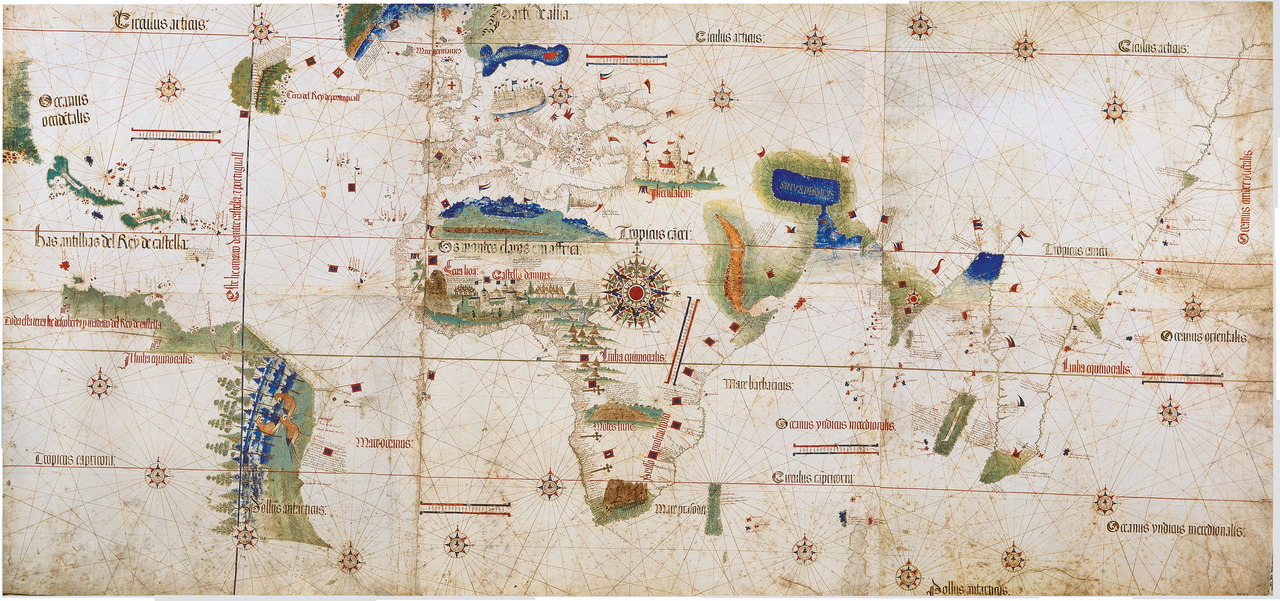
Cantino Planisphere
Anonymous Portuguese cartographer · 1502
 Painting
Secondary source
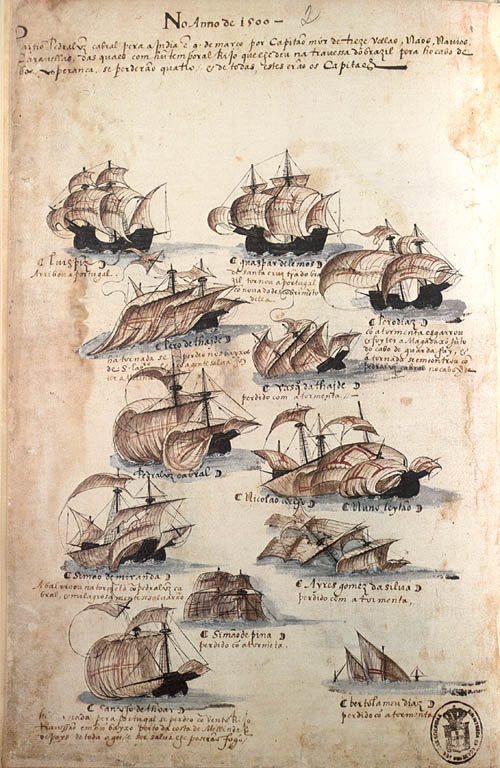
Cabral Armada of 1500 (Livro das Armadas)
Unknown author · 16th century
Free account
Read every Pedro Álvares Cabral source
Sign up free →
Ready when you are
Start chatting with Pedro Álvares Cabral now.
20 messages free · No credit card · Available in 50+ languages.