


Primary sourcePaintingc. 1665-1668
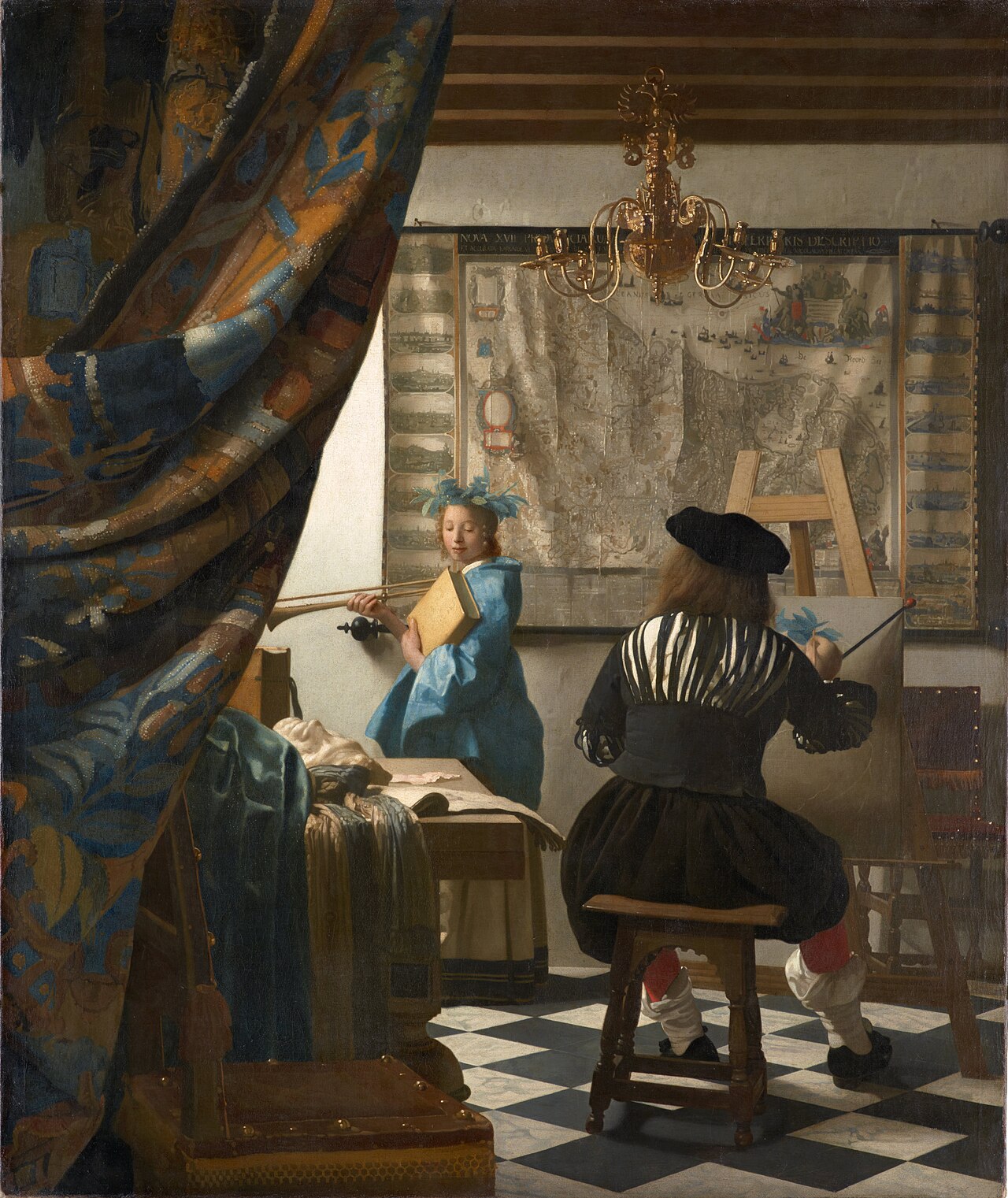
The Art of Painting
Johannes Vermeer · c. 1665-1668
Vermeer's complex allegory of his own profession, kept by him until his death, showing a painter at work before a map.
Vermeer painted and kept this allegory of his own art throughout his life, reflecting how he saw his profession.
About this source
What it is
This large oil painting by Johannes Vermeer, made around 1665–1668, shows a painter at work in his studio, with a female model dressed as a muse and a large map of the Netherlands behind them. It is held in the Kunsthistorisches Museum in Vienna, owned by the Austrian Republic.
Why it matters
Many historians read this as an allegory of painting itself, and it is considered Vermeer's most complex and ambitious work. Vermeer never sold it during his lifetime, suggesting it held special personal meaning for him, perhaps as a showpiece of his art. The symbolism of the map, the model's attributes, and the painter's costume reveal how artists of the period thought about the status and history of their profession.
Look closer
- Why might the painter in the image be a self-portrait, and why is his face hidden from us?
- What might the map, the laurel wreath, trumpet and book symbolise?
- Why do you think Vermeer kept this painting instead of selling it?
This painting is part of the curated material that grounds the AI version of Johannes Vermeer on Humy.ai — when students ask about related events, the AI can quote it and cite it.
More Johannes Vermeer sources
Browse all 95 →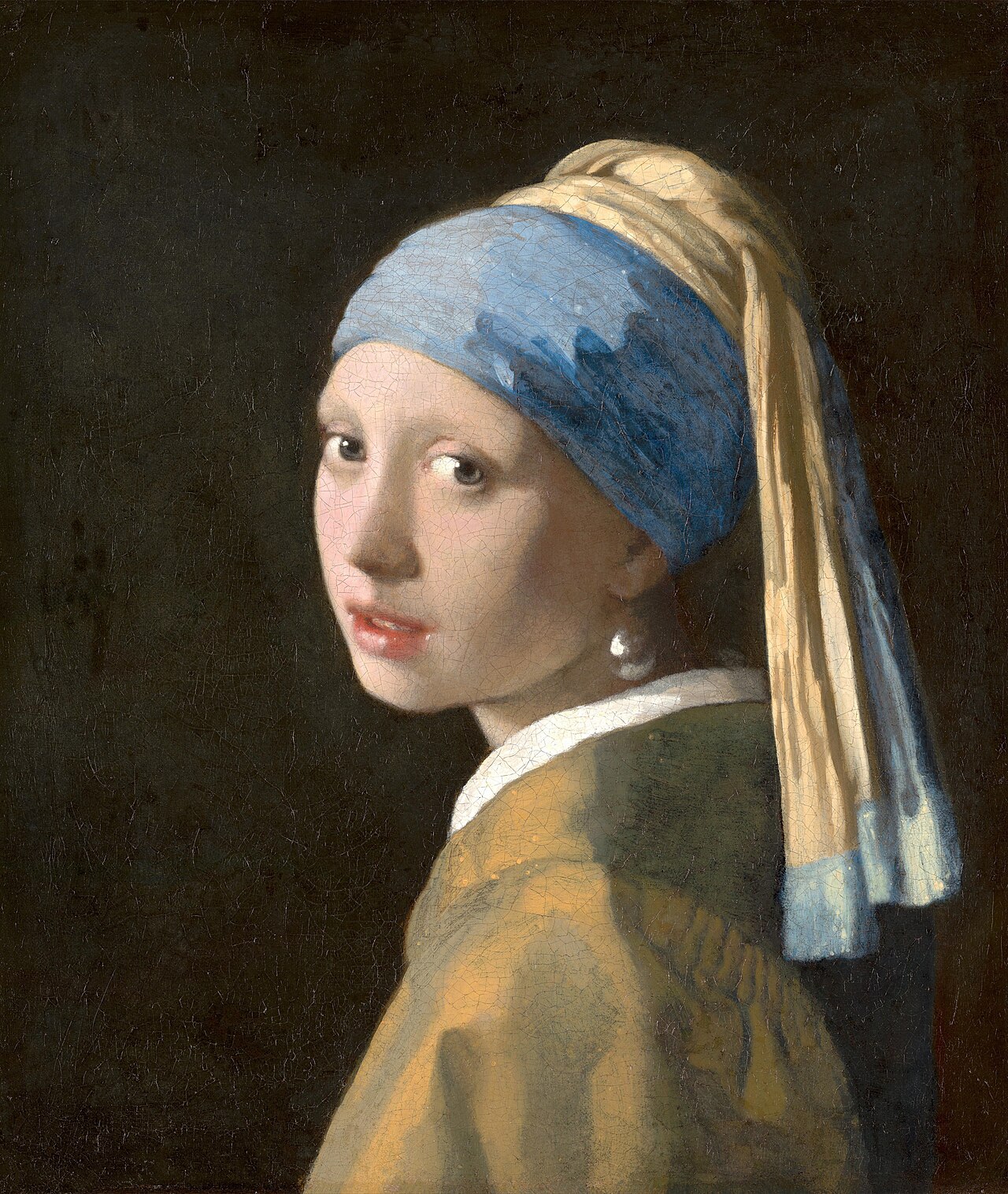 Painting
Primary source
Girl with a Pearl Earring
Johannes Vermeer · c. 1665
 Painting
Primary source
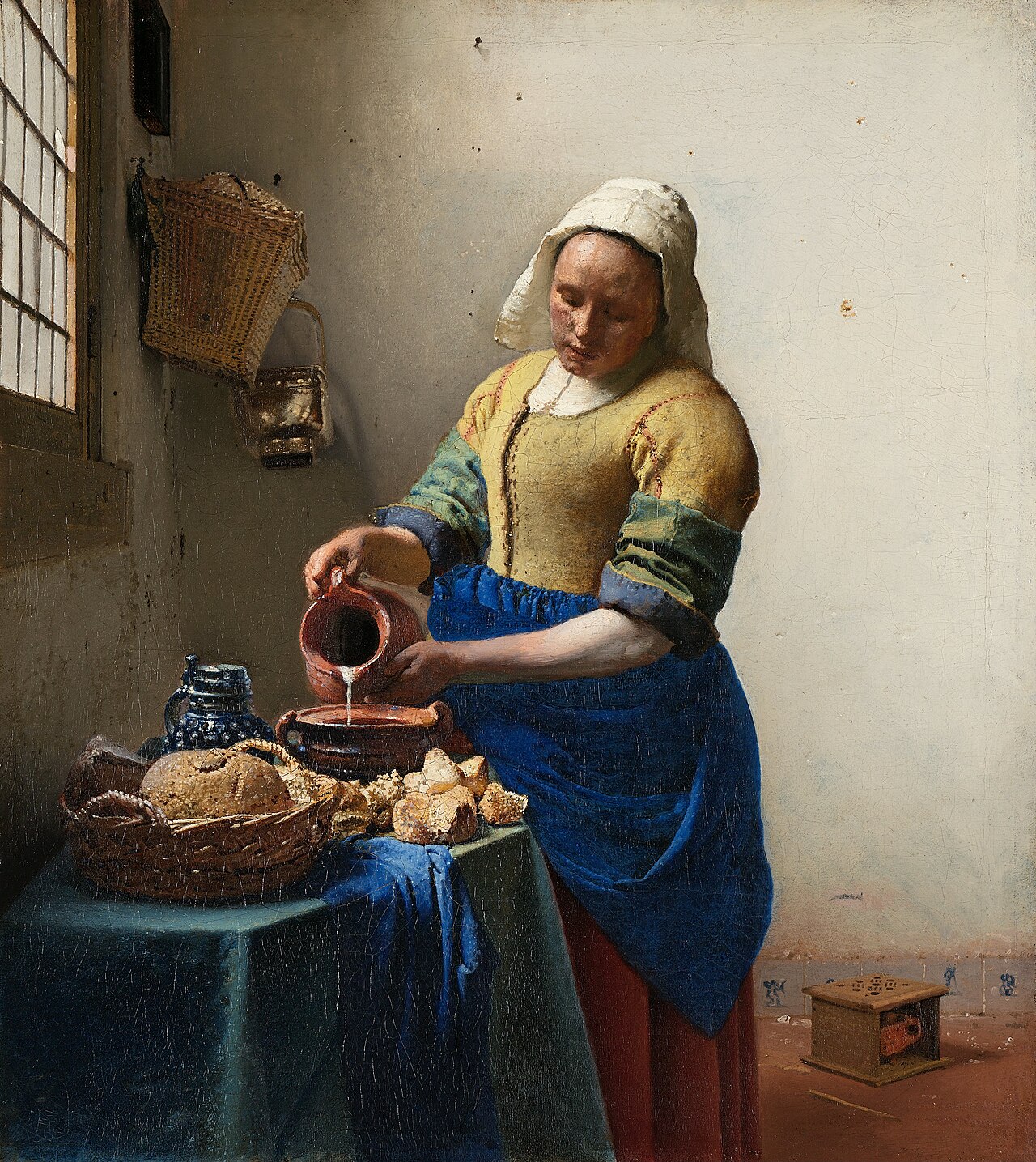
The Milkmaid
Johannes Vermeer · c. 1658-1661
 Painting
Primary source
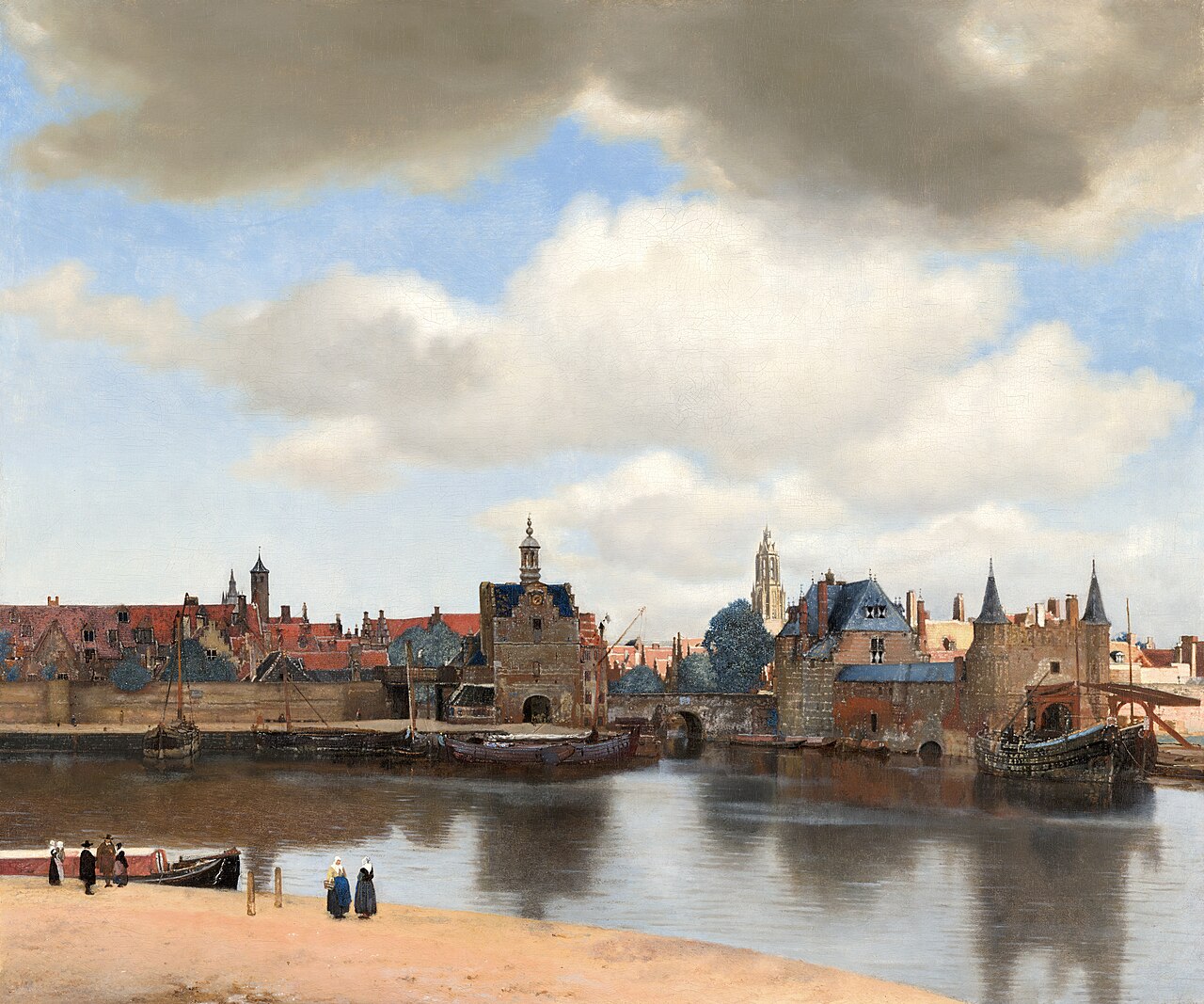
View of Delft
Johannes Vermeer · c. 1659-1661
 Painting
Primary source
Portrait of Johannes Vermeer
Johannes Vermeer
Free account
Read every Johannes Vermeer source
Sign up free →
Ready when you are
Start chatting with Johannes Vermeer now.
20 messages free · No credit card · Available in 50+ languages.