


Primary sourcePainting6 February 1911
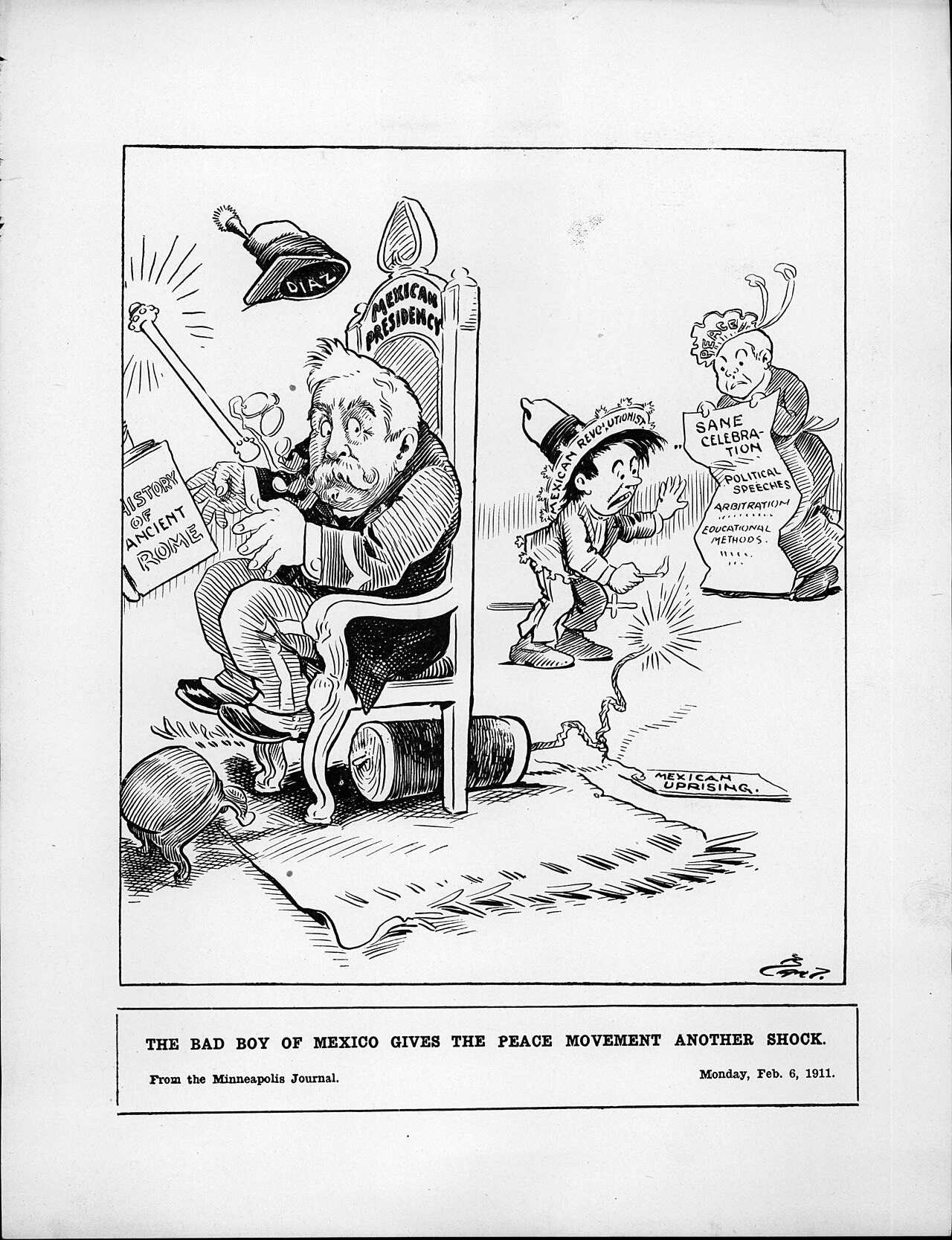
The Bad Boy of Mexico Gives the Peace Movement Another Shock
Charles Lewis "Bart" Bartholomew · 6 February 1911
A 1911 political cartoon shows Porfirio Díaz seated on a throne above a stick of dynamite, startled as a revolutionary lights the fuse. It presents the Mexican Revolution as an explosion breaking into his presidency.
Shows Díaz as the subject of a contemporary cartoon portraying his regime as about to be overthrown by revolution.
About this source
What it is
This is a black-and-white political cartoon by Charles Lewis "Bart" Bartholomew, dated Monday, February 6, 1911, in the Minneapolis Morning Tribune. It shows President Porfirio Díaz sitting on a throne labelled Mexican Presidency, with a large stick of dynamite beneath it. A man whose hat is labelled Mexican Revolutionist lights the fuse, which is labelled Mexican Uprising. Díaz looks startled as his book, History of Ancient Rome, spectacles and imperial hat fly into the air. In the background, a woman labelled Peace holds a sign reading Sane Celebration - Political Speech - Arbitration - Educational Methods.
Why it matters
The cartoon reflects how many American newspaper readers saw the Mexican Revolution in early 1911. The newspaper reported that day that Francisco I. Madero, the revolution's leader, believed in the force of arms to win the reforms he demanded. The cartoon shows a contemporary view of Díaz's regime as fragile, and it is a useful record of how outsiders framed the conflict.
Look closer
- What do the labels on the throne, fuse and book tell you about how the cartoonist wanted viewers to understand Díaz?
- Why might the artist have placed a figure of peace in the background?
- What does the cartoon leave out about the Mexican people who were affected by the revolution?
This painting is part of the curated material that grounds the AI version of Porfirio Díaz on Humy.ai — when students ask about related events, the AI can quote it and cite it.
More Porfirio Díaz sources
Browse all 94 → Document
Primary source
Letter of Resignation of Porfirio Díaz
Porfirio Díaz · May 1911
Primary source
Message of Porfirio Diaz to Thomas Alva Edison
Porfirio Diaz · 15 August 1909
 Artifact
Secondary source
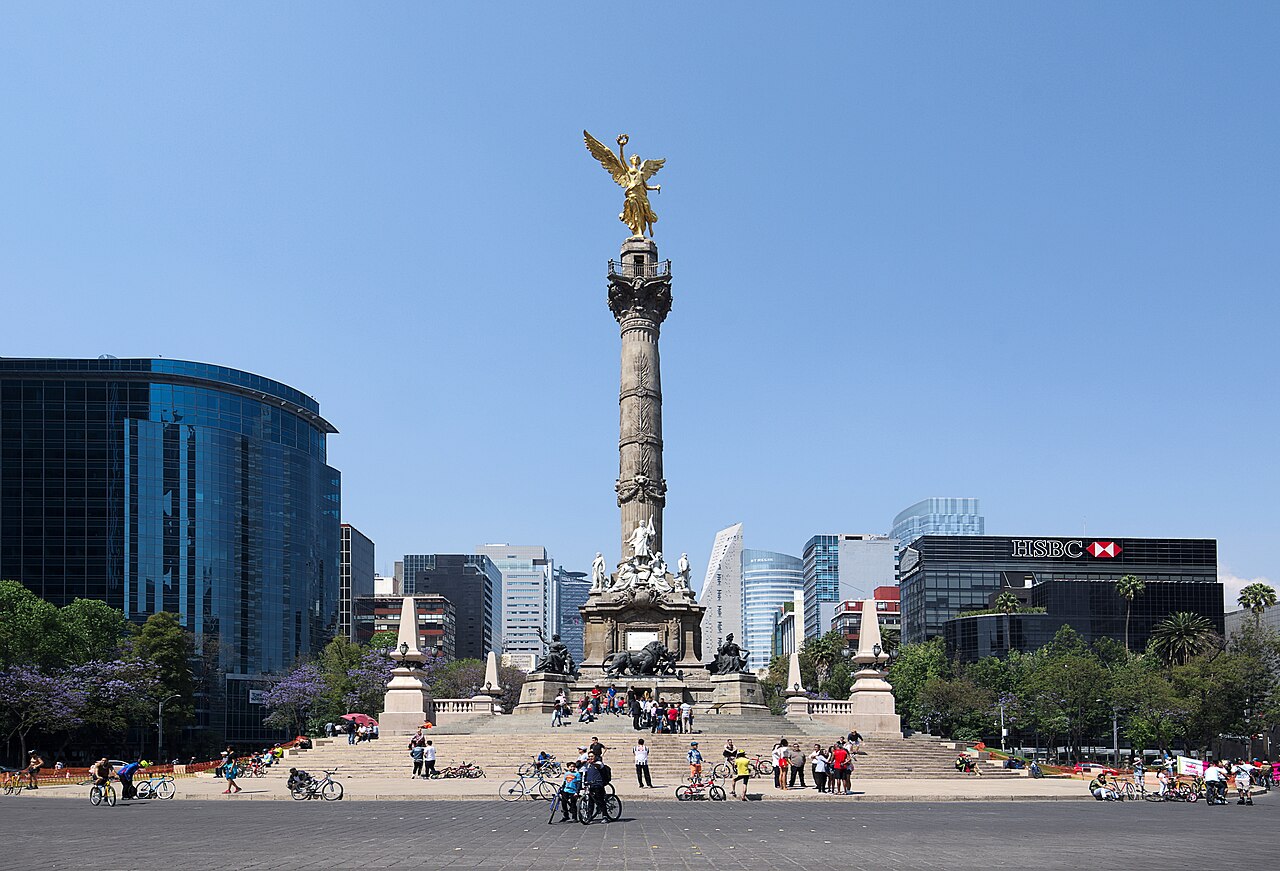
Angel of Independence
Antonio Rivas Mercado · 1910
 Book
Secondary source
Barbarous Mexico
John Kenneth Turner · 1910
Free account
Read every Porfirio Díaz source
Sign up free →
Ready when you are
Start chatting with Porfirio Díaz now.
20 messages free · No credit card · Available in 50+ languages.