


Secondary sourcePainting1653
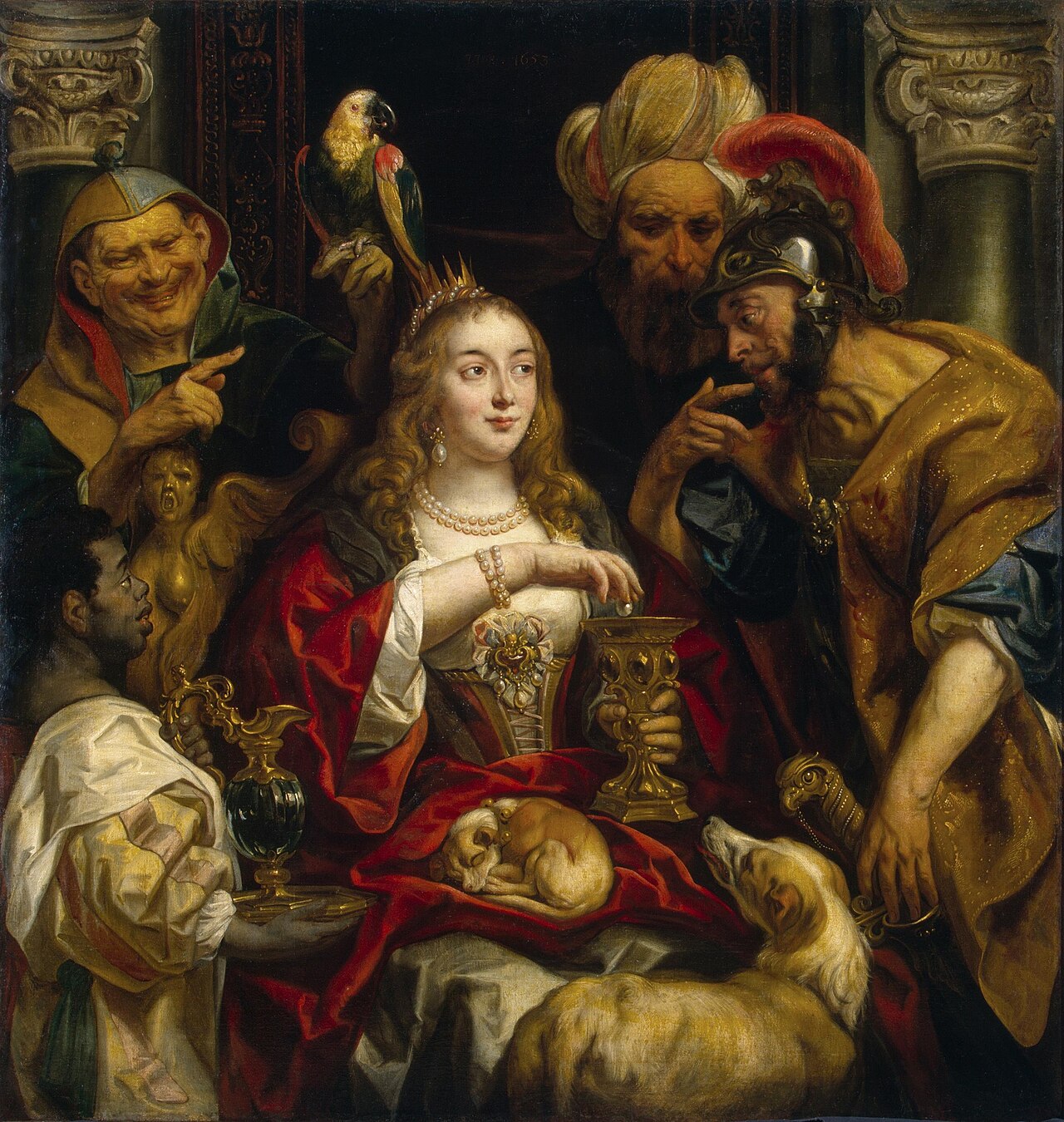
The Banquet of Cleopatra (Cleopatra's Feast)
Jacob Jordaens · 1653
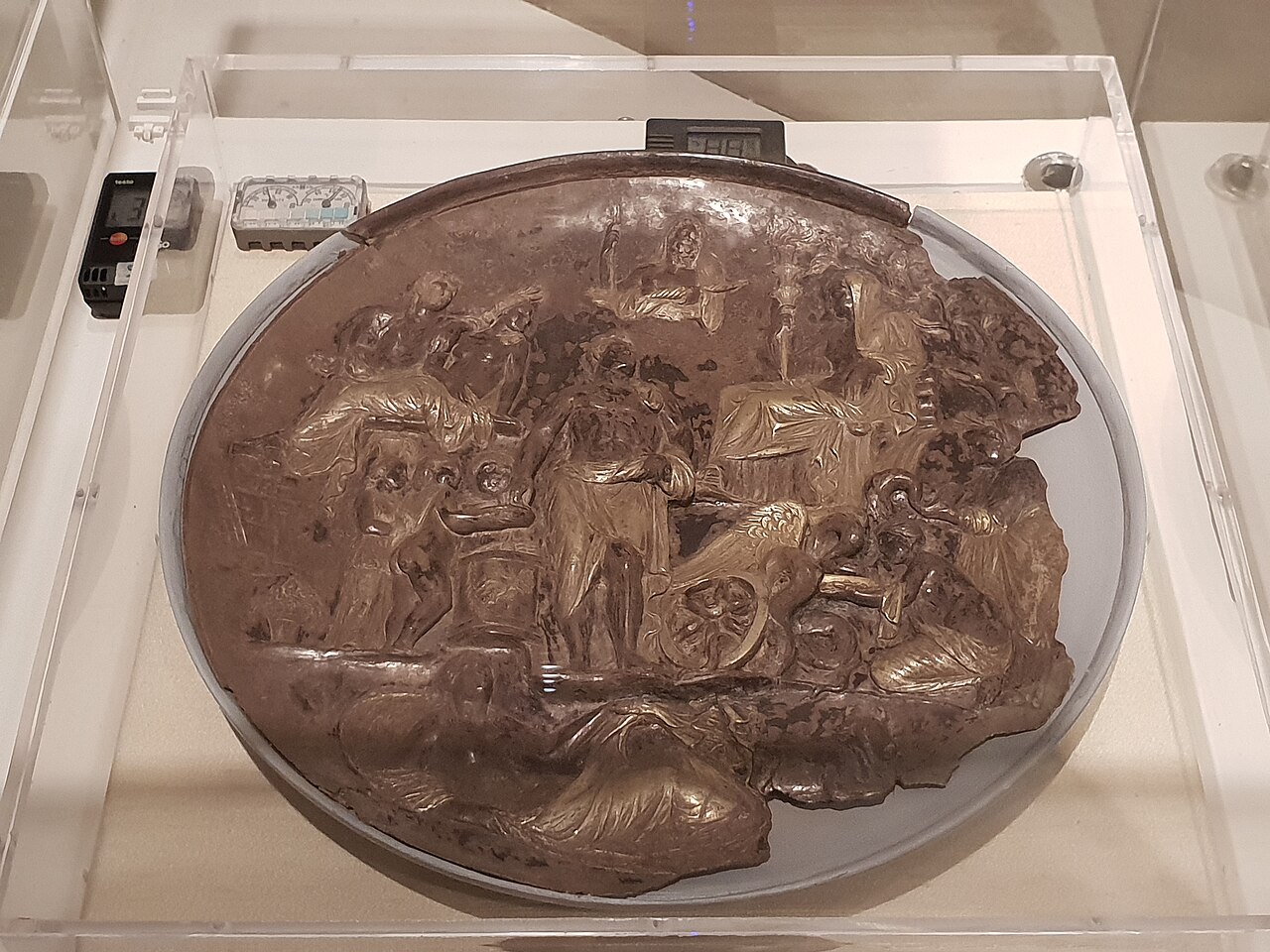
A Flemish Baroque painting of Cleopatra dissolving a pearl in vinegar at a feast, with Mark Antony shown watching in amazement.
Shows Antony witnessing Cleopatra's legendary pearl bet, part of the moral storytelling that shaped his later image.
About this source
What it is
This oil painting was made by the Flemish artist Jacob Jordaens in 1653 and is held in the Hermitage Museum. It shows Cleopatra at a banquet holding a golden goblet, surrounded by a jester, attendants, and a helmeted man in a gold cloak identified as Mark Antony.
Why it matters
The scene illustrates a story told by the Roman writer Pliny the Elder, in which Cleopatra bet Antony she could spend an enormous sum on a single meal by dissolving a precious pearl in vinegar and drinking it. The judge of the bet, Lucius Munatius Plancus, declared her the winner. Jordaens uses the tale as a moral warning about pride and luxury, showing Antony and his companion frozen in astonishment while a jester mocks the queen's extravagance.
Look closer
- What expressions do you see on the faces of Antony and the other guests?
- Why might the artist have included a jester pointing at Cleopatra?
- How does this painting use a legendary story to comment on wealth and vanity?
This painting is part of the curated material that grounds the AI version of Mark Antony on Humy.ai — when students ask about related events, the AI can quote it and cite it.
More Mark Antony sources
Browse all 83 →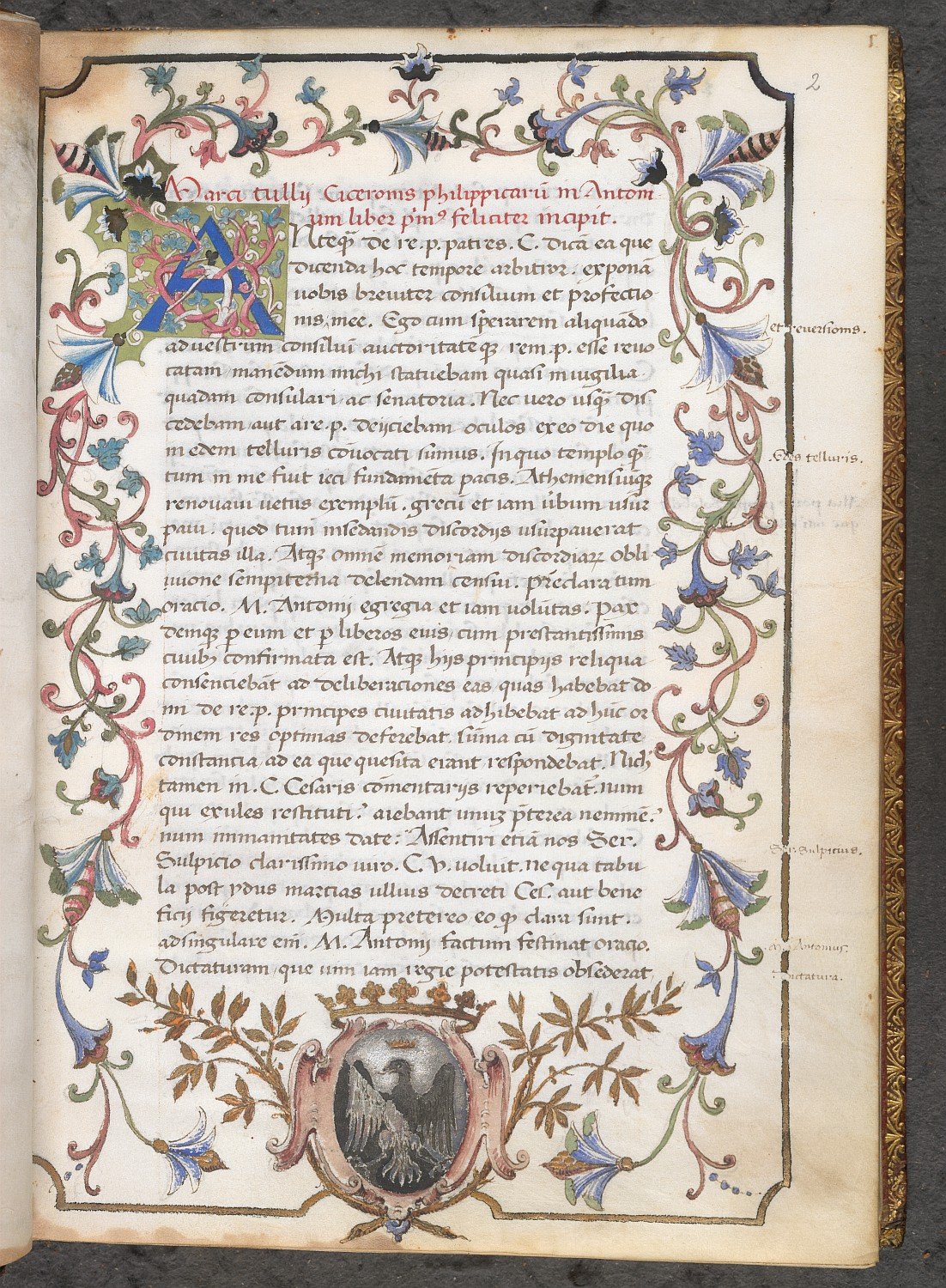 Speech
Primary source
Philippics
Cicero · 44-43 BC
Secondary source
Life of Mark Antony
Plutarch
 Artifact
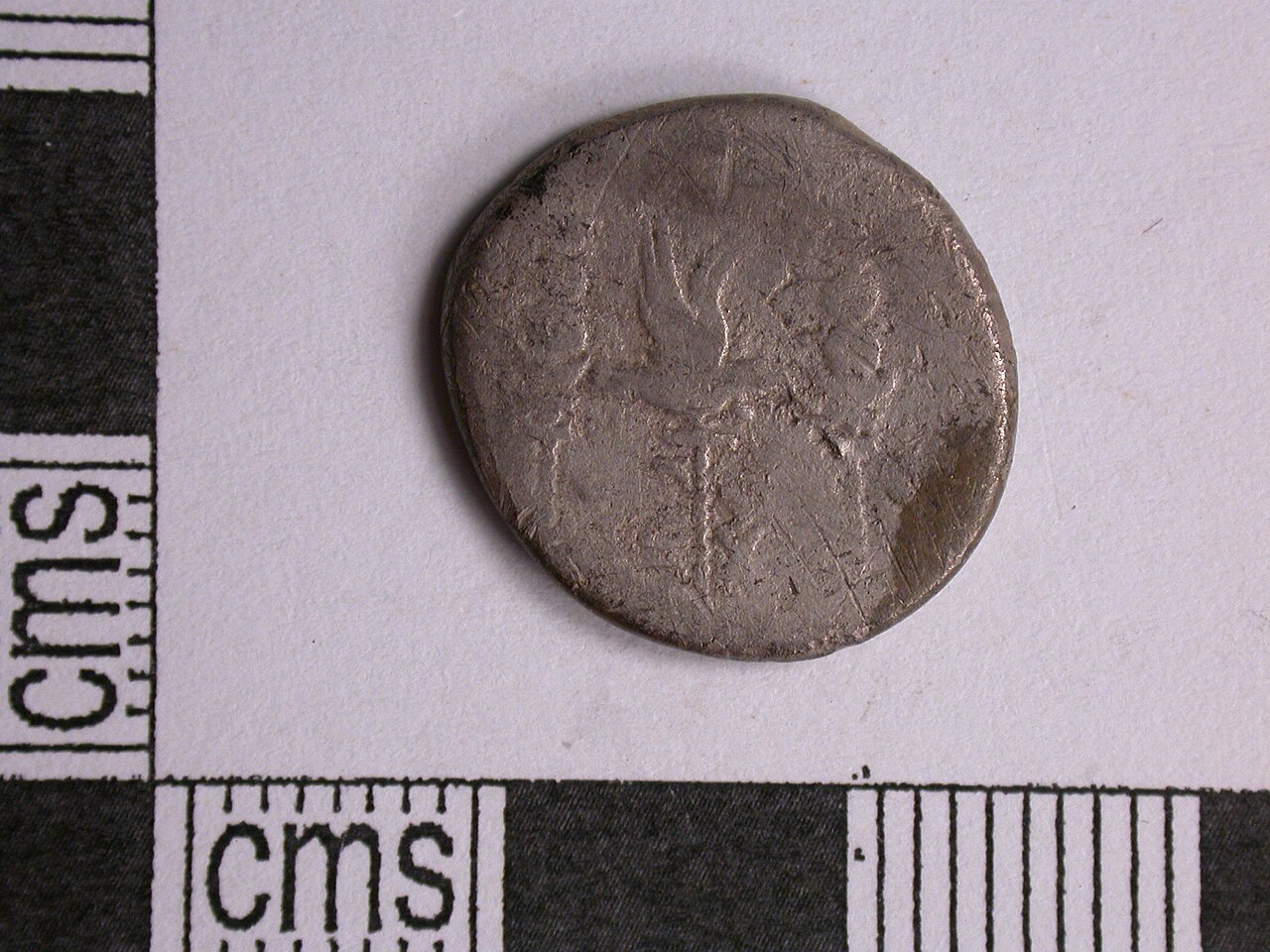
Primary source
Legionary denarius of Mark Antony
Mint of Mark Antony · 32–31 BC
 Document
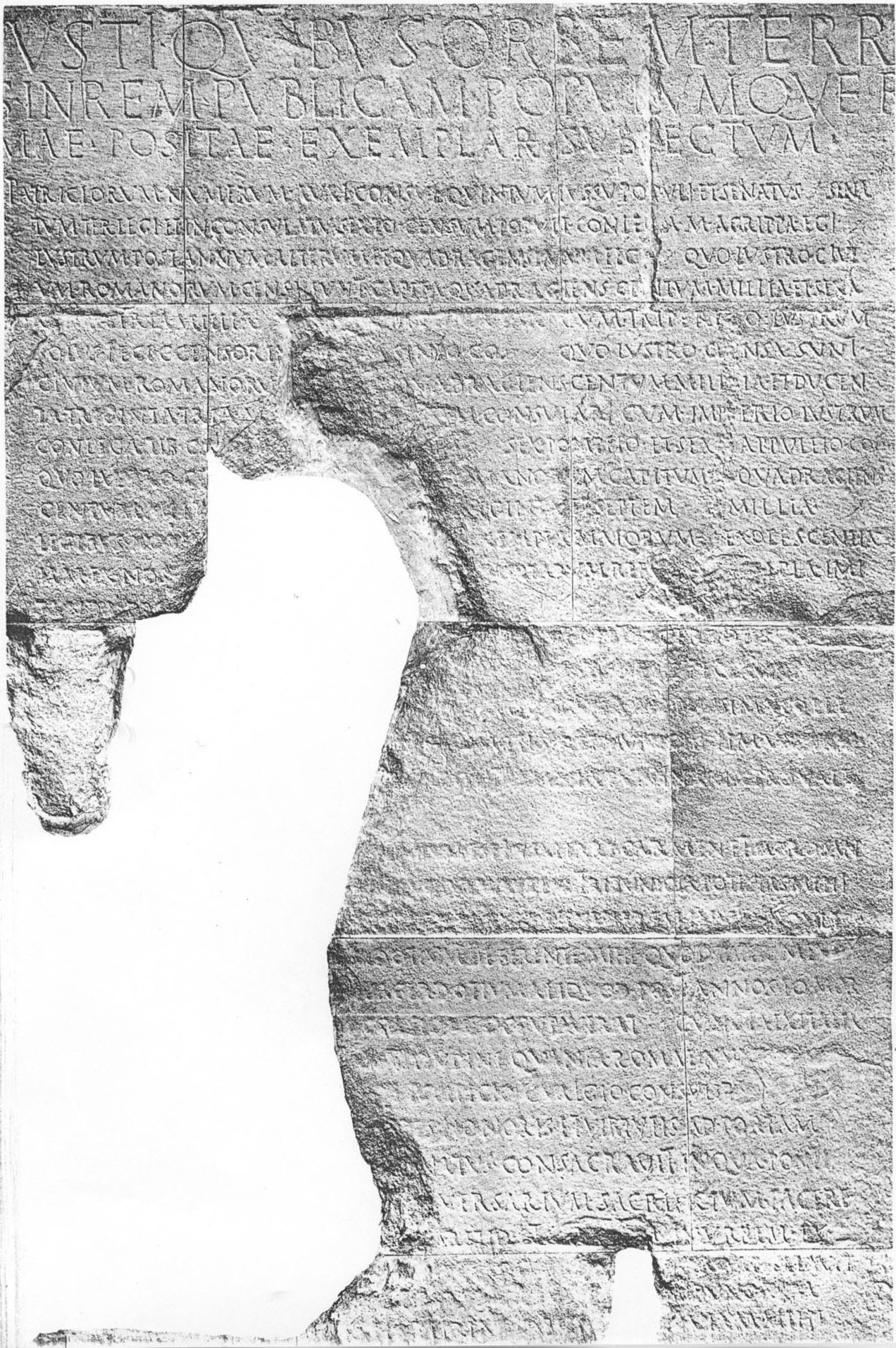
Primary source
Res Gestae Divi Augusti
Augustus · 14 AD
Free account
Read every Mark Antony source
Sign up free →
Ready when you are
Start chatting with Mark Antony now.
20 messages free · No credit card · Available in 50+ languages.