


Primary sourceSpeech44-43 BC
Philippics
Cicero · 44-43 BC
A series of speeches by Cicero attacking Mark Antony after Caesar's assassination, debating the legitimacy of Caesar's legacy.
These speeches debate whether Caesar's acts and legacy should be honored or undone after his assassination.
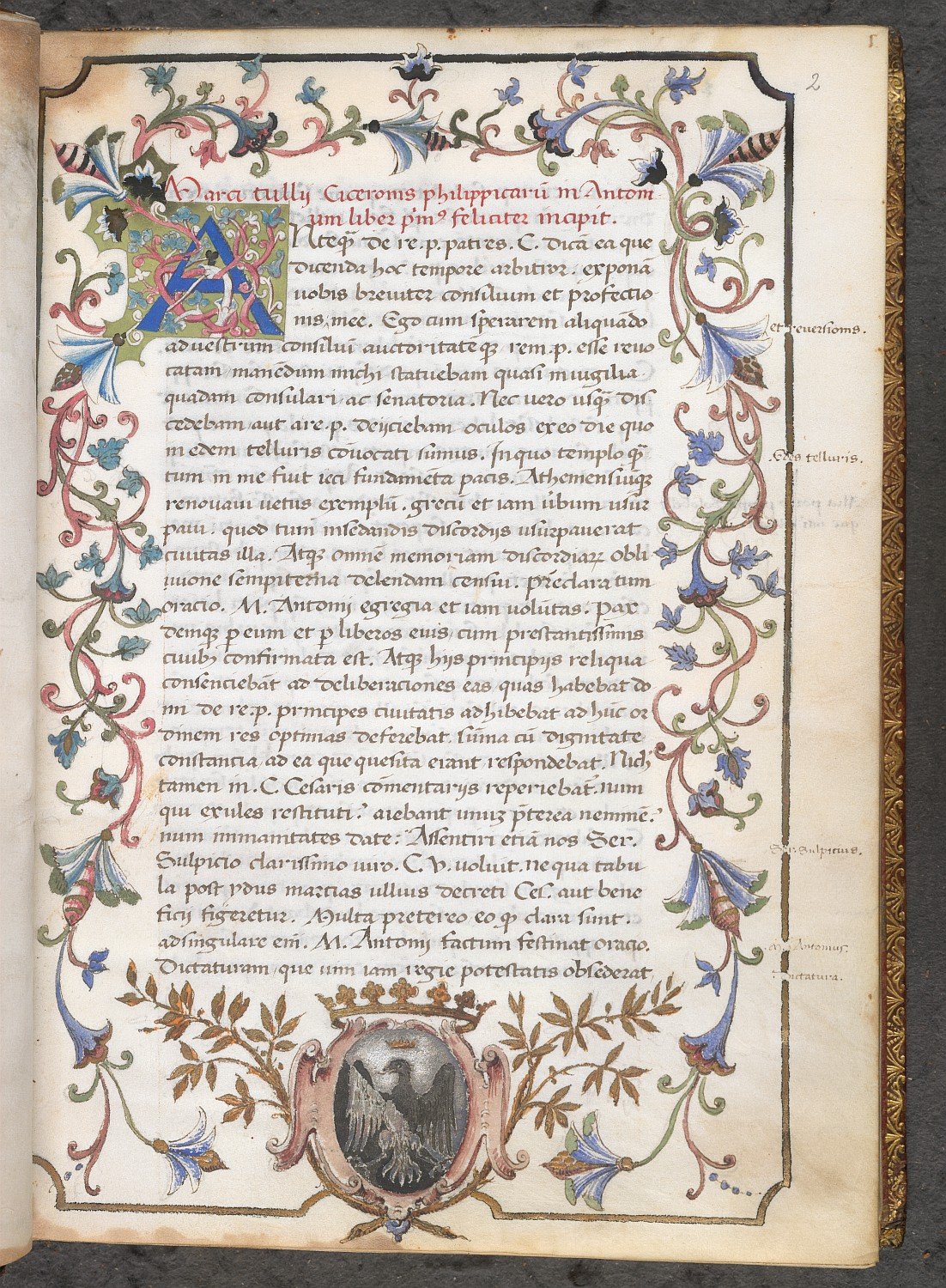
About this source
What it is
The Philippics are fourteen speeches written by the Roman statesman Cicero in 44-43 BC, attacking Mark Antony. They were named after Demosthenes' speeches against Philip of Macedon. The copy shown here is a later illuminated manuscript page held by the British Library, once owned by the Gonzaga family.
Why it matters
The speeches were delivered right after Julius Caesar's assassination, when Rome was split between Caesar's supporters and the men who had killed him. Cicero argued that Antony was twisting Caesar's wishes for his own benefit, and he used the speeches to rally the Senate against him. The fallout was severe: the Senate's army ended up under Octavian's control, and Antony later had Cicero killed in revenge.
Look closer
- Why might Cicero compare himself to a Greek orator attacking a tyrant?
- What does this decorated manuscript page, made centuries later, tell us about how later owners valued this text?
- How might someone loyal to Caesar's memory respond to these speeches?
This speech is part of the curated material that grounds the AI version of Julius Caesar, Cicero and Augustus on Humy.ai — when students ask about related events, the AI can quote it and cite it.
More Julius Caesar sources
Meet the AI Julius Caesar →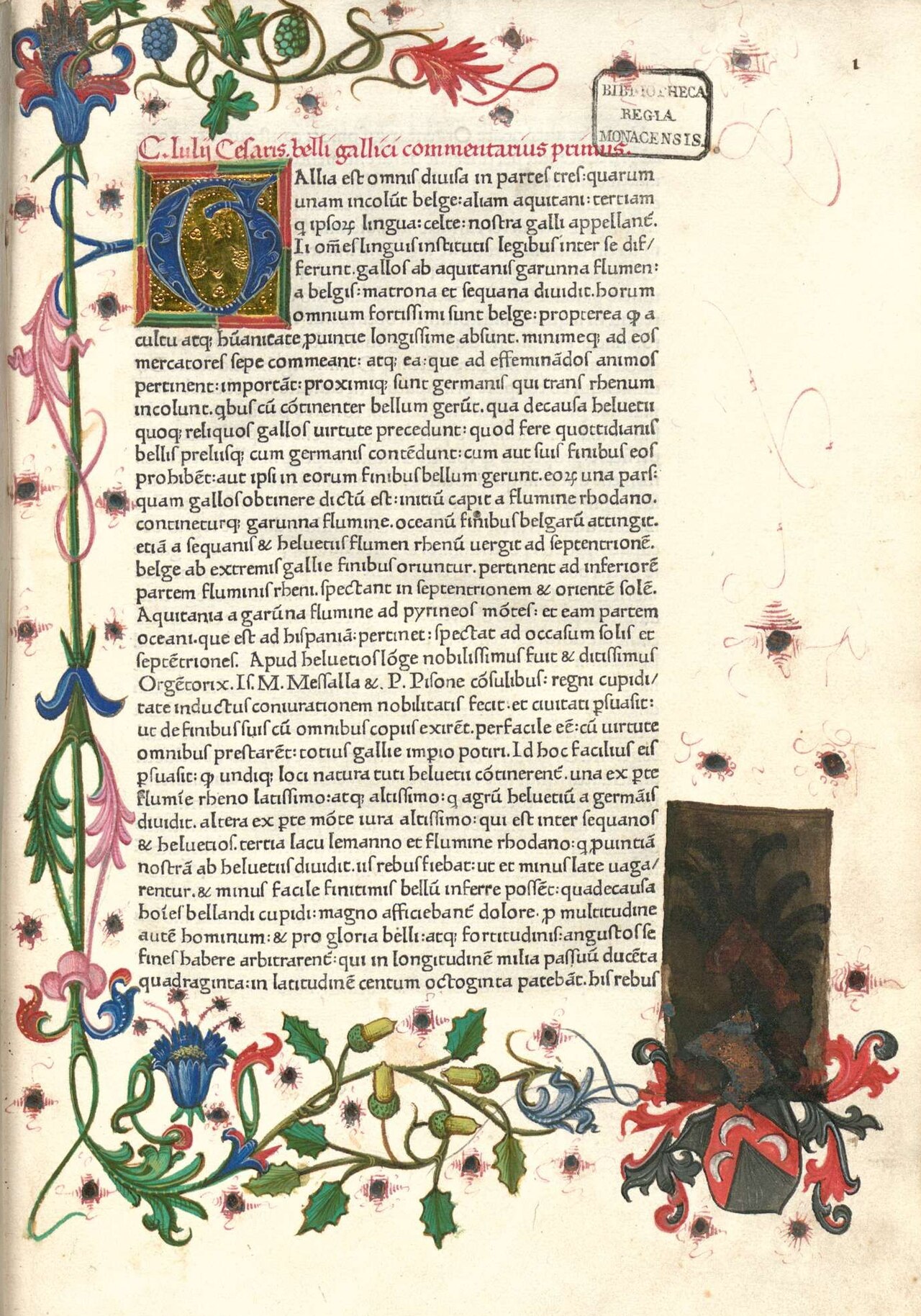 Book
Primary source
Commentarii de Bello Gallico
Julius Caesar · c. 58-50 BCE (this copy 1469)
 Painting
Secondary source
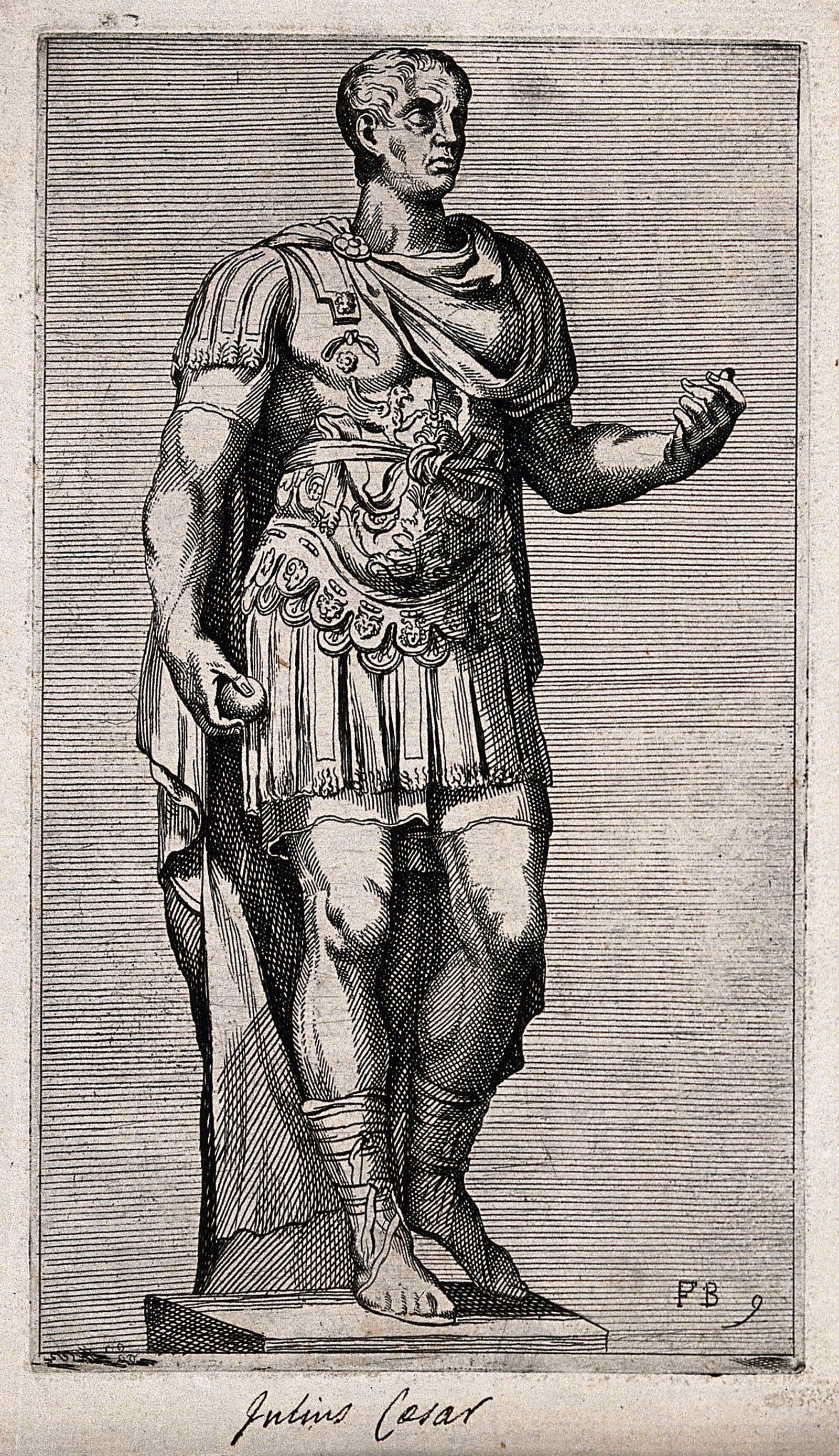
Etched Portrait of Julius Caesar
F. Perrier
 Painting
Secondary source
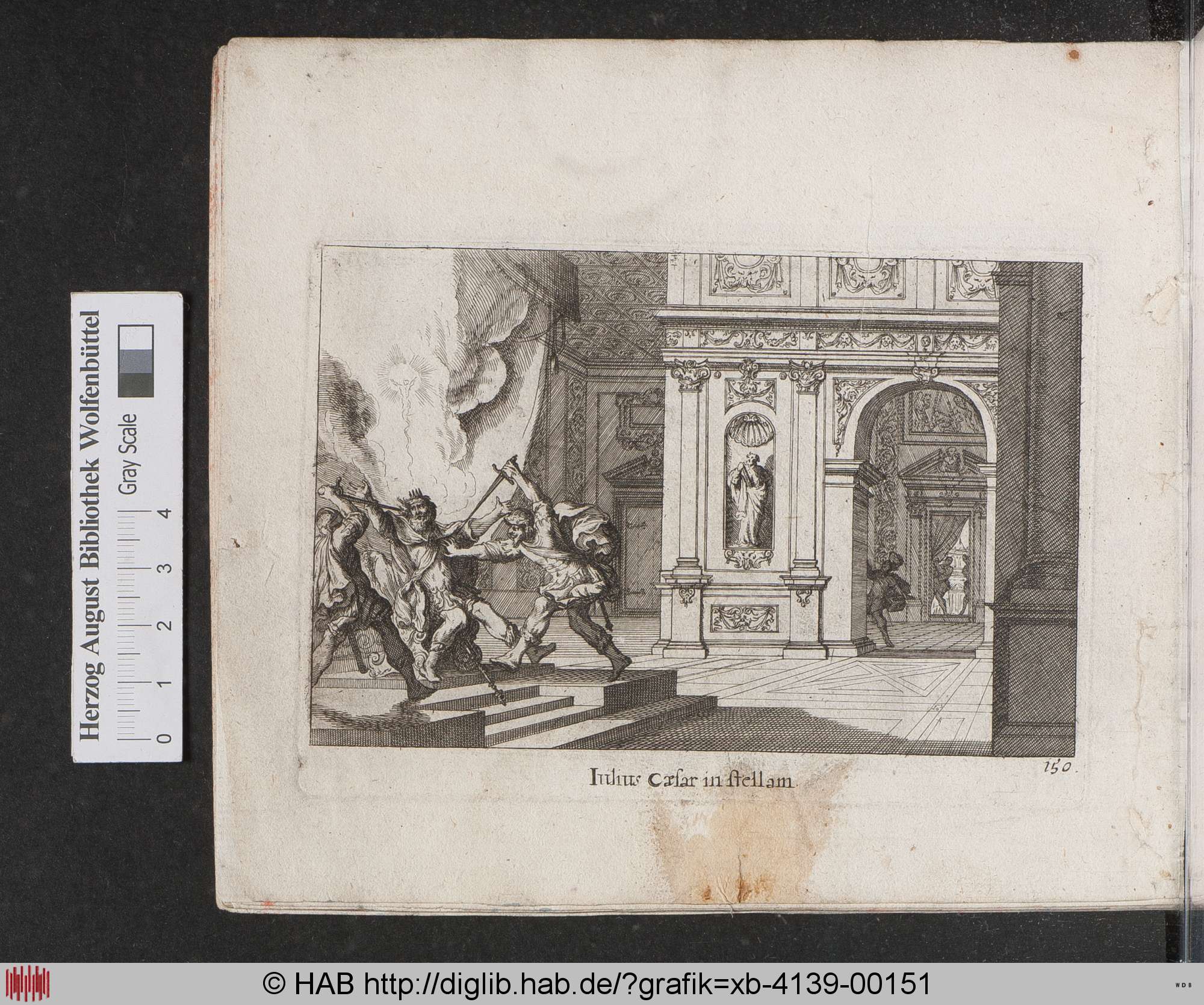
Murder of Julius Caesar in the Senate
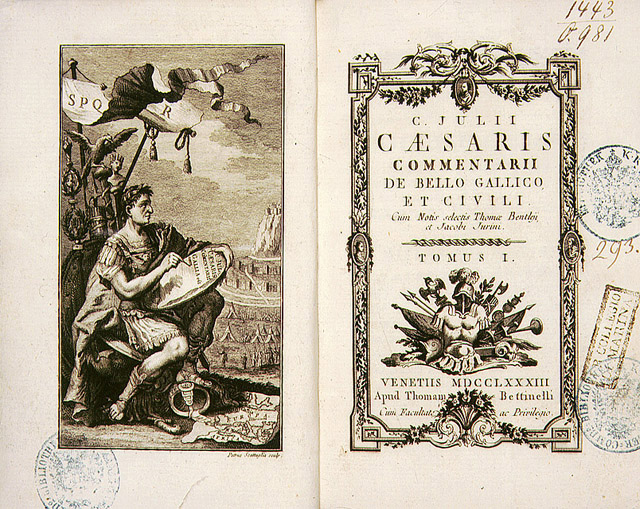 Book
Primary source
Commentarii de Bello Civili
Julius Caesar · 49-48 BCE
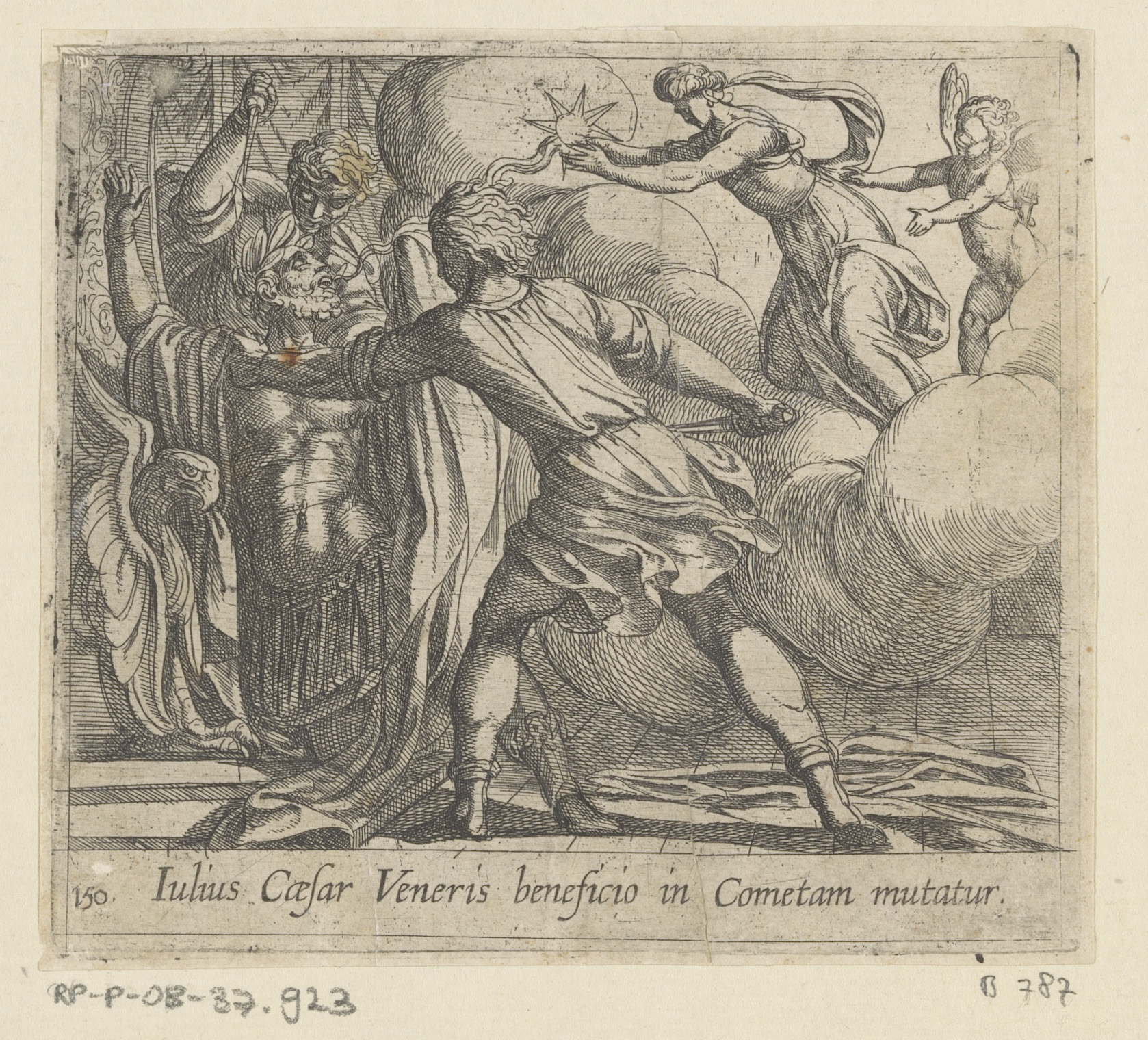 Painting
Secondary source
The Murder of Julius Caesar
1606
Ready when you are
Start chatting with Julius Caesar now.
20 messages free · No credit card · Available in 50+ languages.