


Primary sourceBook1704
The Battle of the Books
Jonathan Swift · 1704
Swift's 1704 mock-epic satire imagining a literal battle between ancient and modern books, written in defence of his patron Sir William Temple.
Written by Swift to defend his patron Sir William Temple, showing his early formation as a writer.
Free Humy account · No credit card · 120,912 sources to read
About this source
What it is
"The Battle of the Books" is a short satire by Jonathan Swift, published in 1704 as part of A Tale of a Tub. It imagines a literal battle between ancient and modern books come to life in a library, acting out the contemporary debate over whether ancient or modern learning was superior.
Why it matters
Swift wrote this while working as secretary to Sir William Temple, whose essay had sparked the "Battle of the Books" controversy with critics such as William Wotton and Richard Bentley. The satire shows Swift's early literary skill and his loyalty to Temple's household, and it introduced imagery—like the spider and the bee—that became lasting symbols for the clash between critics and creative writers.
Look closer
- Why might Swift have chosen to defend his patron through satire rather than direct argument?
- What does the spider-and-bee allegory suggest about how Swift viewed critics compared to original writers?
- Swift deliberately left the ending of the battle unresolved—why might he have done this?
This book is part of the curated material that grounds the AI version of Jonathan Swift on Humy.ai — when students ask about related events, the AI can quote it and cite it.
More Jonathan Swift sources
Browse all 79 →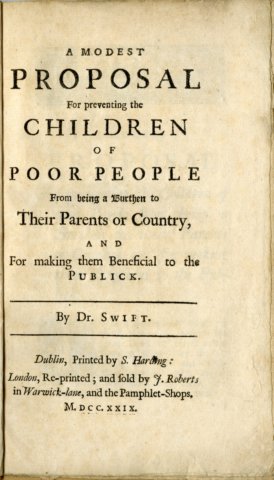 Document
Primary source
A Modest Proposal
Jonathan Swift · 1729
 Book
Primary source
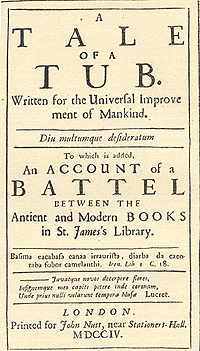
A Tale of a Tub
Jonathan Swift · 1704
 Book
Primary source
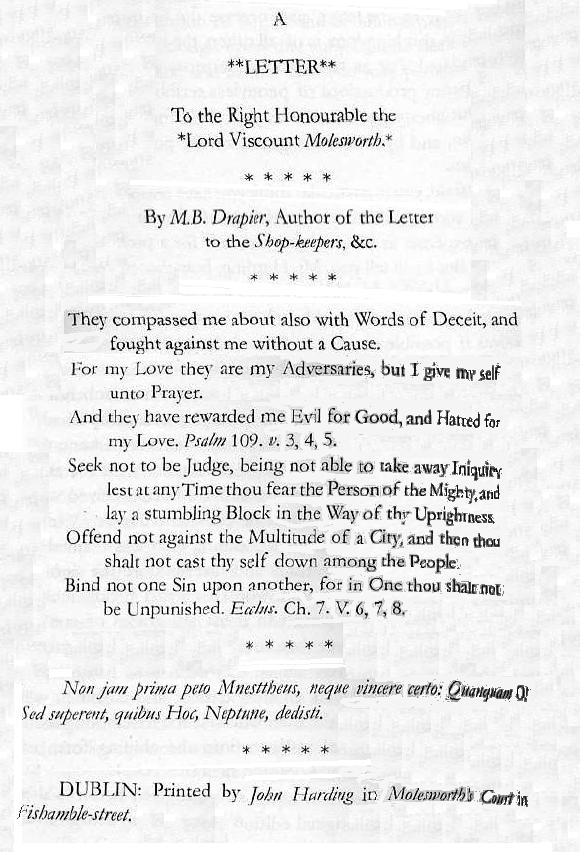
Drapier's Letters
Jonathan Swift · 1724-1725
 Painting
Primary source
Jonathan Swift
Charles Jervas · c. 1718



Free account
Read every Jonathan Swift source
Sign up free →
Ready when you are
Start chatting with Jonathan Swift now.
20 messages free · No credit card · Available in 50+ languages.