


Primary sourceBook1724-1725
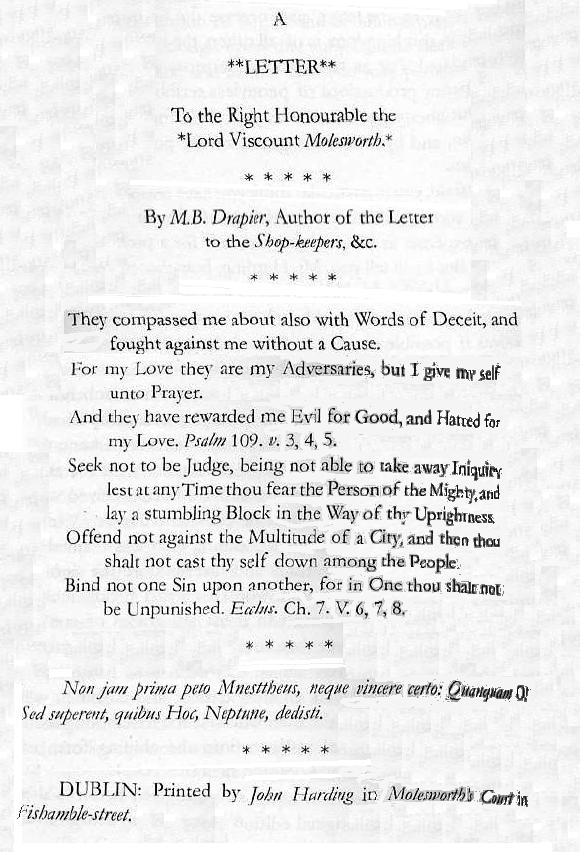
Drapier's Letters
Jonathan Swift · 1724-1725
Jonathan Swift's pamphlets attacking a copper coinage patent linked to George I's mistress, which forced the king's government to withdraw it.
The patent that Swift's pamphlets attacked had been secured through George I's mistress, the Duchess of Kendal, embarrassing the king's government.
About this source
What it is
Drapier's Letters are seven pamphlets written between 1724 and 1725 by Jonathan Swift, Dean of St Patrick's Cathedral in Dublin, under the pseudonym 'M. B., Drapier'. They attacked a patent granted to William Wood to mint copper coinage for Ireland.
Why it matters
Swift argued the patent was corrupt, noting it had been secured partly through a payment to the Duchess of Kendal, mistress of King George I. The campaign stirred Irish public opinion, led to a boycott, and forced the withdrawal of Wood's patent, making Swift a hero to many in Ireland and showing the limits of royal and ministerial power when faced with public resistance.
Look closer
- Why did Swift write under a pseudonym instead of his own name?
- What does the involvement of the king's mistress in the patent suggest about how royal influence worked?
- How did ordinary Irish people make their opposition effective?
This book is part of the curated material that grounds the AI version of George I on Humy.ai — when students ask about related events, the AI can quote it and cite it.
More George I sources
Meet the AI George I →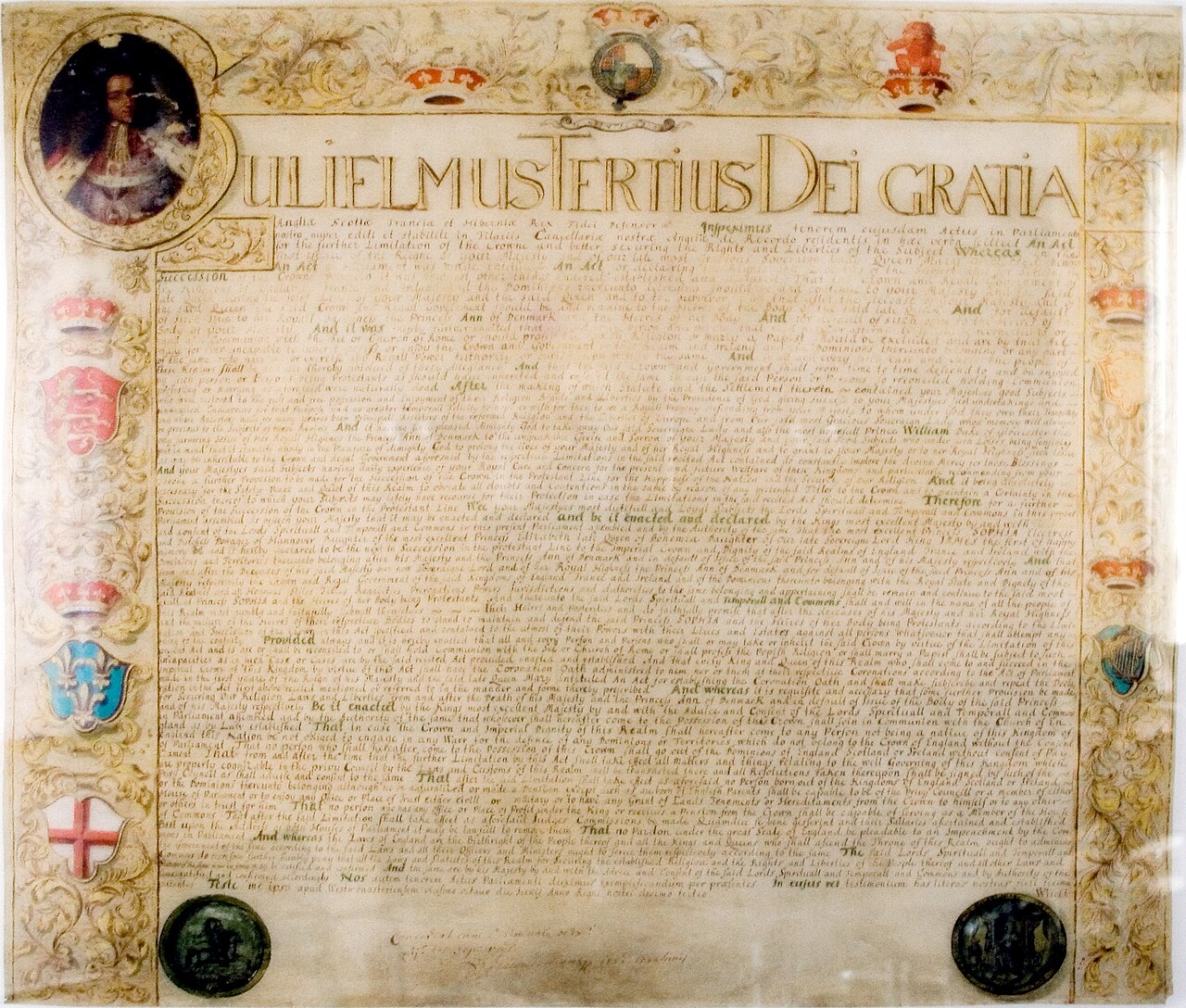 Document
Primary source
Act of Settlement 1701
1701
 Painting
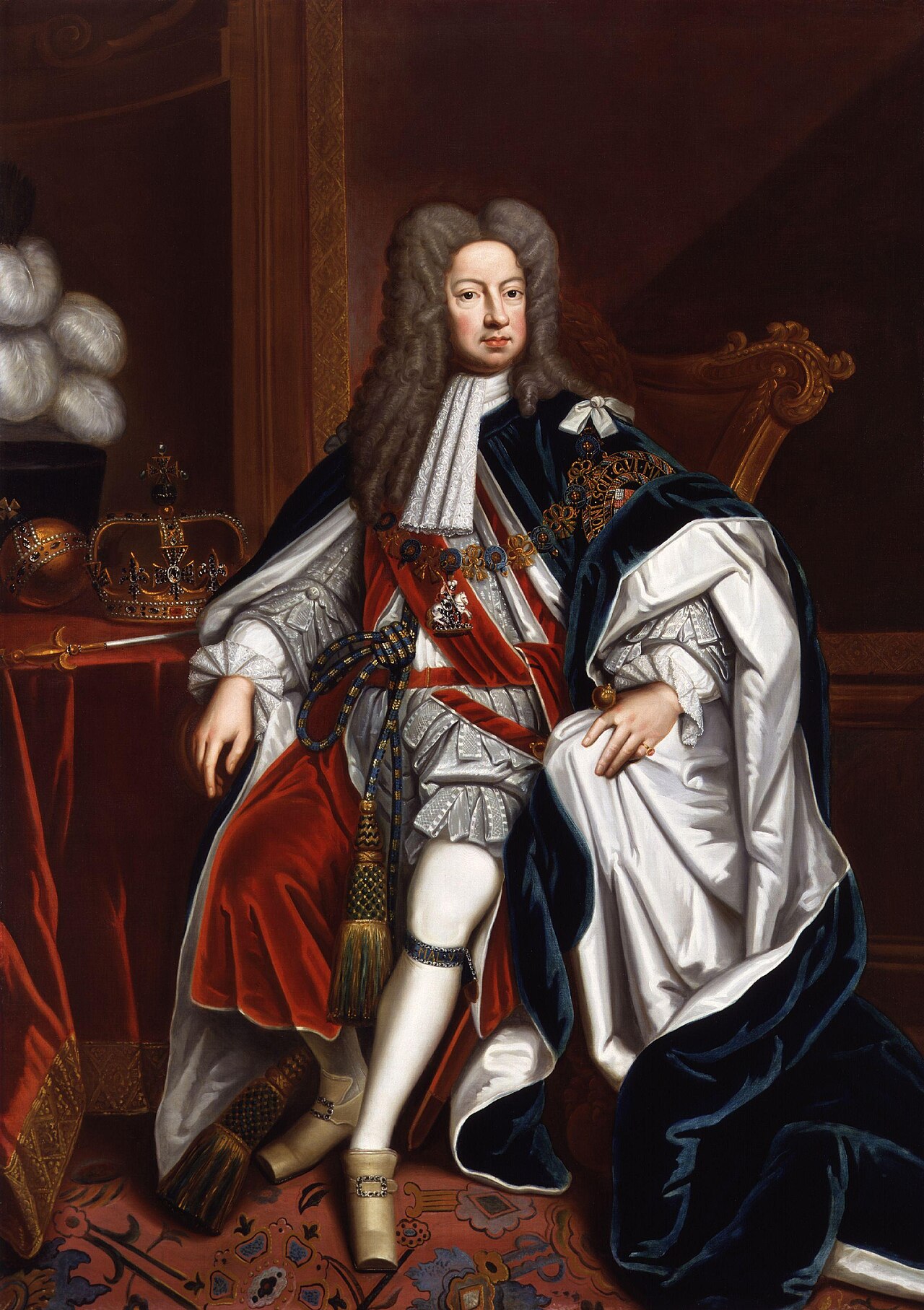
Primary source
Portrait of George I of Great Britain
Godfrey Kneller
Secondary source
Water Music
George Frideric Handel · 1717
Primary source
Septennial Act 1715
1716
 Document
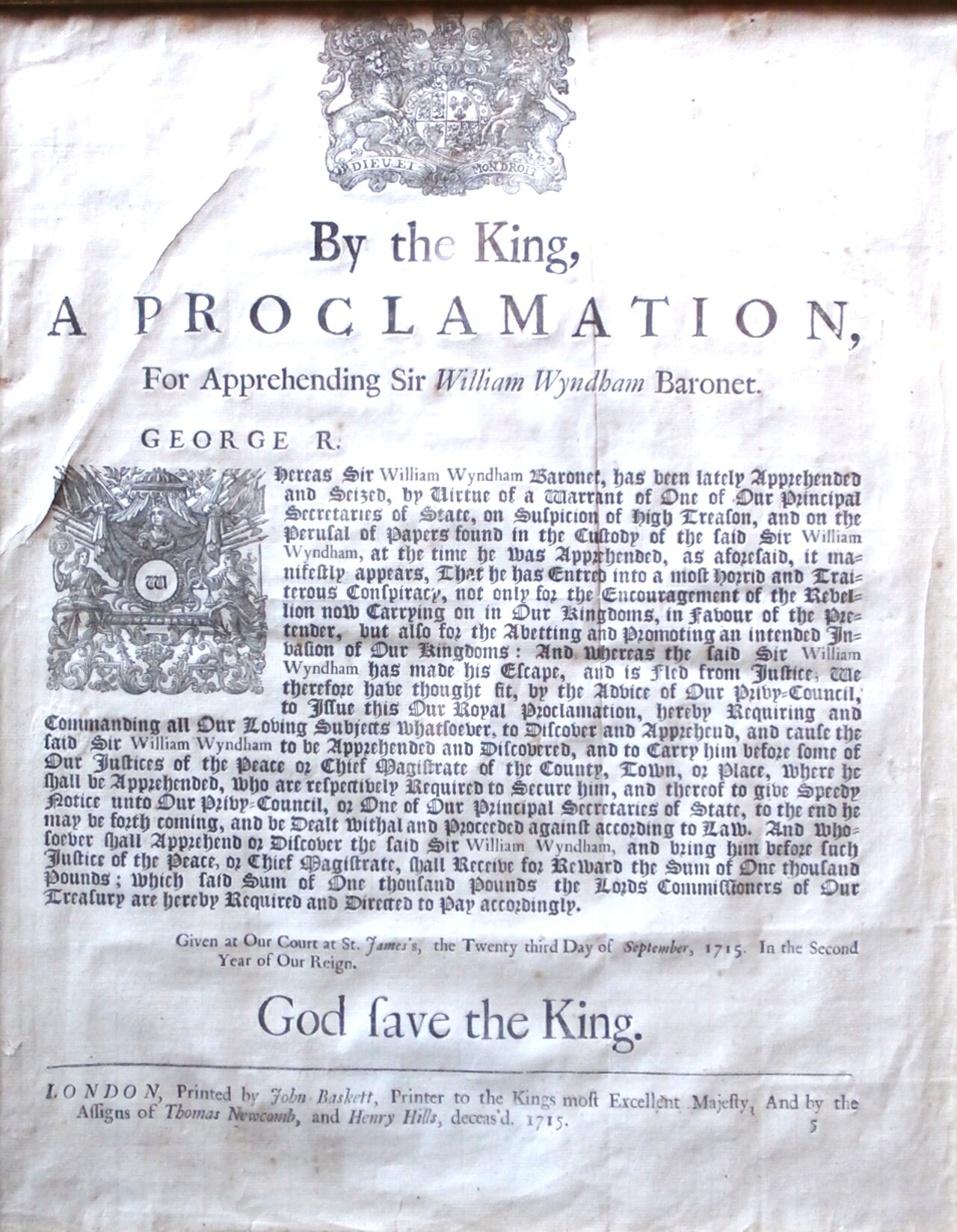
Primary source
Royal Proclamation for the Arrest of Sir William Wyndham
23 September 1715
Ready when you are
Start chatting with George I now.
20 messages free · No credit card · Available in 50+ languages.