


Primary sourceDocument1701
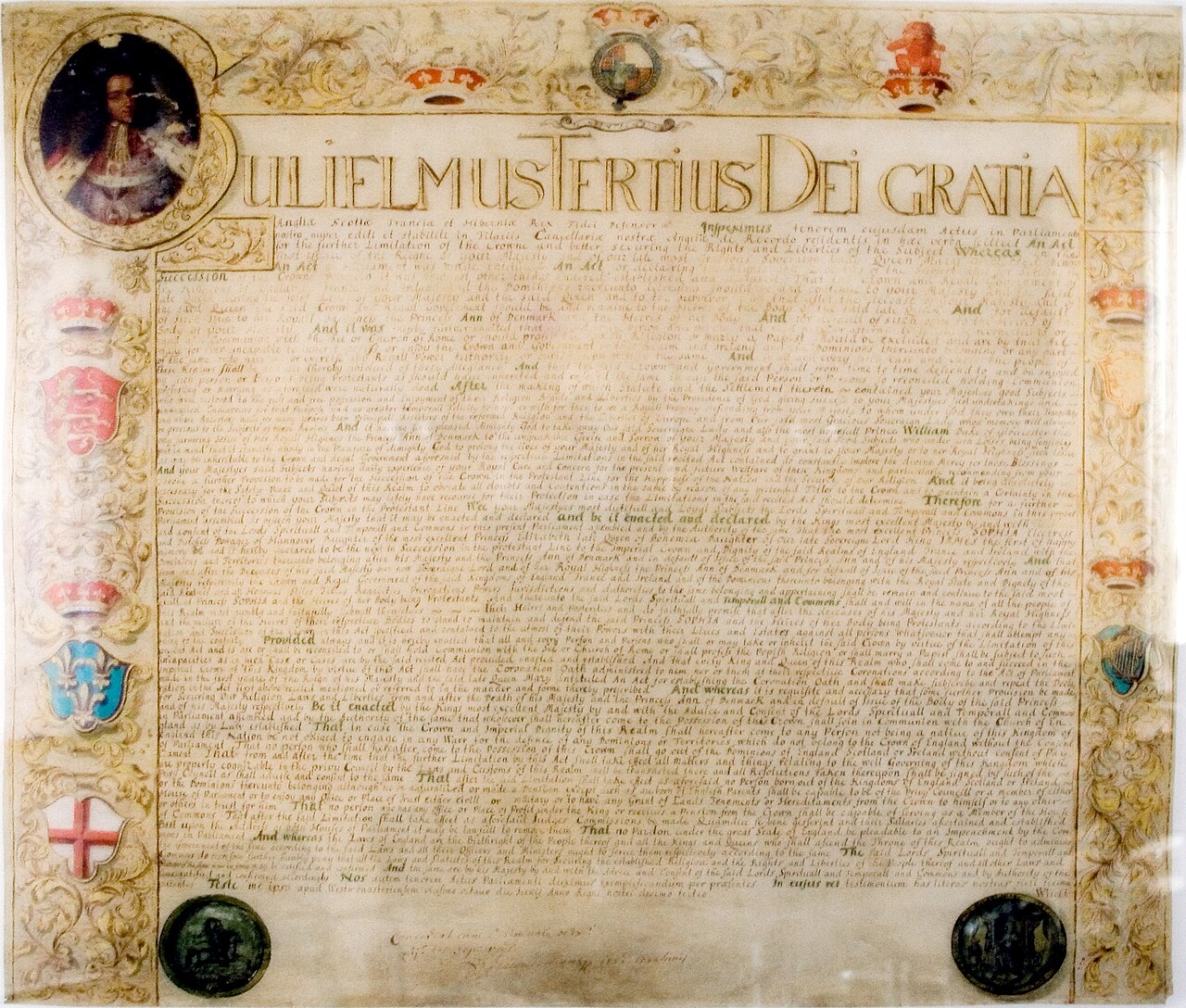
Act of Settlement 1701
1701
The English law that barred Catholics from the throne and settled succession on the Hanoverian line, making George I king in 1714.
This Act is the legal basis of George's claim to the British throne, making him king through Protestant succession rather than closeness of blood.
About this source
What it is
This is an Act of the Parliament of England passed in 1701. It decided that after Queen Anne, the English and Irish crowns would pass to Sophia of Hanover and her Protestant heirs, excluding Catholic claimants. It also required the monarch to belong to the Church of England.
Why it matters
Sophia died shortly before Queen Anne, so her son inherited the throne instead, becoming King George I and starting the Hanoverian dynasty. The Act shows how Parliament, not just bloodline, decided who could be king, and it explains why a German-speaking prince ended up ruling Britain. It also limited royal power and shaped the later union of England and Scotland.
Look closer
- Why would Parliament pass over more than fifty Catholic relatives to choose a distant Protestant cousin?
- What does the decorative illumination and sealed parchment tell you about how important this document was meant to look?
- What does this law leave out about the people who lost their claim to the throne?
This document is part of the curated material that grounds the AI version of George I on Humy.ai — when students ask about related events, the AI can quote it and cite it.
More George I sources
Meet the AI George I →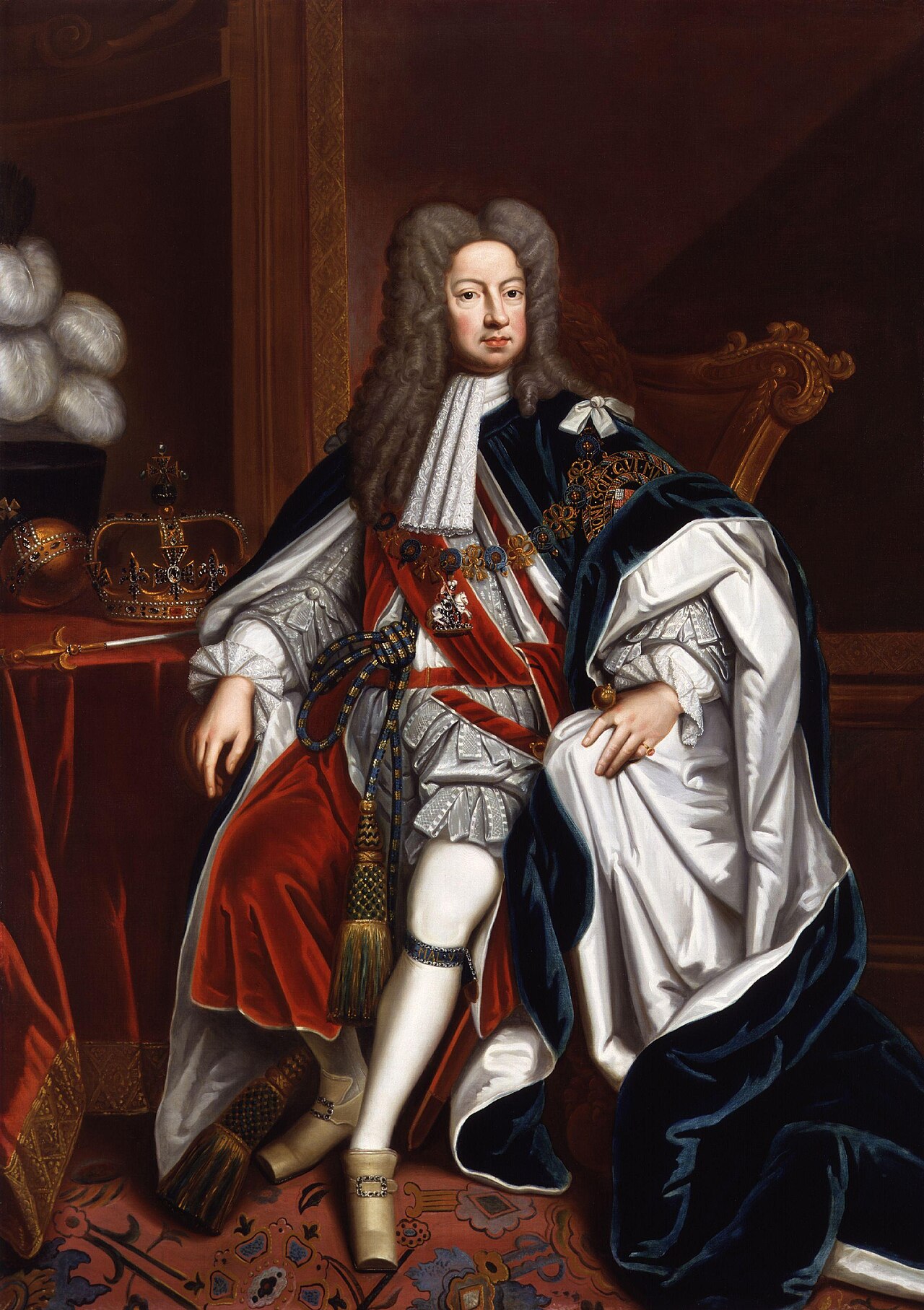 Painting
Primary source
Portrait of George I of Great Britain
Godfrey Kneller
Secondary source
Water Music
George Frideric Handel · 1717
Primary source
Septennial Act 1715
1716
 Document
Primary source
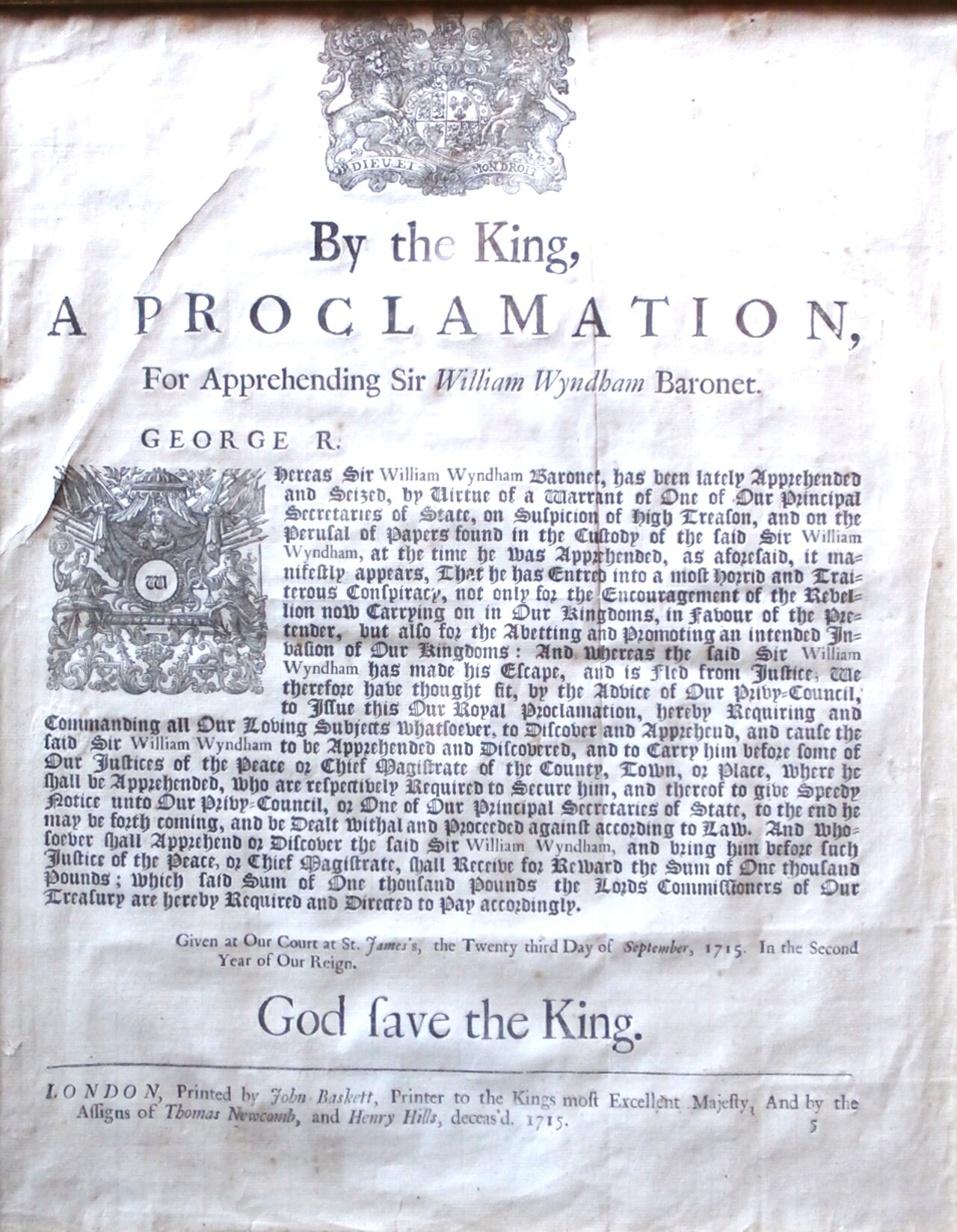
Royal Proclamation for the Arrest of Sir William Wyndham
23 September 1715
 Painting
Primary source
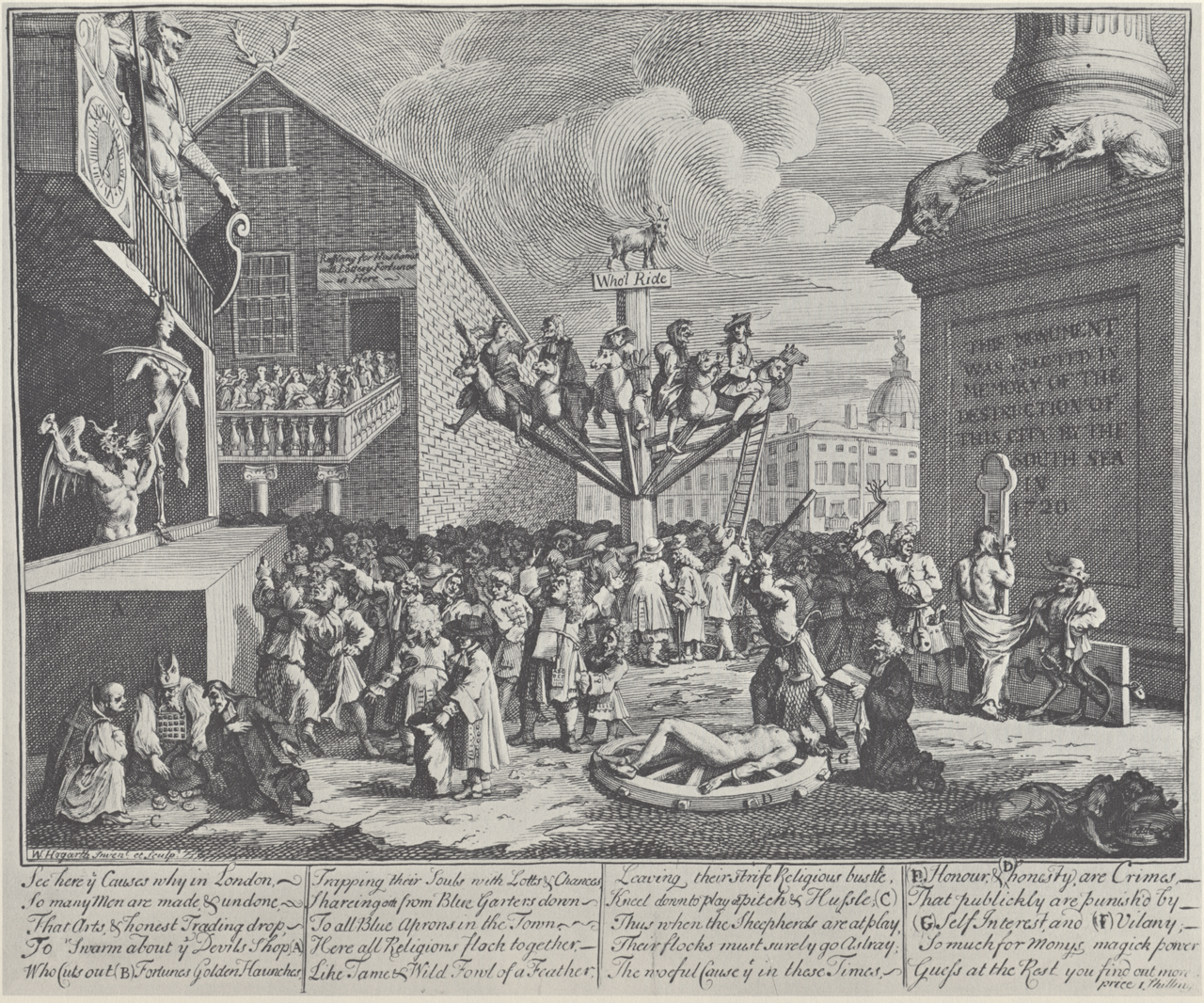
Emblematical Print on the South Sea Scheme
William Hogarth · 1721
Ready when you are
Start chatting with George I now.
20 messages free · No credit card · Available in 50+ languages.