


Secondary sourceArtifactbetween 1688 and 1690
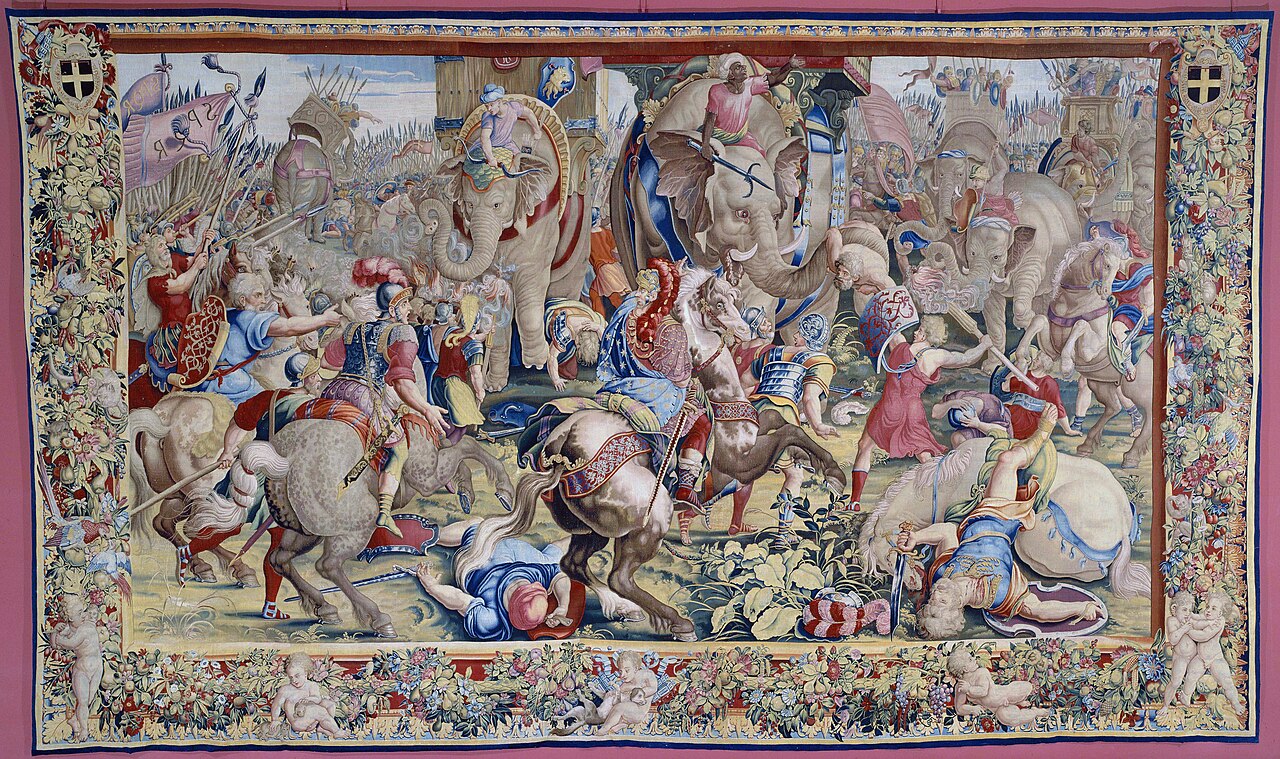
The Battle of Zama tapestry
François Bonnemer, after Jules Roman and Francesco Penni · between 1688 and 1690
A Gobelins tapestry from the Scipio series, woven in the late 1680s, showing the battle that ended the Second Punic War. It presents Scipio's victory as a scene from later French royal art.
Shows Scipio's decisive victory at Zama as imagined by a later court workshop, illustrating how his legend was reused centuries afterwards.
About this source
What it is
This is a tapestry from the Scipio series, made by the Gobelins manufactory in Paris between 1688 and 1690. The collection record credits François Bonnemer as the cartoon maker, working after designs attributed to Jules Roman and Francesco Penni. The tapestry is held at the Louvre. It shows mounted soldiers and war elephants fighting across a landscape, with fallen and wounded soldiers in the foreground and an army with red flags in the background.
Why it matters
The battle of Zama, won by Scipio in 202 BCE, ended the Second Punic War against Hannibal. This tapestry was made almost two thousand years after the battle, so it shows how later artists and patrons imagined it. The Scipio series was woven for the French crown, and it reveals how a Roman general's story was used to express power and glory in seventeenth-century France.
Look closer
- Which figures are shown most clearly, and which seem to fade into the background?
- Why might a French workshop in the 1680s choose to show a Roman battle with such rich borders and decoration?
- What does this image leave out about the people and cost of the war?
This artifact is part of the curated material that grounds the AI version of Scipio Africanus on Humy.ai — when students ask about related events, the AI can quote it and cite it.
More Scipio Africanus sources
Browse all 94 → Book
Secondary source
The Histories
Polybius · c. 150 BCE
 Book
Primary source
History of Rome
Titus Livius · 27-9 BC
 Book
Secondary source
Parallel Lives
Plutarch · c. 100-120 AD
 Letter
Primary source
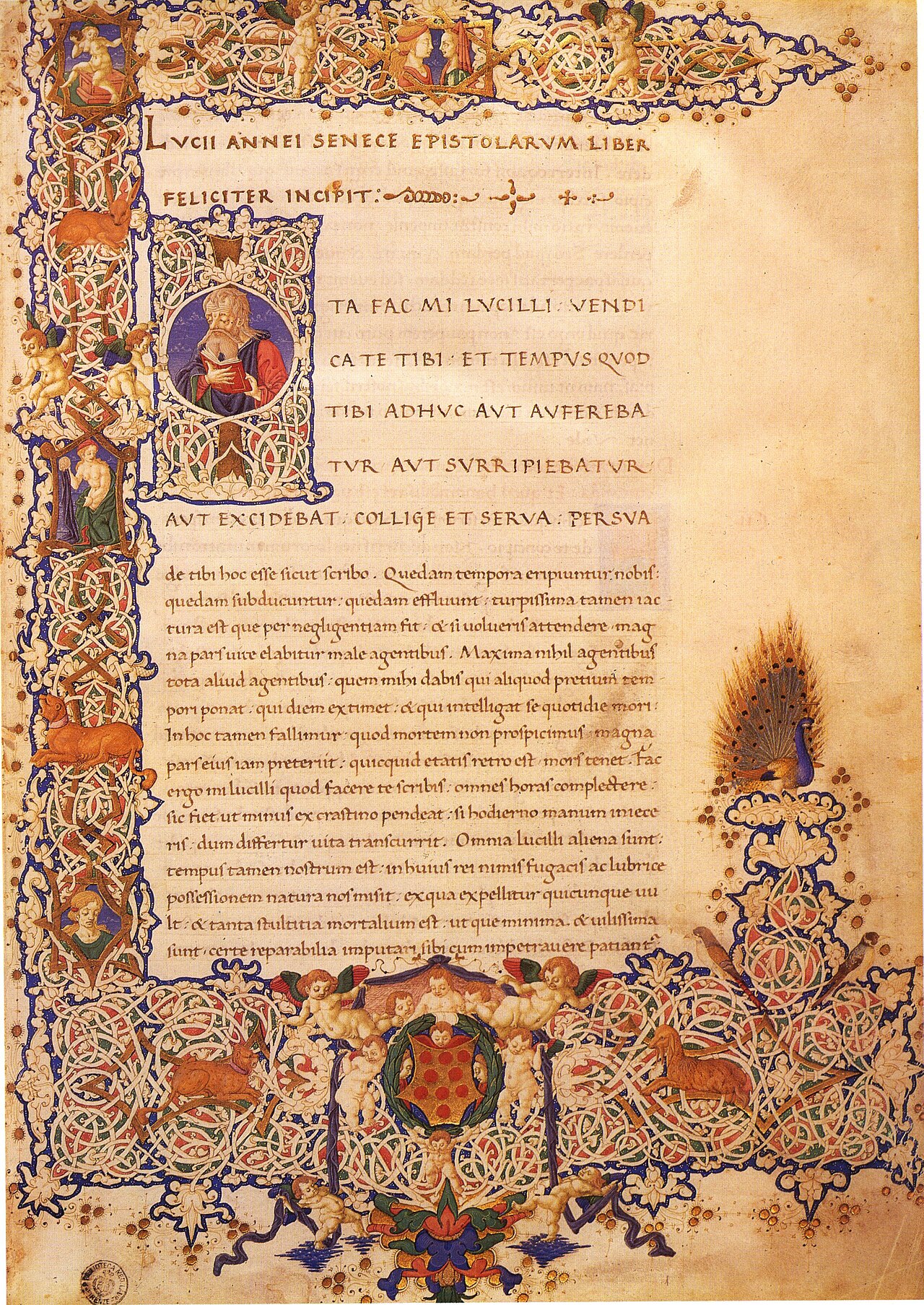
Epistulae Morales ad Lucilium
Seneca · c. 62-65 CE
Free account
Read every Scipio Africanus source
Sign up free →
Ready when you are
Start chatting with Scipio Africanus now.
20 messages free · No credit card · Available in 50+ languages.