


Secondary sourcePaintingc. 1920-1927
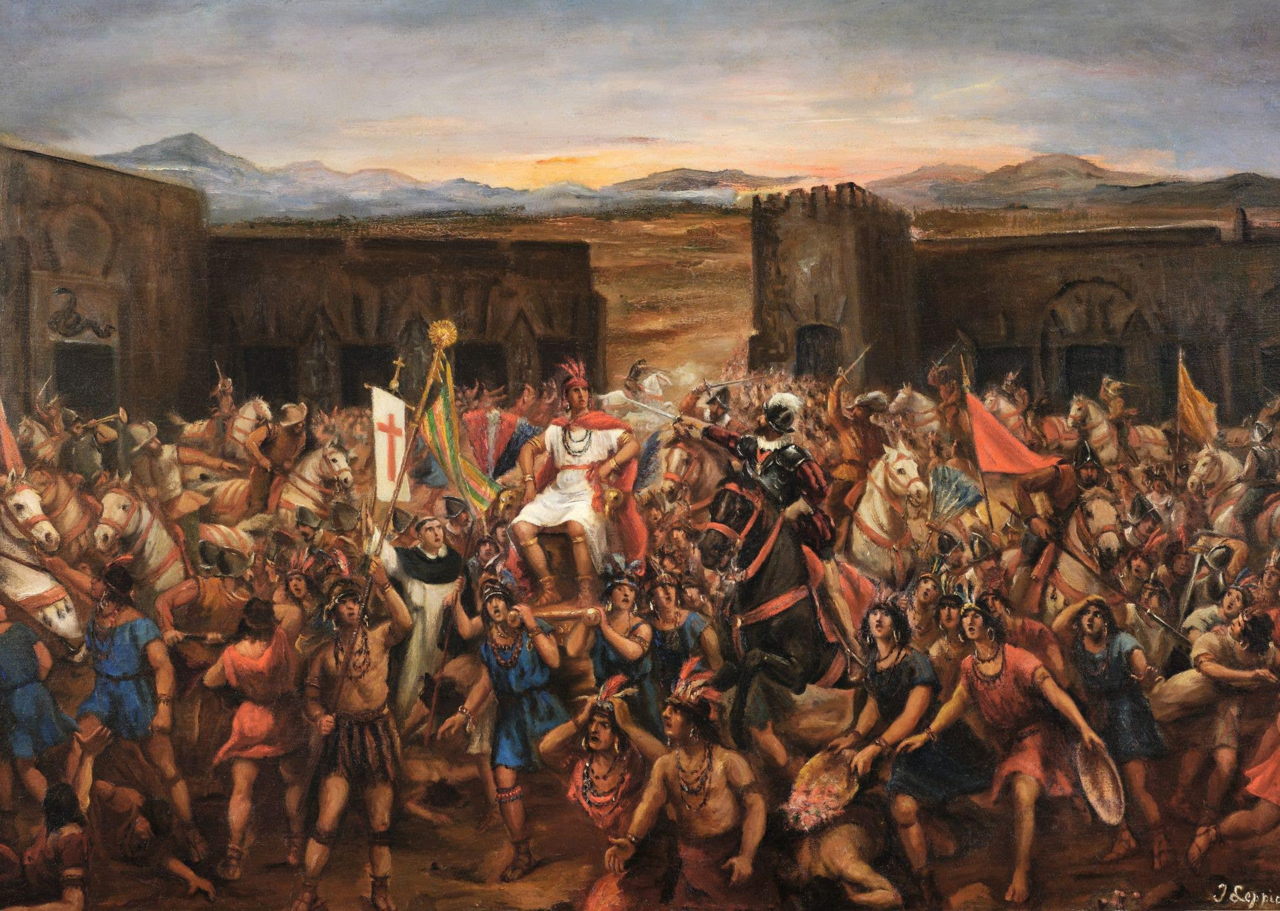
The Capture of Atahualpa
Juan Lepiani · c. 1920-1927
A 20th-century oil painting imagining the dramatic 1532 capture of Atahualpa by Spanish forces at Cajamarca.
A later painted depiction of Atahualpa's capture, the pivotal moment of his downfall.
About this source
What it is
This oil painting by Juan Lepiani, made around 1920-1927, depicts the Battle of Cajamarca and the capture of Atahualpa in 1532, the event that began the Spanish conquest of the Inca Empire. It shows a crowded plaza, a seated figure in a gold headdress surrounded by people, and an armored Spanish knight on horseback.
Why it matters
Painted nearly four centuries after the event, this work reflects how later Peruvian artists imagined and remembered the fall of Atahualpa and the Inca Empire. It is not an eyewitness image but a dramatic reconstruction meant to convey the violence and shock of that moment.
Look closer
- What details in the painting suggest chaos and fear among the crowd?
- Why might an artist working centuries later choose to paint this scene, and what choices did he make about what to show?
- What can't a painting like this tell us about what actually happened?
This painting is part of the curated material that grounds the AI version of Atahualpa on Humy.ai — when students ask about related events, the AI can quote it and cite it.
More Atahualpa sources
Meet the AI Atahualpa →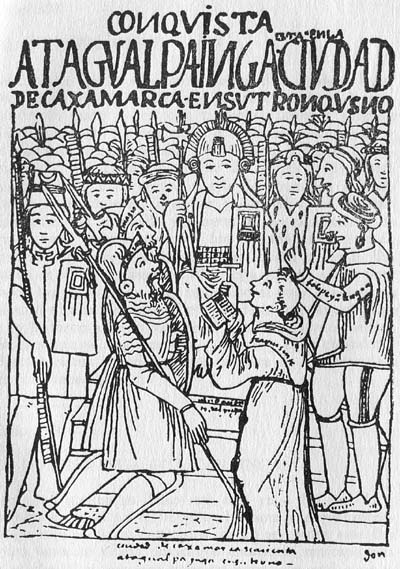 Painting
Secondary source
Atawallpa Pizarro tinkuy
Felipe Guaman Poma de Ayala · 1532 (depicted); drawing later
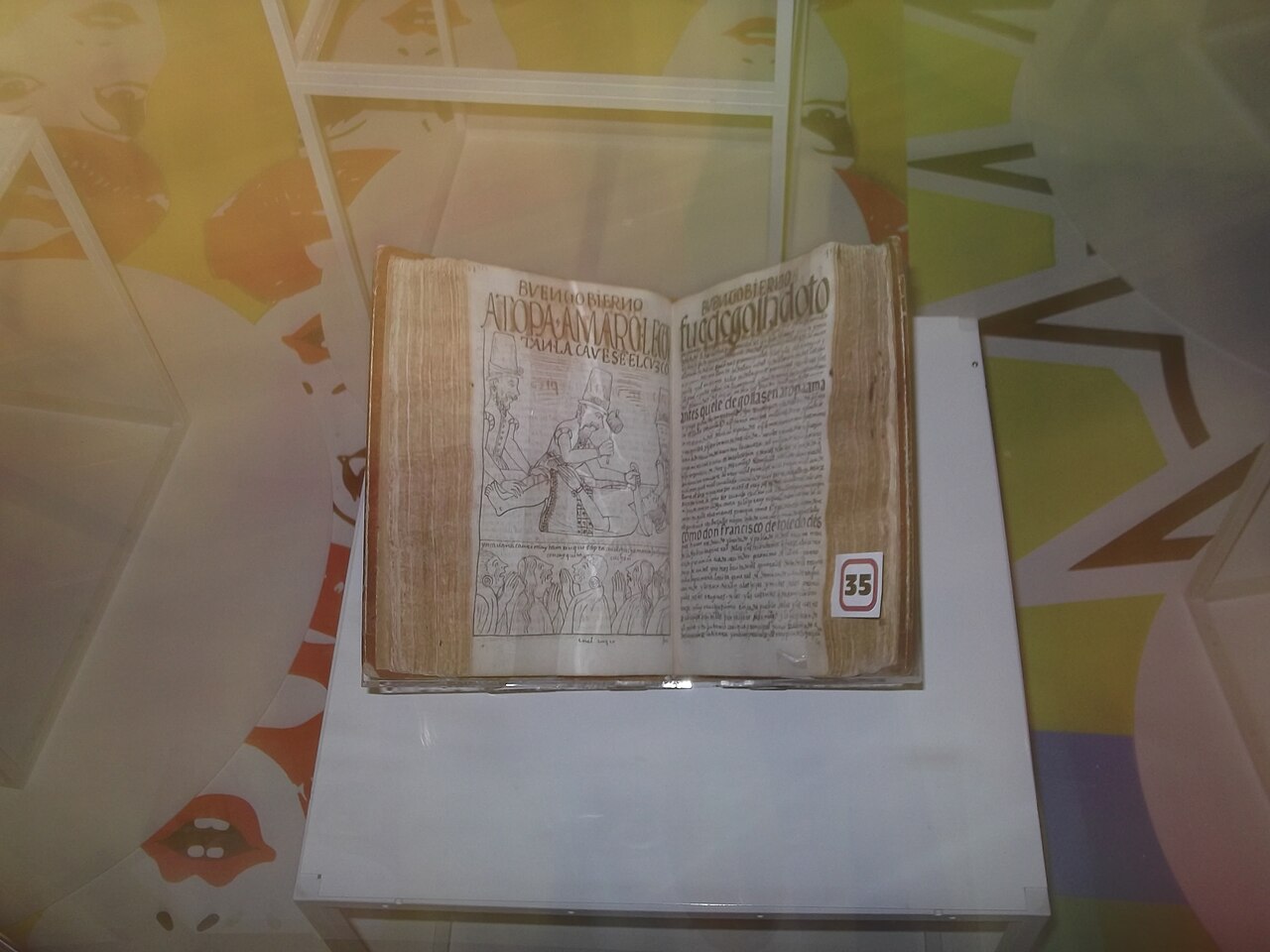 Book
Primary source
El primer nueva corónica y buen gobierno
Felipe Guaman Poma de Ayala · c. 1615
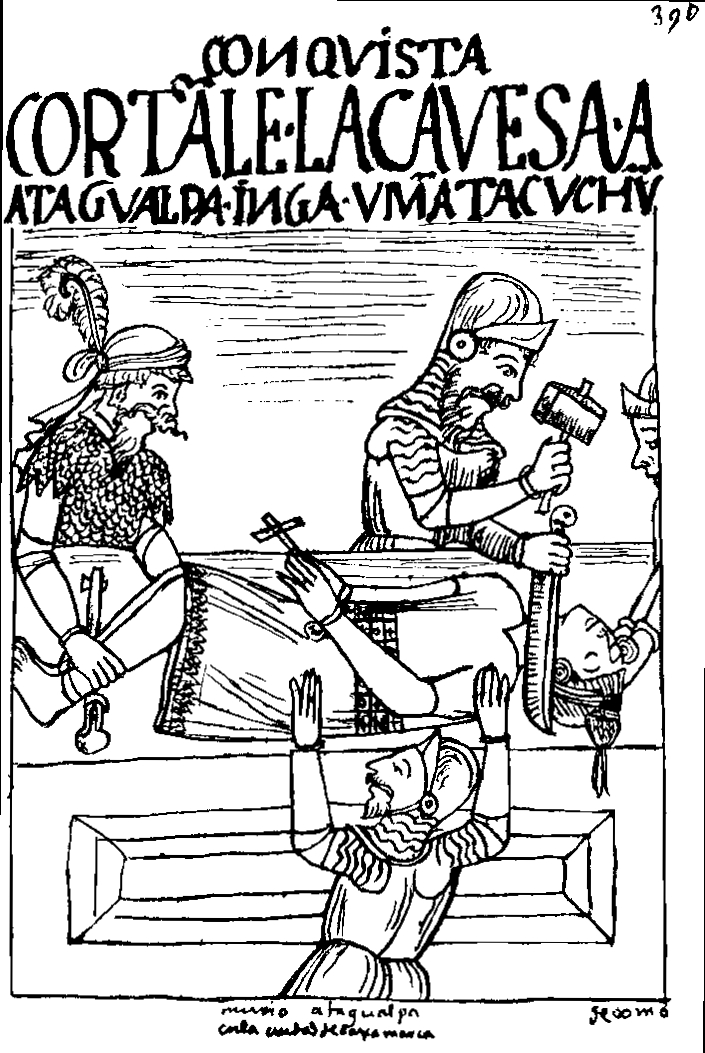 Painting
Secondary source
Muerte de Atagualpa Inca
Felipe Huaman Puma de Ayala · c. 1615
 Artifact
Secondary source
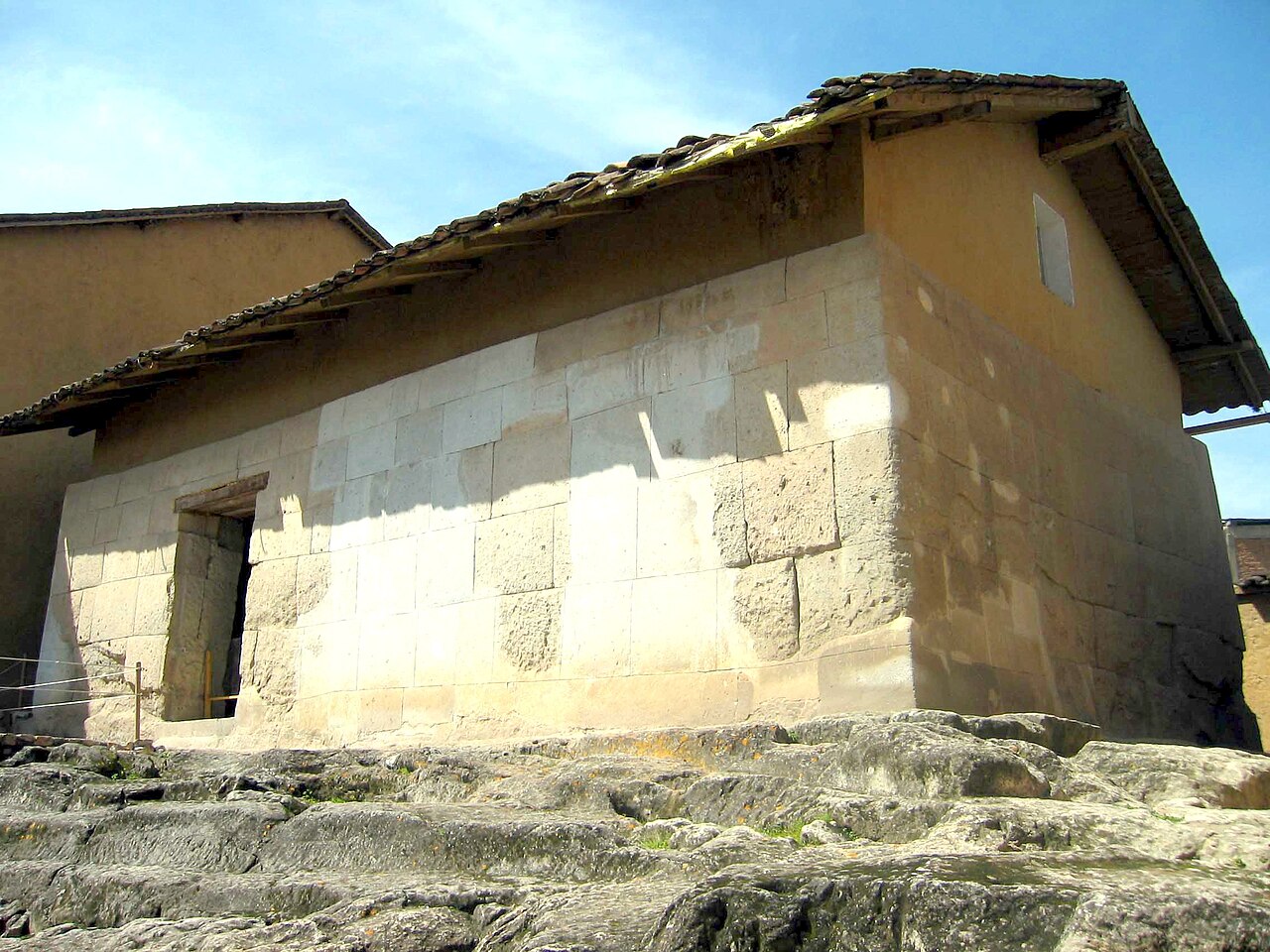
Ransom Room
Secondary source
Suma y Narración de los Incas
Juan de Betanzos · 1551
Ready when you are
Start chatting with Atahualpa now.
20 messages free · No credit card · Available in 50+ languages.