


Secondary sourcePaintingc. 1484
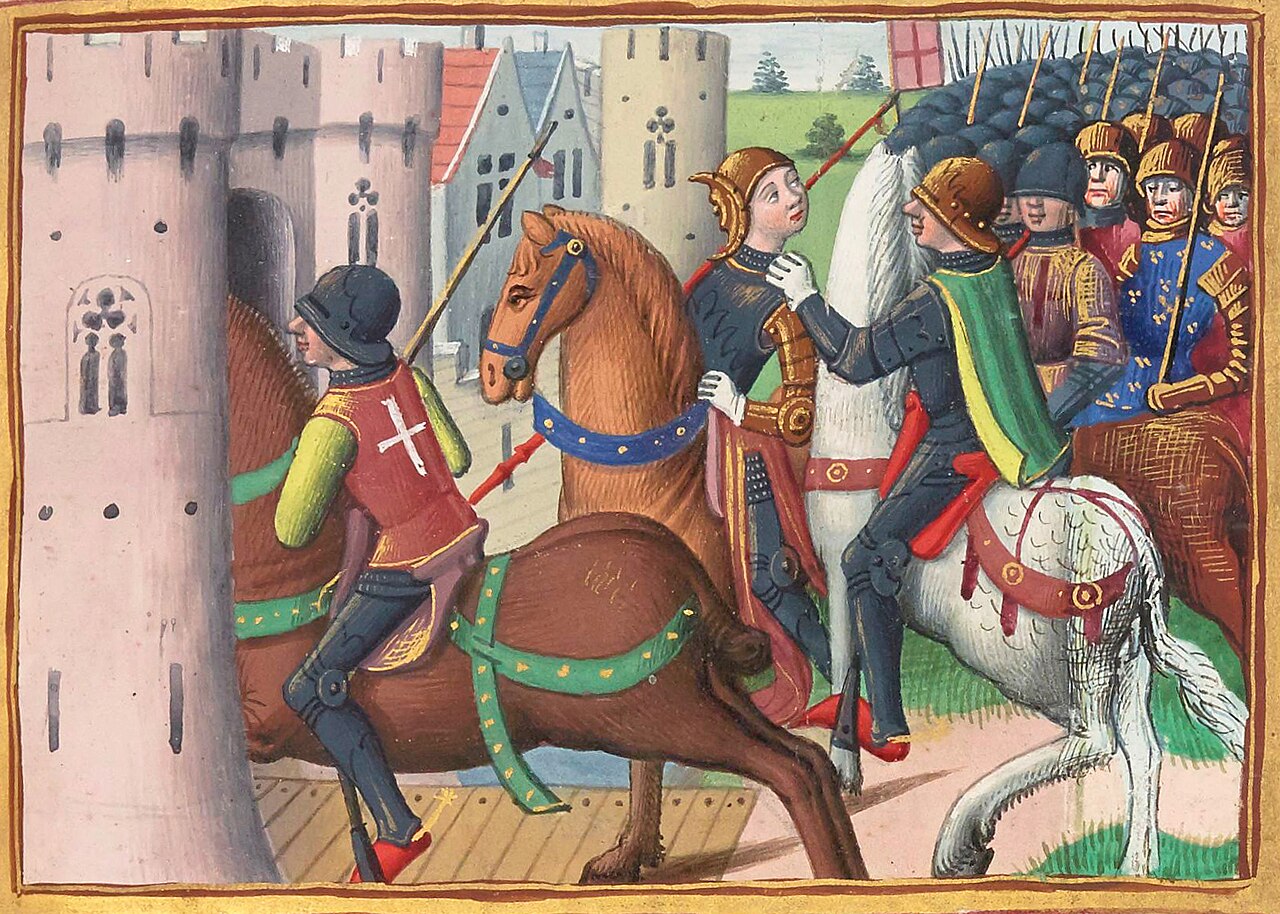
The Capture of Joan of Arc at Compiègne
Anonymous · c. 1484
A manuscript miniature from around 1484 depicting Joan of Arc's capture by the Burgundians at the siege of Compiègne.
A manuscript image depicting Joan's capture at Compiègne, the event that led to her trial and death.
About this source
What it is
This painted miniature, made by an unknown artist around 1484, shows the moment Joan of Arc was captured by the Burgundians during the siege of Compiègne on 14 May 1430. Armored knights and soldiers surround the scene outside a fortified town.
Why it matters
This image marks the beginning of the end of Joan's military career, as her capture led to her trial and execution. Made decades later, it shows how this dramatic turning point was pictured by artists working from the memory and records of her story, not from eyewitness sketches.
Look closer
- What does the composition - a crowd of armored soldiers surrounding Joan - suggest about how the artist wanted viewers to feel?
- Why might this capture scene have been considered important enough to illustrate?
- What is missing from this picture that you might want to know about what really happened?
This painting is part of the curated material that grounds the AI version of Joan of Arc on Humy.ai — when students ask about related events, the AI can quote it and cite it.
More Joan of Arc sources
Meet the AI Joan of Arc →Primary source
Letter to the English
Joan of Arc · 22 March 1429
 Artifact
Secondary source
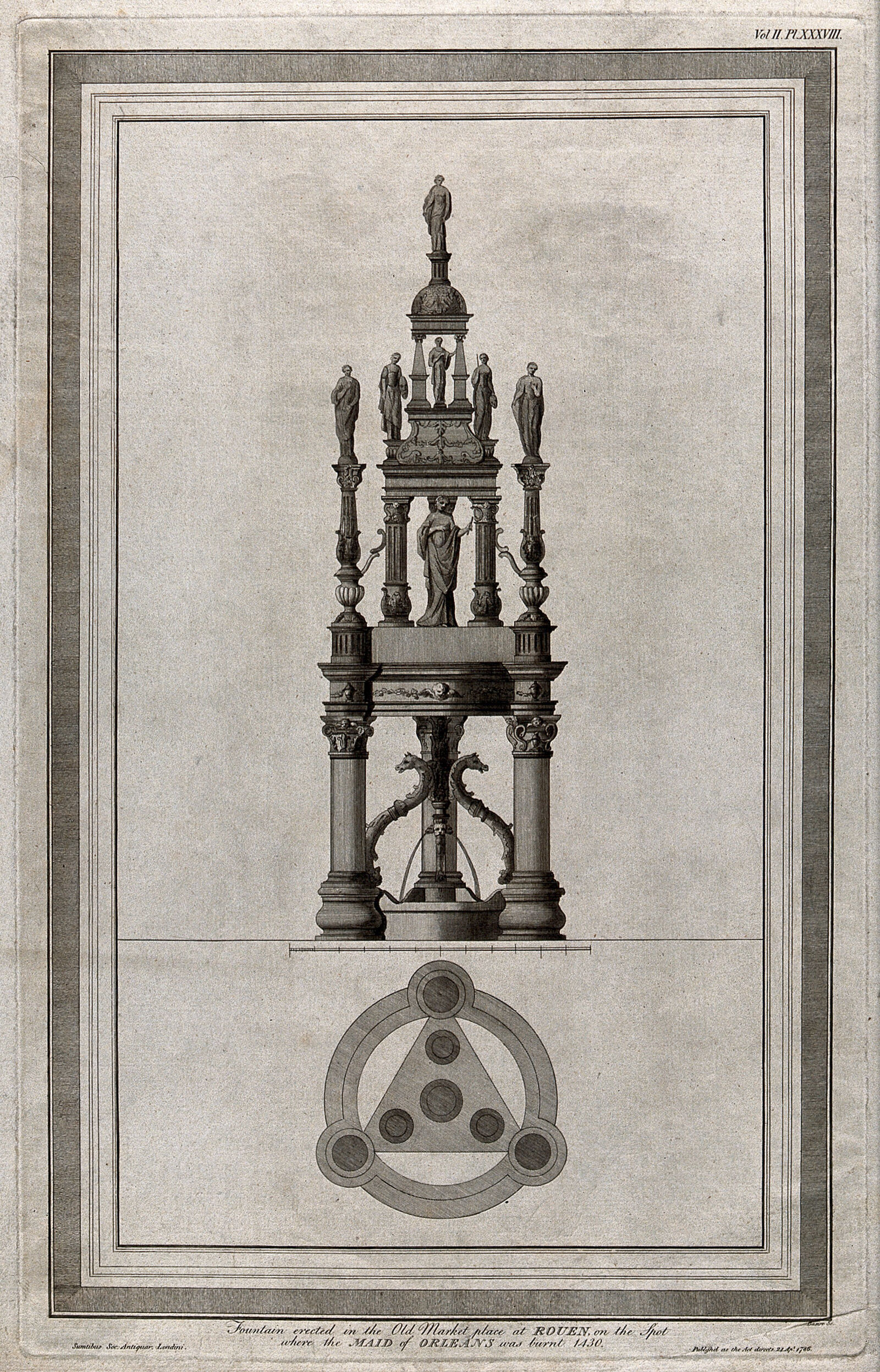
Fountain on the Site of Joan of Arc's Execution
James Basire · 21 April 1786
 Painting
Primary source
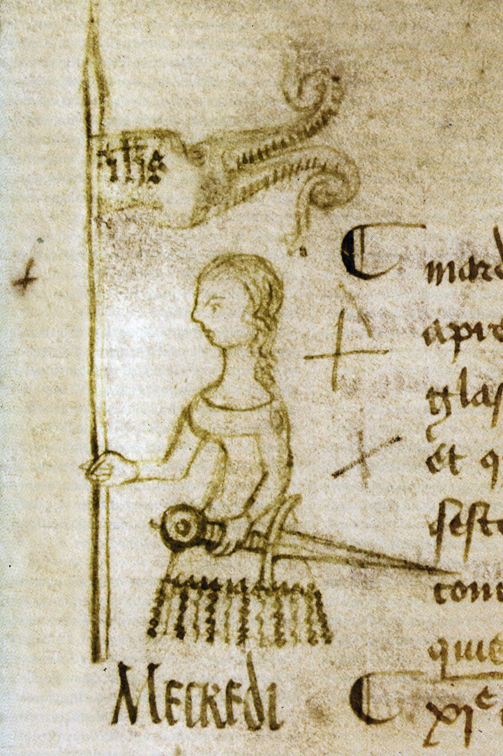
Marginal Drawing of Joan of Arc
Clément de Fauquembergue · May 1429
 Document
Primary source
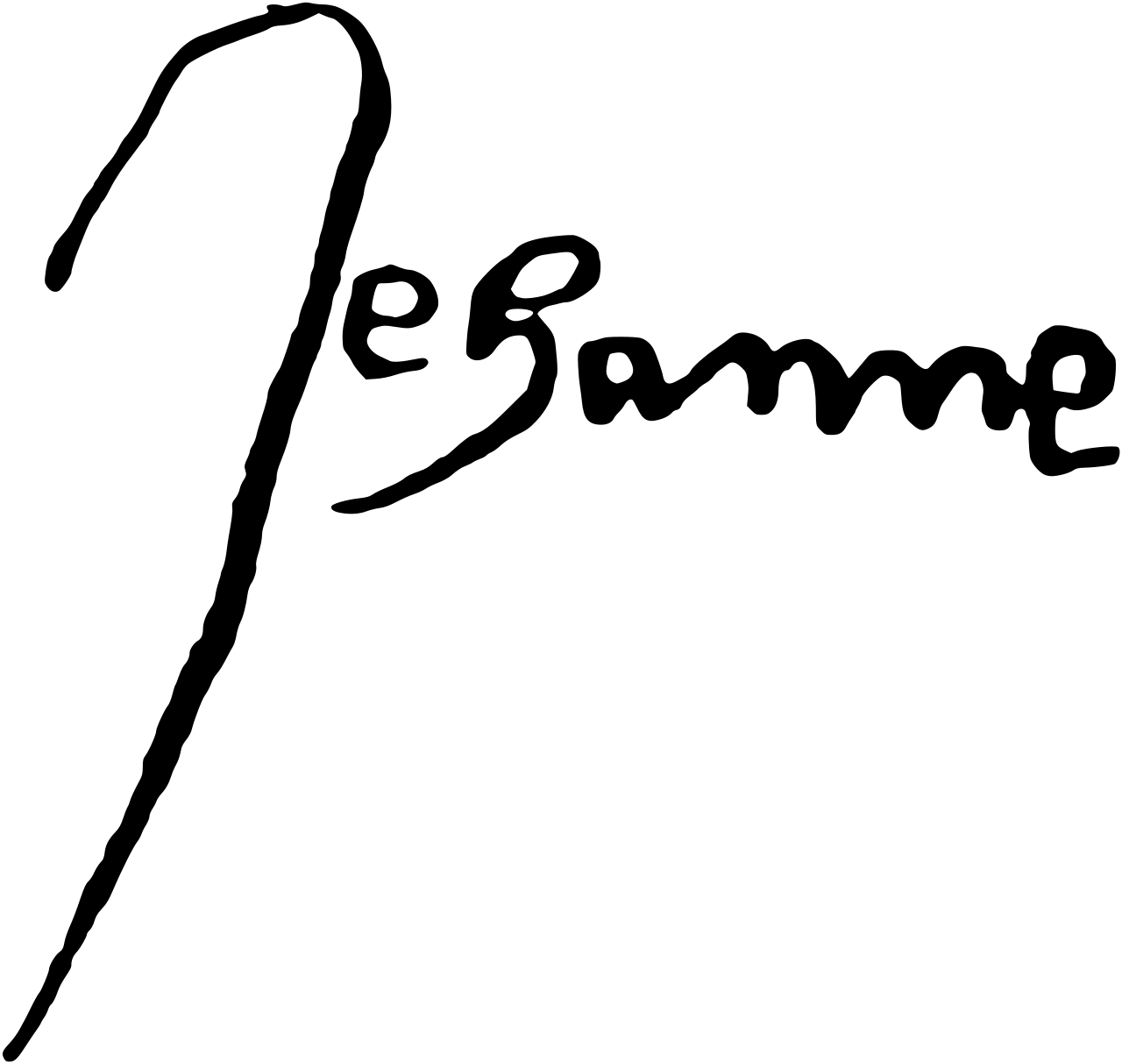
Signature of Joan of Arc
Joan of Arc · 16 March 1430
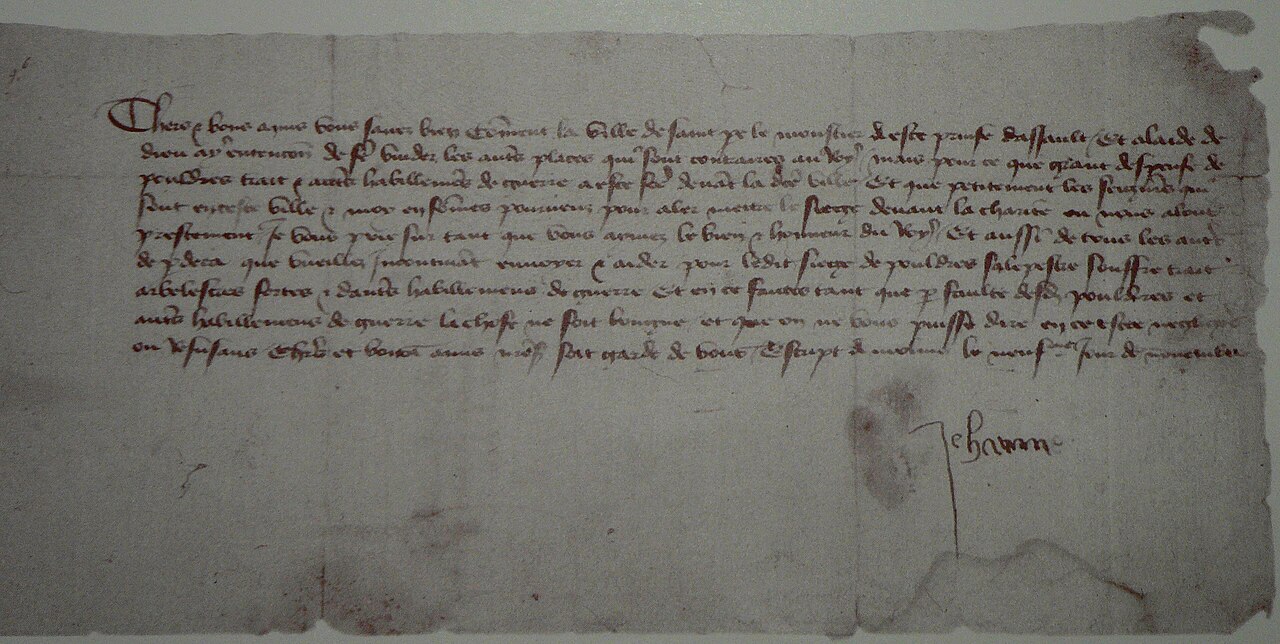 Letter
Primary source
Letter to the People of Riom
Joan of Arc · 9 November 1429
Ready when you are
Start chatting with Joan of Arc now.
20 messages free · No credit card · Available in 50+ languages.