


Secondary sourcePainting1543
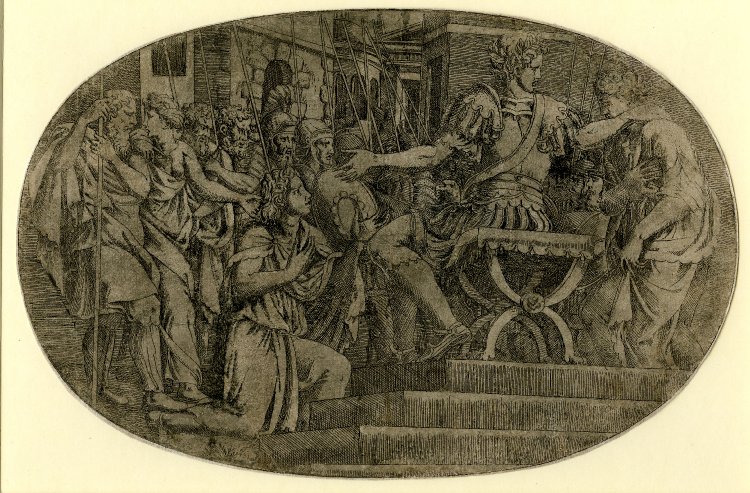
The Continence of Scipio
Antonio Fantuzzi, after Giulio Romano · 1543
A 16th-century print after Giulio Romano, showing Scipio returning a captive woman to her husband.
Depicts Scipio returning a captive woman to her husband, illustrating his legendary self-restraint.
About this source
What it is
This oval etching was made in the 1540s by Antonio Fantuzzi, based on a design by the painter Giulio Romano. The British Museum's own description of the print notes that it shows a Roman general in armour, identified as Scipio, giving a woman back to her husband, who kneels before him.
Why it matters
The scene illustrates the famous story of Scipio Africanus's restraint: rather than keeping a captured woman for himself, he returned her to her husband. The print shows how Renaissance artists like Giulio Romano and printmakers like Fantuzzi spread stories of ancient virtue across Europe through reproducible images.
Look closer
- Why do you think the artist placed Scipio higher than the kneeling man?
- What might the oval shape and crowd of onlookers tell you about how this print was meant to be viewed?
- How does this print differ from a written account of the same story?
This painting is part of the curated material that grounds the AI version of Scipio Africanus on Humy.ai — when students ask about related events, the AI can quote it and cite it.
More Scipio Africanus sources
Browse all 94 → Book
Secondary source
The Histories
Polybius · c. 150 BCE
 Book
Primary source
History of Rome
Titus Livius · 27-9 BC
 Book
Secondary source
Parallel Lives
Plutarch · c. 100-120 AD
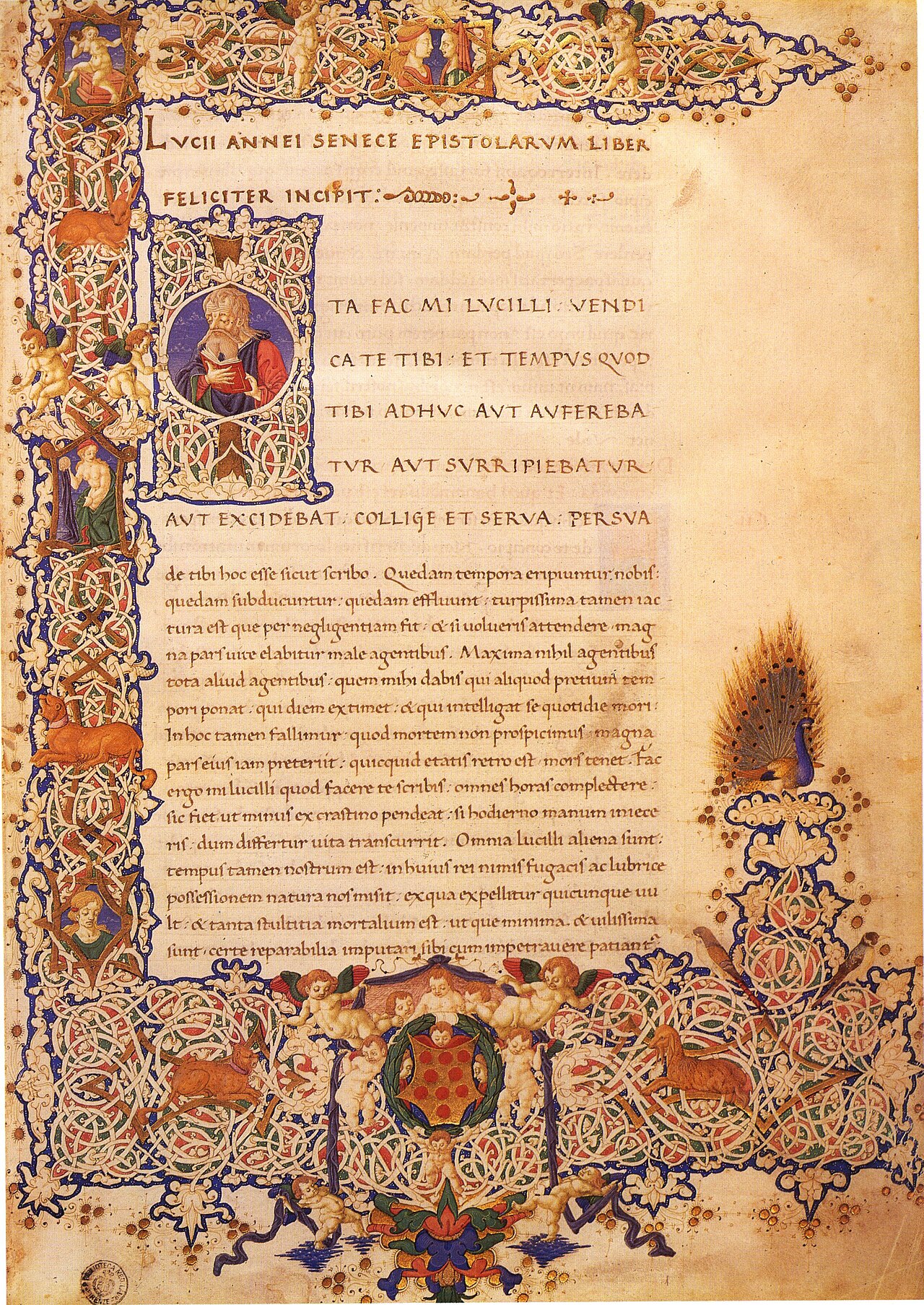 Letter
Primary source
Epistulae Morales ad Lucilium
Seneca · c. 62-65 CE
Free account
Read every Scipio Africanus source
Sign up free →
Ready when you are
Start chatting with Scipio Africanus now.
20 messages free · No credit card · Available in 50+ languages.