


Primary sourcePainting1932–1933
The Dance
Henri Matisse · 1932–1933
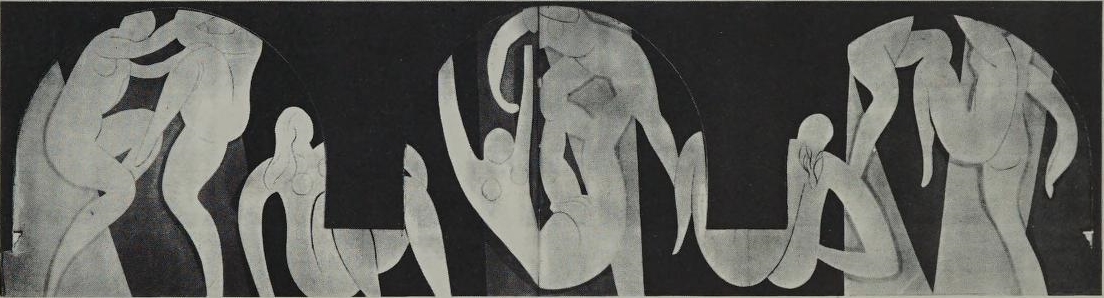
A huge three-panel mural of dancing nude figures that Matisse painted for Albert Barnes's foundation in Philadelphia.
Matisse created this mural on commission from Albert Barnes, showing his shift toward cut-paper planning before his famous cut-outs.
About this source
What it is
The Dance is a three-panel mural painted in oil on canvas by Henri Matisse in 1932–1933. It was commissioned by the American collector Albert C. Barnes for his foundation in Philadelphia, where it still hangs.
Why it matters
Matisse planned the huge composition using cut paper shapes, a method that pointed the way toward his later famous cut-outs. The project took him two years and was exhausting, and he was disappointed to learn Barnes would not show it to the public. It marks a turning point where Matisse returned to simple shapes, flat colour, and the paper technique that defined his final years.
Look closer
- Why might Matisse have chosen to plan a huge wall painting with cut paper instead of brushwork?
- What does the frieze-like arrangement of dancing figures suggest about movement and rhythm?
- How might Matisse have felt completing such a huge, demanding commission only to have it hidden from the public?
This painting is part of the curated material that grounds the AI version of Henri Matisse on Humy.ai — when students ask about related events, the AI can quote it and cite it.
More Henri Matisse sources
Browse all 99 →
Ready when you are
Start chatting with Henri Matisse now.
20 messages free · No credit card · Available in 50+ languages.