


Primary sourcePaintingFebruary 1864
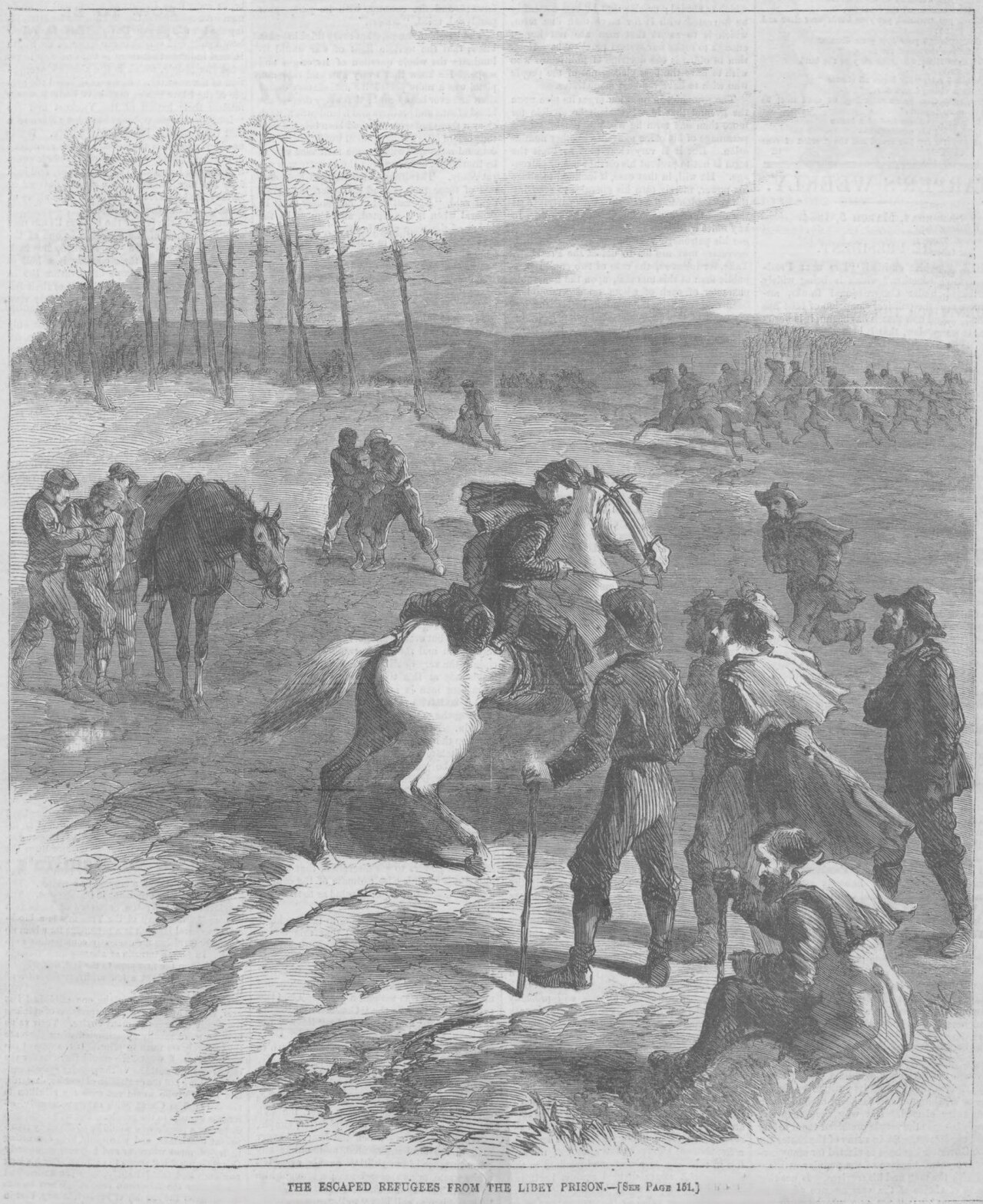
The Escaped Refugees from the Libby Prison
February 1864
An 1864 wood engraving showing Union men who escaped Libby Prison in a breakout that Van Lew helped plan.
Depicts the Libby Prison escape that Van Lew is known to have helped plan and support.
About this source
What it is
This wood engraving, titled 'The Escaped Refugees from the Libby Prison,' depicts escapees from Libby Prison in Richmond in February 1864. Its creator is unknown.
Why it matters
The February 1864 escape from Libby Prison was one of the most famous breakouts of the Civil War. Elizabeth Van Lew is known to have helped plan and support the escape, hiding and aiding fugitives as part of her espionage network. This image shows the moment of escape itself, letting students see how the event was publicly pictured at the time.
Look closer
- What details in the image suggest urgency or danger for the escapees?
- Why might this scene have been chosen for a published illustration?
- What does the image not show about who helped make the escape possible?
This painting is part of the curated material that grounds the AI version of Elizabeth Van Lew on Humy.ai — when students ask about related events, the AI can quote it and cite it.
More Elizabeth Van Lew sources
Meet the AI Elizabeth Van Lew →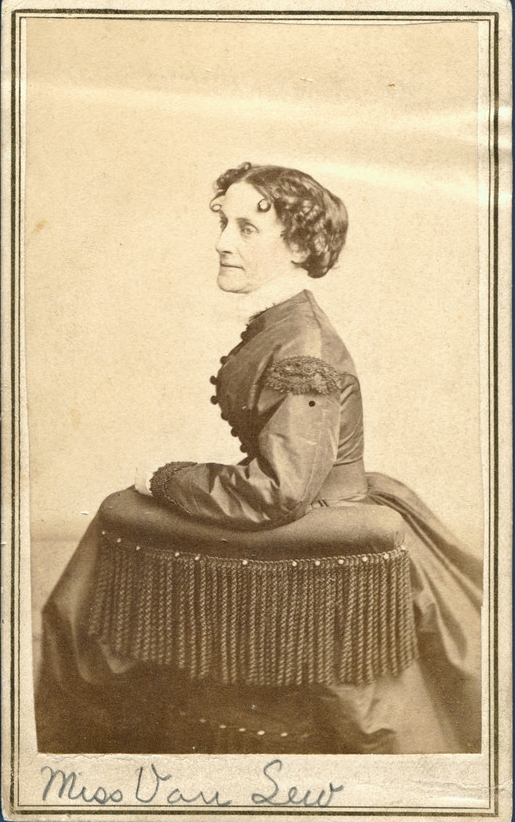 Photograph
Primary source
Elizabeth Van Lew Carte-de-Visite Portrait
A. J. De Morat
 Painting
Primary source
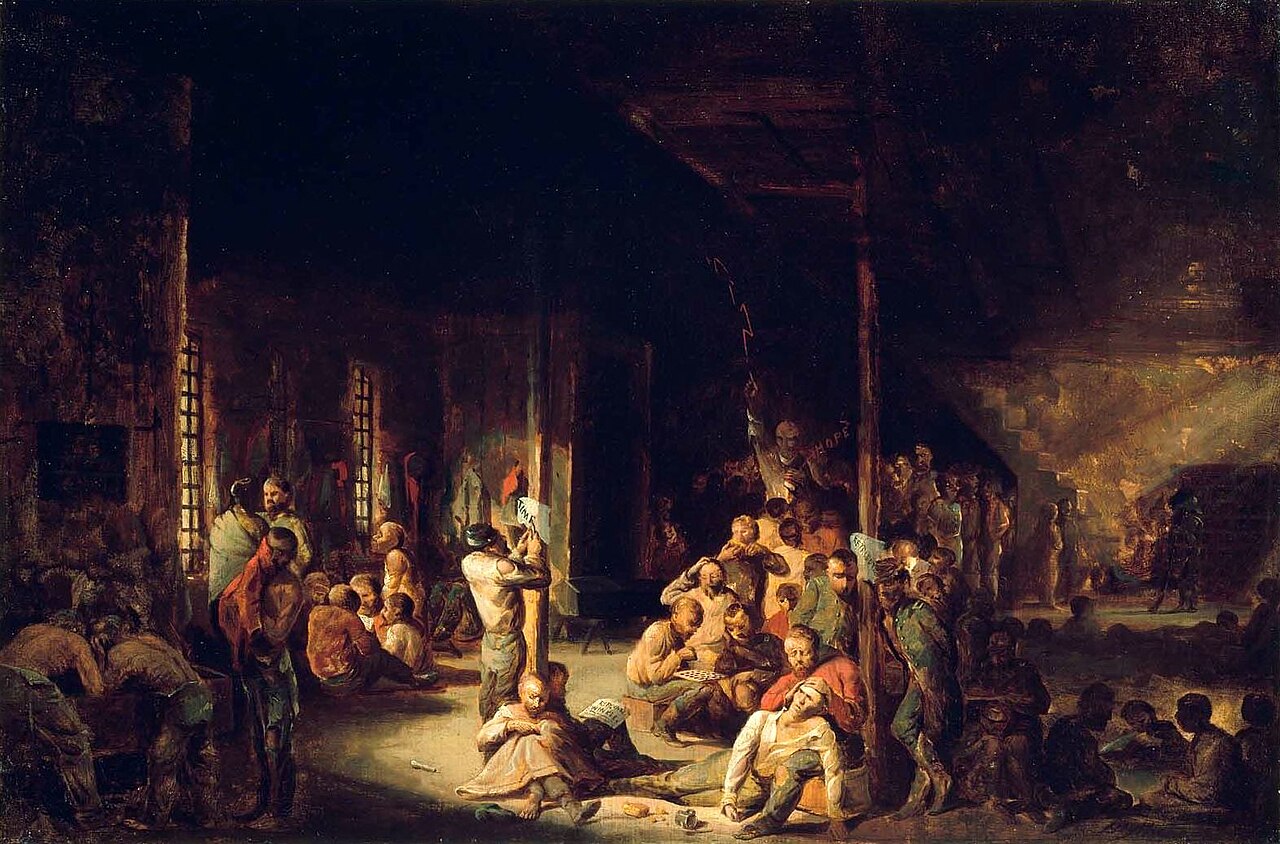
Libby Prison
David Gilmour Blythe · 1863
 Photograph
Primary source
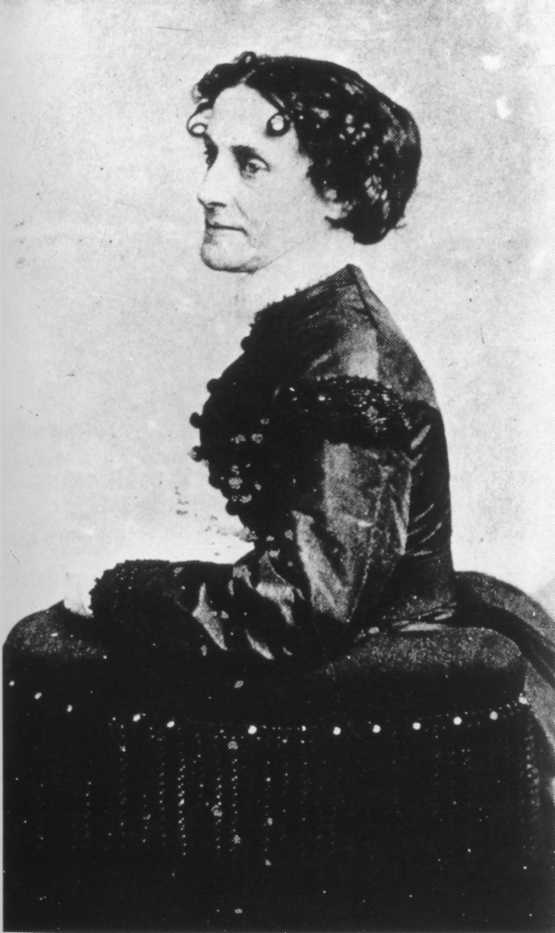
Portrait of Elizabeth Van Lew
 Photograph
Secondary source
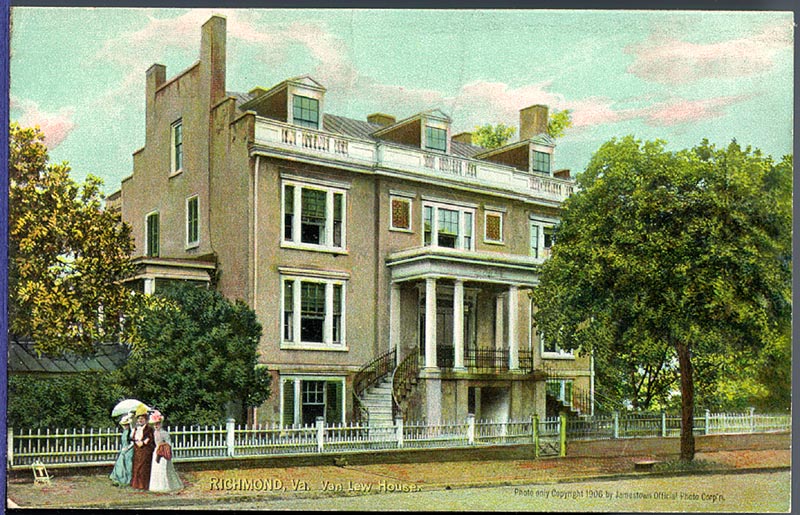
Elizabeth Van Lew Mansion
VCU Libraries · c. 1906
 Diary entry
Primary source
Prison Diary of Michael Dougherty, 13th Pennsylvania Cavalry
Michael Dougherty · 1908
Ready when you are
Start chatting with Elizabeth Van Lew now.
20 messages free · No credit card · Available in 50+ languages.