


Secondary sourcePaintingc. 1891
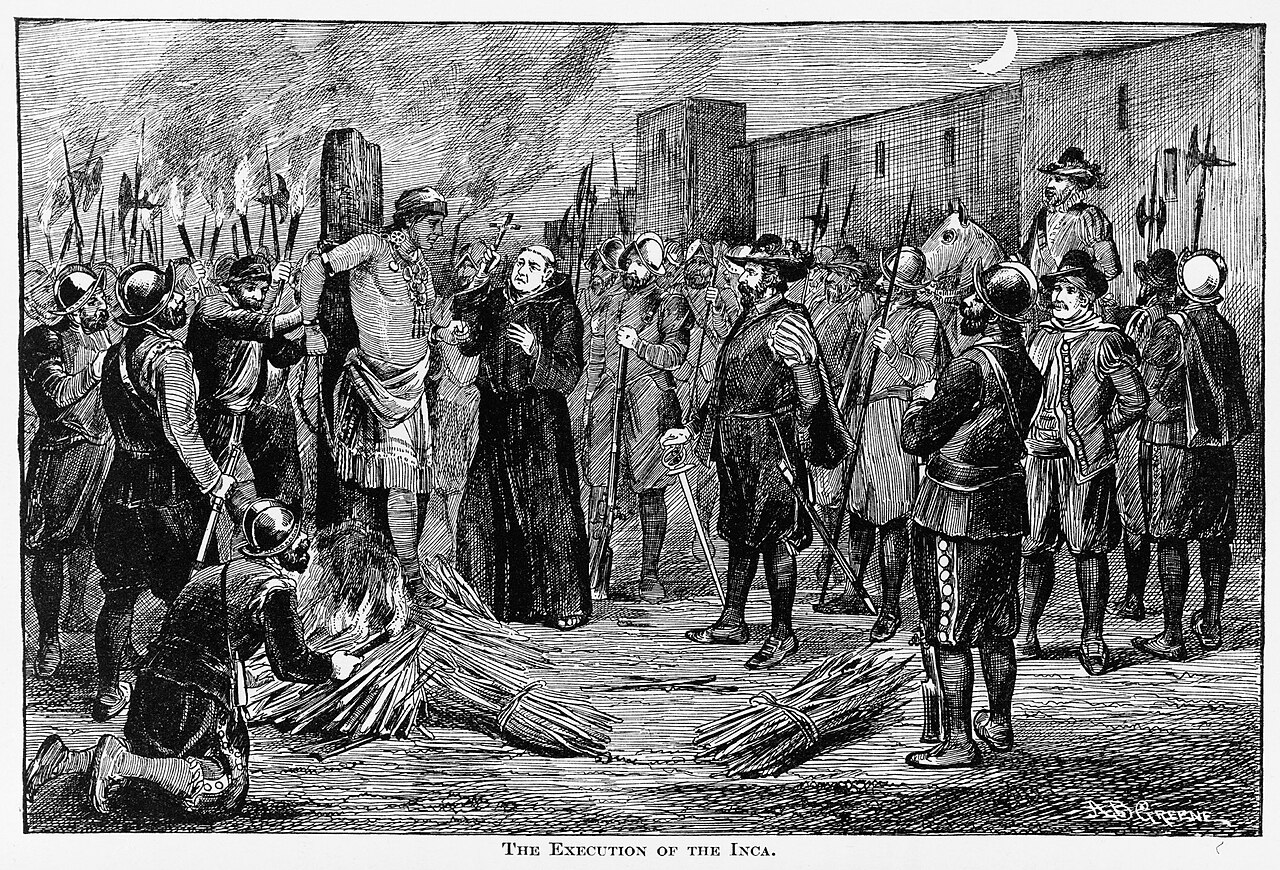
The Execution of the Inca
A. B. Greene · c. 1891
An 1891 engraving dramatizing the execution of Atahualpa, showing him bound and surrounded by Spanish soldiers and a friar.
A later dramatized depiction of Atahualpa's execution by the Spanish, central to his historical story.
About this source
What it is
This engraving, created around 1891 by A. B. Greene, depicts the death of Atahualpa, the Inca ruler. It shows a bound man tied to a stake in a walled plaza, with a robed friar holding a crucifix nearby and armed Spanish soldiers surrounding the scene.
Why it matters
Made centuries after the event, this dramatic scene reflects how later artists imagined and retold the story of Atahualpa's death at the hands of the Spanish conquerors. It shows the clash between the Inca Empire and Spanish forces, and the involvement of religious figures in the conquest.
Look closer
- What details, like the soldiers' weapons or the friar's crucifix, tell you about who held power in this scene?
- Why might an artist in 1891 choose to depict this moment from centuries earlier?
- What emotions does the composition, such as the lighting and smoke, try to create in the viewer?
This painting is part of the curated material that grounds the AI version of Atahualpa on Humy.ai — when students ask about related events, the AI can quote it and cite it.
More Atahualpa sources
Meet the AI Atahualpa →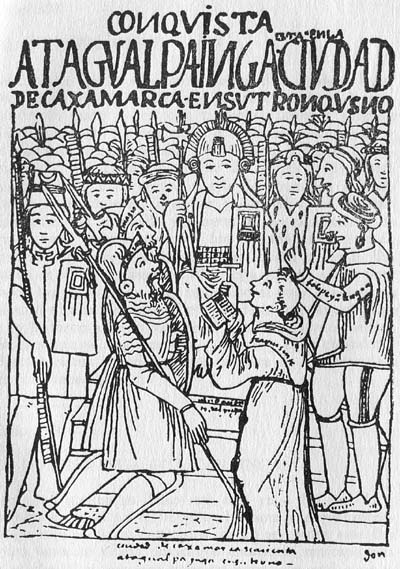 Painting
Secondary source
Atawallpa Pizarro tinkuy
Felipe Guaman Poma de Ayala · 1532 (depicted); drawing later
 Book
Primary source
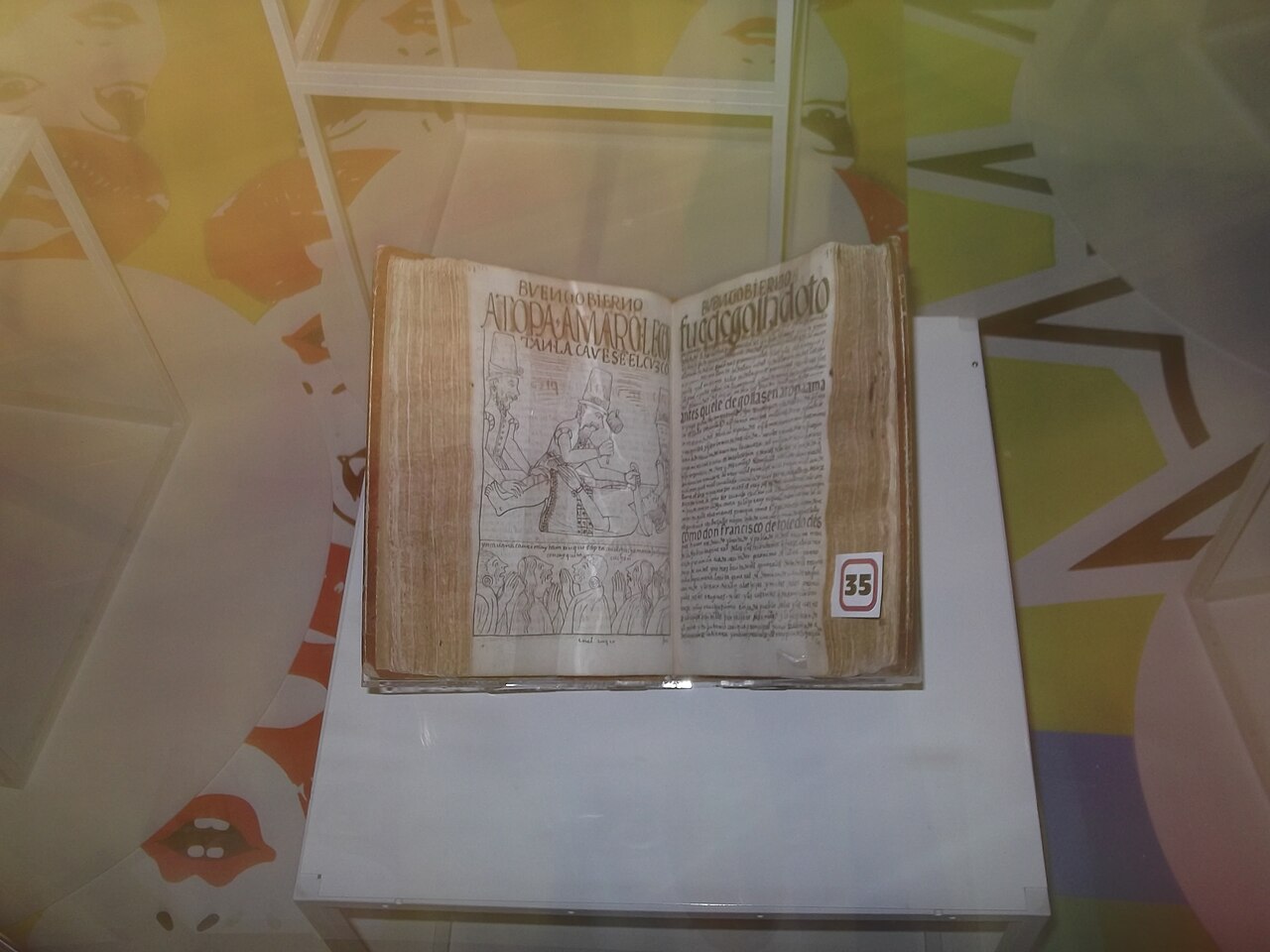
El primer nueva corónica y buen gobierno
Felipe Guaman Poma de Ayala · c. 1615
 Painting
Secondary source
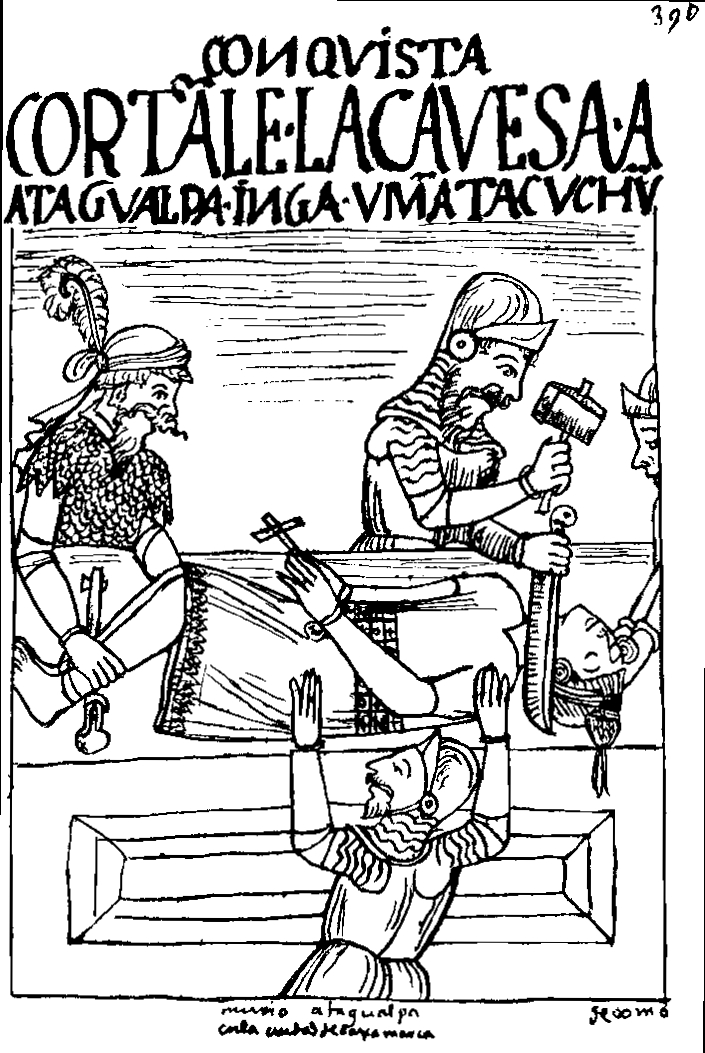
Muerte de Atagualpa Inca
Felipe Huaman Puma de Ayala · c. 1615
 Artifact
Secondary source
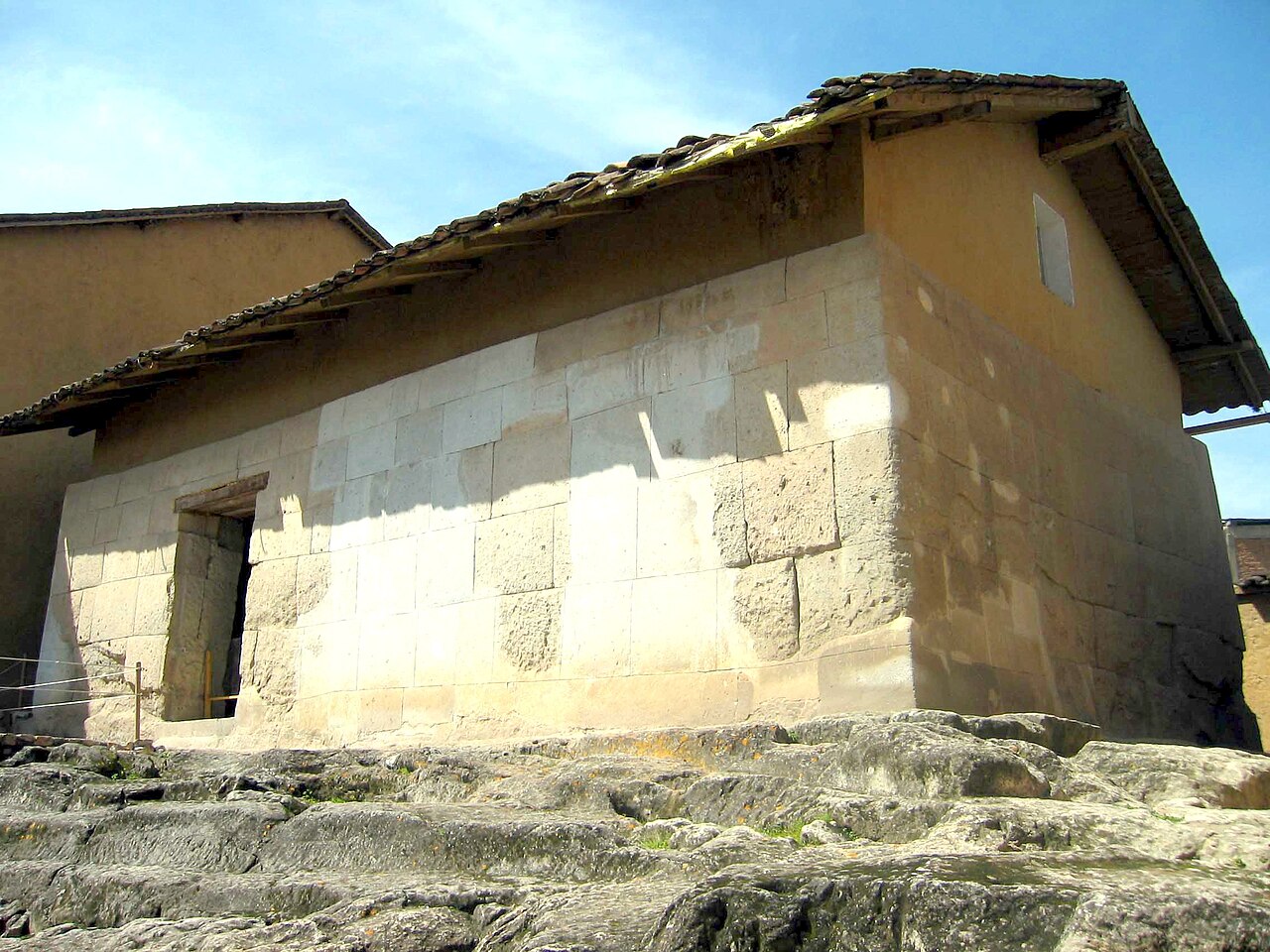
Ransom Room
Secondary source
Suma y Narración de los Incas
Juan de Betanzos · 1551
Ready when you are
Start chatting with Atahualpa now.
20 messages free · No credit card · Available in 50+ languages.